


Medical Disclaimer: This blog is intended for informational and educational purposes only and should not be considered a substitute for professional medical advice, diagnosis, or treatment. Always consult a qualified healthcare professional for medical advice regarding your symptoms or health concerns. Never delay or disregard professional medical advice based on information provided in this article.
Neuropsychology helps you understand how the brain affects the way you think, remember, communicate, and respond to everyday situations. If you have noticed frequent forgetfulness, difficulty concentrating, or changes in your problem-solving abilities, you may wonder whether these symptoms need further evaluation.
The study of neuropsychology is a connection between brain function and behavior, employing structured tests to detect cognitive strengths and weaknesses. Such assessments can be of use following a brain injury, a stroke, or a neurological illness, as well as in cases where there is no obvious reason for changes in memory or thinking.
A neuropsychologist is able to spot patterns in cognitive performance and offer information that can aid in treatment, rehabilitation, and everyday living. This guide outlines the field, the tests used, the conditions it addresses, and the situations in which you might benefit from having a professional evaluation.
Key Takeaways
- The study of neuropsychology looks at the way brain function affects thinking, memory, emotions, and behavior.
- Neuropsychologists make use of standardized tests, interviews, and questionnaires when evaluating cognitive abilities.
- Neurologists are doctors in the medical field who diagnose and treat illnesses affecting the nervous system.
- A neuropsychological evaluation may take several hours, depending on the person’s needs.
- Memory problems do not always indicate dementia; sleep, mood, medications, and other health conditions can also affect cognition.
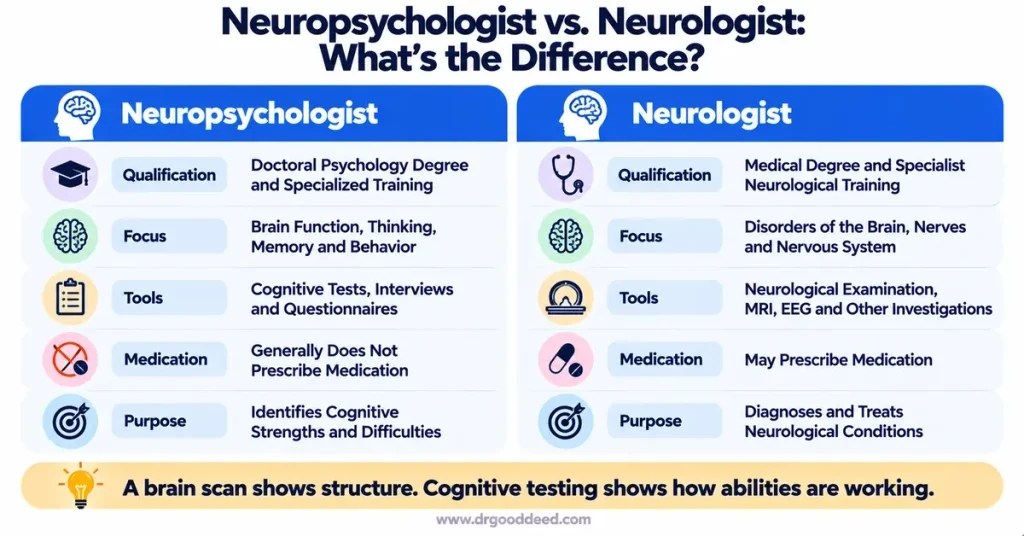
| Feature | Neuropsychologist | Neurologist |
| Training | Doctoral psychology degree and specialized training | Medical degree and specialist neurological training |
| Main focus | Brain function, thinking, memory, and behavior | Disorders of the brain, nerves, and nervous system |
| Assessment tools | Cognitive tests, interviews, and questionnaires | Neurological examination, MRI, EEG, and other investigations |
| Prescribing medication | Generally does not prescribe | May prescribe medication |
| Main purpose | Identifies cognitive strengths and difficulties | Diagnoses and treats neurological conditions |
What Is Neuropsychology?
Neuropsychology is the study of how the brain influences thinking, emotions, behavior, and everyday functioning. It combines concepts from neurology and psychology to explain how changes in brain function can affect a person’s abilities.
When it comes to brain health, the focus is generally on memory. However, neuropsychology covers much more than simply remembering names or appointments; it also examines attention, language, reasoning, processing speed, planning, and emotional regulation.
For instance, a person who is recovering from a stroke might be able to walk on their own yet still have trouble organising daily activities or finding the correct words when having a conversation. A neuropsychological assessment can help in identifying these difficulties and can explain the way in which they affect everyday life.
Understanding what neuropsychology is also means recognizing that cognitive changes can have several causes. Brain injuries and neurological illnesses are possible explanations, but sleep problems, depression, medication effects, and other health concerns may also contribute.
What Does a Neuropsychologist Do?
A neuropsychologist studies the relationship between brain function and abilities such as memory, attention, reasoning, language, and behavior. Through clinical neuropsychology, they use interviews and standardized tests to understand cognitive challenges and see how they affect daily life.
In the United States, training usually consists of obtaining a doctoral degree in psychology (for example, a PhD or a PsyD) followed by an internship and then specialized postdoctoral training.
The licensing requirements differ from one jurisdiction to another, and some professionals also earn specialty board certification.
A neuropsychologist may help by:
- Evaluating ongoing problems with memory and difficulty in concentrating.
- Checking for changes in thinking skills after a stroke or brain injury.
- Looking for patterns in the strengths and weaknesses associated with different thinking skills.
- Recommending strategies to support everyday functioning.
- Helping healthcare teams plan rehabilitation and monitor cognitive changes.
- Preparing a report for the referring healthcare professional.
Neuropsychologists may specialize in working with children, adults, or older people. A patient may be referred by a primary care provider, neurologist, geriatrician, psychiatrist, or another specialist.
Even though neuropsychologists have received advanced training in psychology, they do not qualify as medical doctors unless they also obtain a separate medical qualification. Their function is one of assessing cognitive functioning rather than taking the place of a medical evaluation.
Neuropsychologist vs. Neurologist: What Differs?
The difference between a neuropsychologist and a neurologist lies mainly in what each professional evaluates. A neurologist investigates and treats disorders of the nervous system, while a neuropsychologist examines how brain function affects thinking and behavior.
A person with memory difficulties may first visit a doctor to investigate possible medical causes. If more detailed information about memory, attention, or reasoning is needed, the doctor may recommend neuropsychological testing.
Each assessment provides different information:
- An MRI creates images of the brain’s structure and can show some abnormalities.
- EEG is a method of measuring the electrical activity in the brain and is used to investigate seizures and other related conditions.
- Neuropsychological assessment: Examines performance on structured tasks to understand cognitive strengths and difficulties.
For instance, a brain scan may identify a structural change, but it does not directly explain how well someone remembers new information or manages complex tasks. Cognitive testing provides additional information about these abilities.
A neurologist may use neuropsychological findings alongside medical history, physical examination, and other investigations to guide care.
What Is Neuropsychological Testing?
Neuropsychological testing uses standardized cognitive tests to assess memory, attention, language, processing speed, and problem-solving. The results help a neuropsychologist identify patterns in a person’s abilities rather than relying on one score or symptom.
Tests are chosen based on your age, background, symptoms, and why you are being evaluated. You might answer questions, recall information, solve problems, draw, or do timed tasks. You may also complete quick surveys about your mood and daily life.
Common areas tested include:
- Attention and working memory: maintaining focus and keeping information for a short time.
- The ability to process information and executive function involves working efficiently, planning, and solving problems.
- Abilities in language: Understanding words and expressing one’s thoughts clearly.
- The ability to understand visual information and spatial relationships.
- Memory is the ability to learn new information and then recall it at a later time.
- Evaluating certain coordination skills when this is clinically relevant.
Scores are generally compared with appropriate reference groups, often considering age and educational background. The neuropsychologist also considers factors such as fatigue, language, culture, hearing, vision, and mood when interpreting results.
How Long Does Testing Take?
The duration depends on the reason for testing and the number of assessments required. Your appointment may not follow one fixed schedule. Ask the clinic how long you should allow and whether testing will take place in one session or several.
What Happens in a Neuropsychological Evaluation?
A neuropsychological evaluation combines a detailed interview, cognitive testing, and interpretation of the results. It helps explain what a person is experiencing, which abilities are affected, and what support may be useful.
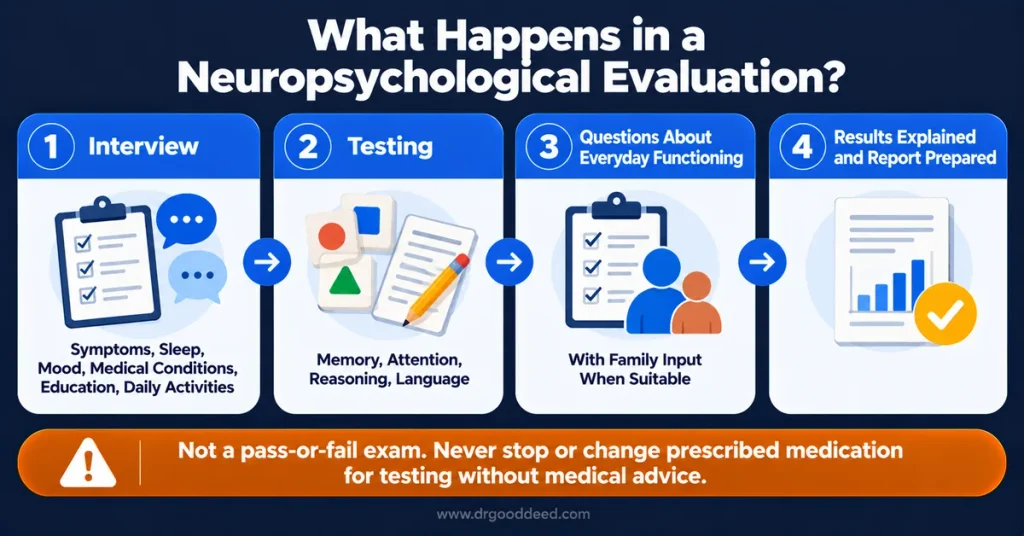
The assessment generally includes four stages:
- The neuropsychologist inquires into the patient’s symptoms, sleep patterns, mood, medical conditions, level of education, occupation, knowledge of various languages, and everyday activities. Yale Medicine states that this interview should take approximately one hour.
- You will carry out tasks that are intended to evaluate your relevant abilities, for example, your memory, attention, reasoning, and language.
- You can be asked questions regarding your everyday functioning, and when suitable, a family member can give their observations as well.
- The neuropsychologist will explain the results and produce a report for you and, if appropriate, for the referring healthcare professional.
How to Prepare for Testing
A few simple steps can make the appointment more comfortable:
- Get enough sleep the night before.
- Eat breakfast unless the clinic advises otherwise.
- Bring glasses, hearing aids, and requested medical records.
- Follow the clinic’s guidance about alcohol and cannabis before testing.
- Ask the clinic whether you need to make any special preparations.
- Never stop or change prescribed medication for testing without medical advice.
You do not need to study or practice answers beforehand. These assessments are not pass-or-fail exams. Their purpose is to understand your current abilities and identify areas where support may help.
Conditions a Neuropsychologist Assesses
Neuropsychologists look at how brain injuries, neurological conditions, and developmental differences affect thinking and behavior. While testing helps identify these changes and guide care, results are always looked at alongside a person’s full medical history and background.
Conditions and concerns may include:
- Alzheimer’s disease, as well as other dementias and mild cognitive impairment.
- Parkinson’s disease, epilepsy, and multiple sclerosis.
- The changes caused by a stroke and those resulting from a traumatic brain injury.
- Cognitive difficulties associated with brain tumors or certain brain surgeries.
- ADHD and autism in children, when an appropriate developmental assessment is indicated.
- Thinking difficulties associated with poor sleep, depression, untreated hearing loss, vascular conditions, or medication side effects.
When to See a Neuropsychologist
Forgetting from time to time is something that can occur as part of normal aging, but if memory problems continue or get worse, then they should be looked at. Some of the causes of cognitive changes may be treated, such as sleep difficulties, mood disorders, and problems with the thyroid.
A neuropsychologist can detect the pattern of difficulties and can advise on whether further assessment or support might be of use. Since testing by itself never always reveals the underlying cause, healthcare professionals may also suggest blood tests, brain imaging, or other investigations.
You may benefit from seeing a neuropsychologist when changes in memory, attention, language, or reasoning begin to interfere with everyday activities. An assessment may also help when cognitive symptoms continue after an injury or when the cause of a problem remains unclear.
Consider discussing an evaluation with your healthcare provider if you:
- Often forget important information or appointments.
- It becomes more difficult to concentrate, plan, or carry out tasks that you are familiar with.
- Look for changes in thinking following a stroke, a concussion, or a brain injury.
- Need guidance on cognitive rehabilitation or everyday support.
- Have unexplained cognitive difficulties that need closer assessment.
- Need a baseline to monitor cognitive abilities over time.
Getting an Assessment in the US
Start by speaking with your primary care provider. Depending on your symptoms, they may refer you to a neurologist, geriatrician, psychiatrist, or neuropsychologist. Check whether your insurance plan covers the evaluation and whether a referral or prior authorization is required.
Getting an Assessment in the UK
If you are concerned about any changes in your memory or thinking, you should get in touch with your general practitioner. The GP might carry out an initial cognitive assessment, arrange for some blood tests, and refer you to a specialist or a memory clinic if necessary. Access to neuropsychological services differs, and private clinics could have different referral requirements.
The fact that someone has memory problems does not mean that they have dementia. According to the NHS, possible causes of difficulty with memory include depression, anxiety, delirium, an underactive thyroid, and side effects from medication.
If you experience a sudden onset of confusion or if the confusion is accompanied by facial drooping, new weakness, or difficulty in speaking, seek immediate assistance. These symptoms could be signs of a stroke or some other medical emergency. In the United States, dial 911, and in the United Kingdom, dial 999.
Frequently Asked Questions
Is neuropsychological testing pass or fail?
No. The tests are not exams that you pass or fail. A neuropsychologist looks at your performance across different tasks and considers your background to understand your cognitive strengths and difficulties.
How long does a neuropsychological evaluation take?
The amount of time required depends on the assessment in question. One article from Yale Medicine states a range of 2 to 6 hours, while another gives a figure of about 4 hours, and WebMD provides a range of 2 to 8 hours, occasionally over several days.
Can a neuropsychologist diagnose dementia?
A neuropsychologist is able to evaluate cognitive abilities and can produce findings that support a dementia assessment; the diagnosis generally requires other information such as the patient’s medical history, the results of a clinical examination, and appropriate investigations.
Do you need a referral to see a neuropsychologist?
It is usual to have a referral from a general practitioner or a specialist, especially in a clinical context. Requirements vary by clinic, insurance scheme, and country, so check the procedure before scheduling an appointment.
Sources:
1.https://pubmed.ncbi.nlm.nih.gov/29472384/ link
2.https://pubmed.ncbi.nlm.nih.gov/29198281/ link
3.https://pubmed.ncbi.nlm.nih.gov/31014166/ link
4.https://pubmed.ncbi.nlm.nih.gov/27637955/ link
5.https://pubmed.ncbi.nlm.nih.gov/22087572/ link
Medical Disclaimer: This article is for general information only and is not medical advice. It does not replace a diagnosis, treatment plan, or guidance from a qualified healthcare professional. Always talk to your doctor about your own symptoms and before starting, stopping, or changing any treatment. If you think you may be having a medical emergency, call 911 or go to your nearest emergency room.