

Brain fog after eating can make you feel sleepy, mentally slow, or unable to concentrate after a meal. Possible causes include blood sugar changes, large meals, food reactions, poor sleep, or other health conditions. Because brain fog is a symptom rather than a diagnosis, recurring episodes should be assessed by a healthcare professional.
Key Takeaways
- Possible causes: Brain fog after eating may be linked to blood sugar changes, large meals, food reactions, or other health conditions.
- Symptoms matter: Shakiness, sweating, dizziness, and confusion may help your clinician assess the cause.
- Track your meals: Record what you ate, when symptoms began, and how long they lasted.
- Avoid self-diagnosis: Brain fog alone does not confirm diabetes, low blood sugar, or food intolerance.
- Know when to seek help: Repeated episodes need medical advice, while sudden confusion or one-sided weakness requires emergency care.
Research on blood sugar dips after meals and their role in brain fog remains limited and inconclusive. Although changes in blood glucose may affect concentration in some people, current evidence does not establish ordinary post-meal blood sugar fluctuations as a clear cause of brain fog.
What Causes Brain Fog After Eating?
Brain fog after meals can have several possible explanations. The timing of your symptoms, what you ate, and whether you experience other symptoms can help a healthcare professional decide what to investigate.
Blood Sugar Changes
Blood sugar changes may explain feeling tired and foggy after eating. According to the Mayo Clinic, low blood sugar can cause symptoms such as shakiness, sweating, hunger, dizziness, fatigue, headache, and confusion. The NHS also identifies confusion and other changes in mental function as possible signs of hypoglycemia (low blood sugar).
But a foggy brain after eating doesn’t always mean that your blood sugar is too high or too low. Research on typical post-meal blood sugar declines in people without diabetes is limited and mixed. Symptoms do not equal a diagnosis of hypoglycemia.
If you have diabetes or take glucose-lowering medication, discuss recurring symptoms with your healthcare professional. Do not change your medicine or dose without medical advice.
Large Meals and Refined Carbs
You may notice brain fog after eating carbohydrates or sugary foods, while others feel sleepy after a large meal. These patterns may be worth tracking, but they do not prove that a particular food or nutrient is responsible. Mayo Clinic recommends choosing balanced meals that include protein and high-fiber foods, which may help support steadier blood sugar levels. Pairing carbohydrates with protein and healthy fats may also help slow digestion and reduce rapid blood sugar fluctuations.
If you experience brain fog after eating sugar, note what you ate and whether the same symptoms happen repeatedly. Avoid assuming that this means you have diabetes or insulin resistance.
Food Reactions
Food intolerance brain fog is sometimes reported alongside digestive or other symptoms, but the evidence linking specific food reactions to brain fog is mixed.
Lactose intolerance can cause digestive symptoms after consuming lactose. Celiac disease is an immune-mediated condition triggered by gluten, and some people with celiac disease report symptoms beyond the digestive tract. Food allergies are different and can sometimes cause severe reactions.
If you suspect gluten, dairy, or another food is triggering your symptoms, speak with a healthcare professional before eliminating it. For example, testing for celiac disease can become less accurate if you stop eating gluten before the assessment.
Other Health and Lifestyle Factors
Poor sleep, alcohol use, diabetes, prediabetes, and thyroid problems may also be relevant when investigating recurring brain fog. Insulin resistance may be worth discussing if you have other blood sugar concerns, but brain fog alone cannot establish that you have it.
A clinician will consider your overall health, medication history, eating patterns, and other symptoms rather than relying on one symptom to identify the cause.
What Is Reactive Hypoglycemia?
Mayo Clinic describes reactive hypoglycemia, also called postprandial hypoglycemia, as low blood sugar that occurs after a meal, usually within four hours. Symptoms may include shakiness, sweating, hunger, dizziness, fatigue, headache, and confusion.
In a 2025 case report published in the Federal Practitioner, Isaacs et al. described a patient who experienced symptoms resembling low blood sugar after carbohydrate-heavy meals, despite normal glucose levels during episodes. The case highlights that post-meal symptoms do not always mean blood sugar is actually low; medical evaluation can help distinguish reactive hypoglycemia from idiopathic postprandial syndrome.
Not everyone who experiences these symptoms after eating has confirmed low blood sugar. Some people experience symptoms resembling hypoglycemia without a confirmed hypoglycemic disorder. This has been described as idiopathic postprandial syndrome, although its underlying mechanisms remain unclear.
A 2025 case report discusses this condition, but one case cannot explain every person’s symptoms. The key distinction is that feeling foggy or shaky does not, by itself, prove that blood sugar is low.
If symptoms repeatedly occur with sweating, shakiness, a fast heartbeat, or confusion, seek medical advice instead of assuming you have reactive hypoglycemia.
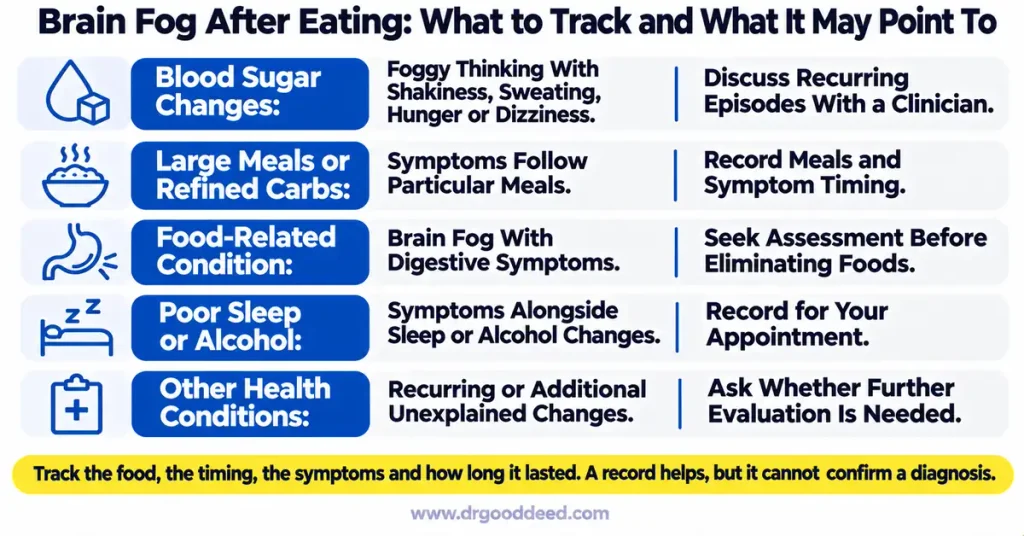
What Should You Track After Meals?
| Possible factor | Symptoms or pattern to note | What to do |
| Blood sugar changes | Foggy thinking with shakiness, sweating, hunger, or dizziness | Discuss recurring episodes with a clinician. |
| Large meals or refined carbs | Symptoms seem to follow particular meals. | Record meals and symptom timing. |
| Food-related condition | Brain fog alongside digestive symptoms or suspected food reactions | Seek assessment before eliminating foods. |
| Poor sleep or alcohol | Symptoms occur alongside changes in sleep or alcohol use. | Record these factors for your appointment. |
| Other health conditions | Recurring symptoms or additional unexplained changes in health | Ask a clinician whether further evaluation is needed. |
A simple record can help you explain your symptoms clearly during an appointment. You do not need a special test or supplement to start tracking them.
For each episode, note:
- The food and drinks you consumed: make sure to list the meal, any snacks, and alcohol if this is relevant.
- Note the time at which you started eating and the time when you first noticed brain fog.
- The sensations you experienced should be noted, such as feeling sleepy, having trouble concentrating, feeling shaky, sweating, feeling dizzy, or experiencing confusion.
- The duration for which it lasted: note the time at which the symptoms improved, if they did.
- Other factors that are relevant should include your sleep quality, level of activity, and any changes to your normal routine.
- Regarding your medical situation, be sure to mention any existing health conditions and medications to your clinician.
- Bring this information to your appointment. It can help identify patterns, but it cannot confirm a diagnosis on its own.
How Can You Reduce Brain Fog After Eating?
The best approach depends on the underlying cause. Mayo Clinic suggests several measures for managing reactive hypoglycemia, including eating balanced meals with fiber, limiting sugary foods and refined carbohydrates, avoiding alcohol on an empty stomach, eating smaller meals spaced throughout the day, and exercising regularly. These measures may help manage symptoms, but the appropriate approach depends on individual needs and the confirmed cause.
You can also learn more about blood sugar levels and how to interpret them and possible causes of high blood sugar in people without diabetes. If brain fog occurs frequently or affects your daily life, a healthcare professional can help you explore the possible causes and decide whether further evaluation is needed.
When Should You See a Doctor?
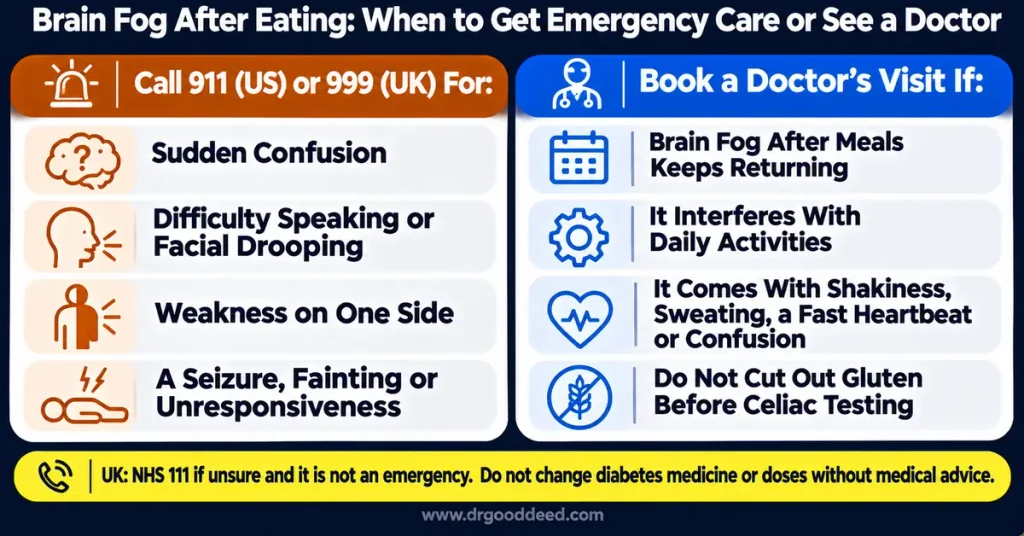
Arrange an appointment with a primary care clinician in the US or a GP in the UK if brain fog after meals keeps returning, interferes with daily activities, or occurs with shakiness, sweating, a fast heartbeat, or confusion. The NHS advises people without diabetes who experience symptoms of low blood sugar, such as shaking, sweating, a fast heartbeat, or confusion, to see a GP.
Seek emergency help for sudden or severe symptoms. Sudden confusion, difficulty speaking, facial drooping, weakness on one side, a seizure, fainting, or unresponsiveness may indicate a serious medical problem. Call 911 in the US or 999 in the UK, or go to an emergency department or A&E. Do not assume these symptoms are simply a reaction to food.
In the UK, contact NHS 111 if you are unsure what level of care you need, and the situation is not an emergency.
A clinician may recommend blood tests or other assessments depending on your symptoms and medical history. No single test is appropriate for everyone, and this article cannot determine the cause of your symptoms.
Conclusion
Brain fog after eating is not always a sign of a blood sugar problem or food intolerance, and identifying the cause may require a closer look at your symptoms and overall health. If difficulty concentrating repeatedly follows meals, affects your daily routine, or occurs alongside symptoms such as dizziness, shaking, or unusual fatigue, consult a healthcare professional.
Depending on your symptoms, they may recommend checking blood glucose levels or evaluating other possible causes. Avoid eliminating gluten or other major food groups before discussing appropriate testing, particularly if celiac disease is a concern. A careful assessment can help you understand what is happening and guide the next steps without unnecessary dietary restrictions or assumptions.
If you develop sudden confusion, difficulty speaking or one-sided weakness, seek emergency care rather than waiting for the symptoms to pass.
Frequently Asked Questions
Why do I get brain fog after eating?
The reasons could be fluctuations in blood sugar levels, eating large meals, reactions to food, and various health problems; in some cases, however, the cause cannot be determined.
Why do I feel confused and tired after eating?
Fatigue and confusion may be caused by low blood sugar, but there are other conditions which can produce the same symptoms. You should get medical advice if this happens again.
What causes brain fog after eating carbs?
Some people notice symptoms after meals rich in refined carbohydrates, but this pattern alone does not prove carbohydrates are responsible.
Can blood sugar cause brain fog after meals?
Yes, low blood sugar can lead to confusion and fatigue. However, the evidence concerning normal drops in blood sugar levels in people who do not have diabetes is limited and inconsistent.
Is brain fog after eating a sign of diabetes?
Not necessarily. Recurring symptoms may be a reason to discuss blood sugar assessment with a healthcare professional.
Medical Disclaimer: This article is for informational and educational purposes only and does not replace professional medical advice, diagnosis, or treatment. Always consult a qualified healthcare professional about your symptoms or health concerns. Never delay or disregard professional medical advice based on information provided in this article.
Sources:
1. National Health Service (NHS). Low blood sugar (hypoglycaemia) [Internet]. London: NHS; [cited 2026 Oct 23]. Available from: https://www.nhs.uk/conditions/low-blood-sugar-hypoglycaemia/ link
2. Isaacs D, et al. [Article on postprandial symptoms and hypoglycemia]. Federal Practitioner [Internet]. 2025 [cited 2026 Oct 23]. Available from: https://pmc.ncbi.nlm.nih.gov/articles/PMC12169635/ link
3. National Institute of Diabetes and Digestive and Kidney Diseases (NIDDK). Diagnosis of celiac disease [Internet]. Bethesda (MD): National Institutes of Health; [cited 2026 Oct 23]. Available from: https://www.niddk.nih.gov/health-information/digestive-diseases/celiac-disease/diagnosis link
4. National Institute of Diabetes and Digestive and Kidney Diseases (NIDDK). Diabetes tests and diagnosis [Internet]. Bethesda (MD): National Institutes of Health; [cited 2026 Oct 23]. Available from: https://www.niddk.nih.gov/health-information/diabetes/overview/tests-diagnosis link
5. Mayo Clinic Staff. Reactive hypoglycemia: What can I do for my symptoms? [Internet]. Rochester (MN): Mayo Foundation for Medical Education and Research; 2023 Apr 13 [cited 2026 Oct 23]. Available from: https://www.mayoclinic.org/diseases-conditions/diabetes/expert-answers/reactive-hypoglycemia/faq-20057778 link
Medical Disclaimer: This article is for general information only and is not medical advice. It does not replace a diagnosis, treatment plan, or guidance from a qualified healthcare professional. Always talk to your doctor about your own symptoms and before starting, stopping, or changing any treatment. If you think you may be having a medical emergency, call 911 or go to your nearest emergency room.