
A normal A1C with high fasting glucose can happen because the two tests measure blood sugar in different ways. A1C shows your average blood glucose over the past 2 to 3 months, while a fasting glucose test measures your blood sugar at one specific time, usually after at least 8 hours without food. Because of this, fasting glucose may be elevated even when your overall average remains within the normal range.
Factors such as stress, illness, poor sleep, medications, or the dawn phenomenon can affect fasting glucose. Neither test is automatically right or wrong; your healthcare professional may interpret both results together and recommend repeat testing if needed.
Key Takeaways
- A1C normal but fasting glucose high means two tests measure different things; repeat the high fasting result and ask about conditions that skew A1C.
- A1C shows your average blood sugar over the last 2 to 3 months, while fasting glucose is one sample taken after at least 8 hours without food.
- The ADA recommends repeating the result that is above the diagnostic cutoff when two different tests disagree.
- A fasting glucose of 100 to 125 mg/dL falls into the impaired fasting glucose range and meets the ADA definition of prediabetes, even when A1C is normal.
- A normal A1C does not completely rule out prediabetes or diabetes.
| Test | What it measures | Prediabetes | Diabetes | Main limitation |
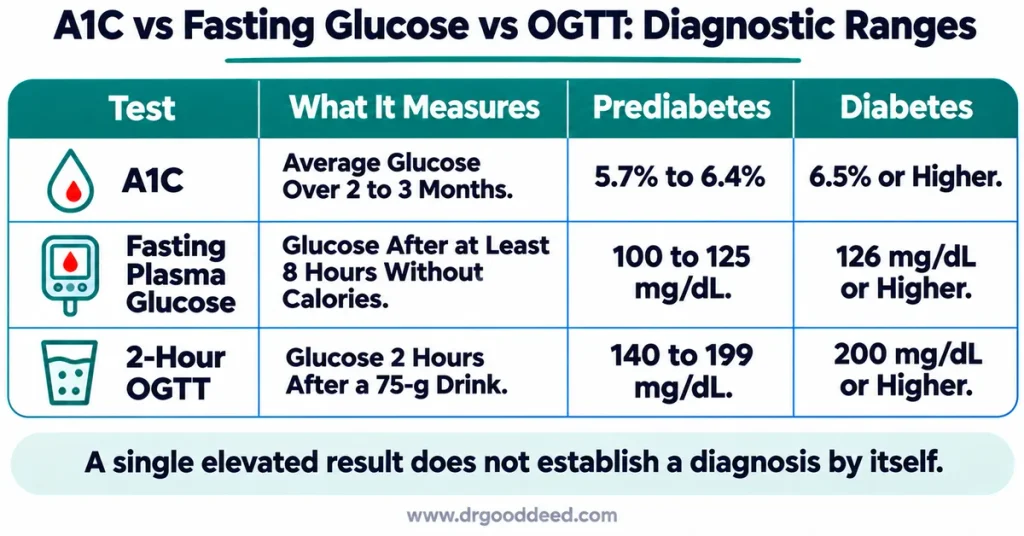
| A1C | Average glucose concentration for the last 2 to 3 months | 5.7% to 6.4% | 6.5% or higher | Can be affected by red blood cell conditions |
| Fasting plasma glucose | Blood glucose after at least 8 hours without calories | 100 to 125 mg/dL | 126 mg/dL or higher | Has higher day-to-day variability |
| 2-hour OGTT | Glucose 2 hours after a 75-g glucose drink | 140 to 199 mg/dL | 200 mg/dL or higher | Requires preparation and several hours |
Why Is My A1C Normal but My Fasting Glucose High?
A1C normal but fasting glucose high happens because A1C averages blood glucose over the past 2 to 3 months, while fasting glucose is one sample taken after at least 8 hours without food.
Fasting plasma glucose, in contrast, measures glucose from one blood sample taken after at least 8 hours without calories. Because it is a single measurement, it can vary more from one day to another.
This means you can have:
- A normal A1C with an elevated fasting glucose.
- A higher A1C with a normal fasting glucose.
- Different results on different days.
The results need to be interpreted together with your clinical history and repeat testing when appropriate.
Which Test Is Right When A1C and Fasting Glucose Disagree?
When the result is A1C normal but fasting glucose high, neither test is automatically right or wrong. In any A1C vs fasting glucose disagreement, the ADA recommends repeating the result that is above the diagnostic cutoff, with careful consideration of factors that can affect A1C or glucose measurements.
For example, older population studies show that these tests do not identify the same people with diabetes.
One analysis of NHANES 2003 to 2006 data found that each test, used alone, identified only part of the people with diabetes:
- A1C of 6.5% or higher detected about 30% of diabetes cases.
- Fasting glucose of 126 mg/dL or higher detected about 46%.
- A 2-hour glucose of 200 mg/dL or higher detected about 90%.
These are older datasets, so they should be viewed as evidence that the tests can identify different groups, rather than as individual diagnostic probabilities.
Without unequivocal hyperglycemia, diabetes diagnosis generally requires two abnormal results, either from the same test on two occasions or from two different tests.
If the disagreement remains substantial and consistent, a clinician may investigate whether something is affecting either test.
Impaired Fasting Glucose With a Normal A1C: Is It Prediabetes?
Yes. Under ADA criteria, impaired fasting glucose means a fasting glucose of 100 to 125 mg/dL, which falls within the prediabetes range even if your A1C is normal.
This is why prediabetes with a normal A1C is possible. A normal A1C does not rule out an abnormal fasting glucose or impaired glucose regulation. To learn about other reasons a reading can run high, see what causes high blood sugar without diabetes.
The WHO uses a different definition, with impaired fasting glucose starting at 110 mg/dL, so the classification can differ between guidelines. For typical ranges, see the normal blood sugar levels chart by age.
| Fasting glucose | ADA interpretation | |
| Below 100 mg/dL | Below the prediabetes cutoff | |
| 100 to 125 mg/dL | Impaired fasting glucose/prediabetes | |
| 126 mg/dL or higher | Diabetes range | |
| A single elevated result does not establish a diagnosis by itself. Your healthcare professional may recommend repeat testing or another glucose test. | ||
When an A1C Reads Falsely Low
A falsely low A1C is worth considering when fasting glucose remains high, but the A1C consistently looks unexpectedly normal. For how these tests are used in diagnosis, see our guide on what is diabetes.
A1C depends partly on red blood cell lifespan. Conditions that shorten red blood cell survival can reduce the amount of time glucose has to attach to hemoglobin and may produce a lower A1C.
Potential causes include:
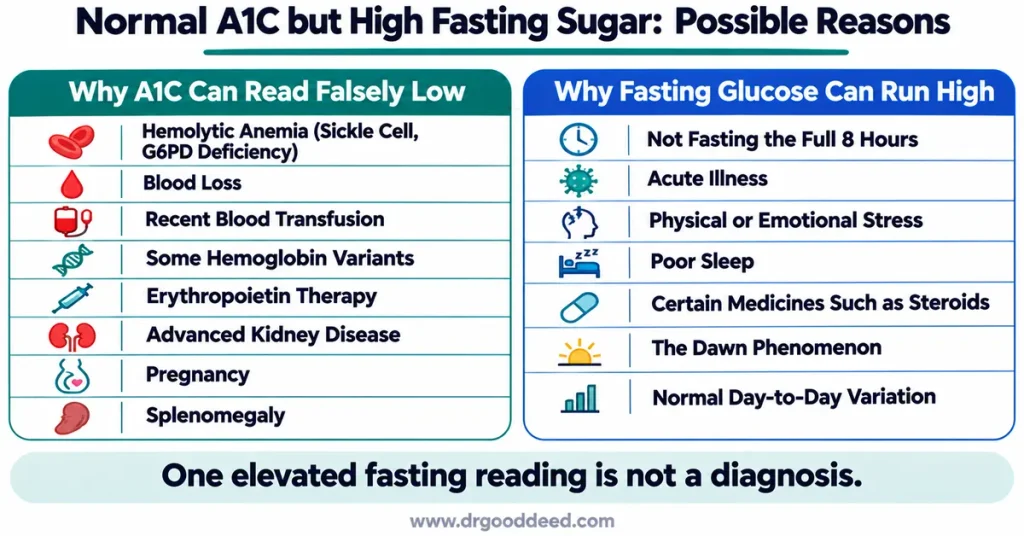
- Hemolytic anemia, such as in sickle cell disease or G6PD deficiency
- Blood loss
- Recent blood transfusion
- Some hemoglobin variants
- Erythropoietin therapy
- Advanced kidney disease
- Pregnancy
- Splenomegaly
- Certain medicines, including ribavirin and interferon
Hemoglobin variants such as sickle cell trait, HbC, and HbE can affect A1C in different directions depending on the testing method.
Some conditions can instead raise A1C. Iron deficiency anemia is one example, and A1C may decrease after iron treatment. Vitamin B12 or folate deficiency can also affect A1C.
When Fasting Blood Sugar Is High for Other Reasons
A fasting blood sugar high on one morning does not necessarily mean diabetes. Fasting glucose can change because of incomplete fasting, illness, stress, poor sleep, certain medicines such as steroids, or normal day-to-day variation.
Other factors to consider include:
- Not fasting for the full 8 hours
- Acute illness
- Physical or emotional stress
- Poor sleep
- Certain medications
- Normal biological variation
Morning glucose can also rise because of the dawn phenomenon, a natural early-morning increase in glucose and related hormones.
The key point is simple: one elevated fasting glucose reading is not a diagnosis.
What to Do Next: Repeat Tests and the Oral Glucose Tolerance Test
If your A1C is normal but fasting glucose is high, the next step is usually to discuss repeat testing and possible causes with a healthcare professional.
Depending on your results and medical history, you may discuss:
- Repeat the test that was elevated on another day.
- Ask whether an oral glucose tolerance test is appropriate.
- Ask whether anemia or a hemoglobin variant could be affecting your A1C.
- Discuss kidney disease or medicines that may affect the results.
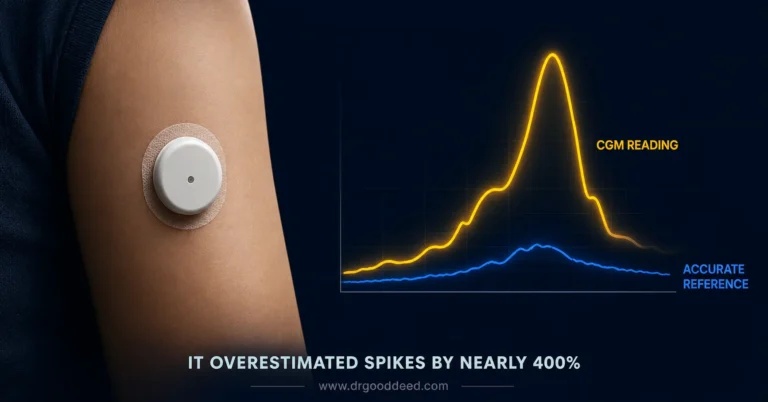
- Ask whether a continuous glucose monitor (CGM) or fructosamine test could help if A1C is unreliable.
A 75-g, 2-hour oral glucose tolerance test can identify abnormal glucose handling that a fasting test may miss. It is used for diagnosing diabetes and prediabetes when appropriate.
In the US, you can discuss the results with a primary care clinician or endocrinologist. In the UK, speak with your GP.
Seek medical care promptly if you have symptoms such as:
- Excessive thirst
- Frequent urination
- Unintended weight loss
Very high glucose accompanied by vomiting, confusion, or deep, rapid breathing can be an emergency. Call 911 in the US or 999 in the UK.
Medical Disclaimer: This article is for informational and educational purposes only and does not replace professional medical advice, diagnosis, or treatment. Always consult a qualified healthcare professional about your symptoms or health concerns. Never delay or disregard professional medical advice based on information provided in this article.
Frequently Asked Questions
Can a Normal A1C Rule Out Diabetes?
No. In NHANES 2003 to 2006 data, an A1C of 6.5% or higher identified only about 30% of people with diabetes, so a normal A1C does not rule it out. Fasting glucose or a 2-hour test can catch cases that A1C misses.
Is a Fasting Glucose of 110 With a Normal A1C a Problem?
Yes, it deserves follow-up. A fasting glucose of 110 mg/dL falls within the ADA prediabetes range and also meets the WHO impaired fasting glucose threshold. Ask your doctor about repeating the test.
Does a High Fasting Glucose With a Normal A1C Mean I Will Get Diabetes?
Not necessarily. In one study of adults aged 71 to 90, about 8% of people with prediabetes by fasting glucose developed diabetes over 5 years, and many returned to normal glucose levels. Risk varies, and body weight alone does not decide it, since even skinny people can get diabetes.
How Long Should I Fast Before a Fasting Glucose Test?
You generally need at least 8 hours without calories before a fasting glucose test. Follow your laboratory or clinician’s instructions about water and medicines.
Sources:
1. American Diabetes Association, Standards of Care in Diabetes 2026: 2. Diagnosis and Classification of Diabetes. link
2. NIDDK, Diabetes Tests and Diagnosis. link
3. NIDDK, Diabetes and Prediabetes. link
4. NIDDK, Recommended Tests for Identifying Prediabetes. link
5. American Diabetes Association, Standards of Care in Diabetes 2026: 6. Glycemic Goals, Hypoglycemia, and Hyperglycemic Crises. link
6. Diabetes Care, The Pros and Cons of Diagnosing Diabetes With A1C (Bonora and Tuomilehto, 2011). link
7. Endotext (NCBI Bookshelf), Prediabetes (Perreault). link
Medical Disclaimer: This article is for general information only and is not medical advice. It does not replace a diagnosis, treatment plan, or guidance from a qualified healthcare professional. Always talk to your doctor about your own symptoms and before starting, stopping, or changing any treatment. If you think you may be having a medical emergency, call 911 or go to your nearest emergency room.