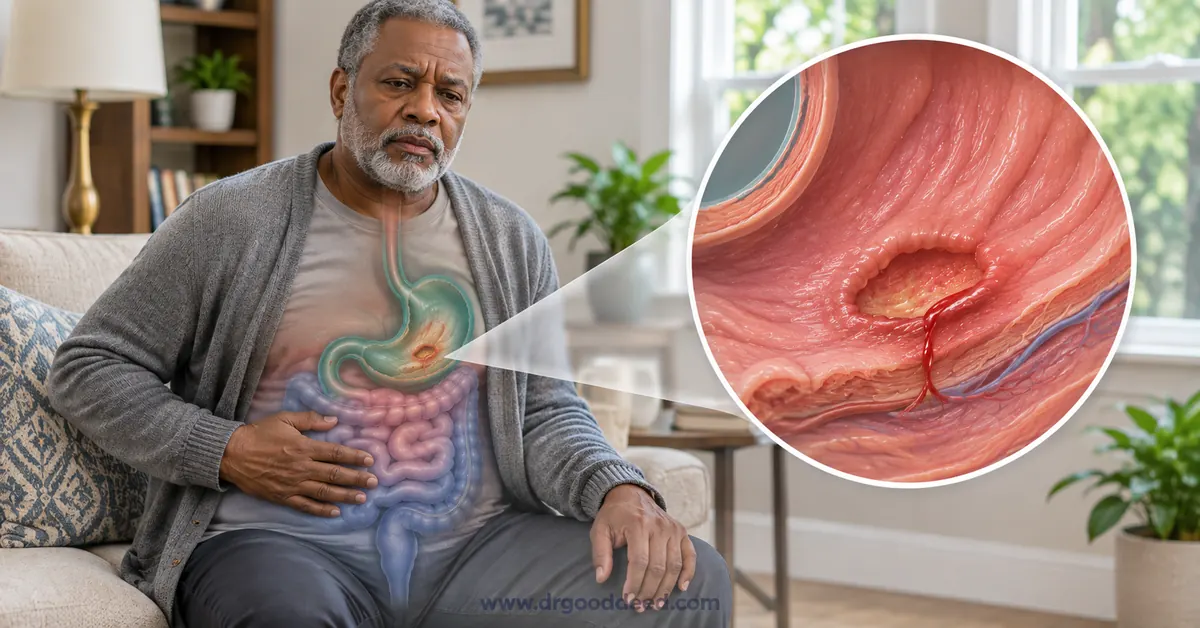

Gastrointestinal bleeding is any bleeding that starts in the digestive tract, from the throat to the rectum. It is called upper or lower depending on where it starts. Signs can include blood in vomit, dark or black stool, or bright red blood during a bowel movement.
Upper GI bleeding starts in the esophagus, stomach or duodenum. Lower GI bleeding usually starts in the colon, rectum or anus. Some bleeding is hidden and may only show up as anemia or weakness. This guide covers the signs, causes, tests and treatment of upper and lower GI bleeding, and when to get urgent help.
Key Takeaways
- Gastrointestinal bleeding is bleeding anywhere in the digestive tract, from throat to rectum, and it is called upper or lower by where it starts.
- Black, tarry stools usually point to upper bleeding and fresh red blood to a lower source, but color alone cannot confirm where it starts.
- Hidden bleeding may cause fatigue, dizziness or anemia without visible blood.
- Doctors use blood tests, stool tests, endoscopy and imaging to identify the source.
- Vomiting blood, heavy bleeding or fainting requires emergency care.
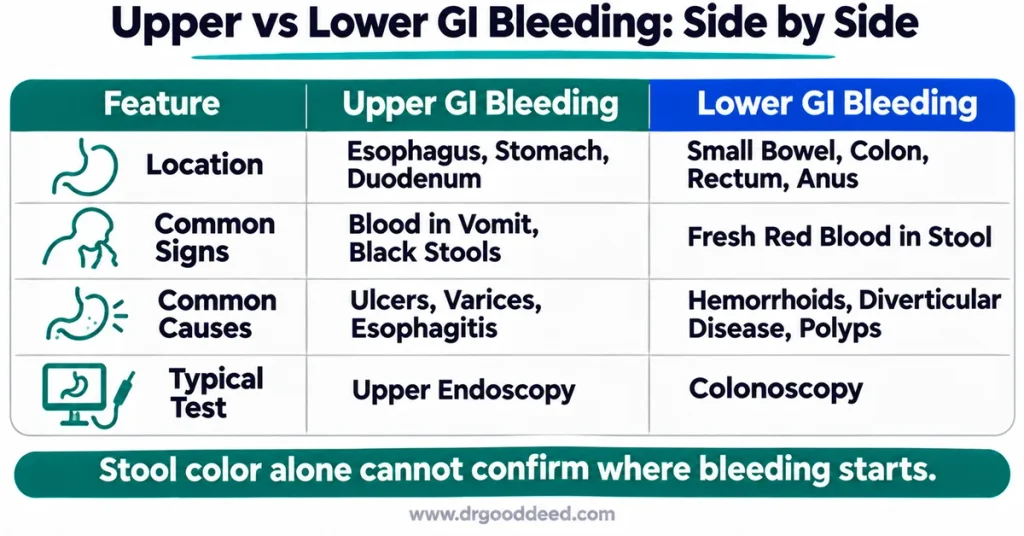
| Feature | Upper GI bleeding | Lower GI bleeding |
| Location | Esophagus, stomach, duodenum | Small bowel, colon, rectum, anus |
| Common signs | Blood in vomit, black stools | Fresh red blood in stool |
| Common causes | Ulcers, varices, esophagitis | Hemorrhoids, diverticular disease, polyps |
| Typical test | Upper endoscopy | Colonoscopy |
What Is Gastrointestinal Bleeding?
Gastrointestinal bleeding is bleeding from any part of the digestive system, and it can be sudden (acute) or ongoing (chronic). It may also go unnoticed until testing finds it.
Doctors call it upper gastrointestinal bleeding when the blood loss occurs above the ligament of Treitz, which supports the duodenum. Lower gastrointestinal bleeding is blood loss below this landmark, and bleeding from the small bowel is sometimes classed as a separate type. The symptoms and how urgent treatment is depend on how much blood is lost and how fast.
Upper GI Bleeding: Causes and Signs
Upper GI bleeding develops in the esophagus, stomach or duodenum. Peptic ulcers are the most common cause, and symptoms may include vomiting blood or passing black, tarry stools.
Common causes include:
- Peptic ulcers: open sores in the stomach or duodenal lining may damage blood vessels.
- Esophageal or gastric varices: enlarged veins linked to serious liver disease can bleed heavily.
- Mallory-Weiss tears: repeated vomiting or forceful retching can tear the esophageal lining.
- Esophagitis and gastritis: inflammation can damage the lining of the digestive tract.
- Other conditions: abnormal blood vessels, hiatal hernias, growths and cancers may also cause bleeding.
Vomited blood may appear bright red, or it may resemble coffee grounds when partly digested.
Lower GI Bleeding: Causes and Signs
Lower GI bleeding commonly starts in the colon, rectum or anus. It often appears as bright red blood in or around stool, although the appearance varies with the source and how fast the bleeding is.
Possible causes include:
- Diverticular disease: small pouches in the colon may bleed.
- Hemorrhoids: swollen rectal or anal veins can cause bright red bleeding.
- Inflammatory bowel disease (IBD): Crohn’s disease and ulcerative colitis can inflame and damage the bowel lining.
- Anal fissures: small tears near the anus may cause bleeding, often with pain.
- Polyps, tumors, infections and ischemic colitis: these conditions can also cause bleeding.
Children with rectal bleeding, particularly toddlers with constipation, should be assessed by a pediatrician.
Note: Bright red blood in the stool may be caused by hemorrhoids, but it can also point to other conditions, such as polyps. Consult a doctor to identify the exact cause, and see how a hemorrhoid differs from a polyp.
See our related guide to mucus in stool.
Black Tarry Stools and Other Warning Signs
Black tarry stools (melena) usually suggest bleeding in the upper digestive tract, but bleeding from the small bowel or right colon can also cause them. Stool color alone cannot establish the bleeding source. A stool test can also find bleeding that is too small to see. Learn what else can cause black poop.
Watch for these symptoms:
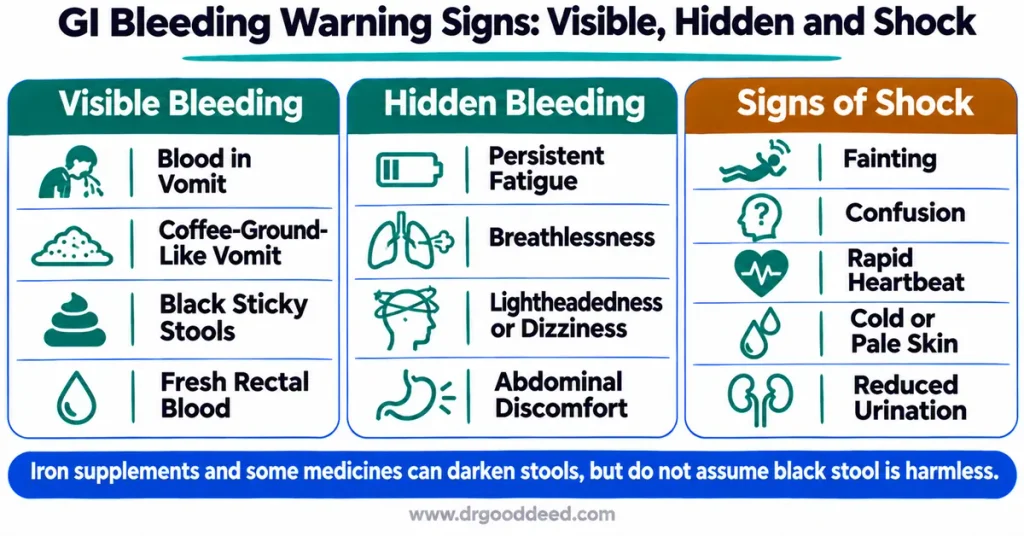
- Visible bleeding: blood in vomit, coffee-ground-like vomit, black sticky stools or fresh rectal blood.
- Hidden bleeding: persistent fatigue, breathlessness, lightheadedness, dizziness or abdominal discomfort.
- Signs of shock: fainting, confusion, rapid heartbeat, cold or pale skin and reduced urination.
Important: Iron supplements and certain medicines can darken stools, but you should not assume that black stool is harmless. Seek immediate medical care for suspected bleeding, especially if you feel weak or dizzy.
Gastrointestinal Bleeding Risk Factors
Several conditions and medicines increase the risk of gastrointestinal bleeding. Important risk factors include:
- Regular use of nonsteroidal anti-inflammatory drugs (NSAIDs), such as ibuprofen or naproxen
- Aspirin and blood thinners, which may increase bleeding risk
- Heavy alcohol use and smoking
- Serious liver disease, gastroesophageal reflux disease (GERD) and previous ulcers
- Older age, recent surgery, trauma or repeated forceful vomiting
Large blood loss, ongoing bleeding and abnormal vital signs also raise the chance of complications.
Medication safety tip: Never stop prescribed aspirin, NSAIDs or blood thinners without consulting your prescriber. If bleeding symptoms develop, seek medical advice promptly.
GI Bleeding Diagnosis: Which Tests Are Used?
GI bleeding diagnosis involves finding where the bleeding is coming from, how much blood has been lost and what is causing it. Doctors use your symptoms, history, medicines, a physical exam and vital signs.
The most common tests are:
- Blood tests: these measure red blood cell levels and hemoglobin to detect anemia caused by blood loss.
- Stool tests: these can find small amounts of blood that you cannot see.
- Upper endoscopy: this test examines the esophagus, stomach and duodenum.
- Colonoscopy: this test examines the colon and helps find the source of bleeding.
- Imaging or angiography: these tests help when endoscopy does not find the source.
- Capsule endoscopy: a swallowed camera capsule can look at the small bowel in some cases.
Doctors may also use risk scores to decide how closely you need to be monitored and whether you need hospital care. They choose the tests based on your symptoms and the suspected source of bleeding.
GI Bleeding Treatment: What to Expect
GI bleeding treatment depends on the cause, location and severity. Some minor bleeds stop on their own, but a medical assessment is important because bleeding may come back or point to a serious condition.
Treatment options include:
- Endoscopic treatment: bleeding can be stopped using clips, bands, injections or heat.
- Acid-reducing medicines: these treat some ulcers and types of esophagitis.
- Banding of varices: this stops bleeding from enlarged veins.
- Source-directed treatment: this includes removing polyps, treating inflammatory bowel disease, treating infections and managing hemorrhoids and fissures.
- Hospital care: blood transfusions, IV fluids, angiography and occasionally surgery may be needed for heavy bleeding.
Doctors may prescribe proton pump inhibitors for certain acid-related conditions.
When Is Gastrointestinal Bleeding an Emergency?
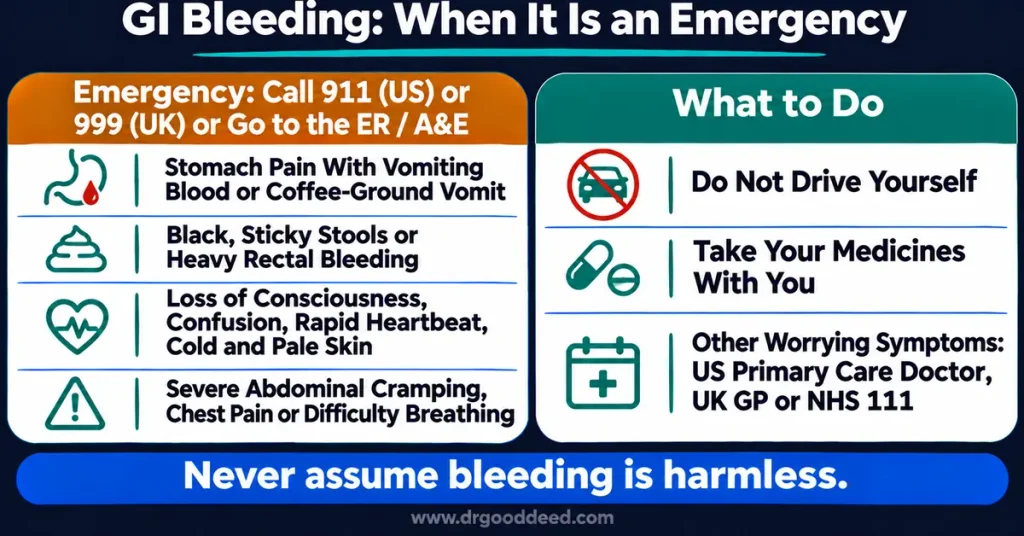
Gastrointestinal bleeding can be life-threatening when blood loss is heavy. Call 911 (US) or 999 (UK), or go to the emergency department or A&E, if you notice:
- Stomach pain with vomiting blood, or vomit that resembles coffee grounds
- Black, sticky stools or heavy bleeding from the rectum
- Loss of consciousness, confusion, a rapid heartbeat, or cold and pale skin
- Severe abdominal cramping, chest pain or difficulty breathing
Do not drive yourself. Take any medicines you use with you.
For other symptoms that worry you, make an appointment with your primary care doctor (US) or GP (UK), or call NHS 111 for advice.
Frequently Asked Questions
Can a GI bleed stop on its own?
Some minor bleeds stop without treatment, such as small tears that heal on their own, but others continue or return. Never assume bleeding is harmless. Vomiting blood, black stools or significant rectal bleeding requires urgent medical assessment.
Can hemorrhoids cause gastrointestinal bleeding?
Yes. Hemorrhoids can cause bright red blood on toilet paper, on stool or in the toilet bowl. However, other conditions can cause similar symptoms, so a doctor should confirm the source. Learn what hemorrhoids look like.
Can ibuprofen cause a GI bleed?
Yes. Regular use of ibuprofen and other NSAIDs is a known risk factor, because they can irritate the digestive tract and contribute to ulcers or bleeding. Ask your doctor or pharmacist about your medication risks, and do not change prescribed medicines on your own.
Can GI bleeding cause anemia?
Yes. Ongoing or untreated blood loss can lower red blood cell levels and cause anemia. Symptoms may include tiredness, weakness, dizziness and shortness of breath. A doctor can assess these symptoms and order blood tests.
Sources
NIDDK, Gastrointestinal (GI) Bleeding. link
Mayo Clinic, Gastrointestinal Bleeding: Symptoms and Causes. link
Merck Manual Professional Version, Overview of Gastrointestinal Bleeding. link
MedlinePlus, Gastrointestinal Bleeding. link
Medical Disclaimer: This article is for general information only and is not medical advice. It does not replace a diagnosis, treatment plan, or guidance from a qualified healthcare professional. Always talk to your doctor about your own symptoms and before starting, stopping, or changing any treatment. If you think you may be having a medical emergency, call 911 or go to your nearest emergency room.