
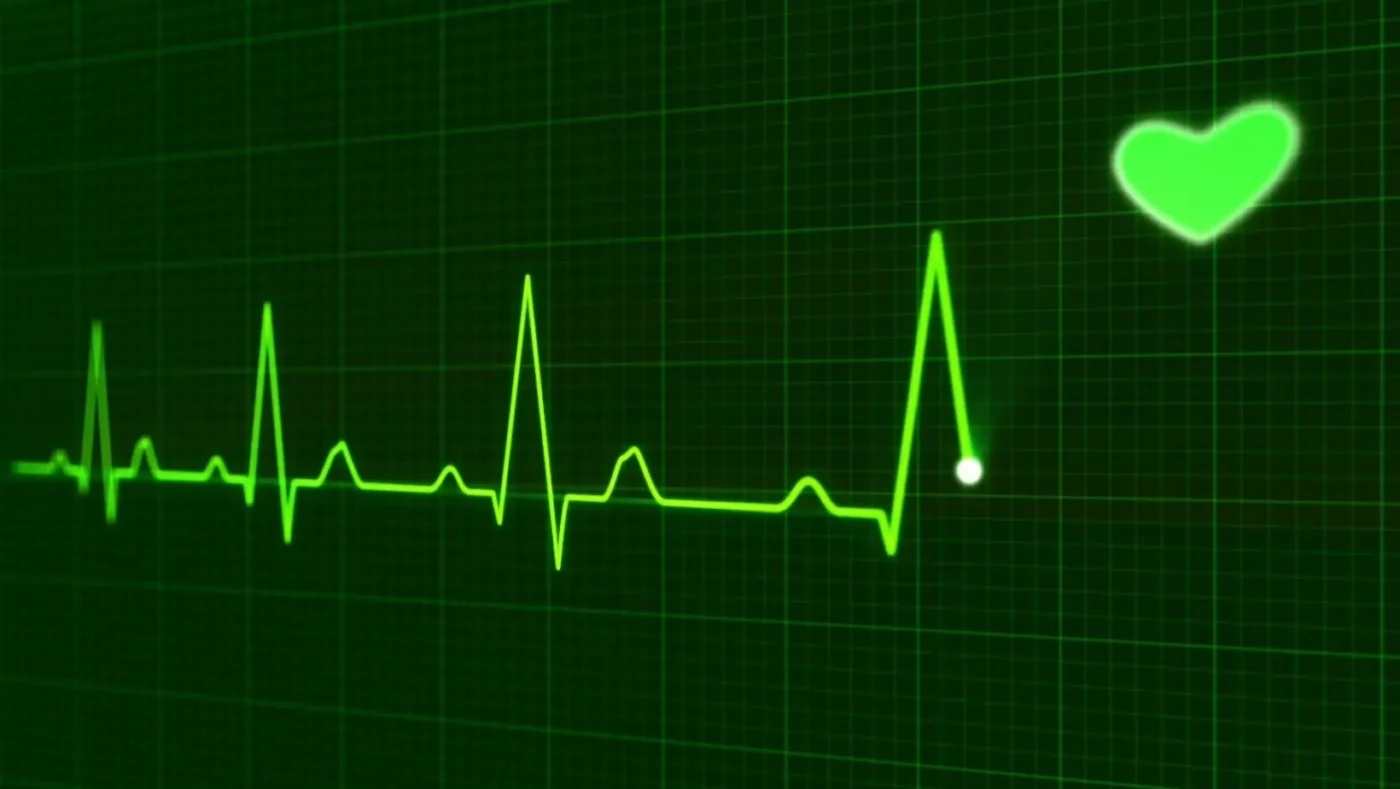

Heart rate variability is the small change in timing between one heartbeat and the next. It is not your heart rate. A heart beating 60 times a minute does not tick like a clock, hitting exactly once every second. Heart rate variability gap might last 980 milliseconds. The next might last 1,050. That constant back and forth is heart rate variability, and it is highly personal. Your own trend, tracked over weeks under similar conditions, tells you far more than comparing your number to a friend’s or a number you saw online.
What Is Heart Rate Variability (HRV)?
Heart rate variability (HRV) is the variation in the amount of time between consecutive heartbeats. If your heart rate sits at 60 beats per minute, that does not mean each beat lands exactly 1,000 milliseconds after the last one. One interval might run slightly shorter. The next might run slightly longer. Those beat-to-beat swings are what HRV measures, and a healthy heart naturally shows this kind of movement rather than a fixed, robotic rhythm.
How Is Heart Rate Variability Measured?
Devices record the exact millisecond gap between heartbeats, called the R-R interval, then calculate how much those gaps differ from one another. Two numbers show up most often. RMSSD looks at short-term, beat-to-beat changes. SDNN looks at the spread of all beat intervals over a longer stretch, often 24 hours. Most fitness watches and rings lean on RMSSD because it works well with short recordings taken while you sleep.
Why Does Heart Rate Variability Matter?
HRV reflects how your autonomic nervous system runs the show behind the scenes. This system has two branches. The sympathetic branch speeds things up during stress or activity. The parasympathetic branch slows things down during rest and recovery.
A nervous system that shifts smoothly between the two tends to produce higher variability. A nervous system usually in the stressed state tends to produce lower variability. Researchers describe HRV as an emergent signal of heart-brain interaction, shaped by nonlinear autonomic processes that also govern blood pressure, gas exchange, and vascular tone.
What Is a Healthy Heart Rate Variability?
There is no single number that counts as a normal heart rate variability for every adult. Values swing widely based on age, sex, fitness, and even the device used to record them. A 25-year-old marathon runner and a 60-year-old office worker will land in very different ranges, and both can be perfectly healthy for their own bodies. What matters more than hitting a specific target is watching your personal baseline and noticing when it shifts sharply up or down.
What Factors Affect HRV?
Knowing what affects HRV helps explain why your number bounces around from one morning to the next. Common influences include:
- Sleep quality and total sleep time
- Physical training load and recovery status
- Alcohol intake, which can suppress nighttime HRV for a full day
- Illness, including minor colds and infections
- Dehydration and poor electrolyte balance
- Chronic stress and anxiety
- Age, since HRV naturally declines over the decades
- Breathing pattern, since slow, deep breathing raises short-term readings
What Does High or Low Heart Rate Variability Mean?
A high HRV generally points to a body that recovers well and adapts easily to stress, while a low HRV often signals fatigue, poor recovery, or an overworked nervous system. Neither reading works as a stand-alone diagnosis. Context, trend, and how you actually feel carry more weight than any single morning’s score.
What Does High HRV Indicate?
A good HRV usually points to strong cardiovascular fitness and a nervous system that recovers quickly after stress. A higher reading reflects your body’s ability to adapt to change, and it has been tied to stronger cardiovascular fitness in people who track it consistently. People with consistently strong readings often sleep well, train consistently, and manage stress effectively. High HRV on its own is not a guarantee of perfect health, but it is a favorable sign when it holds steady over time.
What Does Low HRV Indicate?
Low readings can show up after a hard workout, a poor night of sleep, or a stressful week at work. That is normal and temporary. A pattern of consistently low numbers over weeks, though, deserves more attention. A large meta-analysis covering more than 10,000 heart failure patients found that reduced HRV, measured by SDNN, predicted higher mortality risk, which is why cardiologists sometimes track it alongside other heart measures in people with existing heart disease.
Can HRV Change From Day to Day?
Yes. HRV moves daily, sometimes by a wide margin, because it responds to sleep, training, hydration, alcohol, illness, and stress almost immediately. A single low reading after a late night or a heavy dinner means very little. A rolling average over one to two weeks gives a far more honest picture of where you actually stand.
When Should You Be Concerned About Your HRV?
Talk to a doctor if your readings drop sharply and stay low for more than two to three weeks, especially alongside symptoms like chest pain, unusual fatigue, dizziness, or a racing heartbeat at rest. A wearable device cannot diagnose heart disease. It can only flag a pattern worth asking a professional about.
How Is Heart Rate Variability Measured?
Every method for tracking heart rate variability works by timing the gap between heartbeats with enough precision to catch millisecond-level shifts. Accuracy depends heavily on the tool doing the timing.
RMSSD, SDNN and Your Wearable’s “HRV Score” Aren’t Necessarily the Same Thing
Your wearable’s daily “HRV score” is often a proprietary blend of RMSSD data run through the company’s own algorithm. That means a reading of 45 on one brand’s app is not directly comparable to a reading of 45 on another brand’s app. Stick with one device and one metric when tracking your own HRV normal range over time, and avoid comparing raw numbers across different platforms.
Electrocardiogram (ECG)
A clinical ECG remains the gold standard for measuring heart rate variability. It records the heart’s electrical signal directly, giving the cleanest possible view of each beat-to-beat interval. Hospitals and research labs rely on ECG when precision matters most, such as evaluating patients with heart failure or arrhythmia risk.
Chest Strap Heart Rate Monitors
Chest straps use electrical sensors similar to an ECG and generally deliver more accurate readings than wrist-based optical sensors. Validation research found that wrist-based optical sensors, which use photoplethysmography, produced RMSSD values averaging 6 to 11% lower than ECG readings, largely because they measure blood flow changes rather than electrical signals directly.
Which HRV Measurement Is Most Accurate?
ECG comes first for accuracy, chest straps come second, and wrist-based optical sensors come third. For daily tracking and spotting trends, a chest strap or a well-validated ring or watch works fine for most people. For a medical evaluation tied to a specific heart concern, only a clinical ECG should be trusted.
Ways to Support and Improve HRV
You cannot force a specific number overnight, but real habits can help improve HRV over weeks and months. To increase heart rate variability, focus on:
- Getting seven to nine hours of consistent sleep
- Practicing slow, deep breathing for five to ten minutes daily
- Limiting alcohol, which suppresses recovery-related nervous system activity
- Building in rest days between hard training sessions
- Managing chronic stress through activities that genuinely relax you
- Staying hydrated throughout the day
These changes will not increase heart rate variability instantly. Most people notice a shift in their rolling average after three to six weeks of consistent habits.
FAQs
What is heart rate variability?
Heart rate variability is the millisecond-level change in timing between consecutive heartbeats, controlled by your autonomic nervous system. It is not your pulse rate. A steady 60 beats per minute can still show wide variability between each individual gap.
What is a normal heart rate variability?
There is no universal number for heart rate variability. A normal heart rate variability ranges roughly from 20 to over 100 milliseconds RMSSD depending on age, sex, and fitness. Compare your own trend against your personal baseline, not against another person’s score.
Is a higher HRV always better?
No. Extremely high readings can sometimes reflect an irregular heart rhythm rather than good health. Consistently moderate-to-high HRV that matches your personal baseline, paired with good energy and recovery, is the better marker than chasing the highest possible number.
What causes low heart rate variability?
Poor sleep, alcohol, dehydration, illness, chronic stress, overtraining, and natural aging all lower HRV. A single rough night usually causes a temporary dip. A sustained drop lasting weeks points to an ongoing recovery problem worth addressing.
Can wearable devices measure HRV accurately?
Yes, for tracking personal trends. Wrist-based sensors run 6 to 11% lower than ECG on average, so they work well for spotting patterns in your own data but should not replace clinical ECG for diagnosing heart conditions.
Does age affect heart rate variability?
Yes. HRV declines steadily with age as the autonomic nervous system loses some flexibility. A healthy 60-year-old will typically show lower numbers than a healthy 25-year-old, so age-matched comparisons matter more than raw scores.
Sources
- Cleveland Clinic – Heart Rate Variability (HRV): What It Is and How You Can Track It
- An Overview of Heart Rate Variability Metrics and Norms – National Center for Biotechnology Information (NCBI/PMC)
- Heart Rate Variability as a Predictor of Mortality in Heart Failure: A Systematic Review and Meta-Analysis – NCBI/PMC
- Comprehensive Autonomic Nervous System Evaluation in Stroke Patients: Heart Rate Variability as a Cornerstone for Recovery Prediction – NCBI/PMC
- Heart Rate Variability (HRV) in Patients with Sleep Apnea and COPD: A Comprehensive Analysis – NCBI/PMC
- A Systematic Review of Heart Rate Variability as a Measure of Stress in Medical Professionals – NCBI/PMC
- Heart Rate Variability for Risk Assessment of Myocardial Ischemia: The HRV-DETECT Study – Journal of the American Heart Association
- Heart Rate Variability Triangular Index as a Predictor of Cardiovascular Mortality in Patients With Atrial Fibrillation – Journal of the American Heart Association
- Tracking Cancer: Exploring Heart Rate Variability Patterns by Cancer Location and Progression – NCBI/PMC
- What Is the Average HRV? Check This Heart Rate Variability Chart – Oura










2 Comments
Comments are closed.