

Medical Disclaimer: This article is for informational purposes only and does not replace professional medical advice, diagnosis, or treatment. Consult a healthcare professional for persistent or unexplained dizziness.
Can anxiety cause dizziness, and it happens through a documented chain of physiological events. The Anxiety and Depression Association of America (ADAA) identifies dizziness as one of the most common physical symptoms reported by people with anxiety disorders in the USA. It affects millions of Americans who often mistake it for an inner ear problem or a cardiac issue.
Dizziness linked to anxiety is driven by the autonomic nervous system. When the brain triggers its emergency response, blood flow shifts, breathing changes, and the inner ear receives altered signals. Each of those mechanisms alone confirms that anxiety can cause dizziness through measurable biology. When they occur together during an anxiety episode, the dizziness intensifies.
How Anxiety Causes Dizziness
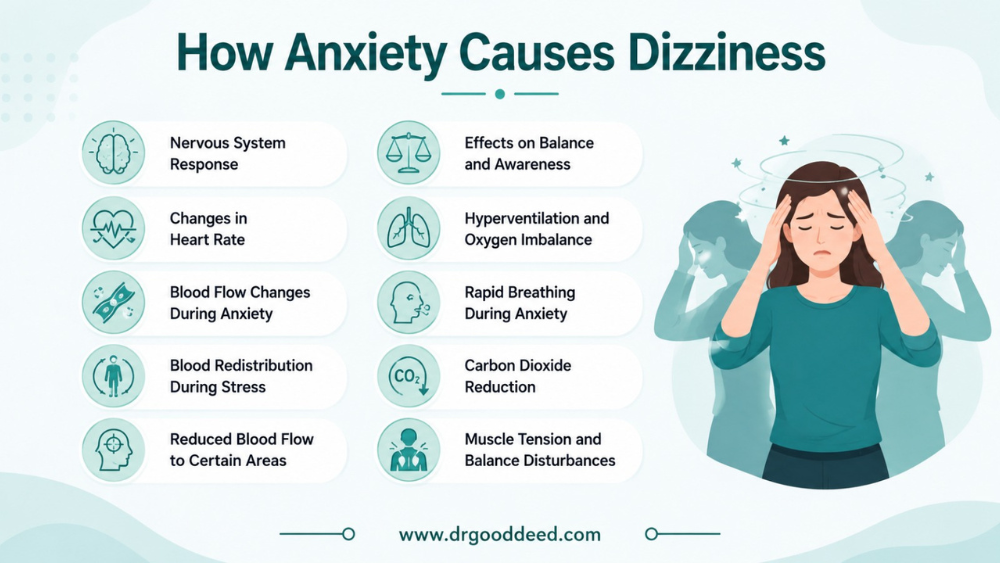
How anxiety causes dizziness comes down to three overlapping systems: the autonomic nervous system, blood circulation, and respiratory chemistry. All three shift during an anxiety episode, and the vestibular system (the brain’s balance center) cannot always keep up.
Nervous System Response to Anxiety
The nervous system response to anxiety starts in the amygdala, the brain’s threat-detection center. It sends an alarm signal to the hypothalamus, which activates the sympathetic nervous system within seconds, which sets every downstream physical change in motion.
Fight-or-Flight Activation
The fight-or-flight response redirects the body’s resources toward immediate survival. Digestion slows, muscles tighten, and the cardiovascular and respiratory systems shift into overdrive. The vestibular system, which relies on stable blood flow and clear sensory input, gets disrupted in the process.
Increased Adrenaline Release
Adrenaline floods the bloodstream within 60 seconds of fight-or-flight activation. It raises heart rate, tightens blood vessels, and sharpens sensory sensitivity. In the inner ear, that sensitivity spike can make normal head movements feel exaggerated, producing a spinning or floating sensation.
Changes in Heart Rate
Heart rate during acute anxiety can jump from 70 to over 120 beats per minute. This rapid change alters cerebral blood flow pressure. The brain briefly receives less stable oxygen delivery, which the vestibular system interprets as instability, producing dizziness.
Blood Flow Changes During Anxiety
Blood flow changes during anxiety are one of the least-discussed but most clinically significant causes of anxiety-related dizziness. When adrenaline constricts peripheral blood vessels, blood gets redistributed away from certain areas toward the muscles.
Blood Redistribution During Stress
During a stress response, blood moves toward large muscle groups (legs, arms) in preparation for physical action. The brain and inner ear receive proportionally less steady flow. This redistribution is temporary but enough to cause lightheadedness lasting several minutes.
Reduced Blood Flow to Certain Areas
The inner ear and cerebellum (the brain’s balance processor) are sensitive to even small drops in blood flow. A 2019 review in the journal Frontiers in Neurology confirmed that vestibular symptoms, including dizziness and imbalance, are directly linked to cerebrovascular blood flow fluctuations during autonomic stress responses.
Effects on Balance and Awareness
The vestibular system uses three inputs to maintain balance: the inner ear, vision, and proprioception (the body’s sense of its own position). Anxiety disrupts the nervous system signals feeding two of those three inputs simultaneously. The result is a sense of being off-balance even while standing still.
Hyperventilation and Oxygen Imbalance
Most people with anxiety breathe faster without realizing it. Even mild overbreathing lowers blood CO2 levels. Lower CO2 causes cerebral blood vessels to constrict slightly, reducing oxygen delivery to the brain. This is the most common mechanism through which anxiety can cause dizziness during panic attacks.
Rapid Breathing During Anxiety
Respiratory rate during anxiety often reaches 20 to 30 breaths per minute, compared to a normal resting rate of 12 to 16. That rate sustained for even 2 to 3 minutes drops CO2 enough to produce noticeable dizziness.
Carbon Dioxide Reduction
CO2 is the primary regulator of cerebral blood vessel dilation. When CO2 drops below normal range (reference range: 35 to 45 mmHg), cerebral vessels constrict and the brain receives less oxygenated blood. Dizziness, tingling in the hands and face, and visual blurring all follow.
Resulting Dizziness and Lightheadedness
The dizziness from hyperventilation feels different from spinning vertigo. It is more of a floating, fuzzy, or “about to faint” sensation. Most people describe it as feeling detached from their surroundings, which is also called derealization.
Muscle Tension and Balance Disturbances
Chronic anxiety keeps the neck, jaw, and shoulder muscles in a near-constant state of tension. The neck muscles send positional signals to the vestibular system. When those muscles are chronically tight, the signals they send are distorted, which creates an ongoing low-grade sense of imbalance even between anxiety episodes.
Symptoms That Often Accompany Anxiety Dizziness
Anxiety can cause dizziness alongside a cluster of other symptoms that appear simultaneously. Some people describe vertigo-like symptoms caused by anxiety as a persistent swaying or floating feeling rather than true spinning. Knowing this cluster helps clinicians differentiate anxiety-related dizziness from inner ear disorders or cardiac causes.
Common co-occurring symptoms include:
- Lightheadedness or floating sensation
- Blurred or tunnel vision
- Tingling or numbness in hands, feet, or around the mouth
- Racing or pounding heartbeat
- Chest tightness or pressure
- Shortness of breath without physical exertion
- Nausea or stomach upset
- Sweating, particularly cold sweats
- Feeling detached from surroundings (derealization)
- Sudden fatigue after the episode ends
Risk Factors for Anxiety-Related Dizziness
Not everyone with anxiety gets dizzy. Certain factors raise the likelihood significantly. People with generalized anxiety disorder (GAD) or panic disorder report cases where anxiety can cause dizziness at higher rates than those with social anxiety, based on data from the National Institute of Mental Health (NIMH).
Key risk factors:
- Generalized anxiety disorder (GAD): Produces chronic, low-level autonomic activation that sustains muscle tension and minor blood flow changes continuously.
- Panic disorder: Episodes involve acute hyperventilation, which drives CO2 down rapidly and produces intense, sudden dizziness.
- Pre-existing vestibular sensitivity: People with a history of inner ear conditions have a lower threshold for anxiety-triggered vestibular disruption.
- Chronic sleep deprivation: Disrupts the vestibular system’s calibration and worsens autonomic reactivity.
- High caffeine intake: Amplifies adrenaline sensitivity and increases respiratory rate, compounding both blood flow and CO2 mechanisms.
- Dehydration: Reduces blood volume, making blood flow changes during anxiety more pronounced.
- Sedentary lifestyle: Reduces cardiovascular efficiency, making heart rate swings during anxiety more destabilizing.
Medical Conditions That Can Also Cause Dizziness
Anxiety can cause dizziness, but several medical conditions produce identical symptoms. Vertigo-like symptoms caused by anxiety and symptoms from inner ear disorders often look identical to patients. Ruling these out before attributing persistent dizziness to anxiety alone is the standard clinical approach in the USA.
Benign Paroxysmal Positional Vertigo (BPPV)
BPPV is the most common cause of vertigo in the USA, per the American Academy of Otolaryngology. It occurs when calcium crystals in the inner ear shift out of position. It produces brief spinning vertigo triggered by specific head movements, unlike anxiety dizziness, which is not position-dependent.
Vestibular Neuritis
Vestibular neuritis is inflammation of the vestibular nerve, usually following a viral infection. It causes sudden, severe vertigo that lasts days and is accompanied by nausea but not hearing loss.
Meniere’s Disease
Meniere’s disease produces episodes of severe vertigo, fluctuating hearing loss, tinnitus (ringing in the ears), and a sensation of fullness in the ear. It is caused by excess fluid in the inner ear and has a distinct symptom pattern that differs from anxiety dizziness.
Low Blood Pressure
Orthostatic hypotension (a sudden blood pressure drop when standing) causes dizziness in 5 to 10% of U.S. adults over age 65, per the American Heart Association. Anxiety can trigger or worsen this.
Anemia
Iron deficiency anemia reduces oxygen delivery to the brain. It causes persistent lightheadedness, fatigue, and pallor. A complete blood count (CBC) distinguishes this from anxiety-related dizziness.
Dehydration
Even mild dehydration (1 to 2% body weight loss in fluids) reduces blood volume enough to drop blood pressure and cause dizziness. This worsens during anxiety episodes when sweating increases.
Heart Conditions
Arrhythmias, particularly atrial fibrillation and supraventricular tachycardia (SVT), cause dizziness through unstable heart rate changes that mimic anxiety symptoms closely. An ECG distinguishes cardiac causes.
Neurological Disorders
Vestibular migraines, multiple sclerosis, and acoustic neuromas can all produce dizziness with no obvious outer trigger. These require imaging and neurological evaluation to rule out.
Treatment for Anxiety-Related Dizziness
Treating anxiety-related dizziness requires addressing the anxiety itself, not just the dizziness symptom. Treating the dizziness alone without managing the underlying anxiety produces temporary relief at best.
Treating the Underlying Anxiety
The most effective treatment is the one that reduces autonomic nervous system overactivation. That requires a combination of psychotherapy and, in many cases, medication.
Cognitive Behavioral Therapy (CBT)
CBT is the first-line treatment for anxiety disorders per the American Psychological Association. A 2020 meta-analysis published in JAMA Psychiatry found CBT reduced anxiety symptoms by 50 to 60% across multiple anxiety disorders. When anxiety decreases, the physiological mechanisms driving dizziness reduce accordingly.
Medication Options
SSRIs
Selective serotonin reuptake inhibitors (sertraline, escitalopram) are FDA-approved for generalized anxiety disorder and panic disorder. They reduce baseline sympathetic nervous system activity over 4 to 6 weeks. They do not cause dizziness and in most cases reduce it by controlling the anxiety driving it.
Anti-Anxiety Medications
Buspirone is a first-line non-addictive option for GAD. Beta-blockers (propranolol) block adrenaline’s physical effects, including heart rate spikes and blood flow changes, making them useful for situational anxiety-related dizziness. Benzodiazepines (lorazepam) provide rapid relief but are not recommended for long-term use due to dependency risk.
Stress Management Techniques
Progressive muscle relaxation (PMR) reduces chronic neck and shoulder tension directly, which removes one of the ongoing sources of vestibular disruption. Practiced daily over 4 to 6 weeks, PMR produces measurable reductions in dizziness frequency in anxiety patients.
Vestibular Rehabilitation When Needed
When anxiety has caused prolonged vestibular disruption, a physical therapist trained in vestibular rehabilitation can retrain the balance system. This is especially useful for people who developed a secondary fear of movement after repeated dizziness episodes.
How to Stop Anxiety-Related Dizziness
Stopping anxiety-related dizziness quickly depends on the mechanism driving it in the moment. Hyperventilation-driven dizziness responds to breathing control. Tension-driven imbalance responds to grounding techniques.
Controlled Breathing Exercises
Slow your breathing to 5 to 6 breath cycles per minute (5 seconds in, 5 seconds out). This raises CO2 back toward normal range within 2 to 3 minutes and reverses the cerebrovascular constriction causing dizziness. A 2022 study in the Journal of the American Heart Association confirmed that slow-paced breathing at this rate normalizes autonomic balance faster than any other non-pharmacological intervention.
Grounding Techniques
The 5-4-3-2-1 technique (identify 5 things you see, 4 you can touch, 3 you hear, 2 you smell, 1 you taste) activates the prefrontal cortex, which dampens amygdala-driven sympathetic activation. This stops the fight-or-flight chain at the source.
Staying Hydrated
Drinking 250 to 500ml of water during an anxiety episode raises blood volume and stabilizes blood pressure, directly countering blood flow changes during anxiety. Dehydration drops blood pressure by 5 to 10 mmHg in some people, which significantly worsens anxiety-related dizziness.
Limiting Caffeine and Alcohol
Caffeine increases adrenaline sensitivity and respiratory rate. Alcohol initially depresses the nervous system but raises autonomic reactivity on rebound, worsening next-day anxiety and dizziness. Cutting caffeine below 200mg daily and limiting alcohol to fewer than 7 drinks per week significantly reduces baseline anxiety dizziness episodes, per NIMH data.
Regular Physical Activity
Aerobic exercise at 150 minutes per week reduces sympathetic nervous system baseline activity. It also improves cardiovascular efficiency, which means heart rate changes during anxiety produce smaller blood pressure swings and less dizziness.
Improving Sleep Quality
Sleep deprivation raises cortisol and amplifies the nervous system response to anxiety. Even one night of poor sleep increases next-day vestibular sensitivity. A consistent sleep schedule reduces cortisol rhythm disruption over 2 to 4 weeks.
Mindfulness and Relaxation Practices
Mindfulness-Based Stress Reduction (MBSR), an 8-week structured program from UMass Medical School, reduces anxiety scores by an average of 38% and has documented effects on reducing autonomic overactivation. Lower autonomic tone means fewer triggers for blood flow changes during anxiety that drive dizziness.
Prevention Strategies
Preventing anxiety-related dizziness long-term requires reducing the frequency and intensity of anxiety episodes themselves. People who manage baseline anxiety well report significantly fewer dizziness episodes.
Evidence-backed prevention strategies:
- Daily slow breathing practice: 5 minutes at 5 to 6 breath cycles per minute lowers baseline sympathetic tone over time.
- CBT maintenance sessions: Monthly booster sessions after initial CBT treatment prevent relapse in 70% of patients, per JAMA Psychiatry data.
- Sodium and fluid intake: Adequate hydration keeps blood volume stable, preventing dehydration-amplified dizziness.
- Cervical spine stretching: Daily neck stretching reduces chronic tension in the muscles feeding vestibular signals, lowering background dizziness.
- Screen time limits before sleep: Blue light suppresses melatonin, worsens sleep quality, and raises next-day cortisol. A 60-minute screen cutoff before bed reduces this effect measurably.
- Eliminating nicotine: Nicotine constricts blood vessels and amplifies autonomic reactivity, worsening both anxiety and dizziness frequency.
When to See a Doctor
Anxiety can cause dizziness, but certain symptoms signal that the dizziness has a different or additional cause requiring medical evaluation. In the USA, primary care physicians typically start with a neurological and vestibular assessment before attributing persistent dizziness to anxiety alone.
See a doctor immediately if dizziness is accompanied by:
- Sudden, severe headache with no prior history
- Loss of consciousness or near-fainting
- Chest pain or irregular heartbeat
- Slurred speech or facial drooping
- Sudden vision changes in one or both eyes
- Dizziness that began after a head injury
- One-sided hearing loss alongside dizziness
Neurological Warning Signs
Neurological causes of dizziness require urgent evaluation. The FAST criteria (Face drooping, Arm weakness, Speech difficulty, Time to call 911) apply directly when dizziness accompanies any facial or motor symptoms.
A 2021 review in Stroke journal found that 5% of patients presenting to emergency rooms with dizziness had a posterior fossa stroke as the actual cause. Anxiety-related dizziness never causes facial drooping, arm weakness, or speech changes. If those are present, the cause is not anxiety.
FAQs
1. Can anxiety really make you feel dizzy?
Yes. Anxiety can cause dizziness through three simultaneous mechanisms: adrenaline-driven blood vessel constriction, hyperventilation-induced CO2 drop, and chronic neck muscle tension disrupting vestibular signals. All three are measurable and documented in peer-reviewed literature.
2. Why do I get dizzy when I feel anxious?
The fight-or-flight response redirects blood away from the brain’s balance center, drops CO2 through rapid breathing, and disrupts vestibular nerve signals via muscle tension. How anxiety causes dizziness involves all three happening within 60 to 90 seconds of an anxiety trigger.
3. What does anxiety dizziness feel like?
Anxiety dizziness feels like floating, lightheadedness, or feeling detached from surroundings. Unlike BPPV, it is not triggered by specific head positions. It often comes with tingling hands, blurred vision, and a racing heart, all peaking within 10 minutes of the anxiety episode.
4. Can panic attacks cause sudden dizziness?
Yes. Panic attacks produce the fastest and most intense dizziness of any anxiety type. Hyperventilation during a panic attack drops CO2 within 2 to 3 minutes, causing lightheadedness severe enough to mimic fainting in some people.
5. How long does anxiety-related dizziness last?
Anxiety dizziness typically lasts 20 to 30 minutes, tied to the duration of the anxiety episode itself. If dizziness persists beyond 2 hours after the anxiety has resolved, a separate vestibular or cardiovascular cause requires evaluation.
6. Can anxiety cause vertigo-like symptoms?
Yes. Vertigo-like symptoms caused by anxiety include a sense of spinning, swaying, or environmental movement without actual rotation. These are driven by autonomic dysregulation rather than inner ear crystal displacement, unlike true BPPV vertigo. Anxiety can cause dizziness that mimics vertigo closely enough that 30% of BPPV diagnoses are initially attributed to anxiety, per the American Academy of Otolaryngology.
7. Is dizziness a common symptom of generalized anxiety disorder?
Yes. 44% of people with GAD report dizziness as a recurring physical symptom. It ranks among the top five physical complaints in GAD alongside fatigue, muscle tension, headache, and gastrointestinal upset.
8. How do blood flow changes during anxiety contribute to dizziness?
Blood flow changes during anxiety divert circulation toward large muscle groups. The inner ear and cerebellum, which need stable blood flow to maintain balance, receive less. Even a 10 to 15% drop in cerebral perfusion triggers vestibular disruption perceptible as dizziness.
9. What is the nervous system response to anxiety that causes dizziness?
The nervous system response to anxiety activates the sympathetic branch of the autonomic nervous system via the amygdala-hypothalamus-adrenal axis. This triggers adrenaline release, blood vessel constriction, and respiratory rate increase, all of which disrupt vestibular function simultaneously.
10. How can I stop anxiety-related dizziness quickly?
To stop anxiety-related dizziness quickly, slow breathing to 5 to 6 breath cycles per minute for 2 to 3 minutes to restore CO2, drink 250ml of water to stabilize blood pressure, and use the 5-4-3-2-1 grounding technique to deactivate the sympathetic nervous system at the source.
Sources
- Anxiety and Depression Association of America (ADAA)
- National Institute of Mental Health (NIMH) – Anxiety Disorders
- American Academy of Otolaryngology – BPPV
- American Heart Association – Orthostatic Hypotension
- American Psychological Association – CBT for Anxiety
- Frontiers in Neurology – Vestibular Symptoms and Autonomic Stress (2019)
- JAMA Psychiatry – CBT Meta-Analysis (2020)
- Journal of the American Heart Association – Breathing and Autonomic Balance (2022)
- Stroke Journal – Dizziness and Posterior Fossa Stroke (2021)
- UMass Medical School – Mindfulness-Based Stress Reduction (MBSR)