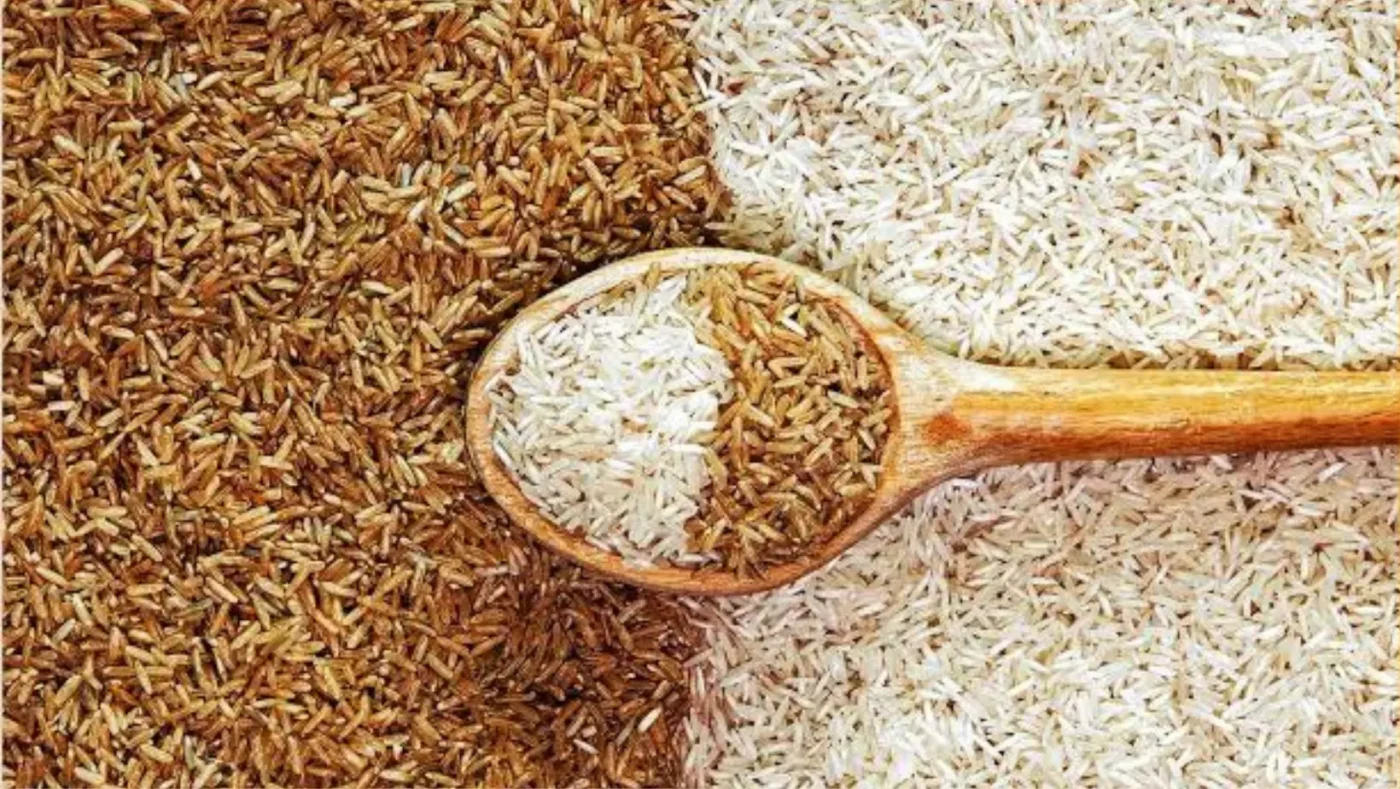

In the brown rice vs. white rice debate, brown rice usually wins on nutrition, since it keeps the fiber-rich bran and germ that milling strips from white rice. Brown rice is a whole grain, while white rice is a refined grain made by polishing away its outer layers. Both remain kitchen staples across the United States, and both can fit a healthy diet depending on your goals. This guide breaks down the real nutrition differences, the specific health benefits of each, and simple meals to try tonight.
Difference Between Brown Rice and White Rice
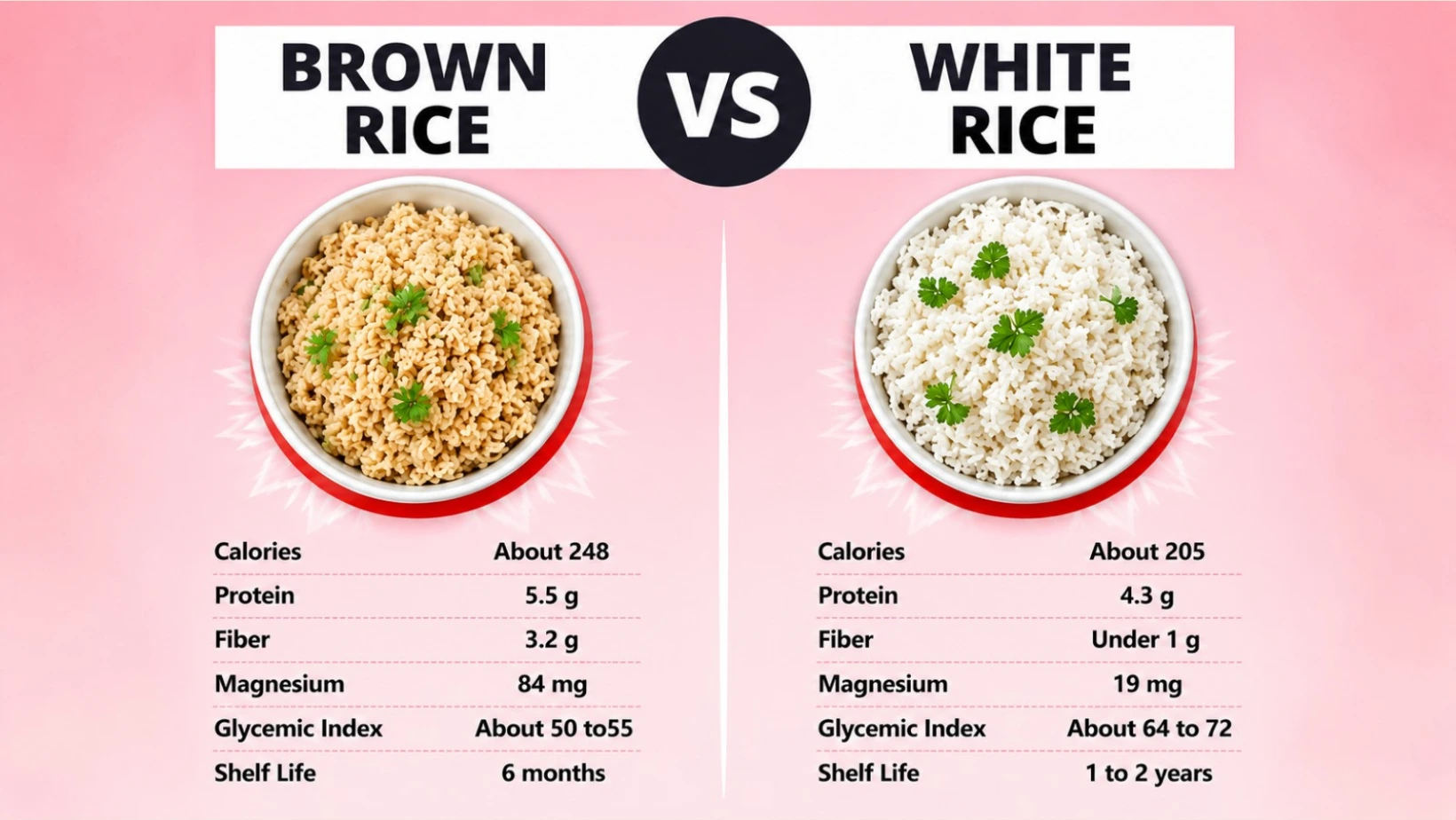
The difference between brown rice and white rice comes down to processing. Brown rice keeps its bran and germ layers, while white rice has them milled away, which strips out fiber, vitamins, and minerals unless the grain is fortified afterward. Here is a side-by-side nutrition breakdown for a cooked 1-cup serving.
| Nutrient (1 cup cooked) | Brown Rice | White Rice |
| Calories | About 248 | About 205 |
| Protein | 5.5 g | 4.3 g |
| Fiber | 3.2 g | Under 1 g |
| Magnesium | 84 mg | 19 mg |
| Glycemic Index | About 50 to 55 | About 64 to 72 |
| Shelf Life | 6 months | 1 to 2 years |
Brown rice keeps more of its natural nutrients, while white rice offers a softer texture and a longer shelf life. Neither is a significant source of added sugar, so the real gap between them sits in fiber and minerals, not sweetness.
Benefits of Brown Rice
The benefits of brown rice stretch beyond fiber alone, touching blood sugar, heart health, and how full you feel after a meal. Because the bran and germ stay intact, brown rice holds onto nutrients that white rice loses in processing. These seven benefits explain why nutrition experts often recommend it as a base grain.
Higher Fiber Content
A cup of cooked brown rice has about 3.2 grams of fiber, compared to under 1 gram in the same amount of white rice. Fiber slows digestion and helps you avoid a quick blood sugar spike after eating.
Supports Digestive Health
The fiber in brown rice feeds healthy gut bacteria and adds bulk to stool, which can ease constipation for people who do not already have a sensitive digestive condition.
Promotes Fullness
Fiber and the slightly chewier texture of brown rice both signal fullness faster than white rice does, which can help with portion control at meals.
Rich in Magnesium
Brown rice contains about 84 milligrams of magnesium per cup, roughly four times more than white rice. Magnesium supports muscle function, nerve signaling, and steady blood sugar levels.
Contains More Antioxidants
The bran layer in brown rice holds plant compounds called phenolics, which act as antioxidants and may help protect cells from everyday damage.
Supports Heart Health
Whole grains like brown rice are linked to lower LDL cholesterol and reduced heart disease risk, largely due to their fiber and mineral content working together.
May Help Blood Sugar Management
A 2021 meta-analysis of seven controlled trials found that swapping white rice for brown rice reduced body weight in people with prediabetes or type 2 diabetes, though it did not significantly change long-term blood sugar markers like HbA1c on its own.
Benefits of White Rice
The benefits of white rice matter just as much for certain people, especially those managing digestive flare-ups or needing fast energy. White rice is not an unhealthy food. It simply serves a different role in a meal plan than brown rice does. Here is where it holds its own.
Easy to Digest
White rice has less fiber, which means the body breaks it down quickly with less strain on the gut. This makes it gentler during digestive upsets.
Quick Source of Energy
Because white rice digests fast, it releases glucose into the bloodstream quickly, giving the body rapid fuel when energy is needed right away.
Suitable Before or After Exercise
Many athletes choose white rice before workouts for fast-digesting carbs, and after workouts to help refill muscle glycogen stores quickly.
Lower Fiber for Sensitive Digestion
People with irritable bowel syndrome or inflammatory bowel disease often tolerate white rice better during flare-ups, since less fiber means less gut irritation.
Longer Shelf Life
White rice lasts one to two years in a sealed container, compared to about six months for brown rice, since removing the bran also removes the oils that cause spoilage.
Versatile in Many Cuisines
From sushi to biryani, white rice’s neutral flavor and soft texture make it a base for cuisines across the globe, which keeps it a practical pantry staple.
Healthy Meal Ideas With Rice
Choosing the right rice for the right meal makes it easier to build a balanced plate without extra planning. These five meals show how to use both types of rice, matched to what your body needs at that meal. Understanding how to include rice in a balanced meal plan starts with pairing rice with protein and vegetables rather than eating it alone.
Grilled Chicken and Brown Rice Bowl
Combine grilled chicken breast, steamed broccoli, and a cup of brown rice for a filling meal with protein, fiber, and slow-release carbs.
Vegetable Stir-Fry With Brown Rice
Stir-fry bell peppers, carrots, and snap peas in a small amount of oil, then serve over brown rice for a fiber-rich, colorful dinner.
White Rice With Lentils and Vegetables
Pair white rice with cooked lentils and sautéed spinach. The lentils add fiber and protein, balancing out the lower fiber content of the rice itself.
Salmon and Rice Plate
Serve baked salmon with either rice type and a side of steamed asparagus. Salmon’s omega-3 fats pair well with brown rice’s added magnesium for heart support.
Burrito Bowl
Layer black beans, grilled vegetables, salsa, and a scoop of brown or white rice for a customizable, balanced meal that works for lunch or dinner.
This approach to include rice in a balanced meal plan works because it treats rice as one part of the plate, not the entire meal.
FAQs
Is brown rice healthier than white rice?
Yes, for most people. Brown rice has more fiber, magnesium, and B vitamins, and a lower glycemic index, making it the better everyday choice for general health.
Which rice is better for weight loss?
Brown rice, generally. Its higher fiber content increases fullness and slows digestion, which can reduce overall calorie intake compared to the same amount of white rice.
Which rice is better for diabetes?
Brown rice. Its lower glycemic index score, around 50 to 55 versus 64 to 72 for white rice, causes a slower rise in blood sugar after meals.
Does brown rice contain more fiber?
Yes. A cup of cooked brown rice has about 3.2 grams of fiber, compared to under 1 gram in the same serving of white rice, roughly a fourfold difference.
Is white rice unhealthy?
No. White rice is not unhealthy in normal portions. It offers quick energy and easy digestion, and many countries with low chronic disease rates eat it as a staple.
Which rice has more protein?
Brown rice. One cup contains about 5.5 grams of protein, compared to roughly 4.3 grams in the same serving of white rice.
Can I eat white rice every day?
Yes, in reasonable portions balanced with vegetables and protein. Daily white rice intake becomes a concern mainly when it replaces fiber-rich foods entirely.
How much rice should I eat in one meal?
About half a cup to one cup cooked, roughly the size of your fist, fits most adult meals when paired with a protein and vegetable source.
Is brown rice harder to digest?
Somewhat. Its higher fiber content takes longer to break down, which can cause bloating for people with sensitive digestion, especially during a flare-up.
Which rice is better for athletes?
Depends on timing. White rice works well right before or after training for fast energy, while brown rice fits better at meals eaten hours before activity.
Sources
- Harvard Health: Brown Rice Versus White Rice, A Head-to-Head Comparison
- Harvard Health: Grain of the Month, Brown Rice
- USDA FoodData Central: Food Search
- PMC: Effect of a Brown Rice Diet on Glycemic Control and Metabolic Parameters, Meta-Analysis
- PMC: Fiber-Rich Diet With Brown Rice Improves Endothelial Function in Type 2 Diabetes
- ClinicalTrials.gov: Brown Rice Intervention on Metabolic Syndrome