

The health benefits of Greek yogurt come from its high protein, calcium, and live probiotic cultures. A single cup can provide about 20 grams of protein, roughly half the daily calcium most US adults need, and beneficial bacteria that support gut health. This guide covers what Greek yogurt is, its top health benefits, its full nutrition profile, and who should be cautious with it.
What Is Greek Yogurt?
Greek yogurt is regular yogurt strained to remove extra liquid whey. This straining step is the reason for its thick texture and higher protein content compared to regular yogurt. Below is what sets it apart, from how it is made to the types on grocery shelves today.
How Greek Yogurt Is Made
Milk is fermented with live bacterial cultures, then strained through a cloth or filter to remove whey. This concentrates the protein and reduces the natural sugar and carbs left behind.
Greek Yogurt vs Regular Yogurt
Greek yogurt has roughly double the protein of regular yogurt in the same serving size. It also has less sugar and a thicker, creamier texture due to the straining process.
Plain vs Flavored Greek Yogurt
Plain Greek yogurt has no added sugar and the cleanest nutrition profile. Flavored versions often add 10 to 15 grams of sugar per serving, which can offset some of its benefits.
Types of Greek Yogurt Available
Shoppers can choose nonfat, low-fat, or full-fat versions. Some brands also offer lactose-free, organic, or grass-fed options for specific dietary needs.
10 Health Benefits of Greek Yogurt
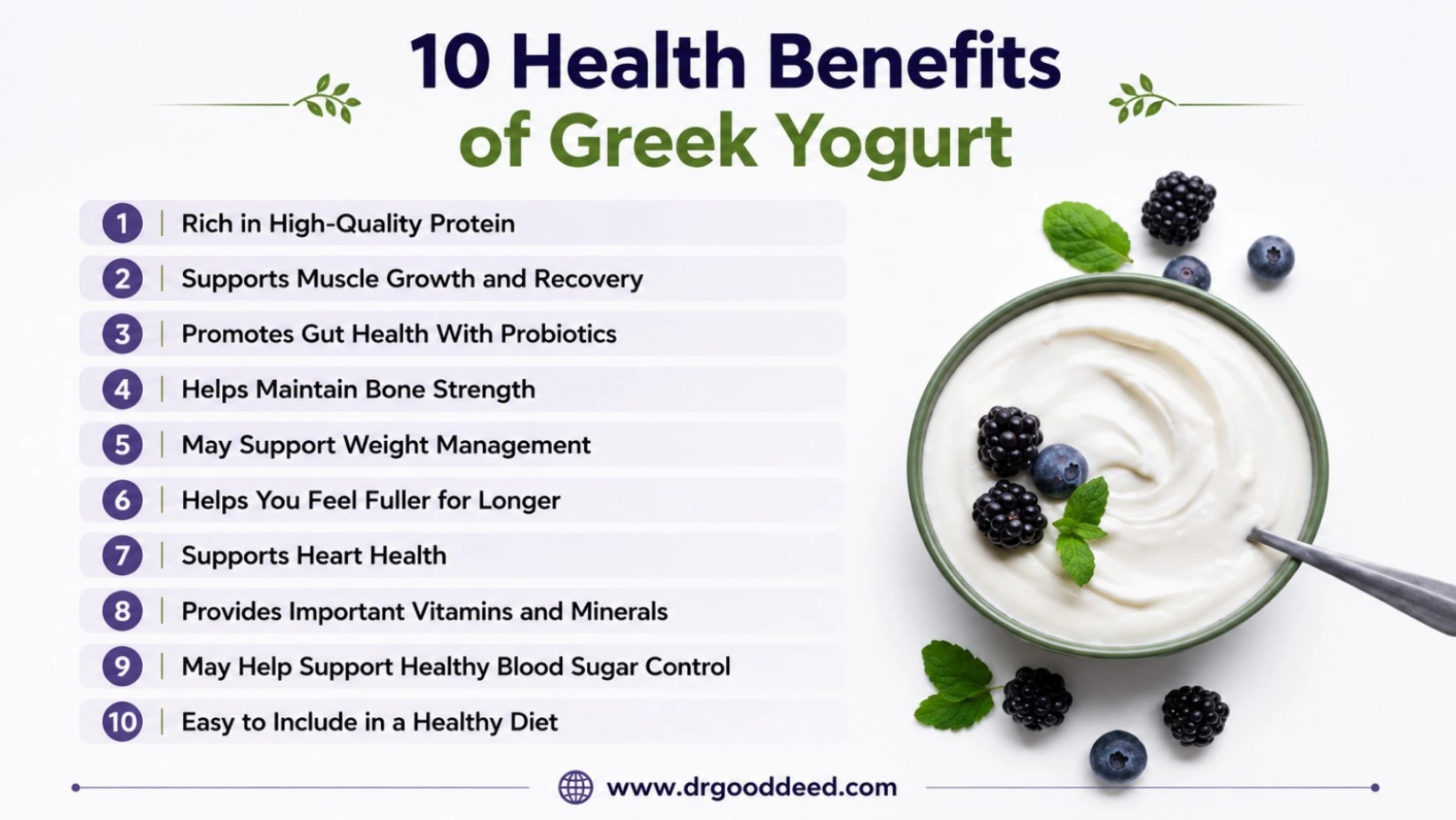
These 10 health benefits of Greek yogurt span muscle support, bone strength, gut health, and blood sugar control. Each benefit below is backed by nutrition data or clinical research.
1. Rich in High-Quality Protein
A cup of plain Greek yogurt delivers about 20 grams of complete protein. This means it supplies all nine essential amino acids the body cannot make on its own.
2. Supports Muscle Growth and Recovery
Protein helps repair muscle fibers after exercise. Greek yogurt’s casein protein digests slowly, giving muscles a steady amino acid supply for hours after eating.
3. Promotes Gut Health With Probiotics
Live active cultures in Greek yogurt add beneficial bacteria to the gut. Research from Harvard T.H. Chan School of Public Health links regular yogurt intake to better gut bacterial diversity.
4. Helps Maintain Bone Strength
Greek yogurt supplies calcium, phosphorus, and protein together. A large observational study of over 4,000 older adults linked higher yogurt intake to 3% greater hip bone density.
5. May Support Weight Management
High protein content increases feelings of fullness. This can reduce overall snacking and calorie intake later in the day compared to lower-protein snacks.
6. Helps You Feel Fuller for Longer
Protein takes longer to digest than carbs or fat. This slows stomach emptying and helps curb hunger between meals more effectively than sugary snacks.
7. Supports Heart Health
Despite past concerns about dairy fat, current research shows no strong link between Greek yogurt and higher cholesterol. Some data even suggests a modest cholesterol-lowering effect.
8. Provides Important Vitamins and Minerals
Greek yogurt is a strong source of vitamin B12, riboflavin, selenium, phosphorus, and zinc. These nutrients support red blood cell health, metabolism, and immune function.
9. May Help Support Healthy Blood Sugar Control
Plain Greek yogurt has a low glycemic index, around 35, so it raises blood sugar slowly. Its protein content also helps blunt sugar spikes when paired with carbs.
10. Easy to Include in a Healthy Diet
Greek yogurt fits into breakfast bowls, smoothies, dips, and marinades. It also works as a lower-fat swap for sour cream or mayonnaise in most recipes.
Greek Yogurt Nutrition
The nutritional protein of Greek Yogurt stands out compared to most dairy products, but the full picture includes calcium, B12, and other minerals too. Here is the average nutrition breakdown for plain, nonfat Greek yogurt per 100 grams, based on USDA FoodData Central figures.
| Nutrient (per 100g, plain nonfat) | Amount |
| Calories | About 60 |
| Protein | 10.3 g |
| Carbohydrates | 3.6 g |
| Fat | 0.4 g |
| Calcium | About 110 mg |
| Vitamin B12 | 29% of Daily Value |
| Glycemic Index | About 35 (low) |
This nutritional profile of Greek Yogurt explains why dietitians often recommend it over regular yogurt for anyone focused on muscle health or blood sugar control. Choosing the plain version keeps sugar and carbs at their lowest point.
Is Greek Yogurt Safe for Everyone?
The safety of Greek Yogurt depends on individual tolerance to dairy proteins and lactose, not just general health status. Most people can eat it daily without issue, but a few groups need to check with a doctor first.
Most Healthy Adults
For most healthy adults, Greek yogurt is a safe, nutrient-dense food. Daily intake fits easily within standard US dietary guidelines for dairy and protein.
People With Lactose Intolerance
The straining process removes much of the natural lactose. Many people with mild lactose intolerance tolerate Greek yogurt better than milk or regular yogurt.
Individuals With Milk Allergy
Greek yogurt still contains milk proteins like casein and whey. Anyone with a true milk allergy should avoid it and choose a non-dairy alternative instead.
Children
Plain, whole-milk Greek yogurt can be a healthy source of protein and calcium for children over one year old. Avoid added-sugar versions marketed to kids.
Pregnant Women
Pasteurized Greek yogurt is considered safe during pregnancy. It’s protein and calcium support fetal growth and maternal bone health throughout pregnancy.
Understanding whether Greek yogurt is safe for everyone also means knowing the best time to eat it. The best time to eat Greek yogurt for muscle recovery is within an hour after exercise, when the body absorbs protein most efficiently. For blood sugar control, the best time to eat Greek yogurt is alongside a meal rather than alone, since pairing it with fiber slows sugar absorption further.
FAQs
Is Greek yogurt healthier than regular yogurt?
Yes, generally. Greek yogurt has about twice the protein and less sugar than regular yogurt, due to the straining process that removes excess whey.
Can Greek yogurt help with weight loss?
Yes, as part of a balanced diet. Its high protein content increases fullness, which can lower overall calorie intake compared to low-protein snack choices.
Is Greek yogurt good for gut health?
Yes. Live active cultures in Greek yogurt add beneficial bacteria strains, which research links to improved gut bacterial diversity and more regular digestion.
Can people with lactose intolerance eat Greek yogurt?
Often, yes, in moderation. Straining removes much of the lactose, making it easier to digest than milk, though sensitivity still varies by individual.
Should I choose full-fat or low-fat Greek yogurt?
Either works nutritionally. Full-fat offers more calories and saturated fat, while low-fat has fewer calories with a similar protein and calcium content.
Can I eat Greek yogurt every day?
Yes, for most healthy adults. Daily servings of plain Greek yogurt fit within standard US dietary guidelines for dairy and protein intake.
Is Greek yogurt a good source of calcium?
Yes. A 100-gram serving provides about 110 milligrams of calcium, roughly 11% of the daily value most adults need for bone health.
How much Greek yogurt should I eat daily?
About one cup, roughly 245 grams, fits most adult diets. This provides close to 20 grams of protein and half the daily calcium target.
Sources
- Harvard T.H. Chan School of Public Health: The Nutrition Source, Yogurt
- USDA FoodData Central: Yogurt, Greek, Plain, Nonfat
- WebMD: Greek Yogurt Health Benefits, Uses, Nutrition, and Risks
- Healthline: Health Benefits of Yogurt, Nutrition, Protein, and Probiotics
- Cleveland Clinic: Lactose Intolerance and Dairy Tolerance
- Today.com: Greek Yogurt Nutrition, High Protein, Low-Carb, Probiotic Food