
The clearest signs of an unhealthy gut are ongoing bloating, changed bowel habits, stomach pain, and food reactions that were not there before. The National Institute of Diabetes and Digestive and Kidney Diseases notes that gut problems like these often trace back to how well your digestive tract processes food and manages bacteria. In the United States, millions of adults deal with these symptoms every year without knowing what triggers them. This guide breaks down the signs, the causes, and steps that actually help your gut recover.
What Are the Signs of an Unhealthy Gut? 7 Signs Your Gut May Need Attention
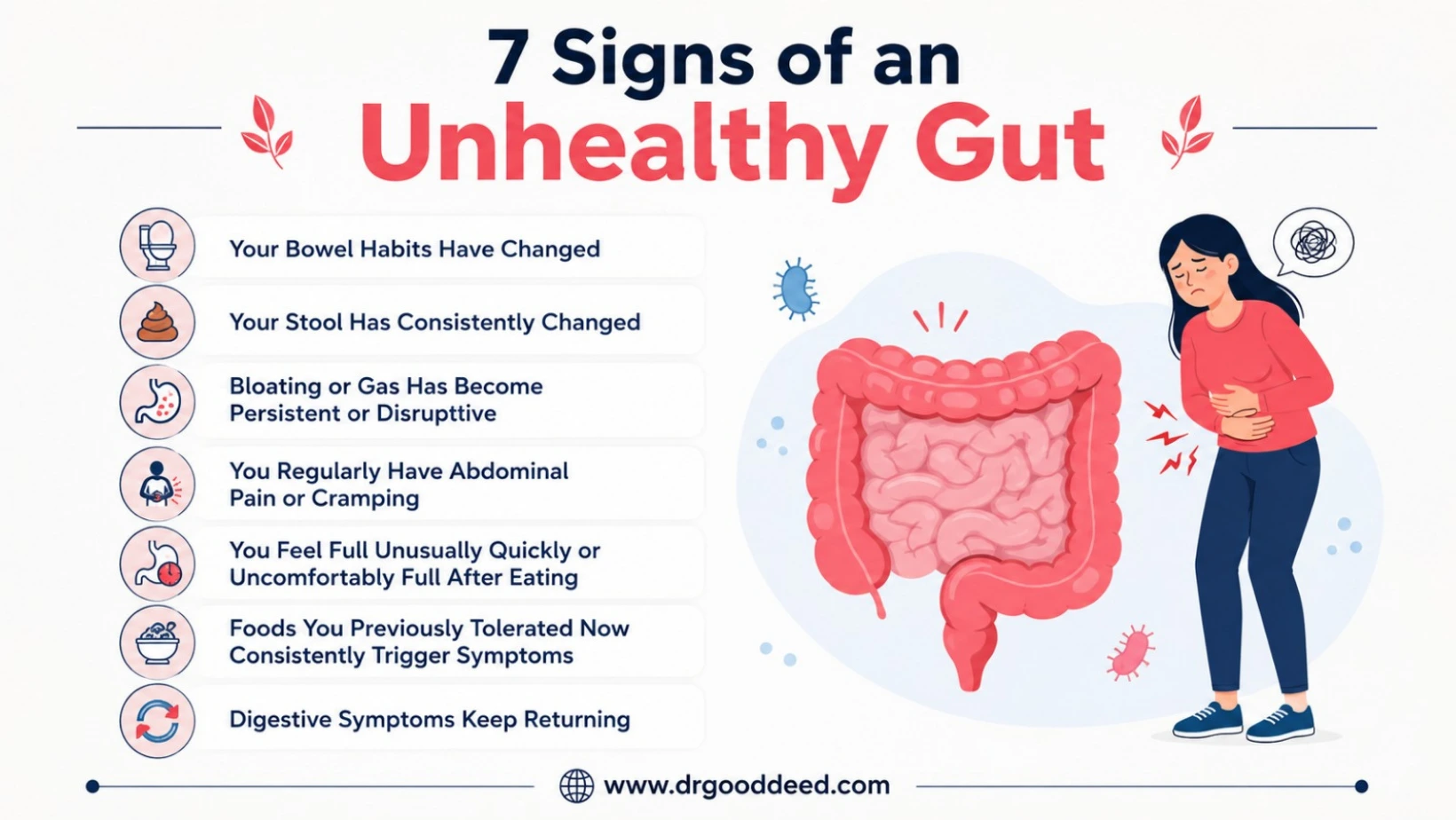
Unhealthy gut symptoms are a mix of bathroom changes, bloating, food reactions, and stomach pain that keeps returning. Spotting the pattern early makes it easier to pinpoint the cause and fix it before symptoms get worse.
1. Your Bowel Habits Have Changed
Going more or less often than usual is one of the first signs of an unhealthy gut. A normal range runs from three times a day to three times a week. What matters most is a shift from your own normal pattern, not a fixed number.
- Sudden constipation lasting more than a few weeks
- New diarrhea that will not settle
- Alternating between the two
2. Your Stool Has Consistently Changed
Color, shape, and texture tell you a lot. Hard, pellet-like stool points to slow movement through the colon. Loose, watery stool three or more times a day meets the clinical definition of diarrhea. Blood, black stool, or pale, greasy stool needs medical attention right away.
3. Bloating or Gas Has Become Persistent or Disruptive
Occasional bloating after a big meal is normal. Daily bloating that stretches your waistband or causes visible swelling is different. This is one of the most common poor gut health symptoms people report to their doctor, especially when it comes with cramping.
4. You Regularly Have Abdominal Pain or Cramping
Pain that returns with your bowel movements, especially pain that eases after you go, fits the pattern doctors look for with irritable bowel syndrome. Sharp, sudden pain or pain with fever is a different story and needs prompt care.
5. You Feel Full Unusually Quickly or Uncomfortably Full After Eating
Getting full after a few bites, or feeling stuffed for hours after a normal meal, can point to slow stomach emptying or bacterial overgrowth. This symptom often gets dismissed as “just eating too fast,” but it deserves a second look if it happens often.
6. Foods You Previously Tolerated Now Consistently Trigger Symptoms
New reactions to dairy, gluten, or fatty foods often signal a shift in gut bacteria or enzyme activity. True food allergies involve the immune system and can turn dangerous fast, so any swelling, hives, or breathing trouble after eating needs emergency care.
7. Digestive Symptoms Keep Returning
A single bad week is not usually a concern. Symptoms that keep cycling back over months, even with diet changes, point to an ongoing issue instead of a one-time bug. This repeating pattern is one of the more reliable signs of poor gut health doctors ask about during checkups.
What Causes an Unhealthy Gut?
The biggest drivers behind these signs of an unhealthy gut are diet, antibiotics, chronic stress, and shifts in the balance of gut bacteria. Most cases involve more than one factor working together. Knowing your own triggers makes treatment far more direct and effective.
Diet and Eating Patterns
Diets low in fiber and high in processed food, added sugar, and fried food feed the wrong bacteria and starve the helpful ones. A 2014 study in Nature found that diet can reshape the human gut microbiome within days.
Gut Motility and Bowel Mechanics
Motility is how fast food moves through your gut. Slow motility causes constipation and bacterial overgrowth. Fast motility causes diarrhea and poor nutrient absorption. Nerve signals, hydration, and physical activity all affect this speed.
Antibiotic Use
Antibiotics kill harmful bacteria, but they also wipe out helpful species. Research shows broad-spectrum antibiotics can reduce gut bacterial diversity by up to 30 percent after a single course. Repeated courses cause more serious, longer-lasting damage.
Medications and Supplements
Beyond antibiotics, regular use of acid reducers, opioid pain medication, and some iron supplements changes gut pH and slows movement. This is often an overlooked cause of unhealthy gut symptoms, especially in older adults on multiple prescriptions.
Gut-Brain Interaction, Stress and Sleep
Your gut and brain communicate constantly through the vagus nerve. Chronic stress and poor sleep change gut muscle contractions and increase sensitivity to pain. This is why stress alone can trigger real, physical digestive symptoms.
Digestive Conditions, Infections and Intolerances
Conditions like IBS, inflammatory bowel disease, celiac disease, and lactose intolerance all produce ongoing gut symptoms with distinct patterns. A stomach virus or food poisoning can also disrupt bacterial balance for weeks after the infection clears.
Gut Microbiome Imbalance
Doctors call this imbalance dysbiosis. It happens when harmful bacteria outnumber helpful ones, weakening the gut lining and triggering inflammation that can reach beyond the digestive tract.
How to Improve Gut Health Naturally
Improving gut health involves raising fiber slowly, adding fermented foods, drinking enough water, and lowering chronic stress. None of these require expensive supplements to start working.
Build Fiber Tolerance Gradually
Jumping straight to 30 grams of fiber a day after eating very little causes more bloating, not less. Add five grams every few days instead. Adults generally need 25 to 38 grams of fiber daily, depending on age and sex.
Add Probiotic and Prebiotic Foods
Probiotics are live bacteria that support your gut. Prebiotics are the fiber that feeds them. Pairing both works better than either alone.
| Food Type | Examples | Main Benefit |
| Probiotic | Yogurt, kefir, sauerkraut, kimchi | Adds live helpful bacteria |
| Prebiotic | Garlic, onions, oats, bananas | Feeds existing good bacteria |
| High-fiber | Beans, lentils, berries, whole grains | Bulks stool, speeds transit |
| Fermented | Miso, tempeh, kombucha | Supports bacterial diversity |
Stay Hydrated
Water softens stool and helps fiber do its job. Without enough fluid, added fiber can actually worsen constipation instead of relieving it.
Manage Stress
Short daily practices like walking, breathing exercises, or set sleep times reduce the stress signals that disrupt gut muscle movement. Consistency matters more than duration.
When to See a Healthcare Provider
See a doctor if you notice blood in your stool, unexplained weight loss, fever with abdominal pain, or symptoms lasting more than two weeks despite diet changes. These signs need testing, not home remedies.
FAQs
What are the first signs of an unhealthy gut?
The first signs of an unhealthy gut are usually bloating after meals, irregular bowel movements, and stomach discomfort that returns within days of clearing up.
How can I tell if my gut health is poor?
Track your symptoms for two weeks. If bloating, pain, or bowel changes show up more than three times a week, that pattern points to poor gut health.
What foods help restore gut health?
Plain yogurt with live cultures, cooked lentils, oats, and garlic help most. These combine probiotics and prebiotics, which work better together than alone.
How long does it take to improve gut health?
Mild bloating often eases within one to two weeks of dietary change. Deeper imbalances from repeated antibiotics can take six to eight weeks to stabilize.
When should I see a doctor for gut health problems?
Yes, see a doctor if symptoms last beyond two weeks or sooner if you notice blood in stool, fever, or unexplained weight loss.
Sources
- National Institute of Diabetes and Digestive and Kidney Diseases. Irritable Bowel Syndrome
- National Institute of Diabetes and Digestive and Kidney Diseases. Constipation: Definition & Facts
- National Institute of Diabetes and Digestive and Kidney Diseases. Diarrhea: Definition & Facts
- National Institute of Diabetes and Digestive and Kidney Diseases. Symptoms & Causes of Diarrhea
- National Institutes of Health, Office of Dietary Supplements. Probiotics: Health Professional Fact Sheet
- National Center for Biotechnology Information. Antibiotics and the Human Gut Microbiome
- ScienceDirect. Antibiotics and the Gut Microbiome: Understanding the Impact on Human Health
- Mayo Clinic. Food Allergy: Symptoms and Causes
- Mayo Clinic. Stress Management
- International Scientific Association for Probiotics and Prebiotics. Understanding Prebiotics and Fiber