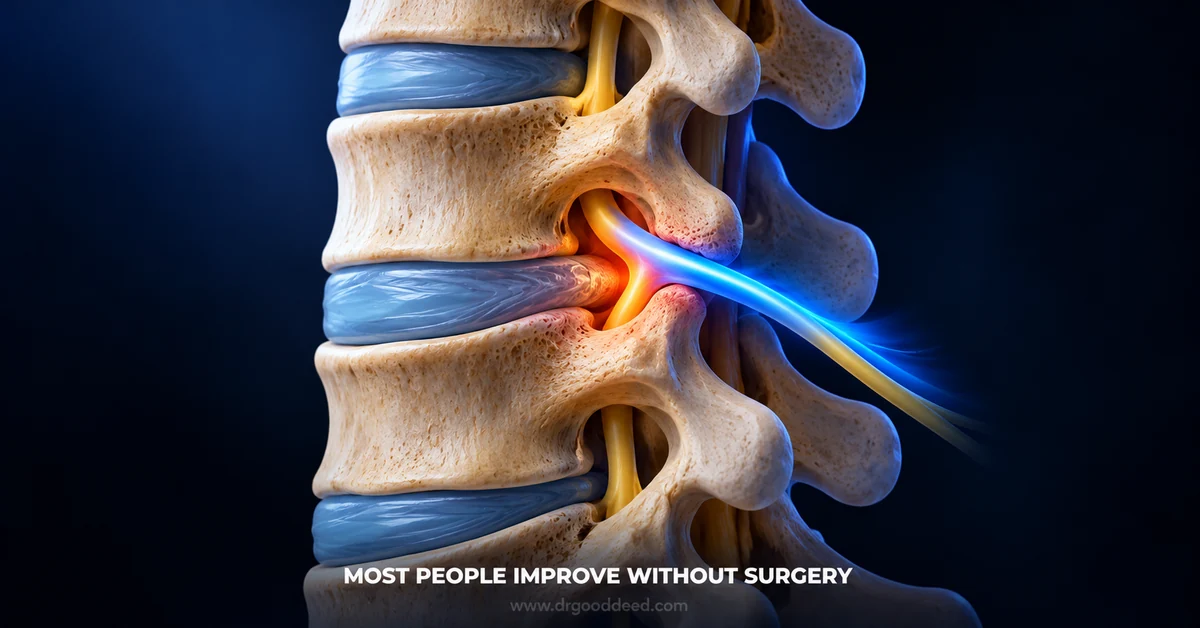

Neuroforaminal stenosis is a narrowing of the small openings in the spine through which nerves leave the spinal column. Up to 40% of people have at least moderate lumbar foraminal stenosis by age 60, and about 75% by 80, though most have no symptoms. When one of these openings tightens, the nerve root passing through can be squeezed, producing pain, tingling or weakness in an arm or leg.
Plenty of people never notice anything, and most of those who do improve without surgery. This guide explains the causes, symptoms, diagnosis and treatment, and which warning signs mean you need urgent care.
Key Takeaways
- Neuroforaminal stenosis is a narrowing of the openings where nerve roots leave the spine; a pinched root can cause pain, numbness, or weakness.
- Age-related wear is the most common cause.
- Most people get better with non-surgical treatment, and surgery is kept for severe cases.
- Weakness in both legs, numbness around the genitals or anus, or loss of bladder or bowel control needs emergency care.
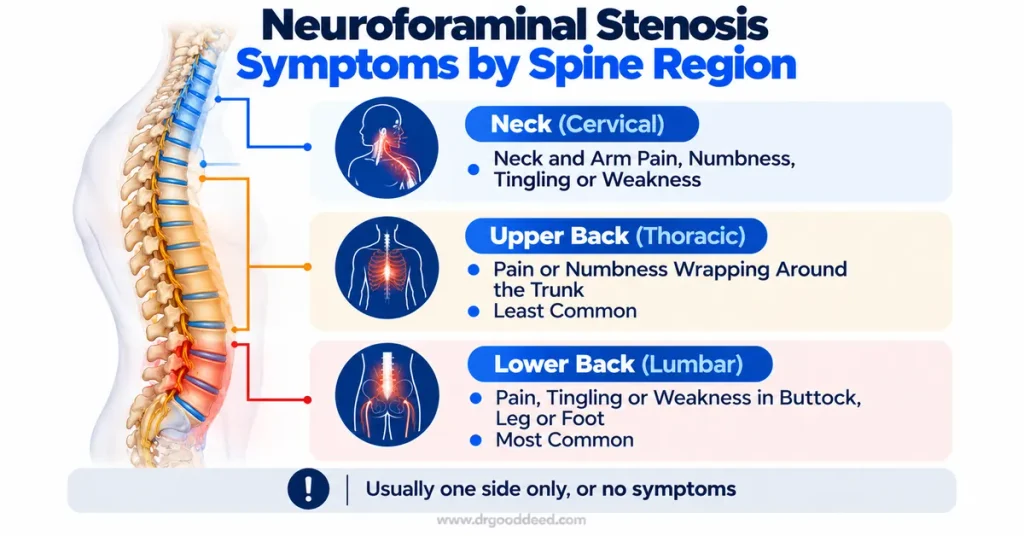
| Spine region | Typical symptoms | Note |
| Neck (cervical) | Neck pain, arm pain, numbness, tingling or weakness | Can affect how well the hands work |
| Upper back (thoracic) | Pain or numbness that wraps around the trunk | Least common site |
| Lower back (lumbar) | Pain, tingling or weakness in the buttock, leg or foot, often called sciatica | Most common site |
| Any region | Usually one side only, or no symptoms | Many people feel nothing |
What Is Neuroforaminal Stenosis?
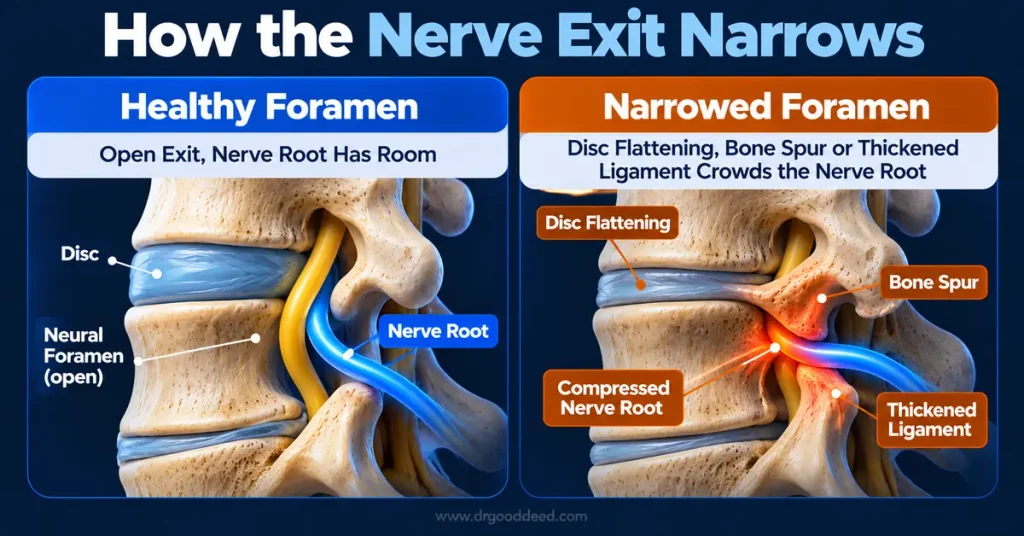
The bones of the spine have small tunnels between them, called neural foramina. Nerve roots, the branches that leave the spinal cord, run through these tunnels on their way to the arms, legs, and trunk. In neuroforaminal stenosis, the tunnels become too narrow. This is also called neural foraminal stenosis or simply foraminal stenosis.
It is one form of spinal stenosis, the general term for narrowing in the spine. The difference is where the squeeze happens: here it is at the side exits, not in the central canal that holds the spinal cord. Symptoms are most likely to show up after age 50. It can occur in the neck, upper back or lower back. The lower back is the most common location and the upper back the least.
Neuroforaminal Stenosis Causes
The usual cause is ordinary wear that builds up over the years (Cleveland Clinic; WebMD). Bone growth, disc problems, and injury account for most of the rest. Symptoms alone cannot tell you which cause is behind the narrowing, so doctors depend on an examination and imaging.
- Age-related wear: Discs are the cushions between spinal bones, and they flatten with time. The bones move closer together, and the exits shrink.
- Bone spurs: These are extra bone growths, often linked to osteoarthritis, which is wear on the joint surfaces. They can crowd into the opening.
- Disc problems: In a herniated disc, the soft center pushes outward. A degenerated disc thins and bulges. Either can press on the exit.
- Thickened ligaments and spondylolisthesis: Ligaments are tough bands holding bones together, and they may thicken as we age. Spondylolisthesis is when one vertebra slips forward over the one beneath it.
- Injury and repeated stress: An old spinal injury can alter the shape of the openings. Repeated strain, reported in some gymnasts and weightlifters, is another cause.
- Less common causes: Tumors and bone conditions such as Paget’s disease, in which bone remodels abnormally, can also narrow the foramina.
Neuroforaminal Stenosis Symptoms by Spine Region
Which symptoms you get depends on which nerve root is squeezed, since each root serves a different part of the body. A compressed root can cause radiculopathy: pain, numbness, or weakness in the area that nerve supplies.
- In the neck, pain tends to travel from the neck into the shoulder and arm, often with numbness, tingling or weakness.
- Some people struggle to use their hands or feel unsteady when walking.
- In the upper back, pain or numbness may wrap around to the front of the trunk, and balance problems are possible.
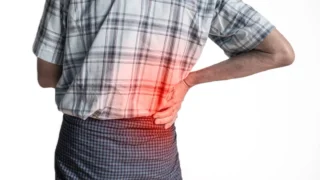
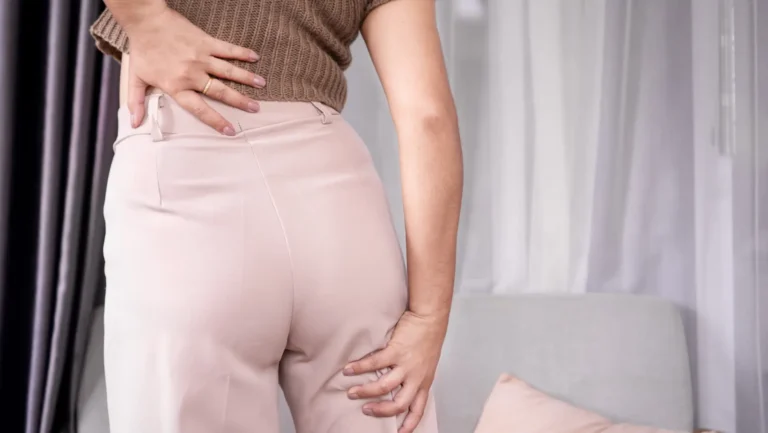
- The lower back often produces sciatica, which is pain in the buttock and the back of one leg. It can extend to the foot, with tingling or weakness.
- Lower back symptoms commonly get worse with standing or walking and ease with sitting or leaning forward.
- Leaning forward is thought to open the exits slightly.
- The pattern is a useful clue, but it does not prove anything by itself.
Symptoms usually affect one side only, unless nerves on both sides are compressed. Bending, twisting, coughing, and sneezing can all make the pain worse.
Pro Tip: For one week, write down which positions bring symptoms on, which ones ease them, and whether a cough or sneeze sets off a jolt. Pain on walking that settles when you sit is a recognizable lower back pattern.
How Is Neuroforaminal Stenosis Diagnosed?
Doctors combine your account of the symptoms, a physical exam, and imaging.
During the exam, your doctor checks movement, strength, reflexes and sensation to work out which nerve root is involved.
- MRI shows soft tissue such as discs, nerves, and ligaments, while CT shows bone spurs in finer detail.
- X-rays show how the spinal bones line up. In some cases nerve conduction tests and electromyography (EMG, which records the electrical activity of muscles) help confirm radiculopathy.
- Bone scans may be ordered if arthritis, a fracture, infection or a tumor is suspected.
Radiology reports sometimes grade neural foraminal stenosis from 0 (no narrowing) to 3 (severe, with nerve root collapse). A CT myelogram can be recommended for people who cannot have an MRI.
Neuroforaminal Stenosis Treatment Without Surgery
Treatment usually begins without an operation. It combines activity changes, physical therapy, and pain relief chosen with a doctor or pharmacist.
- Activity changes: A short period of rest (but not bed rest), then avoiding the positions that set off pain. Heat or ice may soothe. Static cycling is often less painful than walking.
- Physical therapy and exercise: A therapist designs movements to take pressure off the pinched nerve and strengthen the surrounding muscles. Weight loss may help when extra weight adds strain.
- Over-the-counter painkillers: Some list NSAIDs (anti-inflammatory pain relievers) first, but acetaminophen (paracetamol) is unlikely to help leg nerve pain from the spine, and the benefit of NSAIDs is unclear. Ask a pharmacist, and never stop a prescribed medicine on your own.
- Nerve-pain medicines: Doctors may prescribe certain antidepressants or anti-seizure drugs for nerve pain. Dosage varies with age and condition.
- Opioids: These are used sparingly and for short periods in severe pain, because they can be habit-forming.
- Epidural steroid injections: These are considered when exercise has not helped. A steroid combined with numbing medicine may not work better than numbing medicine alone, and steroids can occasionally cause serious side effects.
- Braces: A soft collar may help neck pain for a short time.
Foraminotomy and Other Surgery Options
A foraminotomy widens the nerve opening by removing bone or tissue. Doctors usually consider it only when other treatments have failed, the pain is severe or daily life is badly affected. It is done under general anesthesia and usually takes several hours.
- Other surgical options include foraminotomy, facetectomy, spinal cord stimulation, an interspinous distraction device, a small spacer placed between the vertebrae to hold the space open, and disc removal when a herniated disc is the cause.
- Most people return to a normal diet and activity after a few days of rest, and physical therapy may follow.
The risks of spinal stenosis surgery in general are infection, blood clots, and a tear in the covering of the spinal cord. Surgery often eases symptoms, but sometimes they stay the same or get worse.
Your surgeon is the best person to tell you what to expect in your own case.
Neuroforaminal Stenosis Outlook and Recovery
Most people with neuroforaminal stenosis improve without surgery, though symptoms can come back.
No reliable numbers exist to predict how your condition will go, and anyone offering certainty is claiming more than the evidence supports. If arm or leg pain or numbness returns, tell your doctor instead of waiting it out.
When Is Neuroforaminal Stenosis an Emergency?
Get emergency care if you have sudden severe back pain after an injury, sudden leg weakness, or nerve compression that affects both sides of your body or your bladder or bowels. These signs can point to serious pressure on the nerves or spinal cord.
- Both sides: Sciatica in both legs, or severe and worsening weakness or numbness in both legs.
- Groin area: Numbness around the genitals or anus.
- Bladder: Trouble starting to pee, being unable to pee, or losing control of your bladder.
- Bowel and sexual function: Losing control of your bowels or new problems with sexual function.
- Neck compression: Clumsiness, trouble using your hands or walking, and weakness can signal compression of the spinal cord.
In the US, go to the emergency department or call 911. In the UK, call 999 or go to A&E, and do not drive yourself. Bring your medicines.
For less urgent problems, see your primary care doctor in the US if arm or leg pain or numbness lasts several days. In the UK, see a GP if pain has not improved after a few weeks of home care, is getting worse or is stopping you doing normal things. NHS 111 and NHS community musculoskeletal services are other routes.
FAQs
Is neuroforaminal stenosis the same as spinal stenosis?
No. It is one type of spinal stenosis, the type where the side openings for nerve roots narrow. Other types narrow the central canal that holds the spinal cord, and the two can occur together.
How is neuroforaminal stenosis graded?
Radiologists may score the narrowing from 0 (none) to 3 (severe, with nerve root collapse). Not every report uses this scale, so ask your doctor what a neural foraminal stenosis finding on your scan means for you.
Does walking help neuroforaminal stenosis?
Not always. In the lower back, walking or standing often makes symptoms worse while sitting eases them, and static cycling is often less painful than walking. Ask your clinician which kind of movement suits you.
Is a back brace good for neuroforaminal stenosis?
Usually not for the lower back. Low-back braces are generally not advised; however, bracing is an option only if your doctor recommends it. A soft collar may help neck pain for a short time. Check with your clinician first.
Sources
- WebMD: What Is Neural Foraminal Stenosis? link
- Healthline: Foraminal Stenosis link
- Medical News Today: Neural Foraminal Stenosis link
- NHS: Sciatica link
- Mayo Clinic: Spinal Stenosis, Diagnosis and Treatment link
- Mayo Clinic: Spinal Stenosis, Symptoms and Causes link
Medical Disclaimer: This article is for general information only and is not medical advice. It does not replace a diagnosis, treatment plan, or guidance from a qualified healthcare professional. Always talk to your doctor about your own symptoms and before starting, stopping, or changing any treatment. If you think you may be having a medical emergency, call 911 or go to your nearest emergency room.