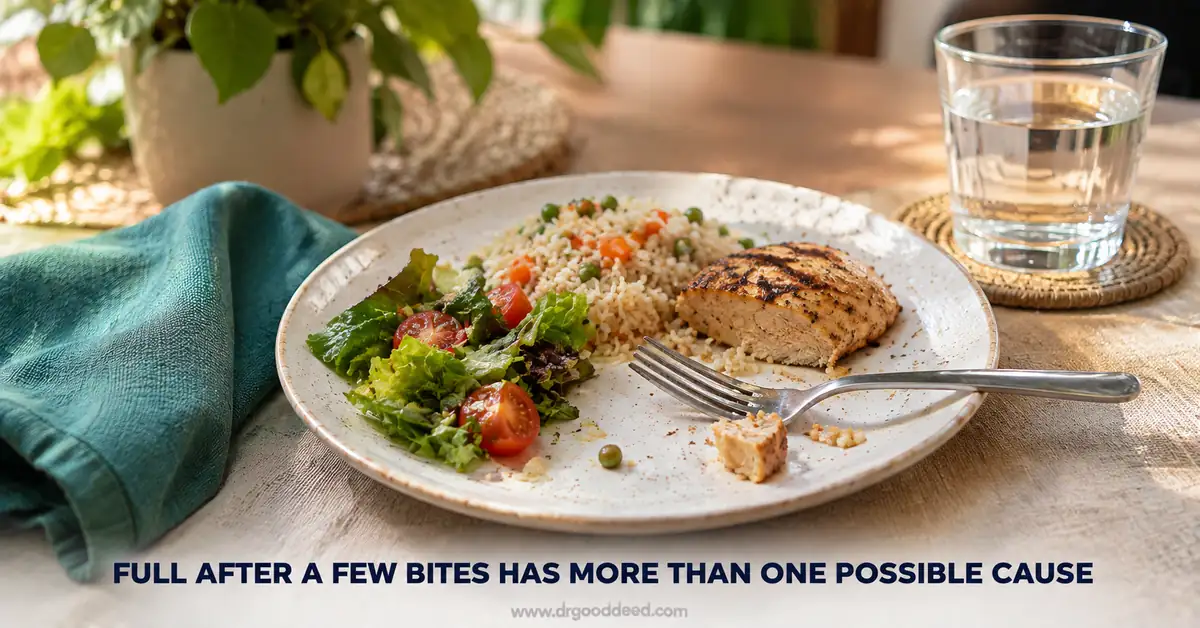

Feeling full after just a few bites is known as early satiety, which means you feel full sooner than usual while eating. Some of the common causes of this condition include functional dyspepsia, delayed stomach emptying (gastroparesis), medications that cause delayed digestion, and bloating.
Key Takeaways
- Feeling really full after eating may indicate functional dyspepsia or slow stomach emptying. See a doctor if you also lose weight without trying.
- Feeling full after eating can mean early satiation during a meal or ongoing fullness that lasts long after eating.
- An estimated 7% of people worldwide and about 12% in the US experience functional dyspepsia, the most common cause of dyspepsia (AAFP).
- GLP-1 medicines prescribed for managing diabetes and obesity can slow down gastric emptying.
- Vomiting, weight loss without any apparent cause, gastrointestinal bleeding, and swallowing difficulties need to be evaluated in a medical setting.
Early Satiation vs. Postprandial Fullness
Doctors differentiate between early satiation and postprandial fullness when they look into upper digestive problems.
| Symptom | When it happens | What it may suggest |
| Early satiation | During a meal | Functional dyspepsia or another digestive problem |
| Postprandial fullness | After a meal | Functional dyspepsia or delayed stomach emptying |
| Upper abdominal bloating | During or after eating | A supportive symptom of a digestive disorder |
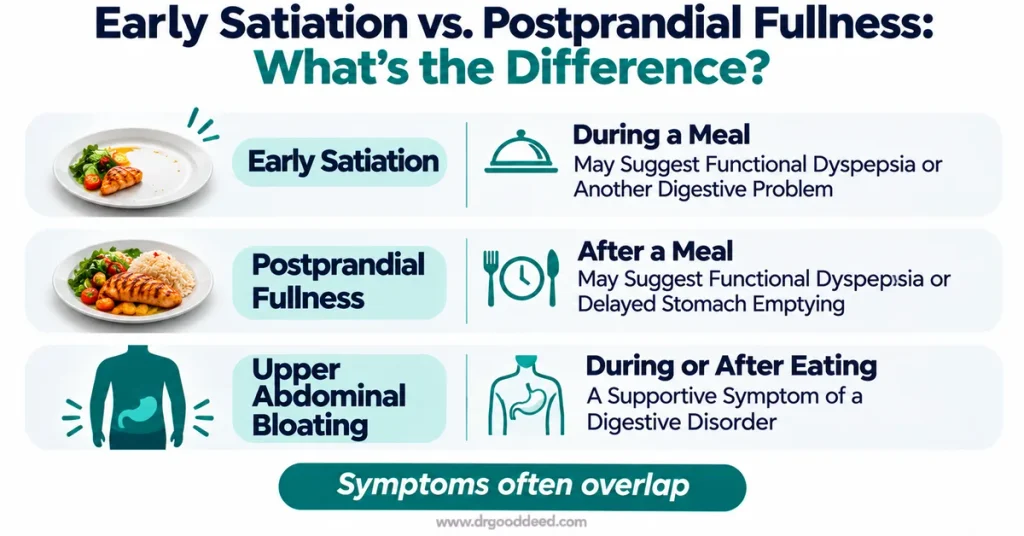
People who feel really full after eating may experience overlapping symptoms rather than a single clearly identifiable problem. The possible causes of early satiety include impaired stomach relaxation, delayed emptying, medication effects, and structural digestive conditions.
Facts: According to the Rome IV criteria, postprandial distress syndrome involves bloating and feeling full after eating meals or experiencing early satiation that interferes with usual activities. These symptoms occur at least three days per week. Upper abdominal bloating, nausea after meals, and excessive belching can also support the diagnosis.
Why Does the Stomach Fill Too Fast?
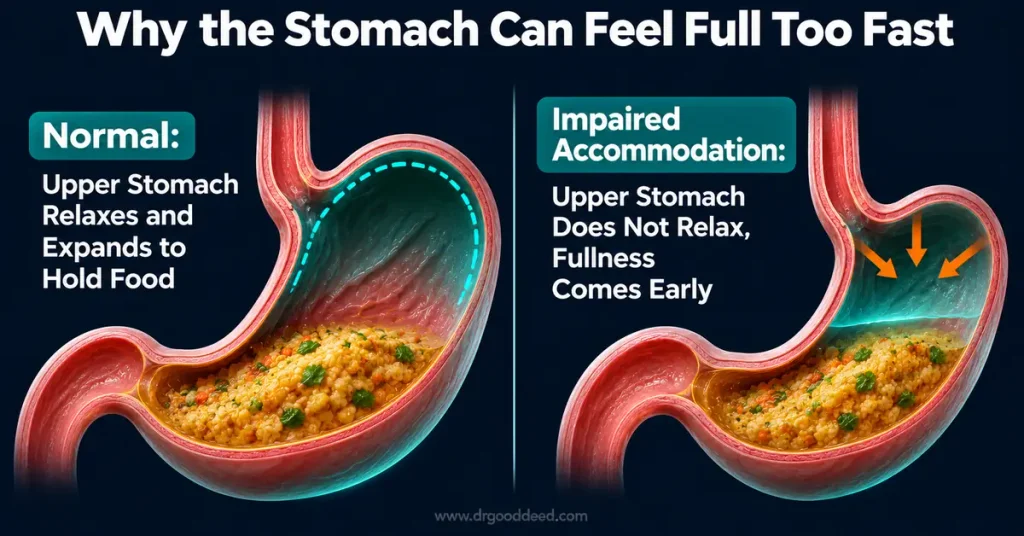
Feeling really full after eating a small meal can arise if the upper part of the stomach does not relax and expand to fit food properly.
In a healthy state, the upper side of the stomach relaxes with the introduction of food. This is called gastric accommodation and signifies that the stomach can accept the amount of food without exerting too much pressure.
- Functional dyspepsia causes recurring upper abdominal discomfort without an identifiable cause and affects around 12% of people in the US (AAFP).
- Up to about 40% of people with functional dyspepsia may have impaired gastric accommodation, meaning the stomach does not relax properly to accommodate food. This may contribute to early fullness after eating, although the link with symptom severity is not always clear.
- However, impaired gastric accommodation cannot be the explanation for all patients. According to the research, the studies do not link the severity of symptoms with the degree of the problem with relaxation.
- Some people have heightened sensitivity to stomach stretching. They feel uncomfortable even when the stomach works well, excluding the existence of any significant problems.
A healthcare professional may identify dyspepsia based on the analysis of symptoms, medical history, medications taken by a patient, and test results.
How Is Gastroparesis Diagnosed?
Gastroparesis refers to delayed gastric emptying without mechanical obstruction. In general, diagnostic tests for gastroparesis start with blood tests and radiological imaging of the abdominal cavity, after which a gastroscopy or a gastric emptying study may be prescribed. However, this does not mean that the patient can be diagnosed with the disease based simply on a sense of fullness. The stomach usually works to deliver food to the intestines gradually, but when diagnosed with gastroparesis, this process is interrupted.
Some patients even vomit food several hours after eating, which is caused by the food staying in the stomach too long.
Diabetes is one of the main causes, because long-term high blood sugar can damage the vagus nerve that controls the stomach. Knowing your target range helps, so check a normal blood sugar levels chart by age to see where your numbers should fall.
Despite having the same symptoms, gastroparesis and functional dyspepsia still cannot be distinguished based on fullness.
The condition can be assessed through medical tests:
Testing Procedure: Normally, gastroparesis tests are carried out after four hours and determine whether more than 10% of the meal is still located in the stomach after the specified time frame. The results of the test should be looked at in combination with the symptoms.
The clinician might look into the level of control of glucose in the blood as well as the use of any medication, in addition to checking on other related illnesses. This could help determine whether a delayed discharge is the reason behind your symptoms, or there is some other sickness.
GLP-1 Drugs and Slowed Stomach Emptying
GLP-1 receptor agonists delay the passage of solid food from the stomach. This can add to feeling really full after eating.
- These drugs are indicated for the treatment of type 2 diabetes and weight loss.
- They influence appetite and glucose levels in the blood, while delayed emptying is one of their effects within the digestive system.
- Studies show that the slowing effect decreases with the prolonged use of long-acting GLP-1. Do not stop or change a GLP-1 dose on your own. You should talk to your prescriber.
- It is still not clear how much the delayed emptying contributes to decreased appetite.
If you have any symptoms like new fullness, nausea, vomiting, and dehydration at the beginning of using GLP-1 medication or changing its dosage, make sure to share this with your physician.
Ulcers, Blockages, and Cancer: Causes of Early Fullness
Being full after eating a small quantity of food may signal a structural problem within the digestive system. However, in most cases, dyspepsia has no organic disease when examined via endoscopy. Less common causes include:
- Peptic ulcers: Ulcers developing in the stomach or upper small intestine cause upper abdominal pain that is connected to meals.
- Stomach outlet obstruction: Obstruction due to narrowing can cause a continuous feeling of fullness and vomiting.
- Stomach cancer: Tumour formation may affect normal digestion or take up space needed for food and introduce other alarming symptoms such as unexplained weight loss, anaemia, continuous pain, or vomiting.
How to Relieve Early Fullness with Meal and Posture Changes
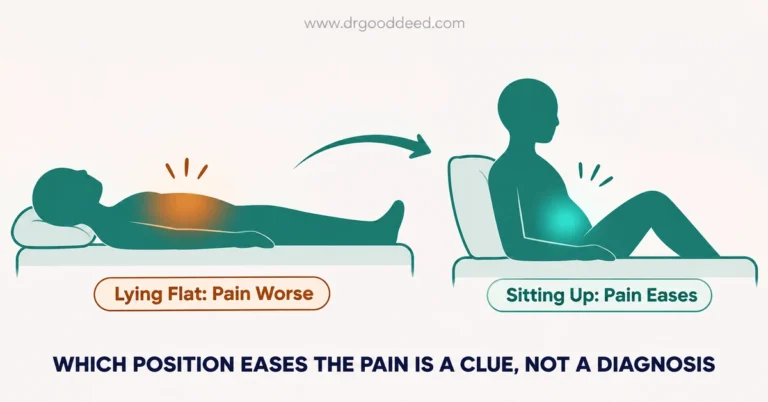
A few meal and activity modifications might alleviate the presence of early fullness, but these techniques alleviate the symptoms and do not treat the issue.
- Eating smaller portions regularly could solve the problem of too much food entering the stomach at the same time.
- Drink water and other fluids between meals for those diagnosed with gastroparesis to avoid dehydration.
- A walk after meals: gentle activity may help the stomach empty.
- Eat softer, less fibrous foods if you have gastroparesis, as they may be easier to digest. Choose foods based on your symptoms and your healthcare professional’s advice.
- Medication review with your prescriber: GLP-1 drugs slow solid-food emptying. Consult your doctor about your medication dose.
Read our article on home remedies for indigestion.
When Is Early Fullness a Warning Sign?
Know when to worry about feeling full quickly: check for these symptoms:
- Unexplained weight loss that accounts for over 5% of body weight during the previous six to twelve months.
- Vomiting blood and black stool.
- Swallowing is accompanied by pain or has become more difficult.
- Unexplained iron-deficiency anemia.
- Some relatives had problems with cancer of the upper digestive tract.
- New symptoms that begin at age 60 or older. Guidelines vary, with age cutoffs ranging from 50 to 60. These symptoms do not always signal a serious condition, but a doctor should still evaluate them.
In the US, see your primary care doctor or urgent care; in the UK, see your GP. Call 911 or 999 for vomiting blood or black stools.
FAQs
Why do I feel full after eating only a few bites of food?
Feeling full after having eaten only a few bites has a name too, which is early satiety. It is often caused by functional dyspepsia, delayed stomach emptying, medicines such as GLP-1 drugs, or, less commonly, a structural problem in the digestive tract.
What is it called when you feel full quickly after eating?
It is called early satiety. Early satiety causes include functional dyspepsia, slow stomach emptying, GLP-1 drugs and structural problems such as ulcers or tumors.
Is feeling full after a small meal a sign of cancer?
Cancer is one possible but uncommon explanation. Feeling full after eating small amounts does not automatically indicate cancer because functional dyspepsia and other noncancerous conditions can cause similar symptoms. Unexplained weight loss, bleeding, anaemia, or persistent vomiting require evaluation.
Can acid reflux make you feel full after eating a small meal?
Yes. Reflux can overlap with functional dyspepsia and other upper digestive symptoms. People who are bloated and full after eating may also experience heartburn, regurgitation, or discomfort after meals. A clinician can assess whether reflux or another condition is contributing.
Can anxiety make you feel full quickly after eating?
Anxiety and depression are associated with functional dyspepsia, and changes in gut-brain signaling can influence how digestive sensations are perceived. However, anxiety alone does not establish the cause of early fullness. Persistent or worsening symptoms still deserve medical evaluation.
Sources
- Cleveland Clinic. Early Satiety: Causes, Treatment & Long-Term Complications. link
- National Institute of Diabetes and Digestive and Kidney Diseases (NIDDK). Symptoms & Causes of Gastroparesis. link
- Rome Foundation. Rome IV Criteria. link
- American Gastroenterological Association. Clinical Guidance on the Management of Gastroparesis. link
- American Academy of Family Physicians. Mounsey A, Barzin A, Rietz A. Functional Dyspepsia: Evaluation and Management. Am Fam Physician, 2020. link
- Aziz I, et al. Epidemiology, clinical characteristics, and associations for symptom-based Rome IV functional dyspepsia in adults in the USA, Canada, and the UK: a cross-sectional population-based study. Lancet Gastroenterol Hepatol, 2018. link
- Tack J, et al. Role of impaired gastric accommodation to a meal in functional dyspepsia. Gastroenterology, 1998. link
- Quantified Metrics of Gastric Emptying Delay by GLP-1 Agonists: A Systematic Review and Meta-Analysis with Insights for Periprocedural Management. link
Medical Disclaimer: This article is for general information only and is not medical advice. It does not replace a diagnosis, treatment plan, or guidance from a qualified healthcare professional. Always talk to your doctor about your own symptoms and before starting, stopping, or changing any treatment. If you think you may be having a medical emergency, call 911 or go to your nearest emergency room.