
Medically reviewed by Dr Nivedita Pandey, GI and hepatology.
If you need to poop when running, you are not alone: running speeds up your gut through lower blood flow to the intestines, bouncing and stress hormones. That sudden urge to find a bathroom can happen even when you feel perfectly fine before putting on your running shoes. It is often related to how exercise affects your digestive system, but what you eat, drink, and do before a run can make a difference.
Key Takeaways
- If you need to poop when running, it is usually runner’s trots, a common and mostly harmless reaction that you can often prevent.
- During maximal exercise, blood flow to the gut may drop by up to 80% (de Oliveira et al., 2014).
- High-fiber foods, caffeine, and fatty meals can trigger digestive symptoms when eaten too close to a run (Mayo Clinic, 2021).
- Black, tarry, or bloody stool is not a normal running symptom and needs prompt medical attention (NIDDK, 2024).
Why You Need to Poop When Running
You need to poop when running mainly because blood flow to your gut drops, your organs bounce with each stride and stress hormones speed up your bowels.
The exact reason varies from one runner to another. A review published in Sports Medicine in 2014 describes exercise-related digestive problems as a combination of physical, physiological, and dietary factors.
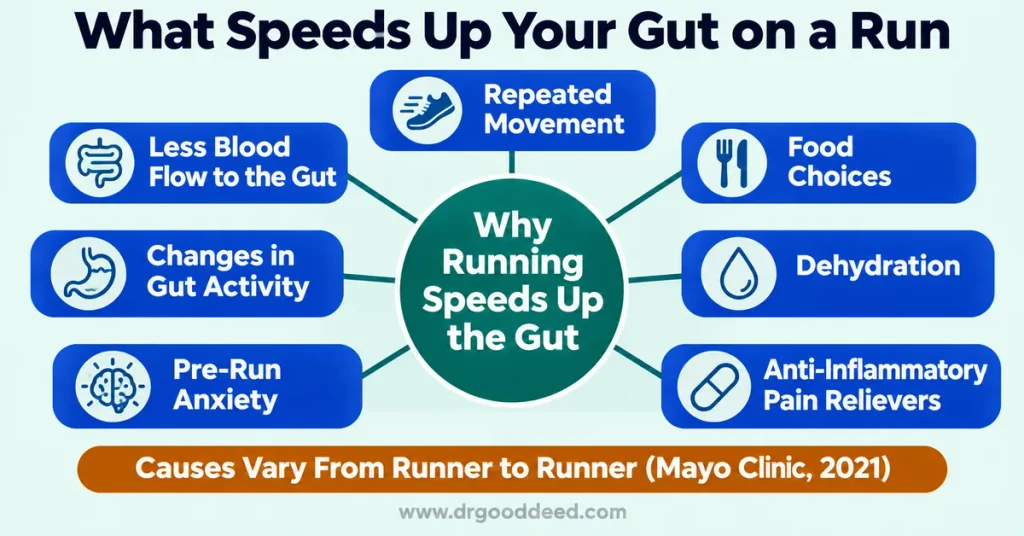
| Possible cause | What happens in your body |
| Reduced blood flow to the gut | During intense exercise, your body sends more blood toward working muscles and the skin. This reduces the blood available to the digestive organs. During maximal exercise, gut blood flow may fall by up to 80% (de Oliveira et al., 2014). |
| Repeated movement | Every stride creates movement inside your abdomen. This repeated jostling can contribute to bowel urgency, especially during longer runs (Mayo Clinic, 2021). |
| Changes in gut activity | Exercise can affect intestinal movement and hormone release. These changes may encourage bowel contents to move through the digestive tract more quickly (Mayo Clinic, 2021). |
| Food choices | High-fiber meals, fatty foods, caffeine, and certain sweeteners can cause digestive discomfort or loose stools in some runners (Mayo Clinic, 2021). |
| Pre-run anxiety | Race-day nerves and stress can affect your gut. You may notice the urge to poop becoming stronger just before a race or important workout (Mayo Clinic, 2021). |
| Dehydration | Losing too much fluid during exercise can contribute to digestive problems and make it harder for your body to cope with prolonged activity (Mayo Clinic, 2021). |
| Anti-inflammatory pain relievers | These medicines have been associated with more gastrointestinal complaints during exercise (Mayo Clinic, 2021). |
This sudden bowel urgency is often called runner’s trots or runner’s diarrhea. It refers to frequent, loose bowel movements that happen during or shortly after running (Mayo Clinic, 2021).
It is different from the urge to poop immediately after eating, which can be related to the gastrocolic reflex. You can read more about that in our guide to needing to poop right after eating.
How Common Is Runner’s Trots?
Runner’s trots is more common than many people realize, particularly among people who run long distances. A review published in Sports Medicine in 2014 found that around 30% to 50% of athletes experienced gastrointestinal complaints. Among distance runners, estimates ranged from 30% to 90%, depending on the study and the symptoms recorded.
A more recent study published in BMJ Open Sport & Exercise Medicine in 2023 looked at nearly 2,000 runners. More than half reported abdominal complaints during or shortly after running.
You may be more likely to experience digestive problems when:
- You run for longer periods: Longer sessions give exercise-related gut symptoms more time to develop.
- You increase your pace: High-intensity running places greater demands on your body and can make digestive discomfort more noticeable.
- You are preparing for a race: Changes in your routine, unfamiliar meals, and pre-race anxiety can all affect your gut.
- You have a sensitive digestive system: Certain foods or existing bowel problems may make you more prone to symptoms.
Most exercise-related digestive complaints are mild (de Oliveira et al., 2014). However, severe pain, blood in your stool, or symptoms that continue when you are not running should not be ignored.
Foods and Drinks That Trigger It
Your pre-run meal can have a bigger effect on your stomach than you might expect. Some foods are perfectly comfortable to eat during the day but can cause bloating, cramps, or bowel urgency when you exercise soon afterward.
Mayo Clinic’s guidance (2021) on runner’s diarrhea identifies several common dietary triggers.
- High-fiber foods: Beans, bran, whole grains, fruits, and salads can increase stool bulk and bowel activity. Eating large portions close to a run may make you feel uncomfortable.
- Gas-producing foods: Certain vegetables and legumes can cause bloating and gas, which may become more noticeable while running.
- Sugar alcohols: These sweeteners are found in some sugar-free candies, chewing gum, and desserts. They can cause loose stools or bloating in people who are sensitive to them.
- Caffeine before a run: Coffee and other caffeinated drinks can stimulate bowel activity. Some runners notice an urge to poop soon after drinking coffee. Our guide to stomach pain after drinking coffee explains other ways coffee can affect digestion.
- High-fat foods: Greasy or fatty meals may leave you feeling heavy and uncomfortable during exercise.
- Dairy products: If you have lactose intolerance, milk and other dairy products may cause cramps, gas, or diarrhea.
- Unfamiliar sports nutrition products: Energy gels and bars may upset your stomach, particularly when you try something new during a race.
You do not need to avoid every food on this list. Start by noticing what you eat before a run and whether the same foods trigger symptoms repeatedly. Your own food and symptom patterns are more useful than following a long list of unnecessary restrictions.

How to Stop Needing to Poop When You Run
You may not be able to prevent every episode, but changing your pre-run routine can make bathroom urgency less frequent. Meal timing, hydration, and a gradual training schedule are good places to start.
Try these changes and see which ones work for you:
1. Be mindful of what you eat the day before. If you are prone to digestive problems, limit high-fiber foods, gas-producing foods, and products containing sugar alcohols before a long run. You can return to your usual food choices as your routine allows.
2. Watch your meals 3 to 6 hours before running. Mayo Clinic (2021) recommends limiting caffeine and high-fat foods during this period if they trigger symptoms. Pay attention to how your body responds rather than assuming every runner has the same triggers.
3. Give your stomach time to settle. Avoid eating within 2 hours of your run, following Mayo Clinic’s guidance (2021). Plan your meals around your workout so you are not forced to run immediately after eating.
4. Stay hydrated. Drink enough fluids before, during, and after exercise. Avoid warm drinks before a run if they tend to stimulate your gut. For more general guidance, see our article on how much water you need.
5. Use the bathroom before leaving. Give yourself enough time to have a bowel movement without rushing. For longer runs, choose a route where you know you can access a restroom.
6. Choose comfortable clothing. Tight waistbands can put pressure on your abdomen. Loose, comfortable running clothes may help reduce discomfort.
7. Keep a food and running journal. Note what you eat, when you eat, how long you run, and when symptoms begin. After a few weeks, you may notice that certain meals or habits consistently cause problems.
8. Reduce your pace or distance when symptoms flare up. You do not have to push through every uncomfortable run. Ease back temporarily and increase your distance and intensity gradually as your symptoms improve.
Avoid trying unfamiliar energy gels or bars on race day. A joint position statement published in Sports Medicine in 2025 also emphasizes the importance of finding an individualized approach and practicing nutrition strategies during training.
If these changes do not help, a doctor or dietitian can help you identify possible triggers. Avoid starting a restrictive diet or taking medication just to get through a run without professional guidance.
Is It Runner’s Trots or Something Else?
Runner’s trots usually occur during or shortly after exercise. When diarrhea happens regularly on rest days, wakes you up at night, or comes with unexplained weight loss, it may be related to a digestive condition rather than running alone.
Some other possible causes include:
- Lactose intolerance: Your body may struggle to digest lactose, the natural sugar in milk. This can cause gas, bloating, stomach cramps, and diarrhea, particularly after consuming dairy products (Mayo Clinic, 2021).
- Irritable bowel syndrome: IBS can cause recurring abdominal pain, bloating, and changes in bowel habits. Symptoms may occur during everyday activities, not just while running.
- Ischemic colitis: This is an uncommon but serious condition in which part of the colon receives insufficient blood. Prolonged, intense exercise has been associated with rare intestinal complications, including ischemic bowel (de Oliveira et al., 2014).
- Other bowel conditions: Ongoing diarrhea, recurring abdominal pain, or changes in your usual bowel habits may need further investigation.
The timing of your symptoms matters. Notice whether they happen only during exercise or continue throughout the day.
Stress can also affect digestion. If you experience stress and diarrhea, anxiety may be contributing to the problem. However, recurring digestive symptoms should not automatically be blamed on stress.
When to See a Doctor About Runner’s Trots
Occasional bowel urgency during a run may not be a cause for concern. However, it is worth speaking with your primary care doctor when the problem keeps returning, affects your daily routine, or does not improve after changing your eating and training habits.
The National Institute of Diabetes and Digestive and Kidney Diseases (NIDDK, 2024) advises adults to seek medical attention right away for warning signs such as:
- Black, tarry stool or stool containing blood or pus.
- Severe abdominal or rectal pain.
- Signs of dehydration, such as very little urination, dizziness, or a noticeably dry mouth.
- Six or more loose stools in a day.
- High fever or frequent vomiting.
- Diarrhea that lasts longer than 2 days.
Do not assume that blood in your stool or severe abdominal pain is simply part of running. These symptoms need medical evaluation. Seek emergency medical help if you faint, become confused, or feel severely unwell.
If black, bloody, or tarry stool occurs, get medical attention rather than waiting to see whether it improves with changes to your running routine.
If you still need to poop when running after changing your food, timing, and training, talk to your primary care doctor.
Frequently Asked Questions
Is It Normal to Poop When You Run?
Yes. Running can stimulate bowel activity, which is why some people feel an urge to poop during exercise. Digestive complaints are especially common among endurance athletes, and most are mild (de Oliveira et al., 2014). However, severe pain, blood in your stool, or persistent diarrhea should be checked by a healthcare professional.
Do Marathon Runners Get Runner’s Trots More Often?
Yes, runner’s trots is more common in long, hard races, because longer and more intense running can reduce blood flow to the gut further. A review published in Sports Medicine in 2014 found that gastrointestinal symptoms were reported by 37% to 89% of runners in events ranging from 67 to 161 kilometers.
Is Pooping After Running Good?
Having a bowel movement after running is common and usually harmless, particularly when you feel well otherwise. Some runners experience loose stools immediately after exercise. However, black or bloody stool, severe abdominal pain, or diarrhea that keeps returning should not be treated as a normal effect of exercise.
Can Dehydration Cause Diarrhea When Running?
Yes. Dehydration can contribute to digestive problems during prolonged exercise, and fluid loss may make existing symptoms worse (Mayo Clinic, 2021). Drink enough fluids before, during, and after your run. If you develop dizziness, very little urination, or other signs of dehydration, stop exercising and seek medical advice.
Should I Take Medicine Before a Race to Stop It?
Do not take medication just to prevent runner’s trots without speaking to your doctor. Start with changes to your meal timing, food choices, and training routine. Anti-inflammatory pain relievers can increase gastrointestinal complaints during exercise (Mayo Clinic, 2021), so discuss medication safety with your healthcare professional before a race.
Sources
Sports Medicine, Gastrointestinal Complaints During Exercise: Prevalence, Etiology, and Nutritional Recommendations (2014). link
Mayo Clinic News Network, How Can I Prevent Runner’s Diarrhea? (2021). link
American Journal of Gastroenterology, Gastrointestinal Symptoms in Long-Distance Runners, Cyclists, and Triathletes: Prevalence, Medication, and Etiology (1999). link
BMJ Open Sport & Exercise Medicine, Exercise-Related Abdominal Complaints in a Large Cohort of Runners (2023). link
Sports Medicine, Sports Dietitians Australia and Ultra Sports Science Foundation Joint Position Statement on Exercise-Associated Gastrointestinal Symptoms (2025). link
National Institute of Diabetes and Digestive and Kidney Diseases, Symptoms and Causes of Diarrhea (2024). link
Medical Disclaimer: This article is for general information only and is not medical advice. It does not replace a diagnosis, treatment plan, or guidance from a qualified healthcare professional. Always talk to your doctor about your own symptoms and before starting, stopping, or changing any treatment. If you think you may be having a medical emergency, call 911 or go to your nearest emergency room.