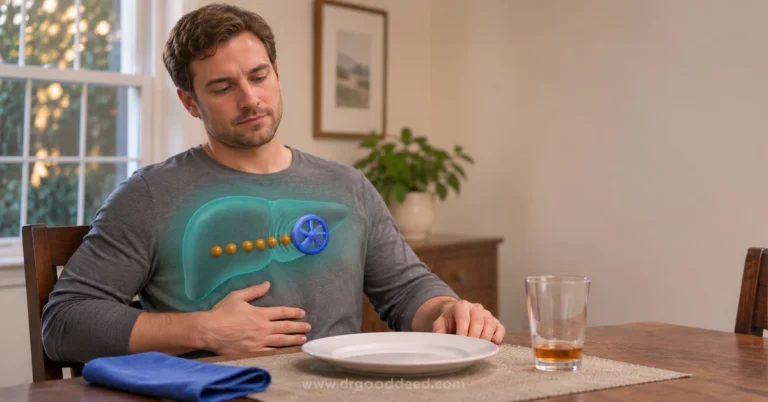

Sweating while eating with diabetes can come from gustatory sweating, a food-triggered sweat, or from low blood sugar, and the two need different responses. If you start sweating at the table, check what else you feel and your blood sugar if you can. Knowing the difference helps you respond safely instead of assuming the food caused it.
Key Takeaways
- Sweating while eating with diabetes can mean gustatory sweating or low blood sugar, so check your blood sugar first if you can.
- Diabetes-related nerve damage can affect the nerves that control sweat glands, leading to sweating during meals or at night.
- A 2021 study found gustatory sweating in 10% of people with type 1 diabetes and 13% with type 2, compared with 5% without diabetes.
- A blood sugar below 70 mg/dL is considered low by the CDC and needs prompt treatment.
- Sweating with chest pain, trouble breathing, fainting, or confusion needs emergency care. Call 911 if you suspect a heart attack or a severe low.
Why Sweating While Eating With Diabetes Happens
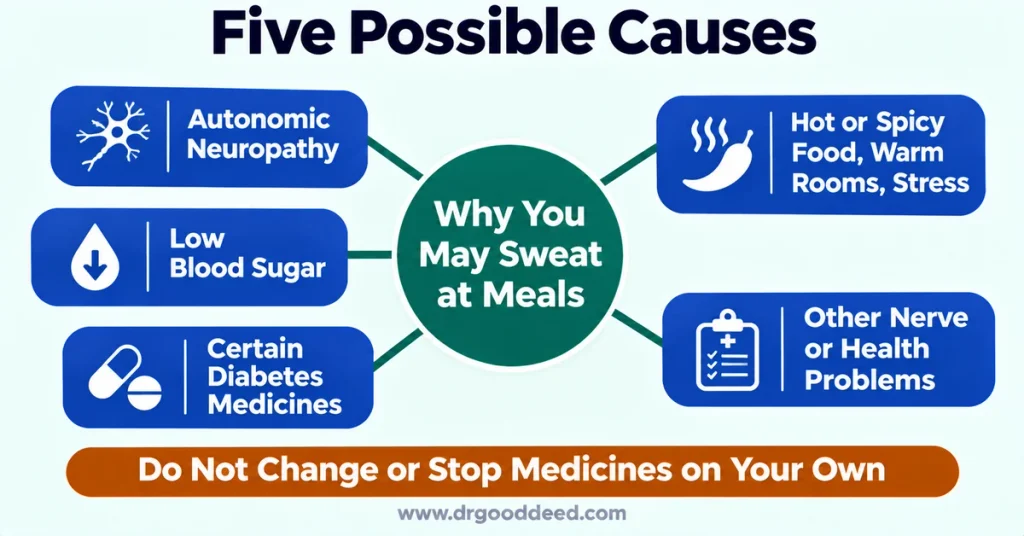
Sweating while eating with diabetes happens when nerve damage disturbs sweat gland control or when blood sugar has dropped too low. These are two important causes, but food, heat, medicines, and other health conditions can also trigger sweating.
Here are the main possibilities:
- Autonomic neuropathy: This is damage to nerves that control automatic body functions, including sweating, heart rate, and digestion. High blood glucose and high levels of blood fats can damage these nerves over time. When the nerves that control sweat glands stop working properly, you may sweat heavily while eating or during sleep.
- Low blood sugar: Sweating is a common early sign of hypoglycemia, or low blood sugar. It may happen with shaking, hunger, a fast heartbeat, dizziness, or confusion. A delayed meal, more activity than usual, or a mismatch between food and diabetes treatment can contribute.
- Certain diabetes medicines: Some treatments can increase the chance of low blood sugar, and sweating may be part of that episode. If sweating keeps happening, ask your care team to review your readings and treatment. Do not change or stop a medicine on your own.
- Food and temperature: Hot soup, spicy food, warm rooms, and stress can make anyone sweat. If sweating happens mainly with certain foods and you feel otherwise well, a food trigger may be involved.
- Other nerve or health problems: Diabetes can affect several types of nerves. You may also notice digestive symptoms, dizziness when standing, or changes in how your body responds to heat.
If you have tingling, numbness, digestive changes, or other symptoms of nerve damage, tell your doctor. You can also read about whether diabetic neuropathy can be reversed.
Gustatory Sweating in Diabetes: Signs and Timing
Gustatory sweating in diabetes is sweating that starts when you eat or sometimes when you smell, think about, or taste food. It often affects the face, scalp, neck, or upper body rather than causing sweat all over.
A study published in 2021 found gustatory sweating in 10% of people with type 1 diabetes and 13% of people with type 2 diabetes. The researchers found it in 5% of people without diabetes. In the study, sweating usually lasted about 10 to 30 minutes.
You may notice:
- Sweat forming on your forehead, scalp, cheeks, or neck while eating.
- Flushing or a warm feeling in the face.
- Sweating that happens with meals even when the room is cool.
- A similar pattern with different foods, not only spicy dishes.
- Sweating that settles after you finish eating.
The study found different risk patterns by diabetes type. Among people with type 1 diabetes, higher A1C was associated with gustatory sweating. Among people with type 2 diabetes, younger age and severe peripheral neuropathy were associated with it.
Gustatory sweating can be linked to nerve damage, but sweating alone does not prove that you have neuropathy. Your doctor will consider your diabetes history, other symptoms, and examination findings.
You may also hear the term Frey’s syndrome. The terms overlap, but they are not the same. Gustatory sweating describes the symptom. Frey’s syndrome is a specific form that most often occurs after surgery or injury near the parotid gland, a salivary gland near the ear. It commonly causes sweating or flushing around the cheek, temple, or ear when eating.
Low Blood Sugar or Gustatory Sweating: How to Tell
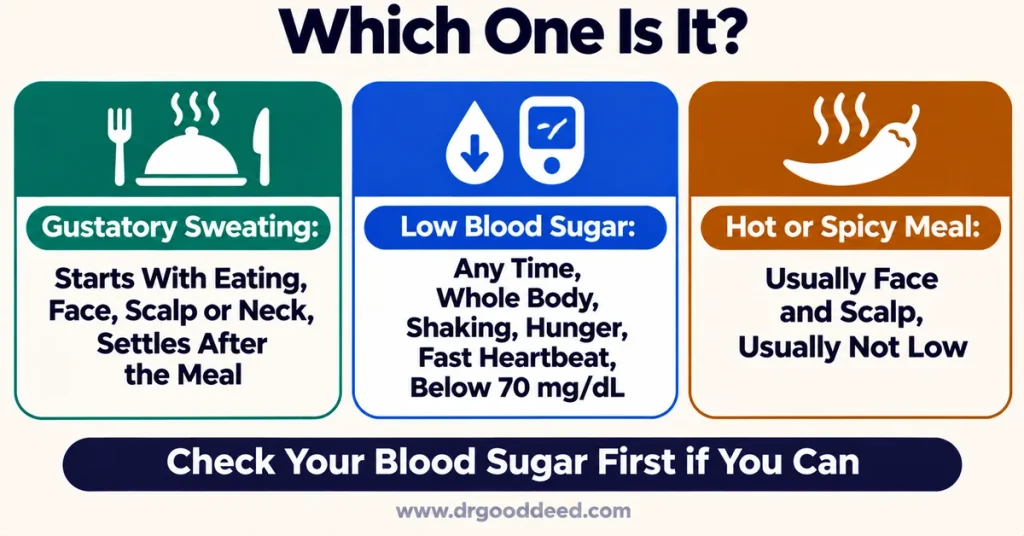
Low blood sugar is below 70 mg/dL, and a glucose meter or continuous glucose monitor can help you tell it apart from gustatory sweating. If you can check your blood sugar during the episode, do so before assuming the meal caused the sweat.
How gustatory sweating, low blood sugar, and a spicy meal differ at the table
| Clue | Gustatory sweating | Low blood sugar | Hot or spicy meal |
| Timing | Starts with eating and may last 10 to 30 minutes | Can happen at any time, especially after a delayed or skipped meal | Usually starts while eating the triggering food |
| Where you sweat | Often face, scalp, neck, or upper body | May cause sweating across the body | Varies; often face and scalp |
| Other signs | May include facial flushing | Shaking, hunger, fast heartbeat, dizziness, weakness or confusion | Usually no other symptoms unless the food triggers another reaction |
| Glucose reading | Not explained by a low reading alone | Below 70 mg/dL | Usually not low because of the food itself |
| First step | Record the pattern and discuss it with your doctor | Treat the low promptly | Note the food and avoid it if it repeatedly causes discomfort |
Doctor’s Tip: Check your blood sugar during the sweating episode if possible. The same symptom can have different causes, and a low blood sugar episode needs treatment right away.
If your blood sugar is below 70 mg/dL and you are awake and able to swallow safely, follow your care team’s low blood sugar plan. The CDC recommends taking 15 grams of fast-acting carbohydrate, while NIDDK suggests 15 to 20 grams, then checking again after 15 minutes. If it is still below 70 mg/dL, repeat the treatment. Your care team may give you a different plan based on your age, health, and treatment.
Fast-acting options may include glucose tablets or gel, regular juice or soda, or sugar. Do not rely on crackers or high-fat foods as the first treatment because they may work more slowly. Once your blood sugar returns to your target range, your care team may recommend a snack if your next meal is not soon.
A reading below 54 mg/dL is considered severe low blood sugar (CDC, 2024). If you become confused, faint, have a seizure, or cannot safely swallow, someone should call 911 and follow your emergency plan. Do not give food or drink to a person who is unconscious or unable to swallow.
Some people develop hypoglycemia unawareness, which means they no longer notice the usual warning signs of a low. This can happen after 5 to 10 years of diabetes, according to the CDC (2024), or repeated low blood sugar episodes. If you often have lows or do not feel them coming, tell your care team.
You can compare your reading with normal blood sugar levels, while keeping in mind that your personal targets may differ.
Is Sweating After Eating a Sign of Diabetes?
No, sweating after eating is not a reliable sign of diabetes by itself. It can happen for several reasons, including gustatory sweating, low blood sugar, spicy food, heat, stress, or another health condition.
Other possible causes include:
- Hyperhidrosis: This means excessive sweating that may happen even when your body does not need to cool down. It can affect specific areas or occur more widely.
- Certain medicines: Some medicines can cause sweating as a side effect. If the sweating began after a treatment change, ask your clinician whether it could be related.
- Spicy foods or hot drinks: These can trigger sweating around the face and scalp, even in people without diabetes.
- Alcohol or stress: Both can affect the body’s response to food and blood sugar.
- Other medical conditions: Hormonal changes, infections, and other health problems can cause sweating.
If you do not have diabetes but notice repeated sweating after meals, your doctor can help decide whether you need blood sugar testing or an evaluation for another cause.
Other mealtime changes may raise similar questions, such as feeling sleepy after eating. A single symptom does not confirm diabetes. Your clinician will consider your symptoms and testing together.
How to Stop Diabetes Sweating at Meals
The best way to manage diabetes-related sweating depends on what is causing it. If low blood sugar is behind the episodes, preventing and treating lows is the priority. If nerve damage is affecting sweat control, your clinician can discuss ways to manage the symptoms.
Try these steps:
- Track when it happens: Write down what you ate, when sweating started, how long it lasted, and whether you had other symptoms.
- Check your blood sugar during an episode: This can help identify a low and give your care team useful information.
- Notice food and environment triggers: Record whether hot foods, spicy meals, warm rooms, or stress make it worse.
- Keep meals regular: Delayed or skipped meals can contribute to low blood sugar for some people. Follow the meal plan your clinician recommends.
- Manage your diabetes consistently: Keeping blood sugar, blood pressure, and cholesterol within your care goals can help reduce the risk of further nerve damage.
- Avoid overheating: Choose a comfortable eating area and avoid very hot rooms if heat makes the sweating worse.
- Ask about treatment options: If gustatory sweating continues to disrupt meals, your doctor may discuss medical treatments. The right approach depends on your health history and other medicines.
- Review low blood sugar risks: Older adults and people with kidney disease may have a higher risk of low blood sugar. Ask your clinician whether your monitoring and treatment plan needs review.
Do not start, stop or adjust diabetes medicines on your own to control sweating. If you suspect a medicine is contributing, bring your glucose readings and symptom notes to your care team.
Which Doctor Checks Gustatory Sweating and How
A primary care doctor or endocrinologist can assess sweating during meals and help determine whether diabetes, low blood sugar, nerve damage, or another condition is responsible.
Your appointment may include:
- A review of when the sweating starts, how long it lasts, and which areas are affected.
- Questions about diabetes duration, blood sugar patterns, recent lows, and current medicines.
- A physical examination, including blood pressure and heart rate.
- A review of other symptoms, such as dizziness when standing, digestive changes, and numbness or tingling.
- Blood tests or other checks if your symptoms suggest another cause.
Your doctor may also review your diabetes-related nerve screening. The usual screening schedule is to begin at diagnosis for type 2 diabetes and five years after diagnosis for type 1 diabetes, according to Mayo Clinic (2022) citing the American Diabetes Association. Ask your clinician whether you are due for a neuropathy assessment.
Bring your glucose meter or continuous glucose monitor records, a list of medicines, and your food-and-symptom diary. If you have noticed neuropathy symptoms in your feet, such as tingling or numbness, mention those too.
When to See a Doctor About Meal Sweating
Call your doctor about sweating while eating with diabetes if it is new, getting worse, or disrupting your meals. Repeated episodes deserve attention, especially if you cannot tell whether they are related to low blood sugar.
Seek emergency help if sweating comes with signs of a heart attack or a severe low blood sugar episode.
- Call 911: Sweating with chest pressure or pain, pain in the jaw, neck, back, or arm, shortness of breath, fainting, or cold, clammy skin can signal a heart attack. Do not drive yourself.
- Call 911: A person who has a seizure, becomes unconscious, or cannot safely swallow during a suspected low blood sugar episode needs emergency help.
- Go to the ER: Severe symptoms such as confusion, collapse, or difficulty breathing need immediate evaluation.
- Visit urgent care: A sudden change in sweating, persistent symptoms, or sweating with fever or other new symptoms should be assessed.
- Contact your primary care doctor or endocrinologist: Make an appointment for repeated mealtime sweating, frequent low blood sugar, symptoms of neuropathy, or sweating that affects your quality of life.
Diabetes-related nerve damage can sometimes make it harder to notice chest pain or the usual warning signs of low blood sugar. That is why you should take sudden sweating with other concerning symptoms seriously.
Frequently Asked Questions
Is Sweating a Symptom of High Blood Sugar?
Not usually. Sweating is more commonly associated with low blood sugar than high blood sugar. High blood sugar often causes thirst, frequent urination, tiredness, or blurry vision. If you sweat and feel unwell, check your glucose if you can and discuss repeated episodes with your clinician. High readings have other causes too, including high blood sugar without diabetes.
Can Diabetes Cause Night Sweats?
Yes. Low blood sugar during sleep can cause sweating that leaves your pajamas or sheets damp. Diabetes-related nerve damage can also affect sweating at night. If you wake up sweaty, check your glucose if possible and share repeated episodes with your care team.
What Are 5 Early Warning Signs of Diabetes?
Mayo Clinic lists common signs such as being very thirsty, urinating often, feeling unusually tired, having blurry vision, and losing weight without trying. Sweating while eating is not one of the typical early warning signs. If you notice several symptoms, ask your clinician whether you need diabetes testing.
Does Sweating While Eating Mean Heart Disease?
Not by itself, but sweating after eating with diabetes needs urgent care if it comes with chest discomfort, shortness of breath, dizziness, fainting, or cold, clammy skin. These can be signs of a heart attack. Call 911 if you suspect one, even if the symptoms seem mild.
Will Gustatory Sweating Go Away?
It may continue, but your doctor can help you manage it. The right approach depends on whether nerve damage, low blood sugar, or another cause is involved. Keeping your diabetes care on track may help protect nerve health, but do not expect a specific timeline without medical assessment.
Sources
Endocrinology, Diabetes and Metabolism, Gustatory sweating in people with type 1 and type 2 diabetes mellitus: Prevalence and risk factors (Klarskov et al., 2021). link
National Institute of Diabetes and Digestive and Kidney Diseases, Autonomic Neuropathy. link
Centers for Disease Control and Prevention, Low Blood Sugar (Hypoglycemia). link
Centers for Disease Control and Prevention, Treatment of Low Blood Sugar (Hypoglycemia). link
National Institute of Diabetes and Digestive and Kidney Diseases, Low Blood Glucose (Hypoglycemia). link
Mayo Clinic, Hyperhidrosis: Symptoms and causes. link
Mayo Clinic, Autonomic neuropathy: Symptoms and causes. link
Cleveland Clinic, Frey’s Syndrome. link
Centers for Disease Control and Prevention, About Heart Attack. link
Mayo Clinic, Diabetes symptoms. link
Virta Health, Is Sweating After Eating a Sign of Diabetes? link
Medical Disclaimer: This article is for general information only and is not medical advice. It does not replace a diagnosis, treatment plan, or guidance from a qualified healthcare professional. Always talk to your doctor about your own symptoms and before starting, stopping, or changing any treatment. If you think you may be having a medical emergency, call 911 or go to your nearest emergency room.