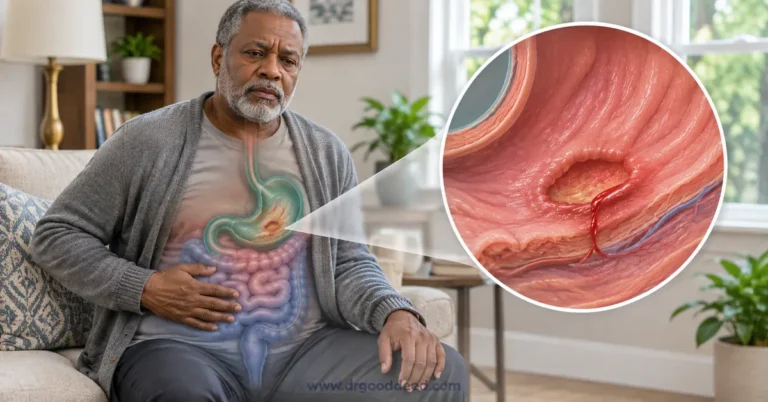


A tubular adenoma on colonoscopy is a precancerous polyp, not cancer, and in most cases your doctor has already removed it. These growths usually develop slowly, but some can become colorectal cancer over time. Your pathology report, including the number, size, and type of polyps found, helps your doctor decide when you need another colonoscopy.
Key Takeaways
- A tubular adenoma on colonoscopy is a benign, precancerous polyp, not cancer. Most never develop into cancer.
- Tubular adenomas are common and generally have a lower risk than villous or tubulovillous adenomas.
- Your risk depends on the number, size, and type of polyps, as well as whether they were completely removed.
- Your next colonoscopy may be recommended in 1, 3, 5, or 7 to 10 years, depending on your findings.
- Seek emergency care for heavy or continuous rectal bleeding, especially if you also have severe abdominal pain or signs of shock.
Tubular Adenoma on Colonoscopy: What It Means
A tubular adenoma on colonoscopy means the lab found a polyp with tube-shaped glands that is benign but could slowly change into cancer if left in place. The tissue removed during the procedure is examined by a pathologist to confirm the type of polyp and check for abnormal cell changes.
A polyp is a growth that develops on the inner lining of the colon. An adenoma is a type of polyp made up of glandular tissue. Tubular adenomas are considered precancerous because some can slowly develop into colorectal cancer. However, finding one does not mean you have cancer.
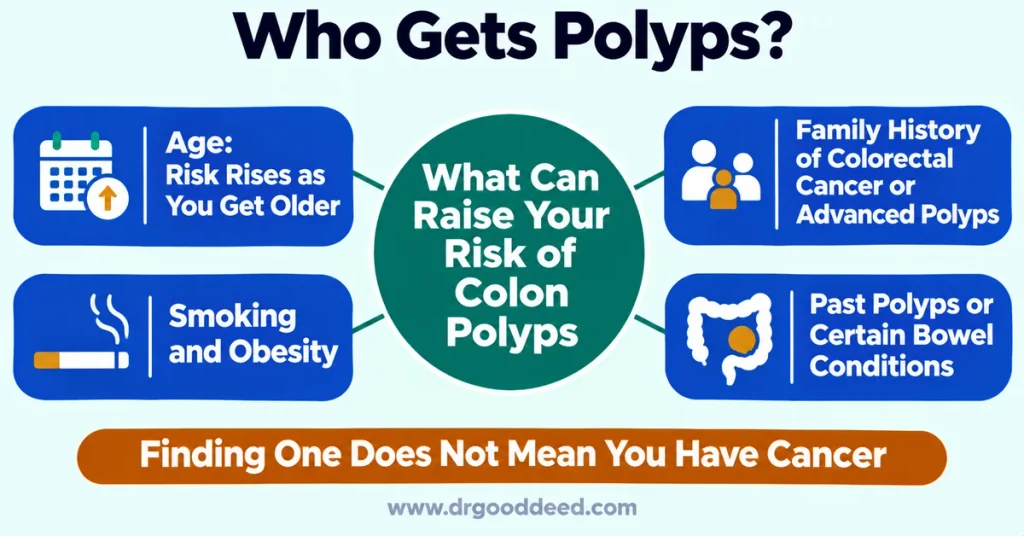
Your risk of developing colon polyps may also be affected by:
- Age: The risk of developing colon polyps increases as you get older.
- Family history: Having a parent, sibling, or child with colorectal cancer or advanced polyps may increase your risk.
- Smoking and obesity: Both are associated with an increased risk of developing colon polyps.
- Medical history: Previous polyps and certain bowel conditions may affect your screening plan.
Most tubular adenomas are found during routine screening and do not cause symptoms. Larger polyps may sometimes affect bowel function. Read our guide on polyps cause constipation to learn more.
How Serious Is a Tubular Adenoma of the Colon?
A tubular adenoma of the colon is usually not a reason to worry once fully removed, and it is a lower-risk type of precancerous polyp. If it has been completely removed, your doctor will usually recommend follow-up screening rather than additional treatment. However, it is important to attend your next colonoscopy because new polyps can develop.
Published estimates of cancer risk vary:
- Less than 1 in 10: Cleveland Clinic reported in 2026 that fewer than one in ten tubular adenomas develop into cancer.
- Less than 5%: NorthBay reported in 2026 that fewer than 5% were malignant in one study.
These figures come from different sources and should not be compared directly. They also cannot predict your individual risk. Your risk depends on the polyp’s size, number, type, and whether it was completely removed.
Cleveland Clinic reported in 2026 that approximately half the population will develop tubular adenomas. Mayo Clinic reported in 2025 that around one in three adults over 50 will develop an adenoma. These estimates may use different populations and definitions.
It can take around 10 years or more for some tubular adenomas to develop into cancer, according to Cleveland Clinic’s 2026 overview. This is why doctors recommend removing precancerous polyps and following the appropriate screening schedule.
How to Read a Tubular Adenoma Pathology Report
A tubular adenoma pathology report explains what type of polyp was found, its size, and whether abnormal cell changes were present. It may also mention where the polyp was located and whether the edges of the removed tissue were clear.
The tissue removed during your colonoscopy is examined by a pathologist. One term you may see is dysplasia, which means that some cells show abnormal changes. Dysplasia can be low-grade or high-grade. It does not automatically mean cancer.
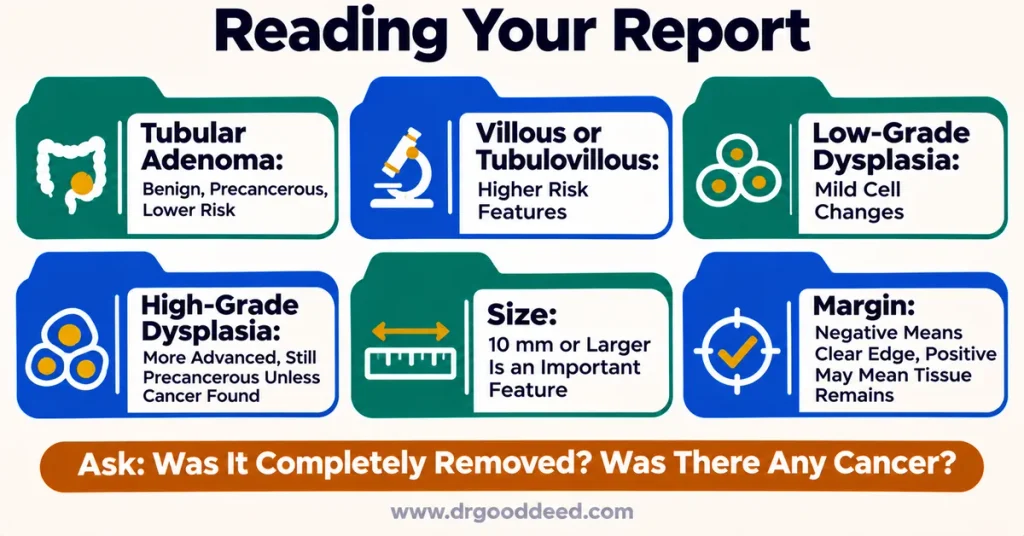
The table below explains what each line on a tubular adenoma pathology report means.
| Pathology report term | What it means | What to ask your doctor |
| Tubular adenoma | A benign, precancerous polyp. It generally has a lower risk of developing into cancer than villous or tubulovillous adenomas. | Was the polyp completely removed? |
| Tubulovillous or villous adenoma | These adenomas have features associated with a higher risk of developing into cancer. | Will this affect when I need my next colonoscopy? |
| Low-grade dysplasia | Mild or early abnormal changes in the cells. | Was there any high-grade dysplasia or cancer? |
| High-grade dysplasia | More advanced abnormal cell changes that are still considered precancerous unless cancer is identified. | Was the polyp completely removed? |
| Size (mm) | The measurement of the polyp. A size of 10 mm or larger is an important risk feature. | What was the size of my largest polyp? |
| Negative or positive margin | A negative margin means no abnormal cells were seen at the edge of the removed tissue. A positive margin may suggest that abnormal tissue remains. | Do I need an earlier examination? |
Your report may also mention the location of the polyp, such as the transverse colon, which is the middle section of the large intestine. Location is recorded as part of your findings, but the number, size, type, and completeness of removal are important factors in deciding your follow-up schedule.
Doctor’s Tip: The two main things to understand after polyp removal are whether it was completely removed and whether the pathology report found cancer. Ask your doctor to explain these findings and what they mean for your next colonoscopy. The American Cancer Society also highlights the importance of understanding these details in a pathology report.
What Are the Worst Colon Polyps to Have?
The colon polyps with the highest cancer risk are villous and tubulovillous adenomas, according to Mayo Clinic (2025). However, not all colon polyps have the same potential to develop into cancer.
The table below compares common colon polyp types and their cancer risk.
| Polyp type | What it means |
| Tubular adenoma | A common precancerous adenoma. It generally has a lower risk of developing into cancer than villous or tubulovillous adenomas. |
| Villous adenoma | An adenoma with a villous growth pattern, which is associated with a higher risk of developing into cancer. |
| Tubulovillous adenoma | An adenoma with both tubular and villous features. It generally carries a higher risk than a tubular adenoma. |
| Serrated polyp | A separate category of polyps. Some types can develop into colorectal cancer through a different pathway. |
| Hyperplastic polyp | Usually low risk, particularly when small and found in the lower colon or rectum. |
| Inflammatory polyp | Often associated with inflammation and generally does not carry the same cancer risk as an adenoma. |
Your doctor will consider the type of polyp, its size, how many were found, and other pathology findings when deciding your follow-up schedule.
Tubular Adenoma Treatment: How Removal Works
Tubular adenoma treatment is usually a polypectomy, which removes the polyp during colonoscopy. You may receive sedation during the procedure.
Your doctor may use a small wire loop, called a snare, to remove the polyp. The removed tissue is then sent to a laboratory for examination.
A few factors may affect what happens next:
- Complete removal: If the polyp is removed in one piece, the pathologist can usually assess the tissue and its edges more easily.
- Partial removal: Larger polyps may need to be removed in several pieces. This is called piecemeal resection.
- Tissue examination: The pathologist checks the tissue type, the degree of dysplasia, and whether cancer is present.
- Repeat procedure: If your doctor is concerned that some polyp tissue may remain, they may recommend an earlier colonoscopy.
- Surgery: In rare cases, surgery may be considered if the polyp cannot be safely removed during colonoscopy or further treatment is needed.
If your pathology report mentions fragments of tubular adenoma, ask your gastroenterologist whether the polyp was removed completely and whether you need an earlier examination.
Tubular Adenoma Colonoscopy Follow-Up: When to Repeat It
Your tubular adenoma colonoscopy follow-up depends on how many adenomas were found, how large they were, and what type of tissue they contained. Your doctor will also consider whether the colonoscopy was complete and whether the polyps were fully removed.
According to the 2020 U.S. Multi-Society Task Force recommendations, summarized by the American Academy of Family Physicians in 2021, the following intervals apply after a high-quality colonoscopy with complete polyp removal:
| Colonoscopy finding | Recommended follow-up |
| 1 to 2 tubular adenomas smaller than 10 mm | 7 to 10 years |
| 3 to 4 tubular adenomas smaller than 10 mm | 3 to 5 years |
| 5 to 10 tubular adenomas smaller than 10 mm | 3 years |
| Any adenoma 10 mm or larger | 3 years |
| Villous or tubulovillous adenoma | 3 years |
| High-grade dysplasia | 3 years |
| More than 10 adenomas | 1 year |
The recommended interval for 1 to 2 small tubular adenomas was extended from 5 to 10 years to 7 to 10 years in the updated guidance. If an older report gives you a different date, ask your doctor whether the newer recommendations apply to your situation.
These intervals do not apply to everyone. People with hereditary colorectal cancer syndromes, inflammatory bowel disease, serrated polyposis, or a personal or family history of colorectal cancer may need a different schedule. Your doctor may also recommend earlier follow-up if the colonoscopy was incomplete or the polyps were not completely removed.
If the polyp was removed in pieces: You may need an earlier examination to check whether any tissue remains. Mayo Clinic reported a 3 to 6-month interval in its 2025 overview, while Cleveland Clinic’s 2026 overview described a check at around 6 months. The correct timing depends on your findings, so your gastroenterologist should confirm when you need to return.
If you are an older adult: Adults over 75 should not automatically continue surveillance colonoscopies without an individual assessment. Overall health, previous findings, life expectancy, and the potential benefits and risks should be discussed with a healthcare professional. An update on surveillance in older adults was reported by GI and Hepatology News in August 2026. Do not stop or delay a planned colonoscopy without speaking to your doctor.
If you are also reviewing other screening recommendations for your age group, see our guide to cancer screening guidelines by age. The CDC recommends routine colorectal cancer screening for most adults aged 45 to 75. Adults aged 76 to 85 should make an individual decision with their healthcare professional.
When to See a Doctor After a Tubular Adenoma
Most tubular adenomas do not cause symptoms. However, contact your doctor if you notice new or persistent bowel changes, bleeding, or other symptoms.
Get emergency help
- Call 911: If you have significant rectal bleeding along with signs of shock, such as fainting, severe weakness, or confusion.
- Go to the ER: If you have heavy or continuous rectal bleeding or severe abdominal pain or cramping.
Contact your doctor immediately after polyp removal
Contact your healthcare team if you experience:
- Fever
- Severe or worsening abdominal pain
- Bloody stools or ongoing rectal bleeding
- Bleeding that does not stop
- Dizziness or unusual weakness
Arrange a routine appointment
Speak to your doctor if you notice ongoing changes in bowel habits or are unsure about the findings in your pathology report. Rectal bleeding can have several causes. Our guide on hemorrhoid vs polyp explains some differences.
If you notice mucus in stool along with other bowel changes, mention it during your appointment. Dark or black stools can also point to bleeding, as this guide on why your poop is black explains.
Take your pathology report with you and ask your doctor:
- How many polyps were found?
- What was the size of the largest polyp?
- Were all the polyps completely removed?
- Was there any high-grade dysplasia or cancer?
- When should I have my next colonoscopy?
If you have questions after a tubular adenoma on colonoscopy, bring your pathology report and ask your doctor to confirm the date of your next test.
Frequently Asked Questions
What Happens at a Tubular Adenoma Colonoscopy Follow-Up?
After a tubular adenoma on colonoscopy, the follow-up test works the same way: the doctor checks the whole colon and removes any new polyps. New adenomas can develop over time, even after an earlier polyp has been removed. Following your recommended screening schedule helps your doctor find and remove them before they have the chance to develop further.
What Do Fragments of Tubular Adenoma Mean?
Fragments of tubular adenoma usually means the polyp tissue was removed in more than one piece. This may happen when a polyp is large or difficult to remove in one piece. Your doctor may recommend an earlier colonoscopy to check the removal site for any remaining tissue. Ask your gastroenterologist when you should return.
Does the Transverse Colon Affect Follow-Up?
The transverse colon is the middle section of your large intestine. Your pathology report may mention it to show where the polyp was found. Follow-up timing is generally based on the number, size, and type of adenomas, along with whether they were completely removed. Ask your doctor whether any other findings affect your recommended date.
Can a Tubular Adenoma Grow Back?
If a tubular adenoma is completely removed, it generally does not grow back in the same place. However, some tissue may remain if removal was incomplete, and new polyps can develop elsewhere in the colon. WebMD reported in 2026 that around 30% of people may develop new polyps. This is one reason follow-up colonoscopy is important.
Do My Family Members Need Earlier Screening?
Possibly. A family history of colorectal cancer or advanced polyps may mean that some relatives need to start screening earlier or follow a different schedule. The CDC recommends discussing personal and family risk with a healthcare professional. Your relatives should speak with their doctors about when they should begin screening.
Sources
American Academy of Family Physicians, Colonoscopy Follow-up: U.S. Multi-Society Task Force on Colorectal Cancer Updates Recommendations (2021). link
American Cancer Society, Your Colon or Rectal Pathology Report: Polyps (Including Serrated Adenomas). link
GI and Hepatology News, AGA update sets limits on endoscopic surveillance in older adults (2026). link
Centers for Disease Control and Prevention, Screening for Colorectal Cancer. link
National Institute of Diabetes and Digestive and Kidney Diseases, Treatment for Colon Polyps. link
Mayo Clinic, Rectal bleeding: Causes. link
Cleveland Clinic, Tubular Adenomas (2026). link
Medical Disclaimer: This article is for general information only and is not medical advice. It does not replace a diagnosis, treatment plan, or guidance from a qualified healthcare professional. Always talk to your doctor about your own symptoms and before starting, stopping, or changing any treatment. If you think you may be having a medical emergency, call 911 or go to your nearest emergency room.