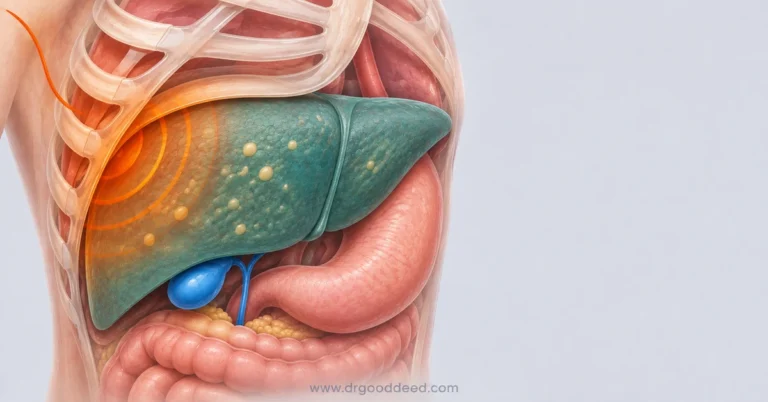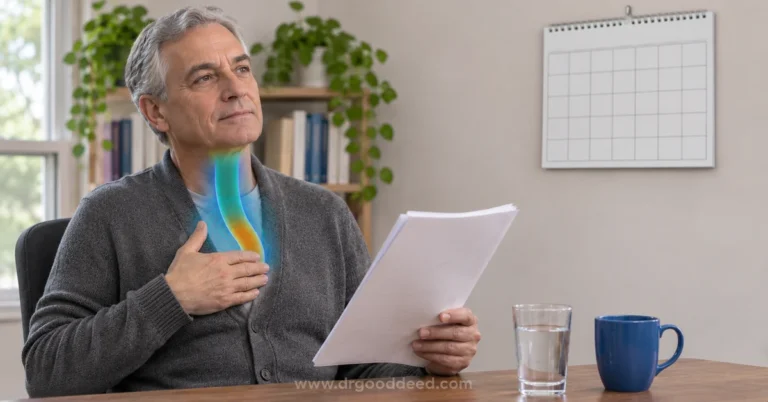

A hepatitis B core antibody positive result with a negative surface antigen can mean a past infection, a hidden infection, or a false positive. Your other blood test results, medical history, and possible exposure to the virus can help explain what the result means.
Key Takeaways
- A hepatitis B core antibody positive result with a negative surface antigen can mean past infection, hidden infection or a false positive, so follow-up matters.
- Your doctor will review all three main hepatitis B markers: total core antibody, surface antigen, and surface antibody.
- Further tests, such as an HBV DNA test, may help explain why your core antibody is positive.
- The hepatitis B vaccine does not cause a positive core antibody result.
- Tell your healthcare team about this result before starting treatment that may weaken your immune system.
What Hepatitis B Core Antibody Positive Means
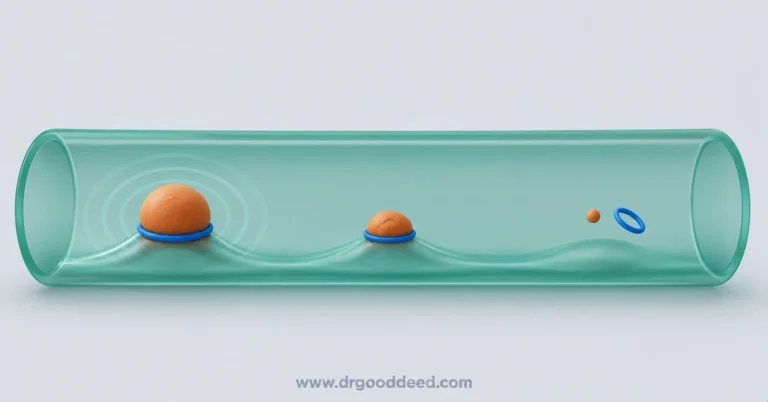
Hepatitis B core antibody positive means a blood test found antibodies to the core of the hepatitis B virus. This reaction usually happens after exposure to the virus.
The core is the inner part of the hepatitis B virus. Total hepatitis B core antibody can remain detectable for life after an infection. However, this result does not tell you exactly when you were infected or whether the virus is currently active.
A negative hepatitis B surface antigen (HBsAg) result means that this marker of a current hepatitis B infection was not detected. However, it does not rule out every possible form of infection.
Your doctor must interpret these results alongside your other hepatitis B markers and medical history.
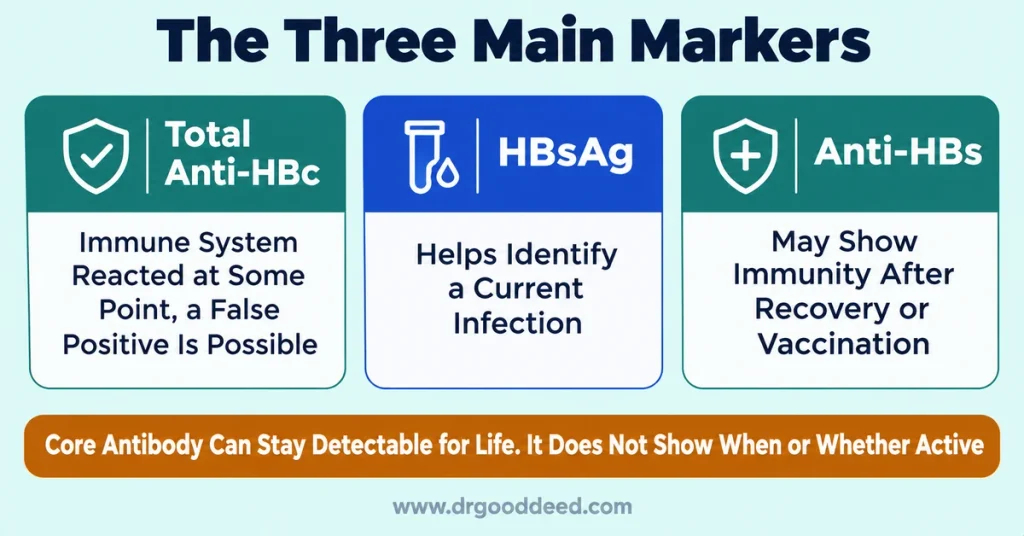
The three main markers are:
- Total hepatitis B core antibody (anti-HBc): Shows that your immune system has reacted to the hepatitis B virus at some point. A false positive result is also possible.
- Hepatitis B surface antigen (HBsAg): Helps identify a current hepatitis B infection.
- Hepatitis B surface antibody (anti-HBs): May indicate immunity after recovering from an infection or receiving the hepatitis B vaccine.
Hepatitis B can be acute or chronic. Learn more about the differences between acute and chronic disease.
How to Read Your Hepatitis B Panel
A hepatitis B panel uses three main markers to help determine whether you have a current infection, a past infection, or immunity from vaccination.
Since 2023, the CDC has recommended at least one-time screening with a hepatitis B triple panel for all adults aged 18 years and older. This panel includes HBsAg, total anti-HBc, and anti-HBs. Earlier guidance used a single HBsAg test.
The table below shows how doctors generally read common hepatitis B panel results.
| HBsAg | Total anti-HBc | Anti-HBs | Typical meaning |
| Positive | Positive | Negative | May indicate an acute or chronic infection. Further tests help distinguish between them. |
| Negative | Positive | Positive | Usually indicates a past, resolved infection. |
| Negative | Negative | Positive | Usually indicates immunity from vaccination. |
| Negative | Positive | Negative | Indicates an isolated core antibody pattern. Further testing may be needed. |
| Negative | Negative | Negative | No evidence of infection or immunity. Your doctor may recommend vaccination. |
A positive surface antibody can indicate protection against hepatitis B. However, your doctor will interpret it alongside your other markers, previous test results, and vaccination history.
Why Only the Core Antibody Is Positive
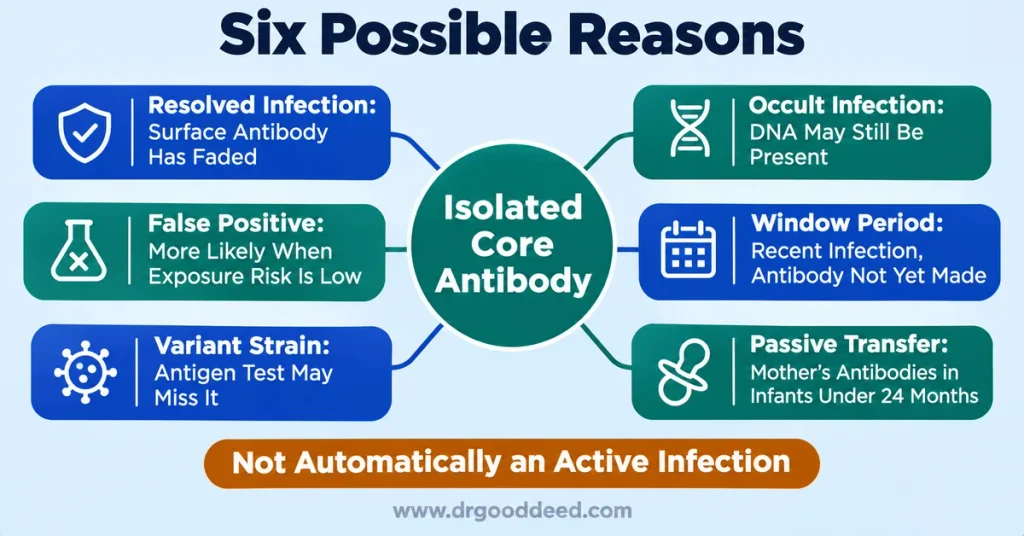
A positive total anti-HBc result with negative HBsAg and anti-HBs is called an isolated hepatitis B core antibody pattern. It can happen for several reasons.
The table below lists possible reasons for an isolated core antibody result.
| Possible reason | What it means |
| Resolved infection | You had hepatitis B in the past, but your surface antibody levels have fallen below the level detected by the test. |
| Occult hepatitis B infection | Your surface antigen is negative, but hepatitis B viral DNA may still be present in your blood or liver. |
| False positive | The test detected a positive result even though you have not had a hepatitis B infection. This may be more likely when your risk of exposure is low. |
| Window period | You may be recovering from a recent acute infection. The surface antigen has disappeared, but the surface antibody has not yet developed. |
| Variant strain | A change in the virus may affect how some tests detect the surface antigen. |
| Passive transfer | In infants younger than 24 months, antibodies from the mother may affect test results. |
An isolated core antibody result does not automatically mean that you have an active infection. Your doctor will consider your exposure history, symptoms, and other test results.
According to a CDC MMWR report published in 2023, the prevalence of isolated core antibody was approximately 0.8%, or 2.1 million people, in the United States between 2001 and 2018. A 2025 CDC document on isolated core antibody reported a prevalence of approximately 0.9%, or 2.3 million people, between 2013 and 2018.
The same 2025 CDC document reported different rates based on birthplace: 0.6% among people born in the United States and 2.1% among people born outside the United States. These estimates come from different analyses and populations, so they should not be treated as directly interchangeable.
What Tests Come After an Isolated Core Antibody
The tests after an isolated core antibody depend on your medical history, possible exposure to hepatitis B, symptoms, and immunity status. Your doctor may recommend repeating the panel or ordering additional blood tests.
Possible tests include:
- Repeat core antibody test: If you have no known risk factors, your doctor may repeat the test using a new blood sample. This can help check whether the original result was a false positive (CDC MMWR, 2023).
- HBV DNA test: This test looks for genetic material from the hepatitis B virus. It can help identify an occult infection or a variant strain.
- IgM anti-HBc test: This is different from the total core antibody test. It may help identify a recent infection, particularly when your doctor suspects acute hepatitis B.
- Repeat surface antibody test: If a recent infection is possible, your doctor may repeat the anti-HBs test after a suitable interval, sometimes around two to three months (CDC, 2025).
The following table shows which tests your healthcare team may consider in different situations.
| Situation | Possible next step |
| No risk factors or symptoms | Repeat the test using a new blood sample to check for a false positive. |
| Born in or lived in a region with higher hepatitis B rates | Review your exposure history and consider an HBV DNA test. |
| Starting immune-suppressing treatment | Discuss HBV DNA testing and the risk of reactivation with your care team. |
| Pregnant | Review all hepatitis B markers. Your healthcare team may consider an HBV DNA test based on your results and history. |
| Recent exposure or symptoms of acute infection | Consider an IgM anti-HBc test and other tests to check for a recent infection. |
You may not need every test listed here. Your doctor will decide which ones are appropriate for your situation.
Do You Need Treatment or the Hepatitis B Vaccine?
Treatment for a positive hepatitis B core antibody depends on the reason for the result. If you have an isolated core antibody pattern, you may not need immediate treatment or vaccination. Your doctor will first determine whether you have a current infection, a past infection, or a false positive result.
The next steps may differ depending on what further testing shows:
- Confirmed false positive: If there is no evidence of infection or immunity, your doctor may recommend the hepatitis B vaccine.
- Resolved infection: If you had hepatitis B in the past and recovered, you may not need treatment. Your doctor will consider your overall health and future risk.
- Occult infection: If HBV DNA is detected, a liver specialist can assess whether you need monitoring or further care.
- Recent infection: If additional tests suggest an acute infection, your healthcare professional will decide what care and follow-up you need.
The hepatitis B vaccine does not cause a positive core antibody result. It produces surface antibodies, not core antibodies.
A long-term hepatitis B infection can cause liver damage and scarring over time. Your doctor may assess your liver health and discuss the stages of liver fibrosis if needed.
Hepatitis B Reactivation and Immune-Suppressing Treatment
Hepatitis B reactivation happens when the virus becomes active again after being under control or undetectable. It can occur when your immune system is weakened by certain illnesses or treatments.
Reactivation is possible in some people with a history of hepatitis B, even when their surface antigen test is negative. People with an isolated core antibody pattern may need additional assessment before starting immune-suppressing treatment (CDC MMWR, 2023).
Tell your doctor about your positive core antibody result before starting any treatment that may weaken your immune system. Your healthcare team may recommend an HBV DNA test and decide whether you need monitoring or preventive care.
Doctor’s Tip: Keep copies of your hepatitis B blood test results and share them with every healthcare professional involved in your treatment. Do this even if you feel well. The CDC and Hepatitis B Foundation highlight the importance of checking hepatitis B status before certain immune-suppressing treatments.
When to See a Doctor About Hepatitis B Results
If your hepatitis B panel shows a positive core antibody and negative surface antigen, speak with your primary care doctor. A gastroenterologist or hepatologist can help interpret the results and decide whether you need further testing.
Seek medical advice if:
- Your blood test shows an isolated hepatitis B core antibody pattern.
- You have a history of hepatitis B exposure or infection.
- You notice symptoms such as jaundice, dark urine, unusual fatigue, or abdominal discomfort. Pain under the right rib cage can also point to a liver problem.
- You are pregnant and have an isolated core antibody result.
- You are preparing to start treatment that may weaken your immune system.
Go to the ER or call 911 if you develop yellow skin or eyes with confusion, severe abdominal pain, or other serious symptoms. For new jaundice or dark urine without these signs, get same-day care from your primary care doctor or urgent care.
If you are recovering from liver damage, your doctor may also discuss possible signs that your liver is healing.
Ask your primary care doctor or a liver specialist to plan the next test if your hepatitis B core antibody positive result has not been explained.
Frequently Asked Questions
What Is the Difference Between Hepatitis B and Hepatitis B Core?
Hepatitis B is a virus that can cause an infection. The core is the inner part of the virus. A core antibody test checks whether your immune system has reacted to this part of the virus. It does not confirm whether the virus is currently active or tell you when you were infected.
Is Hep B Core Antibody Positive After Vaccination?
No. A hep B core antibody positive result does not come from the vaccine, because vaccine immunity does not produce this antibody. A positive core antibody usually indicates past or current exposure to the virus, although a false positive is also possible. Your doctor should review your complete hepatitis B panel to understand the result.
How Long Does Hepatitis B Core Antibody Last?
Total hepatitis B core antibody can remain detectable in your blood for life after an infection. It does not tell you when you were infected or confirm whether the virus is currently active. Your surface antigen, surface antibody, and other tests can help clarify your hepatitis B status.
Can I Spread Hepatitis B if My Surface Antigen Is Negative?
A negative surface antigen result usually means that this marker of a current infection was not detected. However, some people with occult hepatitis B or certain viral variants may still have detectable viral DNA. Ask your doctor whether an HBV DNA test is needed. This guide on how STDs spread covers common myths.
What Does This Result Mean During Pregnancy?
If you have a positive core antibody and negative surface antigen during pregnancy, your healthcare team should review the result alongside your other hepatitis B markers and medical history. The CDC recommends surface antigen screening during every pregnancy. Depending on your results and circumstances, your healthcare team may consider an HBV DNA test or specialist referral.
Sources
Centers for Disease Control and Prevention, Clinical Testing and Diagnosis for Hepatitis B. link
Centers for Disease Control and Prevention, Interpretation and Differentiation of Isolated Positive Hepatitis B Core Antibody (2025). link
Centers for Disease Control and Prevention, MMWR, Screening and Testing for Hepatitis B Virus Infection: CDC Recommendations, United States, 2023. link
Hepatitis B Foundation, Hepatitis B Reactivation Guide. link
Centers for Disease Control and Prevention, Isolated Total Anti-HBc Lab Results During Pregnancy: Clinical Considerations (2026). link
Medical Disclaimer: This article is for general information only and is not medical advice. It does not replace a diagnosis, treatment plan, or guidance from a qualified healthcare professional. Always talk to your doctor about your own symptoms and before starting, stopping, or changing any treatment. If you think you may be having a medical emergency, call 911 or go to your nearest emergency room.