
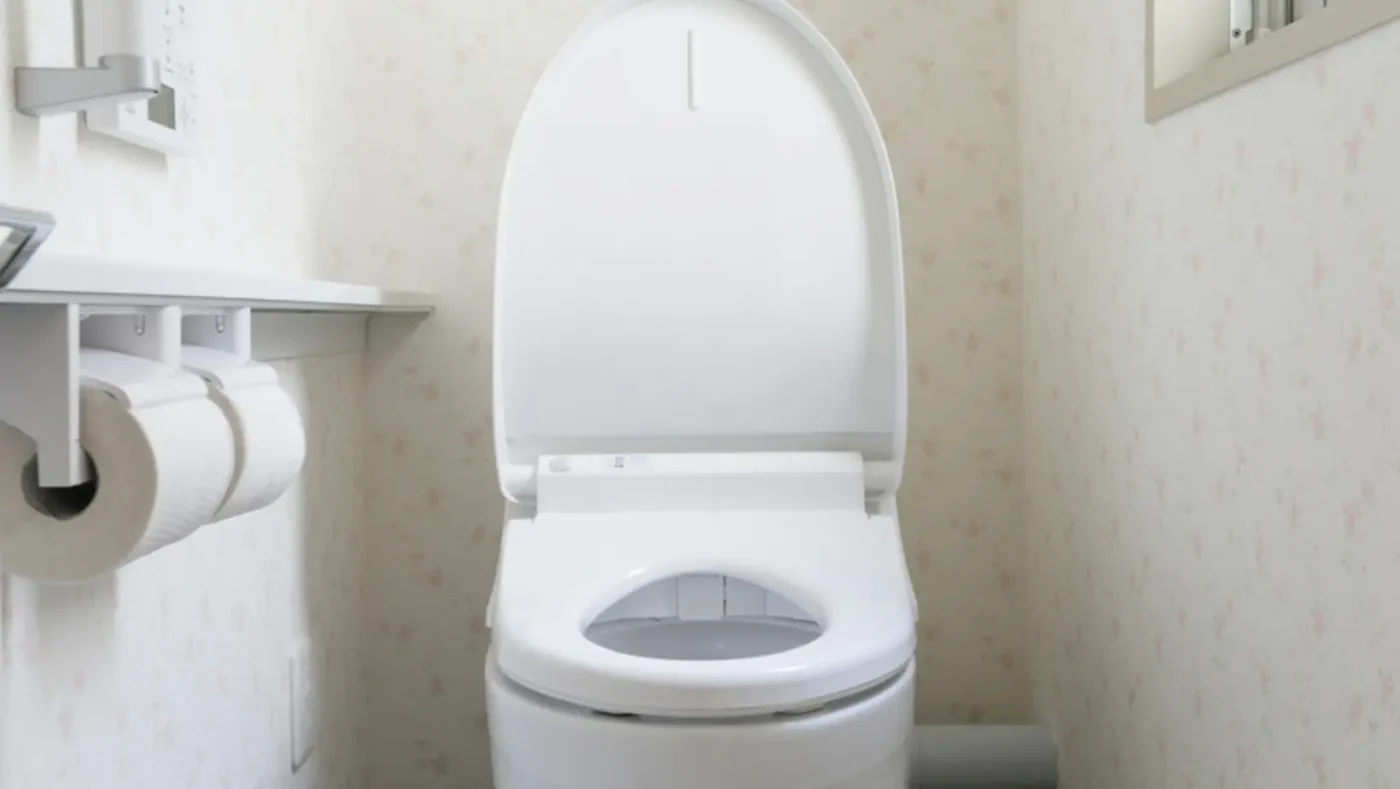

You cannot get an STD from a toilet seat. Sitting on a public toilet does not give you chlamydia, gonorrhea, herpes, HPV, HIV, or syphilis. STD transmission almost always needs skin-to-skin, mucous membrane, or fluid-to-fluid contact between two people, usually during sex. A cold, dry toilet seat cannot recreate that.
This guide breaks down why STD from toilet seat fears are mostly unfounded, what actually spreads through public restrooms, and how each major STD really travels from person to person.
Can You Get an STD From a Toilet Seat?
For almost all practical situations, you cannot get an STD from a toilet seat. The germs that cause STDs are built to survive inside the warm, moist environment of the human body, not on hard plastic. Most of them die within minutes of hitting open air.
Here’s a quick snapshot of the myth versus the reality.
| Claim | Fact |
| Toilet seats spread STDs | Extremely unlikely |
| Public bathrooms are a common STD source | No |
| Direct sexual contact is the primary transmission route | Yes |
| Toilet hygiene still matters | Yes, but for other germs, not STDs |
Why STDs Don’t Survive Well on Toilet Seats
STD-causing germs need a very specific environment to live and spread. A toilet seat cannot offer that environment for more than a few seconds.
STDs are adapted to the human body, not hard surfaces
Bacteria like chlamydia and gonorrhea live inside human cells. Take them out of that warm, wet setting and they dry out fast. Viruses such as HIV and herpes behave the same way. Once exposed to air, their outer membrane breaks down within minutes.
Even if germs are present, infection still requires the right pathway
Say a germ somehow survives on a seat. It still needs a way into your body. That usually means broken skin or a mucous membrane, like the genitals, mouth, or eyes, making direct contact with a fresh, living dose of the germ. Sitting fully clothed, or even bare skin briefly touching a seat, rarely creates that pathway.
Are there any exceptions?
Pubic lice and scabies are the closest thing to an exception, and they aren’t technically classified the same way as bacterial or viral STDs. They can, in rare cases, survive briefly on fabric or surfaces. Even then, toilet seats are an unlikely source compared to shared bedding or clothing.
What If There Is Fresh Blood, Urine, or Other Body Fluids on Toilet Seats?
Fresh blood theoretically carries a higher germ load than dried secretions. But HIV, for example, becomes non-infectious within seconds to minutes once blood dries and hits room-temperature air, according to the CDC. Urine is not a major transmission fluid for STDs at all since most STD pathogens aren’t concentrated there in infectious amounts.
Practical takeaway: wipe the seat, use a paper cover if it bothers you, and move on. The risk from visible fluid on a seat is about general hygiene, not STD transmission.
What Diseases Can Be Associated With Public Toilets?
Public toilets are more of a concern for gastrointestinal bugs than for STDs. Germs like norovirus, E. coli, and shigella spread through fecal contamination on surfaces, especially flush handles and stall locks, not the seat itself. Respiratory viruses can also linger on hard surfaces for hours. Washing your hands after using a public restroom protects you far more than avoiding the seat ever will.
How Are STDs Actually Transmitted?
STD transmission happens through a small, well-documented list of pathways. Public bathrooms are not one of them.
Vaginal, oral, and anal sex
This is the primary route for almost every STD, including chlamydia, gonorrhea, syphilis, HIV, herpes, and HPV. Infected fluids or direct mucous membrane contact during sex carries the germ from one partner to another.
Skin-to-skin contact
Herpes and HPV can spread through skin-to-skin contact in the genital area, even without penetration. This is why condoms lower risk but don’t eliminate it entirely for these two infections.
Sharing needles
HIV and hepatitis B and C spread efficiently through shared needles because blood passes directly between people. This route has nothing to do with surfaces like toilet seats.
Mother-to-child transmission
Some STDs, including syphilis, HIV, and herpes, can pass from a pregnant person to their baby during pregnancy, birth, or breastfeeding. This is a serious reason prenatal STD screening matters.
Can Specific STDs Spread From a Toilet Seat?
Here’s a breakdown of the individual risk for each major STD.
| STD | Toilet Seat Risk | Why |
| Chlamydia | Essentially zero | Bacteria dies within minutes outside the body |
| Gonorrhea | Essentially zero | Extremely fragile bacteria that needs mucous membrane contact |
| Herpes (HSV) | Essentially zero | Requires direct skin-to-skin contact with an active lesion |
| HPV | Essentially zero in real-world settings | No solid clinical evidence of surface transmission |
| HIV | None | Virus becomes inactive within seconds of drying |
| Syphilis | Essentially zero | Needs direct contact with an active, moist sore |
Can chlamydia survive on toilet seats? No. Chlamydia trachomatis is an intracellular bacterium, meaning it needs living human cells to survive. Outside the body, it loses viability within minutes.
Can gonorrhea live on surfaces? Barely, and not long enough to matter. Neisseria gonorrhoeae is one of the most fragile STD-causing bacteria known, and it cannot tolerate drying, temperature swings, or exposure to air for more than a short window.
Can herpes spread from toilet seats? In practical terms, no. Herpes simplex virus needs direct, moist skin-to-skin contact with an active sore or shedding skin. A common misconception is that only visible sores are contagious. In reality, HSV can shed without symptoms, but it still requires person-to-person contact, not a shared seat.
Syphilis transmission requires direct contact with an infectious chancre, which is a sore that forms during the first stage of the infection. These sores are located on the genitals, anus, or mouth, areas that rarely make meaningful contact with a toilet seat.
How to Protect Yourself From STDs
Use condoms or dental dams consistently and correctly. Limit your number of sexual partners when possible, and talk openly with partners about testing history before sex.
Get tested regularly
The CDC recommends annual STD testing for sexually active people under 25 and for anyone with new or multiple partners. Many STDs, including chlamydia and gonorrhea, often show no symptoms.
Get vaccinated when recommended
The HPV vaccine, recommended for preteens and available through age 26 (and sometimes older after a doctor discussion), prevents the strains most linked to cervical and other cancers. Hepatitis B vaccination also protects against a virus that can spread sexually.
Avoid sharing needles
If you use injectable medications or drugs, never share needles or syringes. Needle exchange programs exist in many U.S. cities specifically to reduce this risk.
Know when to see a healthcare provider
See a provider if you notice unusual discharge, sores, burning during urination, or pelvic pain, or if a partner tells you they tested positive for an STD. Early treatment prevents complications and stops further spread.
Situations People Worry About STDs (Risk Explained)
Sitting on a public toilet Risk: Extremely low. Clothing acts as a barrier, and even bare skin contact doesn’t provide the mucous membrane exposure STDs need.
Small cut on your thigh Risk: Still extremely unlikely. STD germs don’t survive long enough on a seat to infect a minor skin cut, and thigh skin isn’t a typical entry point for these infections.
Using toilet paper left behind Risk: Low, but this falls under general hygiene rather than STD risk. Using your own toilet paper avoids any question altogether.
Toilet splash Risk: What actually matters here is exposure to fecal bacteria and gastrointestinal viruses, not STDs. Closing the lid before flushing reduces splash and droplet spread of those unrelated germs.
Touching the seat then touching your face: This is unrelated to STD transmission but can spread cold viruses, flu, or stomach bugs. Hand washing solves this concern completely.
FAQs
Can you get an STD from a toilet seat?
No. STD-causing bacteria and viruses cannot survive outside the human body long enough on a hard, dry surface to infect a new person through casual contact.
How long can STD-causing germs survive on surfaces?
Most survive only seconds to a few minutes outside the body. HIV and gonorrhea die almost instantly once exposed to air and room temperature.
Which STDs are spread through skin-to-skin contact?
Herpes (HSV) and HPV spread through direct genital skin contact, even without penetration or visible sores present at the time.
Can you catch an STD from a public restroom?
No documented cases exist. Public restrooms carry a higher risk for norovirus and E. coli from surfaces like flush handles, not STDs.
How can you protect yourself from STDs?
Use condoms consistently, get tested yearly if sexually active, get vaccinated against HPV and hepatitis B, and never share needles.
Sources
- CDC: About Sexually Transmitted Infections
- CDC: HIV Transmission
- World Health Organization: Sexually Transmitted Infections Fact Sheet
- Mayo Clinic: HPV Infection
- Planned Parenthood: How Are STDs Transmitted
- CDC: Chlamydia Detailed Fact Sheet
- CDC: Gonorrhea Detailed Fact Sheet
- American Academy of Dermatology: Genital Herpes Overview
- CDC: Syphilis Detailed Fact Sheet












2 Comments
Comments are closed.