
A baby poop chart exists because color and texture shift constantly in the first months of life, and parents need a fast way to tell ordinary from concerning. This guide breaks down every shade you’re likely to see, what causes it, and the small number of colors that need a same-day call to your pediatrician.
What Does Normal Baby Poop Look Like? (Baby Poop Color Chart)
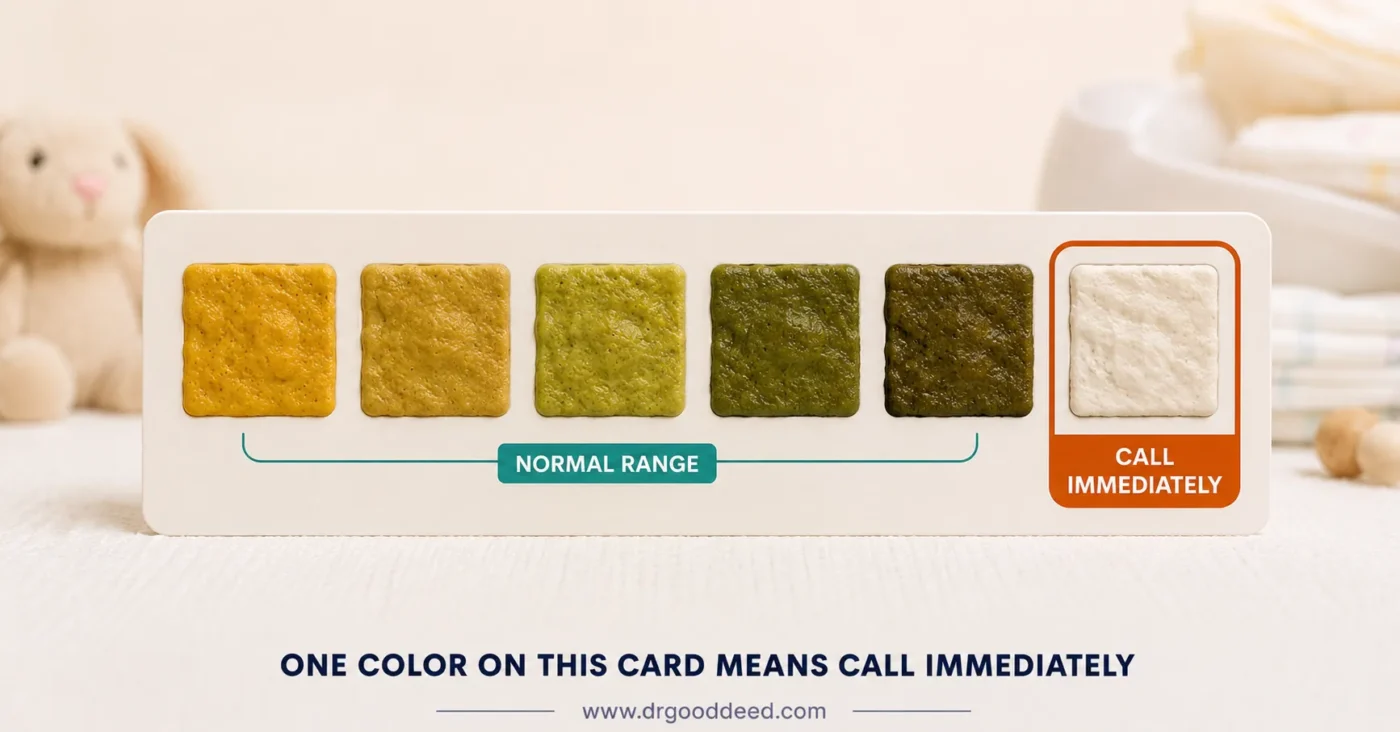
Newborn stool moves through a predictable color sequence in the first week, then settles into a range tied to feeding. This baby poop chart covers the colors parents ask about most, cross-checked against the American Academy of Pediatrics.
| Color | Common Cause | Normal or Call Pediatrician |
| Black, tarry (days 1 to 3) | Meconium, baby’s first stool | Normal |
| Dark green | Transitional stool as meconium clears | Normal |
| Mustard yellow, seedy | Classic breastfed baby poop | Normal |
| Yellow-tan, paste-like | Formula-fed baby poop | Normal |
| Green | Iron, fast gut transit, a mild bug, or bile pigment | Normal, watch for blood or pain |
| Brown | Mature stool once feeding settles | Normal |
| Orange | Bile breakdown, or new foods after solids start | Normal |
| Red or blood-streaked | Anal fissure, milk protein allergy, or swallowed blood | Call pediatrician |
| Black after day 5 to 7 | Digested blood from higher in the gut | Call pediatrician same day |
| White, gray, or clay-colored | Little to no bile reaching the intestine | Call pediatrician immediately |
Meconium: Your Baby’s First Poop
Meconium is thick, sticky, and black to dark green, and it usually appears within 24 to 48 hours of birth. It contains amniotic fluid, mucus, bile, and skin cells your baby swallowed in the womb, which is why it has almost no smell. Most babies clear meconium within three to four days, with the color lightening day by day toward green, then yellow.
If your baby hasn’t passed meconium within 48 hours after delivery, hospital staff will check for a blockage before discharge. Call your pediatrician if black, tarry stool persists past day 5, since that timing rules out meconium and points to something else, most often swallowed or digested blood.
Breastfed vs Formula-Fed Baby Poop: What’s Different
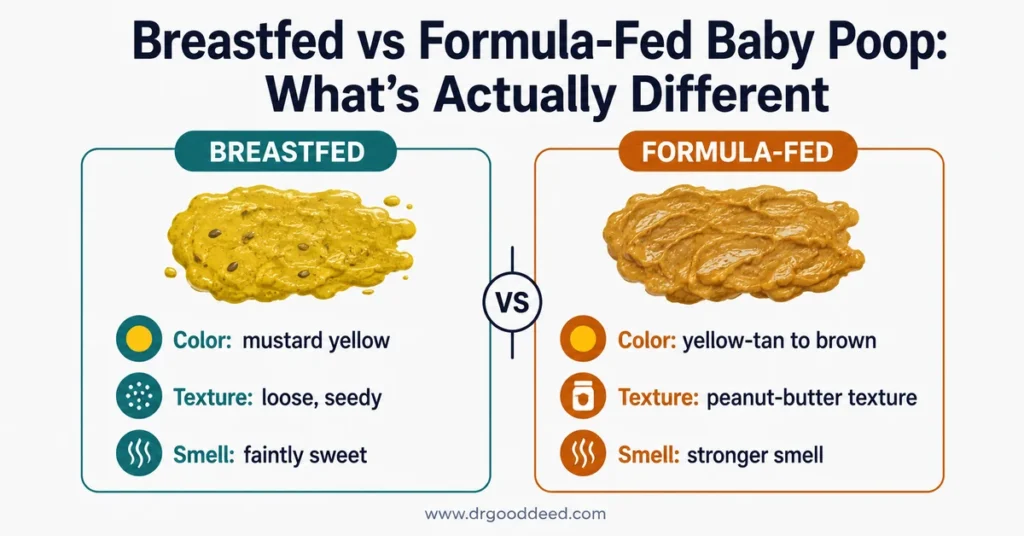
Breastfed baby poop is usually mustard yellow, loose, and flecked with small seed-like curds, and it often smells faintly sweet rather than foul. Formula-fed baby poop tends to run yellow-tan to light brown with a firmer, peanut-butter consistency, and the smell is stronger because formula proteins digest differently than breast milk.
A 2024 cohort study of 1,052 healthy infants published in the European Journal of Pediatrics found breastfed babies had a higher median stool frequency than formula-fed babies at every age point tracked through 17 weeks. The same study found green stool color for at least a week in 47.7% of breastfed infants versus 45.2% of formula-fed infants, essentially the same rate, which confirms feeding type alone doesn’t explain most green diapers.
Switching between breast milk and formula, or between formula brands, commonly triggers a short-term color and texture shift that settles within a few days.
How Often Should a Baby Poop?
Breastfed newborns often stool after every feeding in the first weeks, sometimes 4 to 12 times a day, then may drop to once every few days by two months as breast milk gets absorbed more completely. Formula-fed babies typically pass stool 1 to 4 times a day in the first month, often settling into once daily or every other day after that.
The 2024 European Journal of Pediatrics cohort recorded a median of 4 bowel movements per day at 3 weeks of age across breastfed and formula-fed infants combined, the highest point in the whole 17-week study.
Going several days without a stool is usually fine if your baby stays comfortable and the stool remains soft when it comes. Straining, hard pellets, or visible pain with pooping suggests baby constipation and is worth mentioning at the next visit.
Baby Poop Texture Chart
Texture tells you as much as color, and it’s the piece most baby poop charts skip. Use this baby poop texture guide alongside the color table above for a fuller picture.
| Texture | What It Usually Means |
| Sticky, tar-like | Meconium, expected for days 1 to 3 |
| Seedy and loose, like mustard | Typical breastfed stool |
| Pasty, like peanut butter | Typical formula-fed stool |
| Watery, explosive, more frequent than usual | Possible baby diarrhea, watch for dehydration |
| Small, hard, pellet-like | Possible constipation, more common after solids start |
| Jelly-like or mucus-streaked | Teething, mild illness, or milk sensitivity |
What Does Mucus in Baby Poop Mean?
Mucus in baby poop shows up as shiny, jelly-like strings mixed into an otherwise normal stool, and in small amounts it’s rarely a problem. Teething is a leading cause, since babies swallow far more saliva than usual and their gut passes some of it through undigested.
A cold or mild stomach virus works the same way, adding swallowed mucus to the mix until the illness clears. Persistent or heavy mucus, especially alongside blood streaks, fussiness during feeds, or poor weight gain, can point to cow’s milk protein allergy, a condition estimated to affect roughly 2% to 3% of infants in their first year.
Mucus that shows up once or twice with no other symptoms is not a reason to call the doctor. Mucus that keeps appearing over several days, or that comes with blood, deserves a conversation with your pediatrician.
When Baby Poop Colors Need a Doctor’s Attention
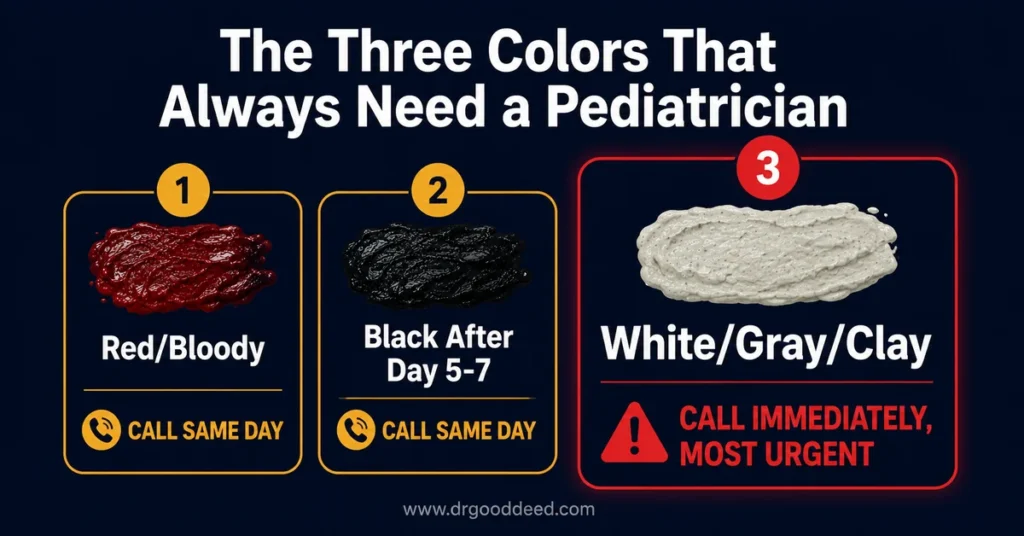
Three colors fall outside the normal range at any age past the newborn week: red, black, and white or pale gray. Each points to a different part of the digestive system and carries a different level of urgency, covered below.
Red or Bloody Stool
Red streaks in a young baby’s diaper usually mean blood from lower in the digestive tract rather than something your baby ate. The most common cause in the first weeks is swallowed blood from a breastfeeding parent’s cracked nipples, which is harmless to the baby.
A small tear near the anus from a firm stool, called an anal fissure, is another frequent and minor cause. Blood-tinged mucus paired with a fussy but otherwise well-fed baby often signals allergic proctocolitis, a mild reaction to milk protein in formula or breast milk. Call your pediatrician the same day you notice red or bloody stool so the cause can be confirmed rather than guessed.
White or Gray Stool
White, pale gray, or clay-colored stool is never a normal finding at any age. Bile is what gives healthy stool its brown, yellow, or green color, so pale stool signals that bile isn’t reaching the intestine as it should. This can indicate biliary atresia, a rare bile duct condition affecting roughly 1 in 10,000 to 15,000 US births that requires surgery, ideally before 45 to 60 days of age for the best outcome.
Some hospitals send families home with a printed infant stool color card specifically to catch this early. If you see pale, chalky, or white stool, call your pediatrician immediately rather than waiting for a scheduled visit.
Black Stool After the First Week
Black stool is expected and harmless during the meconium phase, roughly the first 3 to 5 days of life. Once your baby is past that window and eating an established feeding pattern, black stool usually means digested blood from higher in the gastrointestinal tract, a finding doctors call melena. It can also come from iron supplements, certain probiotics, or swallowed blood from a nursing parent’s healing nipples, so the cause isn’t always serious.
When to Call Your Pediatrician
Call promptly for white, gray, or clay-colored stool, any red or black stool outside the newborn meconium window, or stool that is watery and more frequent than your baby’s usual pattern. Also call if your baby seems to strain painfully with every stool, hasn’t stooled in over a week past the newborn stage, or shows fewer than 4 wet diapers a day alongside sluggish stooling, since that combination can signal dehydration.
Fever, vomiting, a swollen belly, or a baby who seems unusually weak alongside any stool change also warrants a same-day call rather than a wait-and-see approach.
Faq
Is green baby poop always normal?
Yes, in most cases. A 2024 infant cohort study found green stool in nearly half of healthy babies for at least one week, regardless of feeding type.
How long does meconium last before poop changes color?
Meconium usually clears within 3 to 4 days after birth, transitioning from black to dark green, then to yellow or tan by day 4 to 5.
Why does my formula-fed baby poop less than my friend’s breastfed baby?
Breastfed infants have a higher median daily stool frequency at every age through 17 weeks. Formula-fed babies commonly settle into once-daily or every-other-day stools by one month.
Can teething really cause mucus in my baby’s poop?
Yes. Excess swallowed saliva during teething passes through partially undigested, producing shiny mucus streaks without indicating illness or allergy.
Is it normal for my newborn to go a week without pooping?
It can be, especially in breastfed babies past one month, if stool stays soft and your baby seems comfortable. Formula-fed babies going past 2 to 3 days warrant a call.
Does black stool always mean my baby is bleeding internally?
No. Black stool after day 5 often signals digested blood, but iron supplements and swallowed nipple blood are common harmless causes. A pediatrician should confirm which it is.
Sources
- American Academy of Pediatrics, HealthyChildren.org: The Many Colors of Baby Poop link
- American Academy of Pediatrics, HealthyChildren.org: Pooping By the Numbers link
- Mayo Clinic: Baby Poop, What to Expect link
- Solasaari et al., European Journal of Pediatrics, 2024: Defecation Patterns in Healthy Term Infants (HELMi Cohort) link
- PMC/NCBI: HELMi Cohort Full Text, Defecation Frequency and Stool Color link
- Newborn Screening Ontario: Biliary Atresia and the Infant Stool Colour Card link
- NCBI/PMC: Population-Based Screening Strategies for Biliary Atresia, Systematic Review and Meta-Analysis link
- Nationwide Children’s Hospital: Newborn Poop, Meconium and Beyond link
- Cleveland Clinic: Baby Poop Colors and What They Mean link
- CHOC Children’s Health Hub: What Does Your Child’s Poop Color Mean? link
This article is for educational purposes only and does not replace advice from your baby’s pediatrician. Always call your doctor with specific concerns about your baby’s health.