
Noticing more hair in your brush or shower after starting Ozempic can be worrying. In many cases, the shedding is linked to rapid weight loss rather than a proven direct effect of Ozempic itself. This temporary shedding is called telogen effluvium. However, research cannot completely separate the effects of the medicine from the effects of weight loss, so a direct contribution from the drug cannot be ruled out.
Key Takeaways
- Hair loss on Ozempic is mostly temporary shedding (telogen effluvium) after rapid weight loss, though studies cannot rule out a drug contribution.
- Hair loss has been reported in clinical trials of some GLP-1 medicines, but the numbers vary between drugs and studies.
- Wegovy trials reported hair loss in about 3% of adults compared with 1% with placebo.
- Shedding may not appear immediately and can become noticeable 2 to 6 months after the trigger.
- Hair usually starts recovering after weight stabilizes, but visible regrowth can take several months.
- Do not stop Ozempic on your own because of hair shedding.
- Patchy bald spots, scalp changes, or persistent shedding should be evaluated by a doctor.
| Possible explanation | What the evidence shows | Confidence |
| Rapid weight loss | Can trigger telogen effluvium several months later | High that it is a major contributor |
| Nutrient gaps | Eating less may reduce intake of nutrients involved in healthy hair growth | Moderate; testing should guide treatment |
| Pattern hair loss | Research found an association with androgenetic hair loss | Possible |
| Direct drug effect | Current studies cannot separate the drug effect from weight loss | Unproven |
| Other conditions | Thyroid disease and iron deficiency can also cause diffuse shedding | Worth discussing with a doctor |
Does Ozempic Cause Hair Loss?
Ozempic hair loss has not been established as a common direct side effect, but hair loss has been reported with other semaglutide and GLP-1 medicines. The evidence does not yet show whether the medicine itself, the resulting weight loss or both are responsible.
Ozempic and Wegovy have the same active ingredient, semaglutide, but they are approved for different uses. In the clinical trials, hair loss was reported in about 3% of adults who took Wegovy as compared with 1% of those who took the placebo.
Other GLP-1-related trial data have also reported hair loss:
| Medicine | Hair loss reported | Comparator |
| Wegovy (semaglutide) | About 3% | 1% with placebo |
| Zepbound (tirzepatide) | About 4% to 5% | 1% with placebo |
| Mounjaro (tirzepatide) | About 4.9% to 5.7% | 0.9% in a 2022 study |
In Zepbound trials, hair loss was reported in 7.1% of women and 0.5% of men. The reason for this difference is not established.
A 2026 systematic review and meta-analysis covering 17 studies and more than 1 million patient-exposures found increased odds of non-scarring alopecia, telogen effluvium, and androgenetic alopecia among people using GLP-1 receptor agonists.
These findings show an association, not proof of causation. Observational studies cannot cleanly separate the effects of the medicine from rapid weight loss, reduced food intake, or other factors.
Is It the Drug or the Weight Loss?
Rapid weight loss is likely to explain many cases of Ozempic hair loss, but current evidence cannot completely rule out a direct contribution from the medicine.
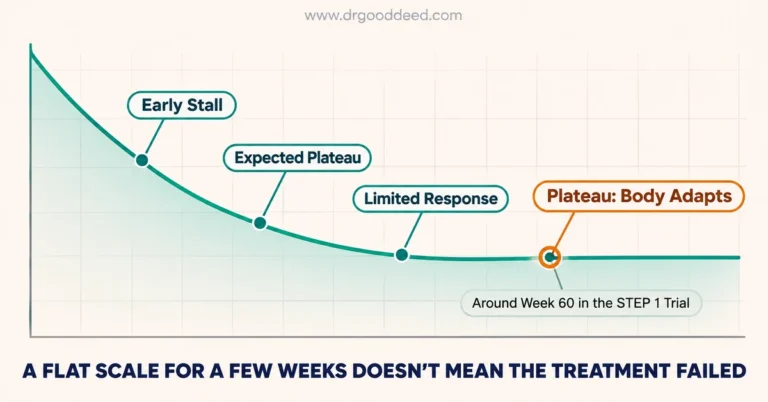
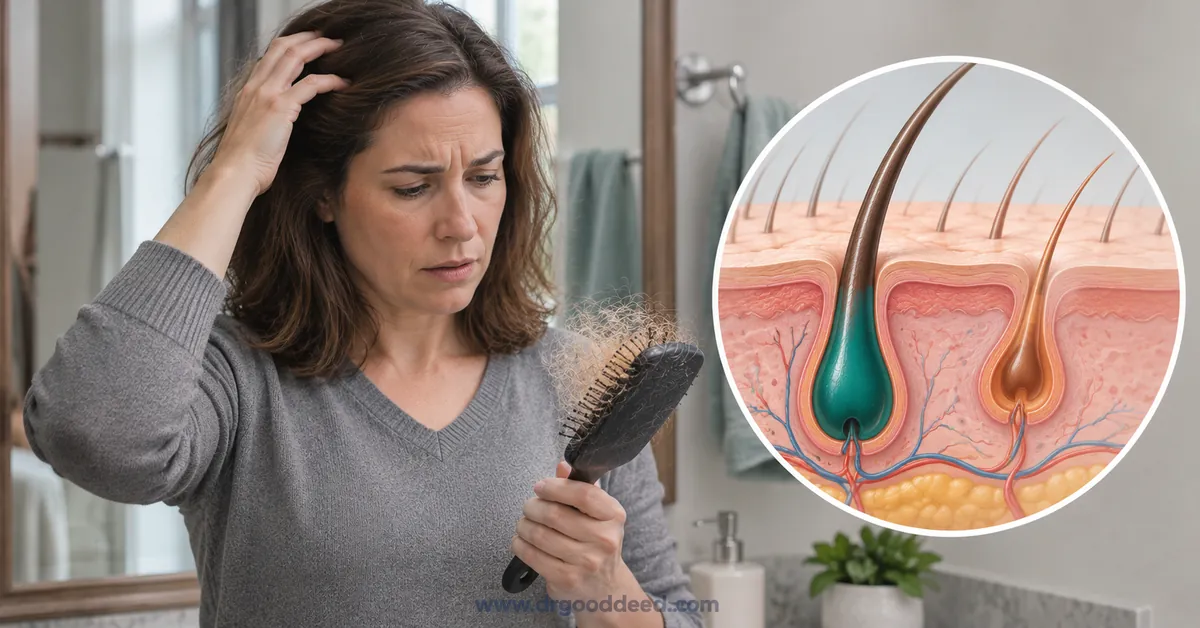
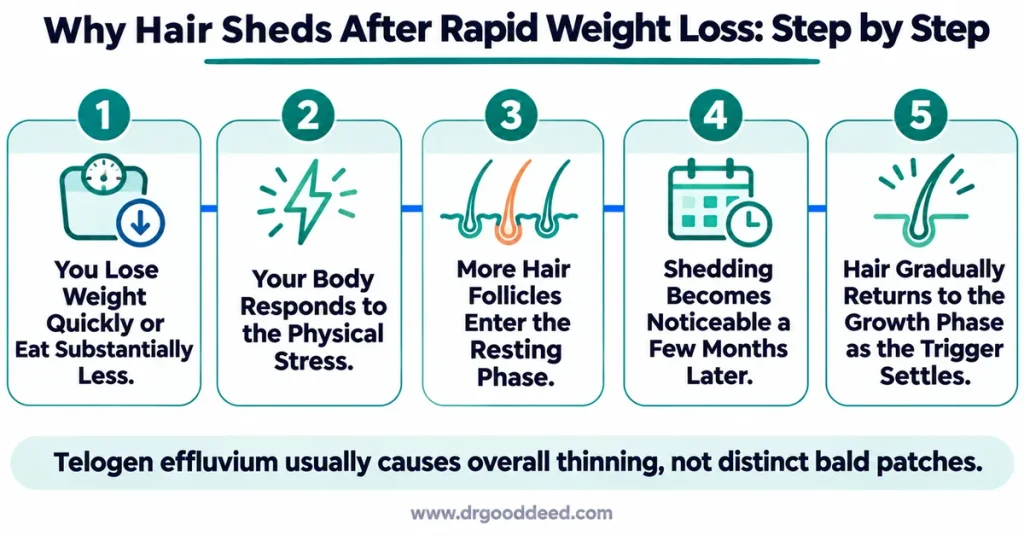
One common explanation is telogen effluvium. This happens when physical stress causes more hair follicles than usual to enter the resting phase of the hair-growth cycle.
The important part is the delay. Your hair may not start shedding when the weight loss happens. Instead, you may notice more hair coming out several weeks or months later.
The process can look like this:
1. You lose weight quickly or eat substantially less.
2. Your body responds to this physical stress.
3. More hair follicles enter the resting phase.
4. Shedding becomes noticeable a few months later.
5. Hair gradually returns to the growth phase as the trigger settles.
Telogen effluvium usually causes overall thinning rather than distinct bald patches. You may notice more hair on your pillow, in the shower, or on your brush.
This type of shedding can also happen after illness, surgery, major stress, or significant dietary changes. That is why the same pattern can occur even without a GLP-1 medicine.
Weight loss may also make an existing tendency toward pattern hair loss easier to notice. So, while weight loss is a likely contributor, it is not the only possible explanation for every case.
Will Hair Grow Back? The Regrowth Timeline
If the shedding is telogen effluvium, hair usually grows back, but recovery takes time. Published sources give different timelines, so there is no single number that applies to everyone.
| Source | Reported onset | Reported regrowth |
| Drugs.com | About 2 to 3 months | Not stated |
| Medical News Today | About 3 to 4 months | About 6 to 9 months |
| Healthline | About 3 to 6 months | About 6 to 9 months after weight stabilizes |
| Newsweek, obesity medicine physician | About 2 to 6 months | About 3 to 6 months after weight stabilizes |
| U.S. Dermatology Partners | Not stated | About 6 to 12 months |
You may continue to see shedding for a while even after your weight begins to stabilize. The hair-growth cycle needs time to respond.
If you are wondering, “Will hair grow back?” the answer is usually yes when the cause is temporary telogen effluvium. Persistent or worsening hair loss should be assessed because other types of hair loss can require different treatment.
What Else Can Thin Your Hair?
Ozempic and weight loss are not the only possible reasons for thinning hair. Thyroid problems, iron deficiency, inadequate nutrition, and pattern hair loss can produce similar symptoms.
A doctor may consider:
- Thyroid disease
- Iron deficiency
- Low protein intake
- Vitamin D deficiency
- Zinc deficiency
- Pattern hair loss
- Recent illness
- Major physical or emotional stress
- Other medicines or medical conditions
This does not mean you have any of these conditions. The purpose of an evaluation is to identify or rule out possible causes.
Your doctor can decide whether blood tests are needed in accordance with your symptoms, medical history, and diet.
This finding suggests that genetic differences in GLP-1 receptor activity may influence susceptibility to male pattern hair loss, but it does not establish that GLP-1 medications directly cause hair loss.
If you have thyroid concerns while taking a GLP-1 medicine, discuss both the thyroid condition and the hair loss with your clinician rather than assuming one is causing the other.
What Helps Hair Loss on Ozempic?
The best approach to hair loss on Ozempic is to identify the cause, maintain adequate nutrition and give temporary shedding time to settle.
- Before taking hair supplements, it is wise to understand the testing process.
- To support adequate nutrition while losing weight, you should eat balanced meals.
- Do not follow a crash diet and talk to your prescriber about the way in which you want to lose weight.
- When handling your hair, be gentle and avoid using too much heat or wearing tight hairstyles.
- Take photos that are dated so that you can keep track of the changes over time.
- If the shedding is severe or continues over a long period, you should see a dermatologist.
Do not automatically start iron, zinc, vitamin D, or other supplements because your hair is shedding. Extra nutrients are not always helpful and can sometimes cause harm when you do not need them.
Biotin also deserves caution. It has not been shown to improve hair growth when you are not deficient, and it can interfere with some laboratory tests, including thyroid tests.
If you are eating very little or feel afraid to eat because of weight-loss treatment, tell your clinician. Your nutritional intake matters for both your overall health and your hair.
Dermatologists may use treatments such as minoxidil for certain forms of hair loss, but treatment depends on the underlying cause. There is not enough GLP-1-specific evidence to say that minoxidil is appropriate for everyone experiencing shedding on Ozempic.
Should You Stop Ozempic Because of Hair Loss?
Hair shedding by itself does not mean you should stop Ozempic. Do not stop, pause, or change your medication without discussing it with your prescriber.
- Stopping the medicine will not necessarily stop shedding immediately because telogen effluvium is a delayed hair-cycle response. The hair may continue shedding even after the original trigger has changed.
- Stopping treatment can also affect weight management, and weight regain may occur after stopping. Your prescriber can consider the benefits and risks of treatment and decide whether any change is appropriate.
If the hair loss is significant, sudden, or persistent, a dermatologist can check whether another type of hair loss is involved.
When Hair Loss on Ozempic Needs a Doctor
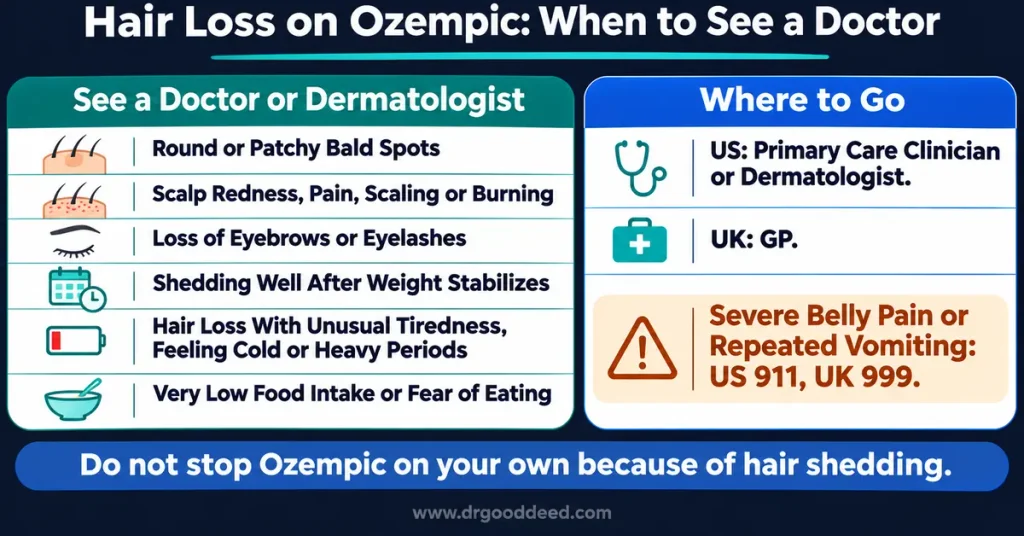
Hair loss on Ozempic deserves medical evaluation when the pattern does not fit typical temporary shedding or when other symptoms appear.
See a US primary care clinician or dermatologist, or a UK GP, if you notice:
- Round or patchy bald spots.
- Scalp redness, pain, scaling, or burning.
- Loss of eyebrows or eyelashes.
- Shedding that continues well after weight stabilizes.
- Hair loss with unusual tiredness.
- Hair loss with feeling unusually cold.
- Hair loss with heavy menstrual periods.
- Very low food intake or fear of eating.
These symptoms do not automatically mean something serious is wrong. They simply make it more important to look for another possible cause.
Severe belly pain or repeated vomiting while taking a GLP-1 medicine requires urgent medical attention. In the US, call 911. In the UK, call 999.
Frequently Asked Questions
Do women lose more hair than men on GLP-1 medicines?
In Zepbound trials, hair loss was reported in 7.1% of women and 0.5% of men. The reason for this difference is not known.
Does Wegovy or Mounjaro cause more hair loss than Ozempic?
Semaglutide hair loss was reported in about 3% of Wegovy users versus 1% with placebo. Tirzepatide studies reported about 4% to 5%, but the trials cannot be directly compared.
Can I take biotin for hair loss on Ozempic?
Biotin has not been shown to help unless you are deficient. It can also interfere with thyroid blood tests, so tell your doctor and laboratory if you take it.
Does minoxidil work for hair loss on Ozempic?
Dermatologists may use minoxidil for some types of hair loss. GLP-1-specific evidence is limited, so a dermatologist should decide whether it is appropriate.
Sources:
1. U.S. Food and Drug Administration. Wegovy (semaglutide) injection and tablets: prescribing information [Internet]. 2026 [cited 2026 Oct 30]. link
2. U.S. Food and Drug Administration. Zepbound (tirzepatide) injection: prescribing information [Internet]. 2025 [cited 2026 Oct 30]. link
3. Viquez Burboa GU, Flores Guillén MAR, Duardo González VS. GLP-1 receptor agonists and alopecia: a systematic review and meta-analysis of incidence, risk, subtypes, and mechanisms. Skin Appendage Disord [Internet]. 2026 Jun 30. link
4. Branyiczky MK, Lowe MS, McMullen E, Donovan J, Khosravi-Hafshejani T. Effects of GLP-1 receptor agonists on hair loss and regrowth: a systematic review. Int J Dermatol. 2026 May;65(5):1030-1032. doi:10.1111/ijd.70133. link
5. Cheng PL, Chang HC. Glucagon-like peptide-1 receptor agonists and hair loss: a systematic review and meta-analysis. Diabetes Res Clin Pract. 2026 Jul;237:113333. doi:10.1016/j.diabres.2026.113333. link
6. Gupta AK, Teasell EM, Economopoulos V, Mirmirani P. GLP-1 therapies and hair loss: a systematic review of current evidence and implications for counseling. Sci Prog. 2026 Apr-Jun;109(2):368504261444578. doi:10.1177/00368504261444578. link
Medical Disclaimer: This article is for general information only and is not medical advice. It does not replace a diagnosis, treatment plan, or guidance from a qualified healthcare professional. Always talk to your doctor about your own symptoms and before starting, stopping, or changing any treatment. If you think you may be having a medical emergency, call 911 or go to your nearest emergency room.