
The best treatment for arthritis in lower back pain combines physical therapy, targeted exercise, anti-inflammatory medication, and posture correction. Lower back arthritis, known medically as lumbar spondylosis or lumbar facet joint osteoarthritis, affects the small joints and discs that connect your spine bones. It gets worse with age, but the right plan can slow it down and cut your pain significantly.
Facet joint arthritis is responsible for roughly 15% to 45% of chronic low back pain cases, according to research published in Mayo Clinic Proceedings. Most people feel it as stiffness in the morning, aching after sitting too long, or sharp pain when bending backward. This guide covers every proven option, from home exercises to injections, so you can build a real plan with your doctor.
Lower Back Arthritis Treatment Options
Lower back arthritis treatment options range from simple home care to surgery, and most doctors start with the least invasive choice first. Below is a quick breakdown of what each option does and when doctors recommend it.
| Treatment Type | What It Does | Best For |
| Conservative care | Reduces strain on joints | Mild to moderate pain |
| Medication | Controls pain and swelling | Flare-ups |
| Physical rehab | Builds strength and motion | Long-term management |
| Interventional procedures | Targets the exact pain source | Pain that resists other care |
| Surgery | Fixes structural damage | Severe, unresponsive cases |
Conservative Treatment Approaches
Doctors almost always start with conservative care first. This means rest during flare-ups, heat or ice packs, weight management, and activity changes. For many patients, this simple approach becomes the best treatment for arthritis in lower back pain without any drugs at all.
Medication Therapy
Short courses of over-the-counter or prescription drugs calm pain enough to let you move and stretch. Among all lower back arthritis treatment options, medication works best when paired with exercise, since drugs treat symptoms but do not fix joint wear.
Physical Rehabilitation
A structured rehab program is often called the single best treatment for arthritis in lower back pain because it addresses the root cause: weak muscles and poor movement patterns. A physical therapist builds a plan around your specific limits and goals.
Interventional Pain Procedures
When pain does not respond to basic care, doctors may suggest a facet joint injection or a nerve treatment called radiofrequency ablation. These procedures numb or disable the small nerves that carry pain signals from the arthritic joint. Relief from an injection can last three to six months, and radiofrequency ablation can offer six to twelve months of relief, based on data reported by Mayo Clinic Proceedings: Innovations, Quality & Outcomes.
Surgical Treatment When Necessary
Surgery is a last resort. Doctors consider it only after months of conservative treatment fail, or when arthritis has caused nerve compression, spinal instability, or severe deformity. Common procedures include spinal fusion and decompression surgery.
Physical Therapy for Lower Back Arthritis
Physical therapy for lower back arthritis builds the muscles that support your spine, corrects posture, and restores range of motion without drugs or surgery. A licensed therapist designs a program based on your pain triggers and daily habits. Most people see real improvement within four to six weeks of consistent sessions.
Benefits of Physical Therapy
Physical therapy lowers pain scores, improves function, and reduces the chance of future flare-ups. It also teaches you how to move safely at home and at work, which prevents new injuries.
Improving Flexibility
Tight hip flexors, hamstrings, and lower back muscles pull on arthritic joints and worsen pain. Stretching routines loosen these muscles and take pressure off the facet joints.
Strengthening Core Muscles
Your core muscles act like a natural brace for your spine. Weak abdominal and back muscles force your joints to absorb more load than they should. Core work is one reason physical therapy for lower back arthritis succeeds where rest alone fails.
Improving Posture
Slouching increases pressure on the back of your spine, right where facet joints sit. A therapist corrects sitting, standing, and lifting posture to spread the load evenly across your spine.
Long-Term Pain Management
Physical therapy is not a one-time fix. Therapists teach a home program you keep doing for years, which is part of why physical therapy for lower back arthritis works better long term than medication alone.
Exercises for Lumbar Arthritis Pain Relief
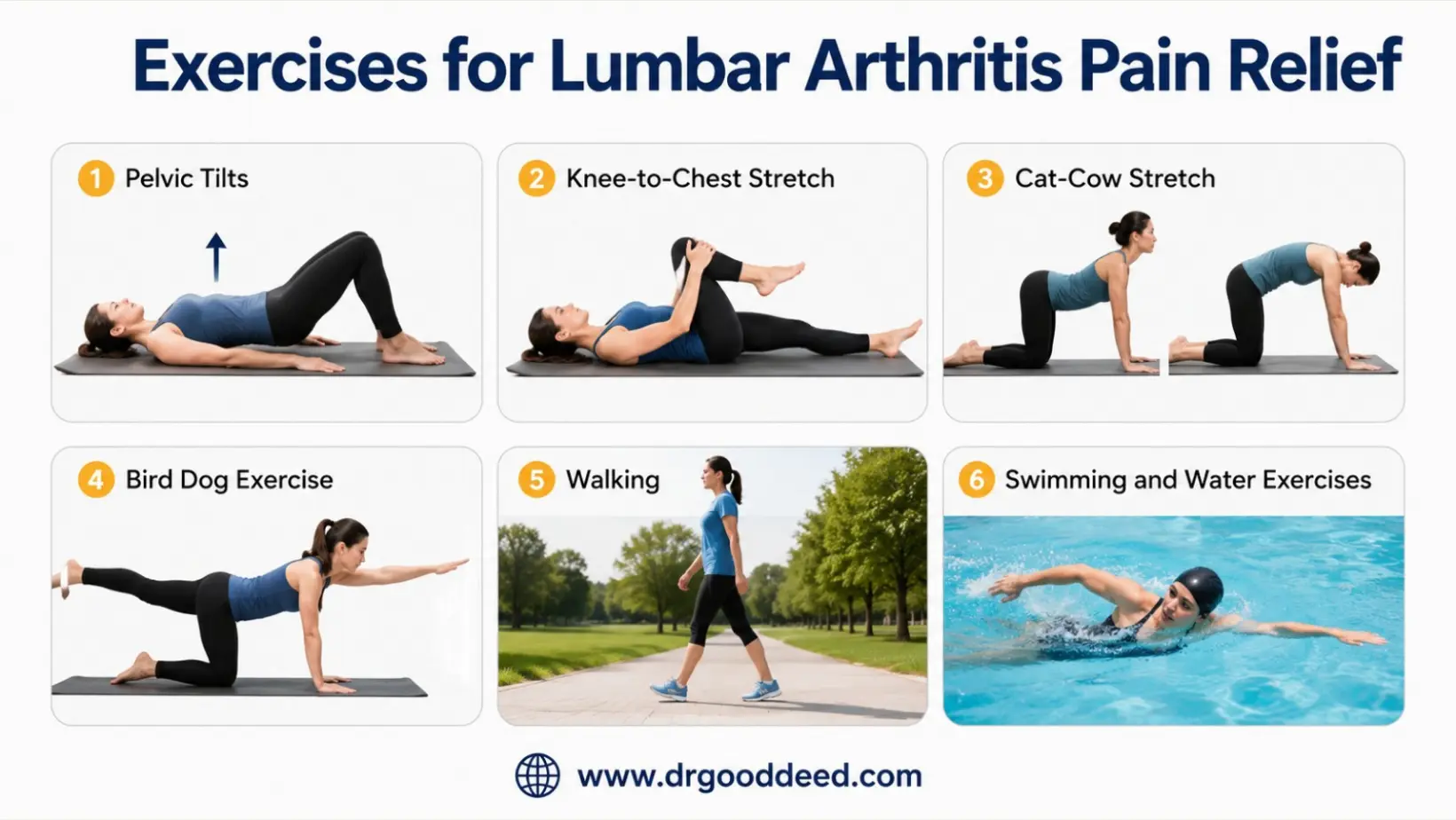
Exercises for lumbar arthritis pain relief work by improving flexibility, building support muscles, and keeping joints lubricated through movement. Skipping exercise because of pain usually makes stiffness worse. Start slow, stop if pain sharpens, and build up over weeks.
Pelvic Tilts
Lie on your back with knees bent. Tighten your abs and press your lower back into the floor. Hold for five seconds, then release. Repeat 10 times. This move gently activates core muscles without straining joints.
Knee-to-Chest Stretch
Lie on your back and pull one knee toward your chest, holding 20 to 30 seconds. Switch legs. This stretch relieves tension in the lower back and hips.
Cat-Cow Stretch
On hands and knees, arch your back up like a cat, then dip it down like a cow. Move slowly through 10 repetitions. This classic yoga move keeps the spine flexible.
Bird Dog Exercise
On hands and knees, extend one arm and the opposite leg at the same time. Hold for a few seconds, then switch sides. This builds core and back strength while training balance.
Walking
A daily 20 to 30 minute walk keeps joints moving and boosts blood flow to spinal tissue. It is one of the simplest exercises for lumbar arthritis pain relief, and it needs no equipment.
Swimming and Water Exercises
Water supports your body weight, so swimming lets you move joints through a full range without the usual strain. Water aerobics classes are widely available and gentle enough for most arthritis patients.
Medications Used for Lower Back Arthritis
Medication does not repair arthritic joints, but it controls the inflammation causing lumbar arthritis pain enough for you to stay active. Clinical guidelines from the American College of Physicians favor a step-up approach, starting with the safest options first.
Acetaminophen
Acetaminophen (Tylenol) reduces pain but does not target inflammation. Recent research shows it works no better than a placebo for reducing back pain intensity, so many doctors now favor NSAIDs first when there are no contraindications.
Nonsteroidal Anti-Inflammatory Drugs (NSAIDs)
NSAIDs like ibuprofen and naproxen are the top first-line drug choice across most clinical guidelines because they directly reduce the inflammation causing lumbar arthritis pain. They carry stomach and kidney risks with long-term use, so doctors keep courses short.
Topical Pain Relievers
Creams and patches containing NSAIDs, menthol, or capsaicin deliver relief right at the painful spot with fewer whole-body side effects than pills.
Muscle Relaxants
Muscle relaxants like cyclobenzaprine ease spasms that often build up around an arthritic joint. They cause drowsiness, so doctors usually limit them to short-term, nighttime use.
Prescription Medications
For chronic pain, doctors sometimes add low-dose tricyclic antidepressants, which have shown moderate benefit for long-lasting back pain. Corticosteroid injections directly into the facet joint can calm severe inflammation causing lumbar arthritis pain during a bad flare, though relief is temporary.
Diet and Nutrition for Arthritis
What you eat can turn joint inflammation up or down. A diet built around whole foods supports every other part of your treatment plan, including exercise and medication.
Anti-Inflammatory Foods
The Mediterranean-style eating pattern, rich in vegetables, fish, olive oil, and nuts, has been linked to lower inflammatory markers and reduced joint pain in arthritis research from the Arthritis Foundation.
Omega-3 Fatty Acids
Fatty fish like salmon, sardines, and mackerel supply omega-3s that lower inflammatory proteins such as CRP. The Arthritis Foundation recommends 3 to 4 ounces of fish twice weekly, or a fish oil supplement of 600 to 1,000 mg daily if you dislike fish.
Fruits and Vegetables
Colorful produce like berries, spinach, and broccoli delivers antioxidants that help your body manage inflammation. Aim for at least 1.5 to 2 cups of fruit and 2 to 3 cups of vegetables daily.
Whole Grains
Whole grains like oats, brown rice, and quinoa contain fiber that helps lower CRP levels, unlike refined grains, which have the opposite effect.
Foods That May Increase Inflammation
Cut back on fried foods, sugary drinks, processed meats, and refined carbs like white bread. These foods are consistently linked to higher inflammation markers in people with arthritis.
FAQs
Can lower back arthritis be cured?
No. Lower back arthritis cannot be reversed once cartilage wears down. Treatment focuses on slowing damage and cutting pain through exercise, medication, and posture correction, not on curing the joint itself.
What is facet joint arthritis?
Facet joint arthritis is cartilage breakdown in the small paired joints connecting each spine bone. It causes stiffness and localized pain that often worsens after standing or twisting, and improves briefly with rest.
Which medications are used for lower back arthritis?
NSAIDs like ibuprofen are the top first-line choice. Doctors also use acetaminophen, short-term muscle relaxants, topical NSAID gels, and corticosteroid injections during flare-ups that resist oral drugs.
Can weight loss improve lower back arthritis symptoms?
Yes. Every extra pound adds compressive force through the lumbar facet joints during standing and walking. Losing even 10 pounds measurably lowers joint load and reduces daily pain in most patients.
Are steroid injections effective for spinal arthritis?
Yes, but temporarily. Facet joint corticosteroid injections typically ease pain for three to six months, according to Mayo Clinic Proceedings data, making them useful for flare-ups rather than permanent relief.
Is walking good for lower back arthritis?
Yes. Walking 20 to 30 minutes daily keeps facet joints lubricated and strengthens supporting muscles. It causes less joint stress than running and is safe for nearly all arthritis patients.
How is lower back arthritis diagnosed?
Doctors combine a physical exam with imaging like X-ray or MRI to spot joint space narrowing. A diagnostic anesthetic injection can confirm a specific facet joint as the exact pain source.
Sources
- Mayo Clinic Proceedings: Evaluation and Treatment of Low Back Pain
- Mayo Clinic Sports Medicine: Facet Arthritis Overview
- Mayo Clinic Proceedings: Innovations, Quality & Outcomes: MRI-Guided Focused Ultrasound for Lumbar Facet Joint Pain
- Mayo Clinic Health System: Pain in the Back, Spinal Arthritis
- PMC: Consensus-Based Interventions for Cervical and Lumbar Facet Joint Pain
- Annals of Internal Medicine: Noninvasive Treatments for Low Back Pain, ACP Clinical Practice Guideline
- ACP Online: Guideline for Treating Nonradicular Low Back Pain
- PMC: Naproxen Sodium and Current Treatment Options for Low Back Pain
- Arthritis Foundation: What to Eat for Arthritis
- Arthritis Foundation: The Ultimate Arthritis Diet