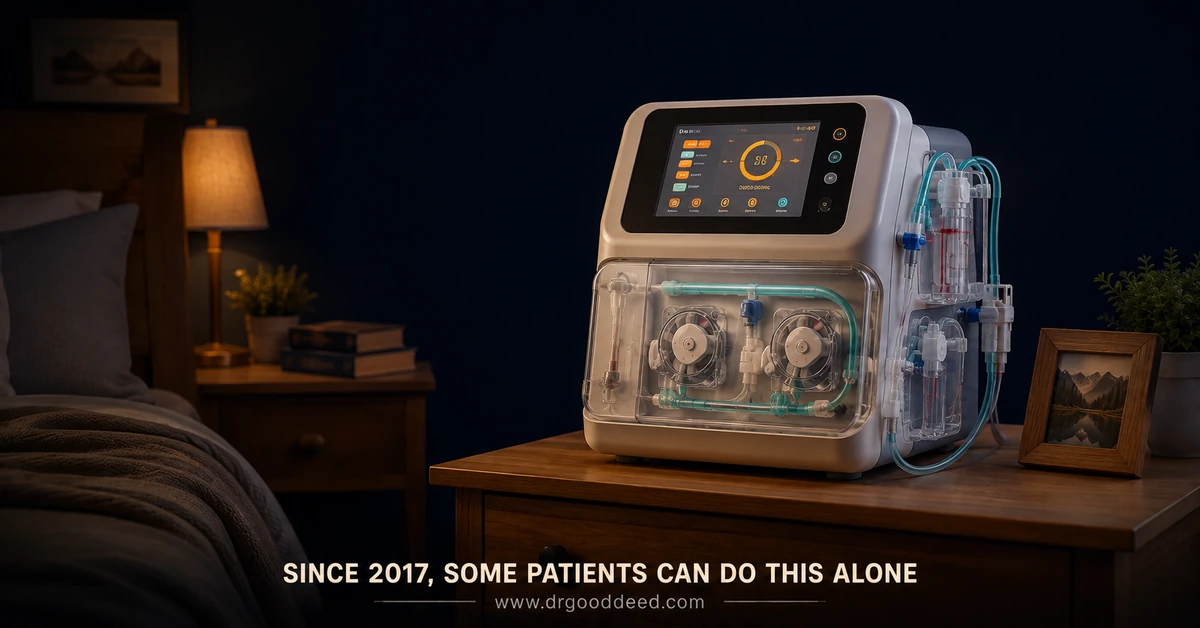

Home hemodialysis is a treatment for kidney failure where you filter your own blood using a dialysis machine at home instead of driving to a clinic three times a week. The process itself hasn’t changed, only the location and who runs it, usually you or a trained care partner. For the right candidate, it trades a rigid clinic schedule for a treatment plan built around daily life.
Key Takeaways
- Home hemodialysis is clinic-grade blood filtration performed at your kitchen table, bedroom, or a dedicated treatment space, using a machine your dialysis center provides and trains you to run.
- Three scheduling patterns exist: conventional (3 times weekly), short daily (5 to 7 times weekly), and nocturnal (overnight, most nights).
- Most programs want a trained care partner present, but a solo option has existed since 2017 for qualified patients.
- Training runs 3 to 8 weeks, sometimes longer, and starts only after your vascular access has healed.
- Real gains in flexibility and symptom control come with real demands on your home, your schedule, and your willingness to manage your own care.
How Home Hemodialysis Works
Hemodialysis pulls blood out through a vascular access point, usually a fistula in your arm, runs it through a dialyzer that filters out waste and extra fluid, then returns the cleaned blood to your body. A machine controls the flow rate, monitors pressure, and tracks how much fluid comes off. Home hemodialysis is the identical clinical process used in dialysis centers, just relocated to your house, with you or your care partner handling the setup, monitoring, and needle placement instead of clinic staff.
The Three Home Hemodialysis Schedules
Your nephrologist and dialysis team will map one of three schedules onto your medical needs and daily routine. Each moves a different amount of fluid and toxin load off your body per week, which changes how you feel between sessions. This is where home hemodialysis vs in-center comparisons matter most.
- Conventional home hemodialysis: Three sessions weekly, each running 3 to 4 hours or longer. Closest in structure to in-center dialysis, but you choose the days and times.
- Short daily home hemodialysis: Five to seven sessions weekly, roughly 2 hours each, using compact machines built for frequent short treatments. Smaller fluid shifts per session tend to reduce post-treatment headaches, cramping, nausea, and the drained feeling many patients describe after longer sessions.
- Nocturnal home hemodialysis: Long, slow overnight sessions, typically 6 to 8 hours, done 3 to 7 nights a week while you sleep. Some programs allow combining nocturnal with daily treatments depending on your prescription and equipment.
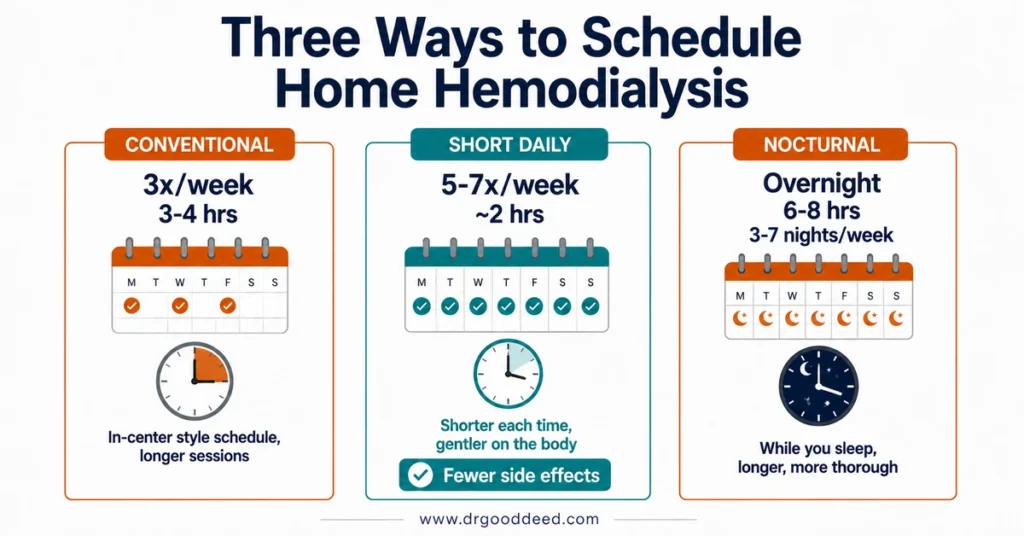
Choosing between these schedules is a clinical decision based on your lab targets, cardiovascular status, and lifestyle, not a preference call you make alone.
Do You Need a Care Partner?
Most home hemodialysis programs require a trained care partner, usually a spouse, adult child, or close family member, present during treatment to help with setup, needle insertion, and emergency response. This remains the default because self-cannulation and machine troubleshooting carry real risk if something goes wrong mid-session. Home hemodialysis care partner requirements vary by clinic and by patient acuity, so ask your program directly what they mandate.
In August 2017, the FDA cleared the NxStage System One for solo home hemodialysis during waking hours, the first clearance of its kind, letting trained, appropriately screened patients dialyze independently without another adult present. Nocturnal solo treatment still generally requires a partner, since sleep limits your ability to respond to alarms.
Expert Insight: Solo eligibility is decided by demonstrated competence during training, not by living alone. Programs assess how consistently a patient self-cannulates, troubleshoots machine alarms, and responds to simulated emergencies before clearing them for independent daytime treatment.
Real Benefits of Home Hemodialysis
Patients who benefit from home hemodialysis have more frequent, gentler sessions that remove fluid and waste more gradually than three long clinic visits a week.
- Schedule control. You pick treatment times around work, caregiving, or sleep, instead of fitting your life around a clinic slot.
- Fewer dietary restrictions. Removing smaller amounts of fluid and potassium more often, as with short daily or nocturnal schedules, generally allows more flexibility with fluid and food intake than conventional three-times-weekly dialysis.
- No commute. Eliminating round-trip clinic travel three to seven times a week reclaims hours weekly, meaningful for people managing jobs or childcare.
- Gentler treatment profile. Smaller, more frequent fluid removal is associated with fewer between-treatment symptoms like cramping, headaches, and post-dialysis fatigue compared with standard in-center sessions.

Real Tradeoffs to Consider
Every source that sells home hemodialysis equipment leads with benefits. The tradeoffs deserve equal attention because they determine whether this treatment actually fits your life.
- Training burden. Expect 3 to 8 weeks of hands-on training for you and your care partner, covering machine operation, self-cannulation, alarm troubleshooting, and infection control, before your clinic approves independent home treatment.
- Care partner logistics. If your program requires a partner, that person commits to being present for every session, indefinitely. This reshapes their schedule as much as yours, and caregiver burnout is a documented concern in home dialysis literature.
- Home space and electrical needs. Your dialysis center assesses your home for adequate space, a dedicated electrical outlet, water access, and supply storage, since machines and boxes of dialysate arrive regularly.
- Self-cannulation. Inserting your own needles into a fistula or graft, session after session, is a skill some patients adapt to quickly and others find persistently stressful.
- Full responsibility for safety. You monitor your own blood pressure, watch for access problems, and respond to machine alarms without a nurse down the hall. This suits self-directed patients; it can overwhelm those who prefer clinical supervision.
Pro Tip: Ask your clinic specifically how they handle overnight machine alarms and after-hours technical support before choosing nocturnal home hemodialysis. Response protocols vary widely between programs, and this detail rarely shows up in general home dialysis brochures.
What Training and Setup Actually Involves
Home hemodialysis starts well before your first at-home session. A surgeon places your vascular access, typically a fistula, 2 to 3 months ahead of time so it has room to heal and mature before use.
Once that’s ready, home hemodialysis training begins with your dialysis team teaching machine setup, needle insertion, alarm response, and cleaning protocols over 3 to 8 weeks, depending on your program and how quickly you and your care partner progress. Your clinic also inspects your home for electrical capacity, storage space for supplies, and water access before signing off on independent treatment.
Is Home Hemodialysis Right for You?
Home hemodialysis cost is largely covered by Medicare and most private insurance under end-stage renal disease benefits, though supply and setup details vary by plan, so confirm specifics with your provider before switching.
Beyond cost, weigh your tolerance for hands-on responsibility, whether a care partner is available and willing, and your home’s practical fit for equipment and storage.
Sources
- National Kidney Foundation, Home Hemodialysis link
- National Kidney Foundation, Home Dialysis: Hemodialysis and Peritoneal link
- National Kidney Foundation, Nocturnal Hemodialysis link
- National Kidney Foundation, Home Dialysis Guide: Daily Life, Diet & Exercise link
- National Kidney Foundation, Hemodialysis Access: Fistula, Graft & Catheter link
- National Kidney Foundation, Stage 5: Home Hemodialysis, A Guide for Patients and Their Families (PDF) link
- American Kidney Fund, Hemodialysis, A Type of Dialysis link
- American Kidney Fund, About Vascular Access link
- NxStage Medical / PR Newswire, FDA Clearance for Solo Home Hemodialysis Using NxStage System One link
- American Association of Kidney Patients, Short Daily Home Hemodialysis link