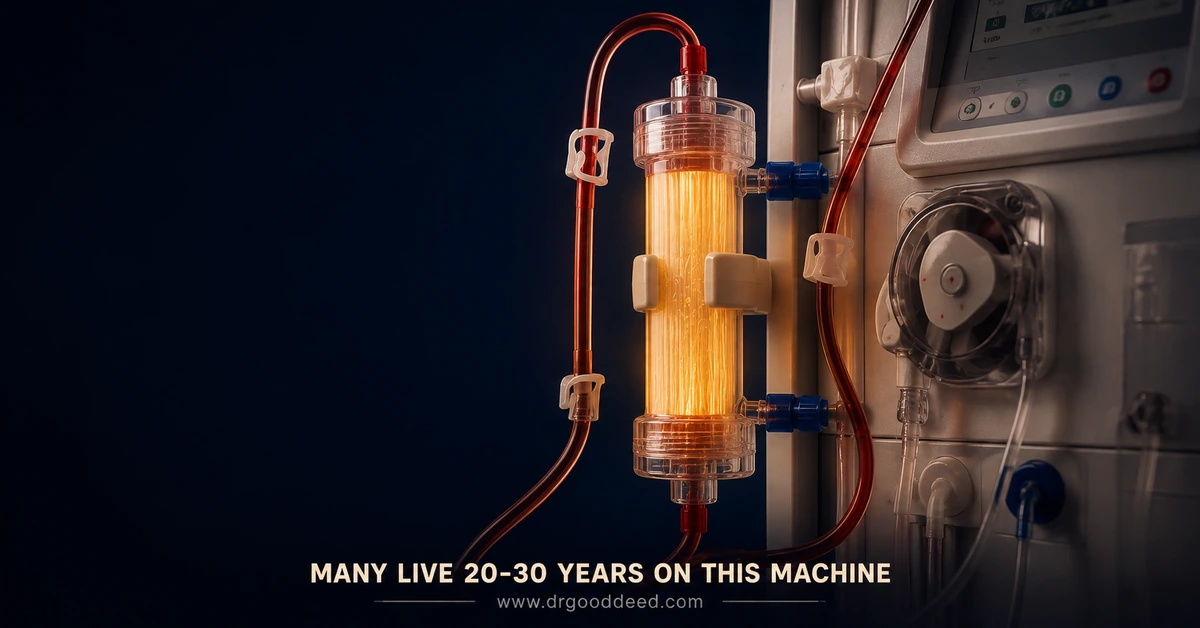

You can live on dialysis for many years, and there is no fixed limit; the average life expectancy is about 5–10 years, but many people live 20–30 years or longer. How long someone lives depends on factors such as age, heart and other health conditions, nutrition, remaining kidney function, dialysis adequacy, and how consistently treatment and medical advice are followed.
Dialysis is not a cure for kidney failure, but it can be life-sustaining, and you may eventually receive a kidney transplant. This guide walks through how long you can live on dialysis.
Key Takeaways
- The commonly cited average for how long you can live on dialysis is 5 to 10 years, though this varies enormously between individuals.
- Some people live 20 to 30 years on dialysis, especially those who start younger and manage other conditions well.
- Age at the start of treatment changes the outlook more than any single average number can show.
- Research shows patients often estimate their own dialysis life expectancy as longer than their nephrologist does.
- A direct conversation with your care team, not a general statistic, gives you the clearest picture of your individual outlook.
The Short Answer: Average Life Expectancy on Dialysis
The average life expectancy on dialysis is 5 to 10 years, though many people live 20 or even 30 years with consistent care. Some clinical estimates put average survival closer to 8.8 years for hemodialysis patients specifically. One-year survival on dialysis is roughly 75%, and five-year survival is approximately 35 to 40%, according to UpToDate’s review of national data.
Why the Average Number Doesn’t Tell the Whole Story
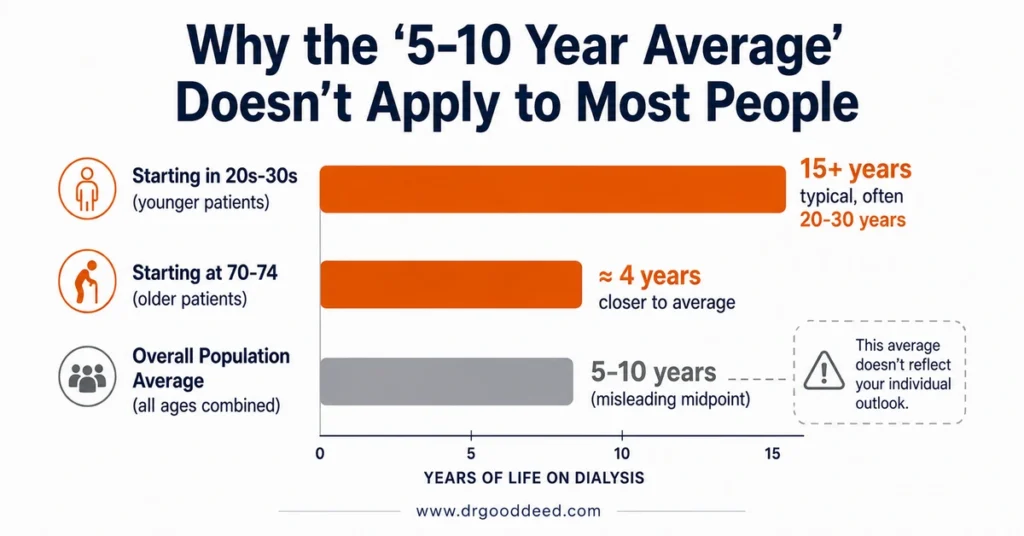
A single average blends together people in their 20s with people in their 80s. Age at the start of treatment is one of the strongest predictors of outcome in kidney failure, more powerful than almost any other single factor tracked in national data.
- A person starting dialysis in their late 20s or 30s typically has decades of potential survival ahead, often 15 years or more, especially without major heart disease or diabetes.
- A person starting dialysis in their 70s or 80s faces a very different picture; some data puts average survival for patients starting dialysis between ages 70 and 74 at closer to 4 years.
- The 5 to 10 year average is a midpoint across all these groups, not a realistic estimate for either end of the age spectrum.
- Comorbid conditions present at the start of dialysis shift the number further in either direction, independent of age alone.
What Affects How Long You Can Live on Dialysis
Nephrologists weigh several variables together when forming an individual prognosis, rather than relying on the population average alone.
- Age at dialysis initiation: Younger patients generally tolerate the physical demands of dialysis better and have fewer competing health risks, which is the single largest driver of the wide range in outcomes.
- Other health conditions, especially diabetes and heart disease: Diabetes is the leading cause of kidney failure in the United States, and the vascular damage it causes, closely tied to how diabetes and kidney damage progress together, also raises cardiovascular risk during dialysis. Heart disease is the leading cause of death among dialysis patients, responsible for roughly 30 to 40% of deaths in this population.
- Consistency with the treatment plan: Missing or shortening dialysis sessions allows toxins and fluid to build up between treatments, which raises hospitalization and mortality risk over time.
- Overall health status at dialysis start: Nutritional status, mobility, and the presence of frailty at the time treatment begins all independently affect survival, separate from age or diagnosis alone.
- Cause of kidney failure: Conditions like polycystic kidney disease tend to carry a somewhat better prognosis on dialysis than kidney failure caused by long-standing diabetes or uncontrolled high blood pressure.
These factors interact rather than acting alone, which is exactly why how long you can live on dialysis is only a personalized one built from your own health history.
Hemodialysis vs Peritoneal Dialysis: Does It Affect Survival?
Most comparative data on hemodialysis vs peritoneal dialysis survival shows broadly similar outcomes between the two modalities across most patient populations, with some studies favoring peritoneal dialysis slightly in the first one to two years, particularly among younger patients without diabetes.
- Individual health factors drive most of the outcome difference between patients, meaning age, comorbid conditions, and treatment adherence matter more than which machine or method is used.
- Peritoneal dialysis may offer a modest early survival advantage in some studies, though this gap tends to narrow or reverse after two to three years, especially in older adults.
- Hemodialysis remains the more common choice in the United States, used by roughly 90% of dialysis patients nationally.
The choice between modalities should be based on lifestyle, home support, and personal preference in discussion with your nephrologist.
Expert Insight: A common misconception is that switching dialysis modalities is a sign of failure or worsening prognosis. In practice, many patients move between hemodialysis and peritoneal dialysis over the years based on lifestyle changes, access issues, or personal preference, and this flexibility itself is associated with sustained quality of life rather than decline.
Why Patients and Doctors Often See This Differently
A 2023 scoping review published in Kidney Medicine, drawing on eight studies of dialysis recipients, found significant mismatches between how long patients expect to live and how long their nephrologists estimate they will live, with patients predicting significantly higher life expectancies than health care professionals and almost no agreement between the two groups.
- Patients tend to overestimate their own survival compared to their nephrologist’s clinical estimate, a pattern found consistently enough across the reviewed studies that researchers described nephrologists as generally not discussing prognosis openly with patients.
- The same review notes that greater prognostic understanding is linked to higher quality end-of-life care, meaning patients who understand their real outlook are better positioned to make informed choices about treatment intensity.
Can a Kidney Transplant Extend Life Beyond Dialysis?
For eligible patients, a kidney transplant generally offers a meaningfully longer outlook than remaining on dialysis long term. Research comparing dialysis and kidney transplant life expectancy consistently favors transplantation, particularly for younger and healthier candidates.
- A living donor transplant typically extends functioning kidney life the longest, with grafts commonly lasting 15 to 20 years, according to the National Kidney Foundation.
- A deceased donor transplant generally offers strong survival benefits as well, with grafts commonly functioning for 8 to 12 years, though overall patient survival often extends well beyond graft function through additional transplants or dialysis if needed.
- Waitlisted dialysis patients being evaluated for transplant already tend to have better survival odds than the general dialysis population, since transplant candidacy itself selects for relatively healthier individuals.
- Even older adults over 65 who receive a transplant show improved longevity and lower cardiovascular risk compared with staying on dialysis, according to matched-pair analyses in transplant literature.
Dialysis and kidney transplant life expectancy comparisons should always be discussed with your transplant team, since eligibility depends on factors like cardiovascular health and overall surgical risk.
Living Well on Dialysis: What Helps People Live Longer
Beyond the factors you can’t control, several everyday choices are consistently associated with living longer on dialysis in clinical research and registry data.
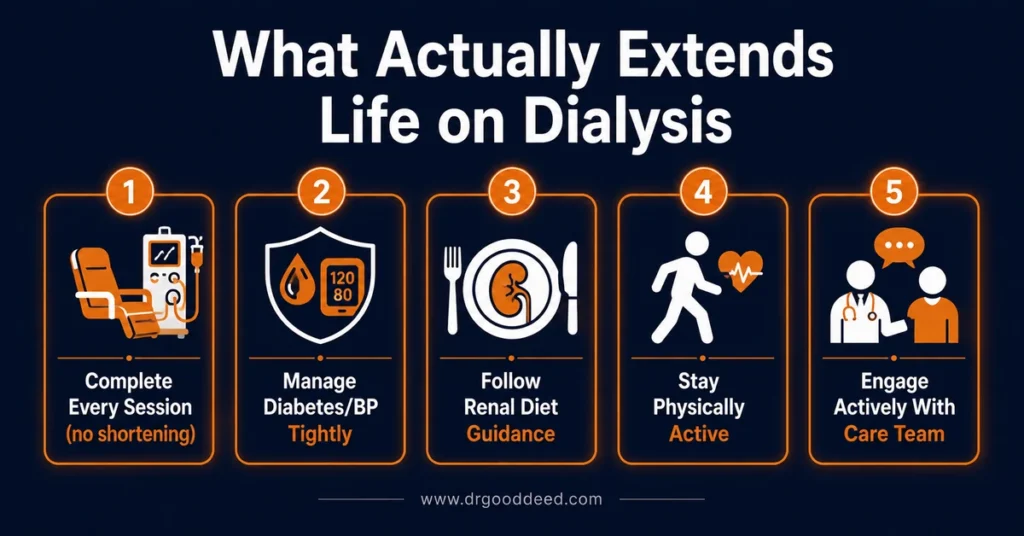
- Following your treatment plan consistently: completing full dialysis sessions without shortening or skipping them prevents dangerous buildup of fluid and toxins between treatments.
- Actively managing other health conditions: tight control of diabetes and blood pressure reduces the added cardiovascular strain that dialysis alone cannot address.
- Following your renal dietitian’s nutrition guidance: managing potassium, phosphorus, and fluid intake protects the heart and reduces hospitalization risk over time.
- Staying physically active within medically approved limits: even light, regular movement is associated with better outcomes and improved quality of life for dialysis patients.
- Working closely with your care team: patients who actively participate in adjusting their treatment plan tend to report both better survival and better day-to-day well-being.
Living longer on dialysis is the accumulation of small, consistent choices made alongside your care team over months and years.
When Someone Considers Stopping Dialysis
For some people, particularly those with advanced age, multiple serious illnesses, or a declining quality of life, stopping dialysis becomes a real and deeply personal decision rather than a hypothetical one. Stopping dialysis life expectancy is typically short, commonly cited as a matter of days, since the treatment is what’s actively removing toxins and excess fluid from the body.
This decision deserves its own careful, compassionate conversation with your care team and loved ones, ideally supported by palliative care specialists who focus on comfort. If you or a family member are approaching this point, our guide on the signs of dying from kidney failure covers what to expect in far more depth than is appropriate here.
Talking to Your Care Team About Your Individual Outlook
Only your nephrologist, working from your specific age, health history, lab trends, and response to treatment, can offer an estimate that actually applies to you.
Ask your care team plainly, bring a family member to take notes, and revisit the conversation as your health changes over time. Your outlook shifts, sometimes for the better, as your care and circumstances evolve.
Sources
- National Kidney Foundation, “Dialysis: Types, Effectiveness, Side Effects” link
- National Kidney Foundation, “Living Well with Dialysis” link
- National Kidney Foundation, “How Long Can Someone Be on Dialysis?” link
- National Kidney Foundation, “20 Common Questions about Kidney Transplant” link
- Beckwith H, Thind A, Brown EA. “Perceived Life Expectancy Among Dialysis Recipients: A Scoping Review.” Kidney Medicine, 2023. link
- UpToDate, “Patient Survival and Maintenance Dialysis” link
- Palliative Care Network of Wisconsin, “Prognostication in Patients Receiving Dialysis” link
- Medical News Today, “Stopping Dialysis: Life Expectancy, Complications, and More” link
- American Association of Kidney Patients, “Pros and Cons of Undergoing Kidney Dialysis” link
- American Journal of Transplantation, “Survival After Kidney Transplantation Compared with Ongoing Dialysis for People Over 70” link