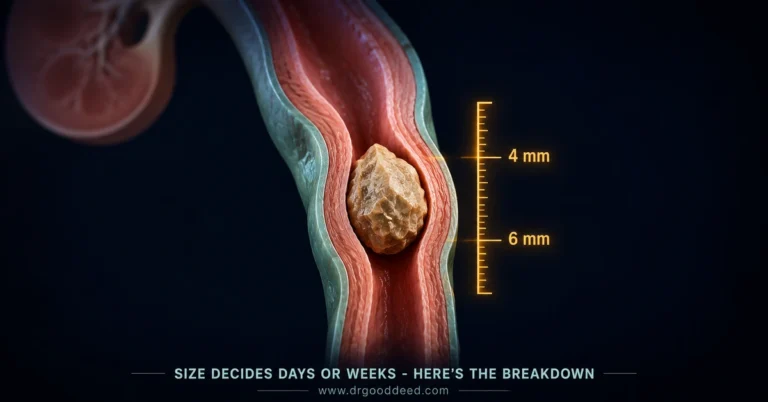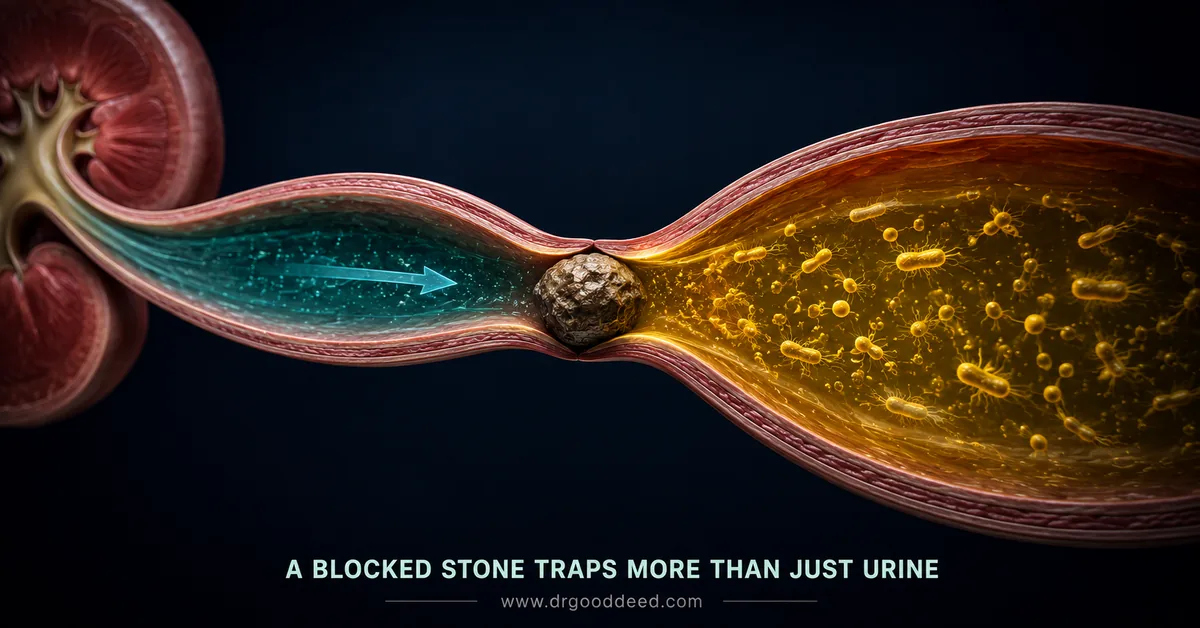

Yes, kidney stones can cause a bladder infection. A kidney stone can trigger a bladder infection, and in a smaller but clinically important number of cases, an infection causes the stone in the first place.
A stone that blocks urine flow lets bacteria pool and multiply, while certain bacteria change the chemistry of urine enough to build a stone around themselves. Readers dealing with a current stone or recurring kidney stones and UTI episodes often ask this same question after noticing a pattern their doctor has not fully explained yet, which is also covered from a different angle in our piece on kidney stones and secondary UTI risk after stone passage.
Key Takeaways
- Can kidney stones cause a bladder infection? Yes. A stone can block urine flow or scrape the urinary tract lining, both of which let bacteria take hold.
- The relationship also runs backward. Certain bacterial infections directly build a kidney stone infection called a struvite or infection stone.
- Fever, chills, or cloudy urine alongside stone pain signals a possible kidney stone fever and needs same-day medical evaluation, not a wait-and-see approach.
- An obstructing kidney stone infection is a recognized urological emergency because trapped, infected urine can progress to sepsis within hours.
- Struvite stones almost always need surgical removal plus kidney stone antibiotics together, since bacteria hide inside the stone itself.
Yes, Here’s How a Kidney Stone Can Lead to an Infection
A stone does not need to be large to set off an infection. Two separate mechanisms explain why kidney stones can cause a bladder infection, which often shows up as a related search alongside recurring UTI questions, according to Atlantic Urology Specialists’ clinical overview of the connection.
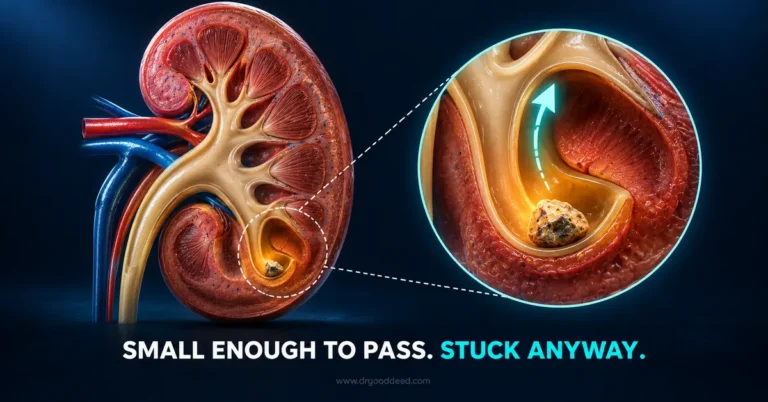
- Urinary obstruction and stasis: A stone lodged in the ureter or at the bladder outlet partially or fully blocks urine flow. Urine backs up and sits stagnant behind the blockage. Bacteria that would normally be flushed out during urination instead have time to multiply, turning trapped urine into an active infection site.
- Direct tissue irritation: Kidney stones, especially ones with sharp or jagged edges, scrape the delicate lining of the ureter and bladder as they move. This mechanical damage weakens the tissue’s natural defense against bacterial adhesion, making it easier for organisms like E. coli to colonize the urinary tract and cause a kidney stone infection.
Together, an obstructing stone with a damaged lining creates close to ideal conditions for bacteria to establish a foothold in the bladder or kidney.
Infection Stones: When It Works the Other Way Around
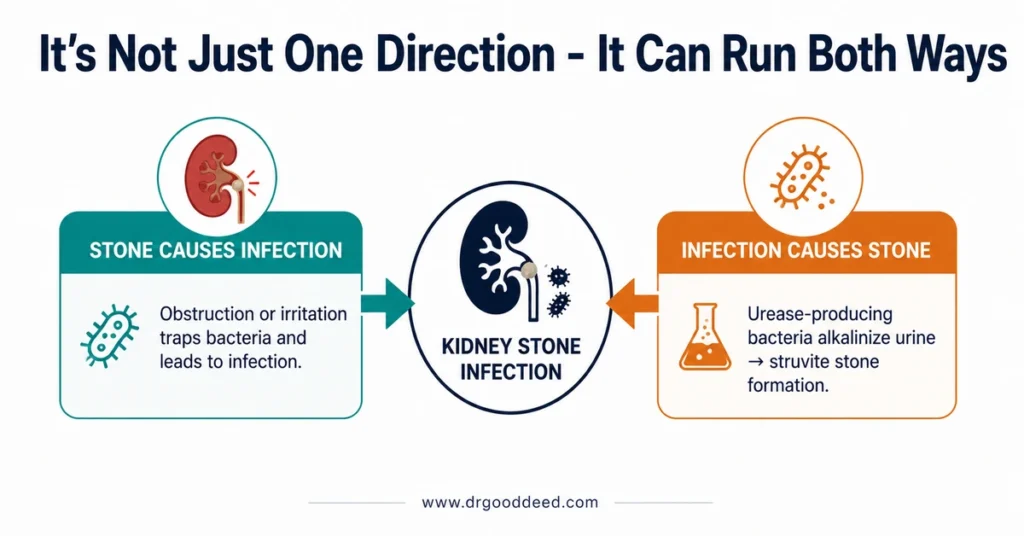
Sometimes the infection comes first, and the stone forms because of it. Struvite stones, also called infection stones, account for roughly 5% to 15% of kidney stones, and understanding them clarifies why kidney stones can cause a bladder infection.
- Struvite stones form only in the presence of urease-producing bacteria, most often Proteus mirabilis, and also Klebsiella, Pseudomonas, and certain Staphylococcus species, per the National Kidney Foundation.
- These bacteria produce urease, an enzyme that breaks urea down into ammonia, raising urine pH above 7 and turning it alkaline.
- In that alkaline environment, magnesium, ammonium, and phosphate crystallize together, and the resulting infection stones can grow rapidly, sometimes filling the entire kidney within weeks as a staghorn calculus.
- The cycle then feeds itself: the stone shelters more bacteria, the bacteria keep the infection active, and the infection keeps building more stone material.
| Direction | What happens first | Typical stone type |
| Stone causes infection | Obstruction or irritation traps bacteria | Calcium oxalate, uric acid, most stone types |
| Infection causes stone | Urease-producing bacteria alkalinize urine | Struvite (infection) stones |
Expert Insight: A struvite stone is not a bystander to infection; it is built by the infection and continues to shelter it, which is why a urine culture that clears up on antibiotics alone does not mean the underlying kidney stone infection is resolved.
Why This Combination Needs Prompt Treatment
Clinical sources including StatPearls and current urology guidelines describe an obstructing kidney stone infection as one of the few true urological emergencies, distinct from an uncomplicated stone or an uncomplicated UTI treated on its own.
- When infected urine cannot drain past a blocking stone, bacteria and toxins can enter the bloodstream, progressing to urosepsis within hours in severe cases.
- Emergency management calls for urgent decompression, typically a ureteral stent or percutaneous nephrostomy tube, placed before or alongside definitive stone treatment.
- Struvite stones specifically resist antibiotics alone. Bacteria embed themselves within a biofilm inside the stone’s structure, a physical barrier that antibiotics cannot fully penetrate.
- Effective treatment pairs complete surgical stone removal with a course of kidney stone antibiotics, since leaving fragments behind lets the infection and stone regrow together.
Pro Tip: If a stone episode brings fever above 100.4°F, note the exact temperature and time it started before calling your doctor or heading to urgent care, since documented fever onset helps clinicians distinguish routine renal colic from a kidney stone fever that needs urgent decompression.
Symptoms That Suggest Infection, Not Just a Stone
Ordinary stone pain and an infected stone can look similar at first, but a few symptoms mark the difference, which matters because it changes how quickly care is needed, separate from the general signs of kidney stones most people already recognize, like flank pain or blood in the urine.
- Fever and chills: A temperature above 100.4°F (38°C) accompanying stone pain points toward infection rather than an uncomplicated stone.
- Cloudy or foul-smelling urine: Bacteria and white blood cells change the appearance and odor of urine in ways plain stone passage does not.
- Burning or urgency during urination: These classic UTI symptoms layered on top of flank pain suggest the bladder or urinary tract is actively infected.
- Nausea, vomiting, or a rapid heart rate: These can signal the infection is affecting the whole body, not staying localized.
Pain alone, without fever or urinary changes, is far more likely to represent an uncomplicated stone working its way through the urinary tract.
When to See a Doctor
Any fever with stone-related pain deserves same-day medical attention, not a scheduled appointment days out. This is especially true if the discomfort has changed in character or lasted longer than expected, a timeline better understood alongside our guide to how long kidney stones last without complications.
- Seek emergency care immediately for fever over 100.4°F, chills, vomiting, confusion, or a rapid heartbeat combined with flank pain.
- Call your doctor the same day for cloudy or foul-smelling urine, burning during urination, or pain that suddenly worsens.
- Mention any history of recurrent UTIs or prior struvite stones at your first contact, since this changes how urgently a provider will image and treat you.
An infected, obstructing stone treated promptly with decompression and targeted care generally recovers well. Delaying evaluation is what turns a treatable kidney stone infection into a medical emergency.
Sources
- Atlantic Urology Specialists: Can Kidney Stones Cause a Bladder Infection? link
- National Kidney Foundation: Struvite Kidney Stones link
- National Kidney Foundation: Kidney Stones Hub link
- UpToDate: Kidney Stones in Adults, Struvite (Infection) Stones link
- StatPearls: Struvite and Triple Phosphate Renal Calculi link
- StatPearls: Bladder Stones link
- Urological Guidelines for Kidney Stones: Overview and Comprehensive Update, PMC link
- EAU Guidelines on Urolithiasis, Uroweb link
- American Kidney Fund: Kidney Stones Causes, Symptoms and Treatment link
- Urology Care Foundation: Kidney Stones, Symptoms, Diagnosis & Treatment link
Medical Disclaimer: This article is for general educational purposes and does not replace professional medical advice, diagnosis, or treatment. Talk to a licensed healthcare provider about your specific symptoms, especially fever, severe pain, or suspected infection.