
A gut microbiome test at home analyzes bacteria in a stool sample you collect yourself, but recent peer-reviewed research raises real questions about how consistent these results actually are. Interest in an at home gut health test has grown fast among people curious about digestion, energy, and general wellness. Before spending money on one, it helps to know what the science currently says, not just what the marketing promises.
Key Takeaways
- A gut microbiome test at home works by sequencing bacterial DNA from a stool sample, then reporting on microbial diversity and composition.
- A 2026 study co-authored with the National Institute of Standards and Technology found meaningful inconsistency between provider results from the same sample.
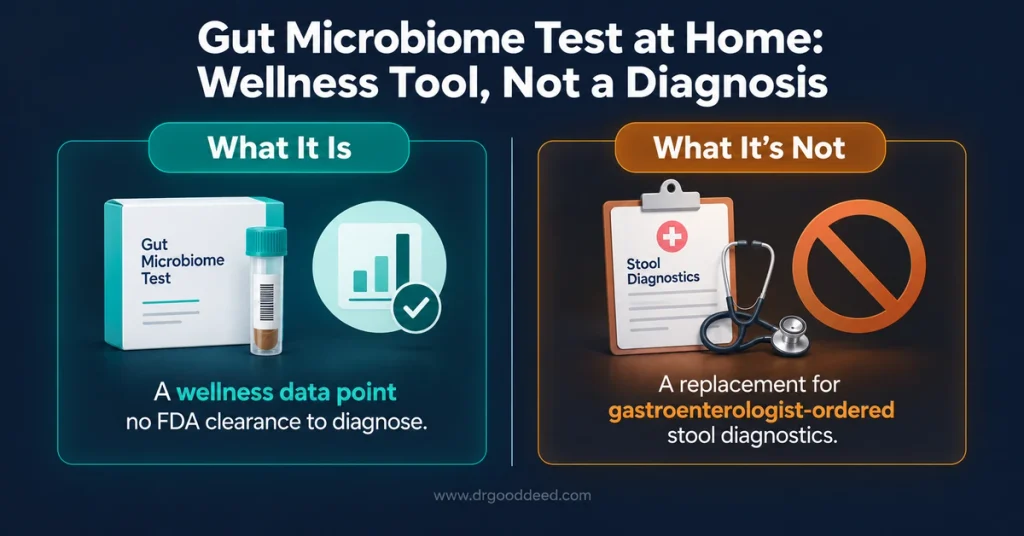
- These kits are wellness tools, not diagnostic tests, and no provider is FDA-cleared to diagnose a digestive condition.
- Providers differ in sequencing method, price, and turnaround time, so comparing them matters if you decide to proceed anyway.
- Persistent gastrointestinal symptoms need a gastroenterologist and proper stool diagnostics, not a consumer kit.
What an At-Home Gut Microbiome Test Actually Measures
A gut microbiome test at home typically involves collecting a small stool sample at home, mailing it to a lab, and receiving a report on which bacterial species are present and in what proportions.
The lab identifies bacteria using one of two main methods: 16S rRNA sequencing, which reads a single marker gene to identify bacterial genus and species, or shotgun metagenomic sequencing, which reads far more of the bacterial genome and can detect strain-level differences and some functional genes.
Some newer tests add metatranscriptomics, which measures which genes are actively being expressed rather than just which bacteria are present. Shotgun and metatranscriptomic methods generally provide more detail than 16S, though detail alone does not guarantee clinical usefulness.
Does Science Actually Support These Tests?
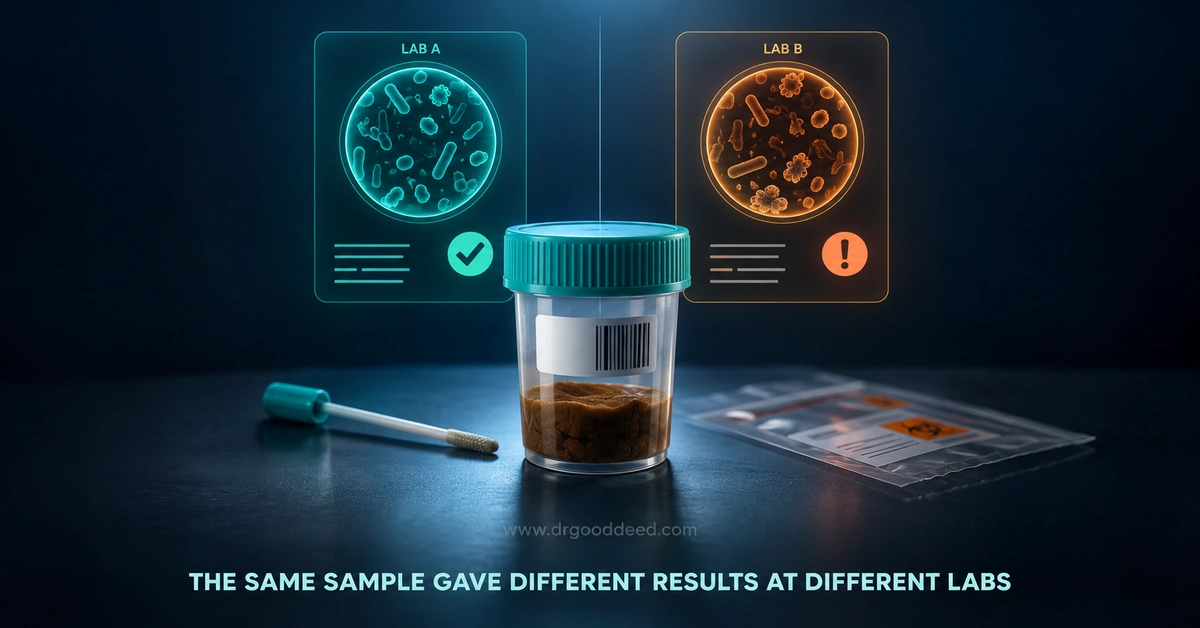
A study published in early 2026 in Communications Biology, conducted with the National Institute of Standards and Technology (NIST), tested identical stool samples across seven commercial gut microbiome providers and found the results varied meaningfully from lab to lab, the same sample sometimes produced different bacterial readings depending on which company processed it.
NIST’s own research blog confirmed this finding, and the Washington Post covered it in February 2026. Dr. Najwa El-Nachef, a gastroenterologist at Henry Ford Health, stated on record that these tests are likely to become genuinely valuable in the future, but “we’re not there yet,” and recommended proceeding with caution. In plain terms, the underlying science of reading a microbiome is real, but the industry’s methods have not yet been standardized enough for consistent, reliable consumer results.
Gut Microbiome Tests Compared (Comparison Table)
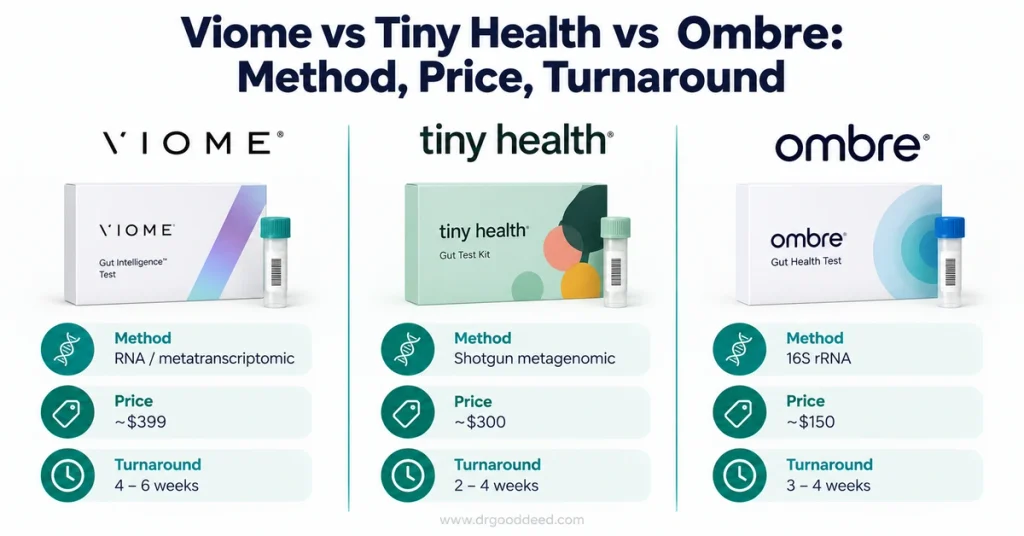
For readers who understand the reliability limitations above and still want to explore a best gut microbiome test option, the practical differences between providers come down to sequencing depth, cost, and how the lab is accredited. None of these differences resolve the inconsistency findings, but they do affect what you get for your money.
| Feature | Viome | Tiny Health | Ombre |
| Sequencing method | RNA/metatranscriptomic sequencing | Shotgun metagenomic sequencing | 16S rRNA sequencing |
| Price range | Roughly 399 depending on kit | Roughly 300 depending on kit | Roughly 150 |
| Turnaround time | About 4-6 weeks | About 2-4 weeks | About 3-4 weeks |
| Lab accreditation | CLIA-certified lab | CLIA-certified lab | CLIA-certified lab |
Viome vs Tiny Health vs Ombre: A Closer Look
- Viome uses metatranscriptomic sequencing, meaning it reports on gene activity rather than just bacterial presence, which is a more complex and newer approach within this space.
- Tiny Health uses shotgun metagenomic sequencing and markets itself heavily toward infant and family gut health tracking, alongside general adult testing.
- Ombre uses 16S rRNA sequencing, the older and less detailed of the three methods, which generally comes at a lower price point.
- None of these three has published independent, third-party validation data addressing the specific lab-to-lab inconsistency identified in the 2026 NIST-co-authored study, so a more detailed sequencing method does not automatically mean a more reliable result.
Pro Tip: If you do order an at home gut health test, keep the report from your first kit and retest with the same provider months later rather than switching brands, since comparing results across two different companies’ sequencing pipelines is far less meaningful than tracking change within one consistent method.
Who Might Still Find a Test Worth Trying
A gut microbiome test at home is not a diagnostic tool, and that distinction shapes who reasonably benefits from trying one.
- Someone curious about general microbial diversity trends, purely for personal interest rather than symptom investigation.
- Someone wanting a rough baseline before making a significant diet change, to later compare against a repeat test from the same provider.
- Someone without concerning digestive symptoms, using the test as a wellness data point alongside diet and lifestyle tracking, not as a medical answer.
Framed this way, a best gut microbiome test search is really a search for the most consistent tracking tool available today, not a clinically validated diagnostic product, and current evidence supports treating it exactly that way.
When to See a Gastroenterologist Instead
Persistent bloating, unexplained weight loss, blood in the stool, ongoing diarrhea or constipation, or abdominal pain that doesn’t resolve are not situations a wellness kit can properly evaluate. A gastroenterologist can order clinically validated stool testing, bloodwork, or imaging that a consumer gut microbiome test at home was never designed to replace. If digestive symptoms are affecting daily life, a medical workup should come first, with any wellness testing treated as a separate, secondary interest afterward.