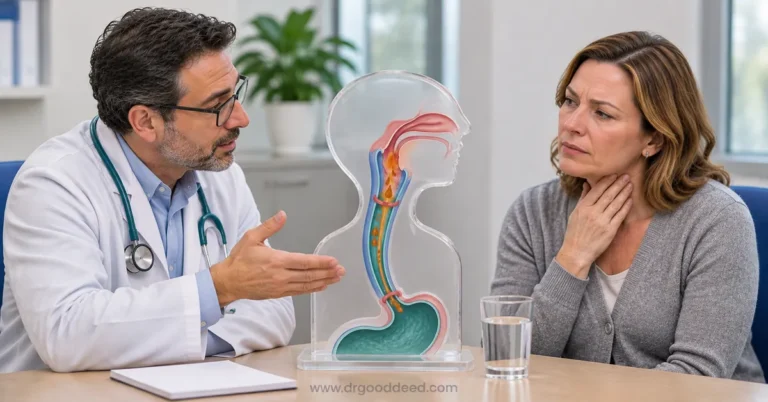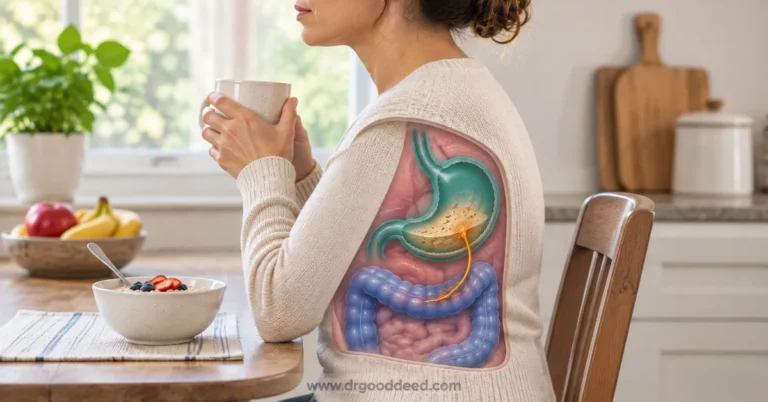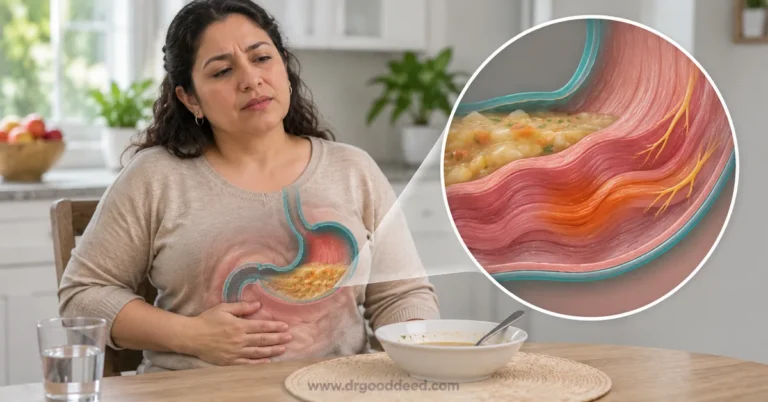

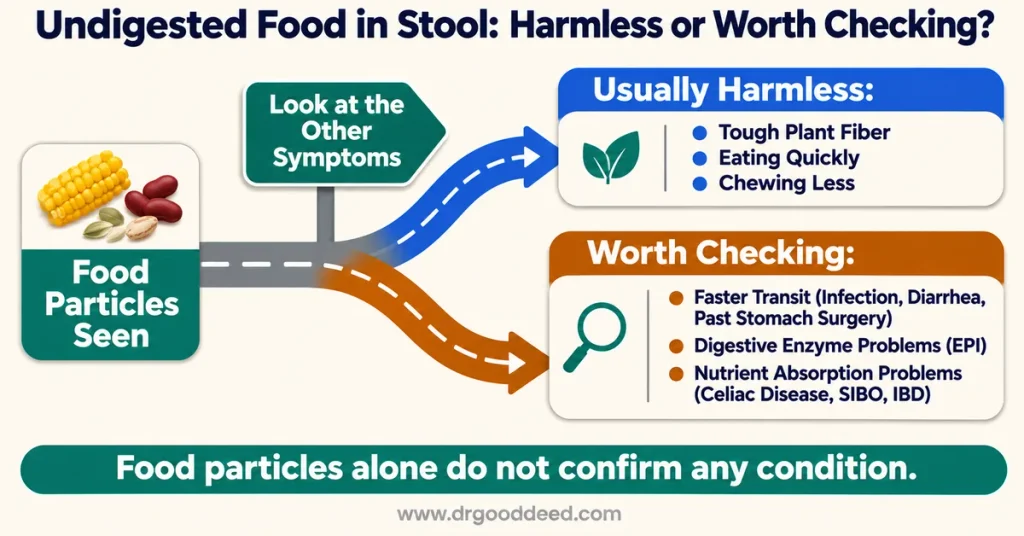
Undigested food in stool is often normal. Bits of corn, seeds, beans or vegetable skins are common because the tough plant fiber in these foods is not fully broken down (WebMD). If you keep seeing food particles while experiencing diarrhea, abdominal pain, greasy stools or unexplained weight loss, however, then it could be a digestive issue that should be evaluated by your doctor.
The appearance of the stool can also vary with fast eating, changes in intestinal transit and certain medical diseases. It helps to know which signs are usually harmless and which need a doctor.
Key Takeaways
- Undigested food in stool is often normal, especially corn, seeds, beans and vegetable skins, but it matters more when other symptoms come with it.
- What changes how stool looks: Food structure, chewing habits and how fast food moves through the gut.
- Other symptoms to watch for: If you have persistent diarrhea, have greasy stools, abdominal pain or unexplained weight loss, you should seek medical help.
- Digestive factors may play a role: Intestinal infections, pancreatic insufficiency, and celiac disease can make it harder to digest or absorb nutrients.
- Warning signs: Blood in stool, black or tarry stools, severe abdominal pain or severe dehydration need urgent care (911 in the US, 999 or A&E in the UK).
What Does Undigested Food in Stool Mean?
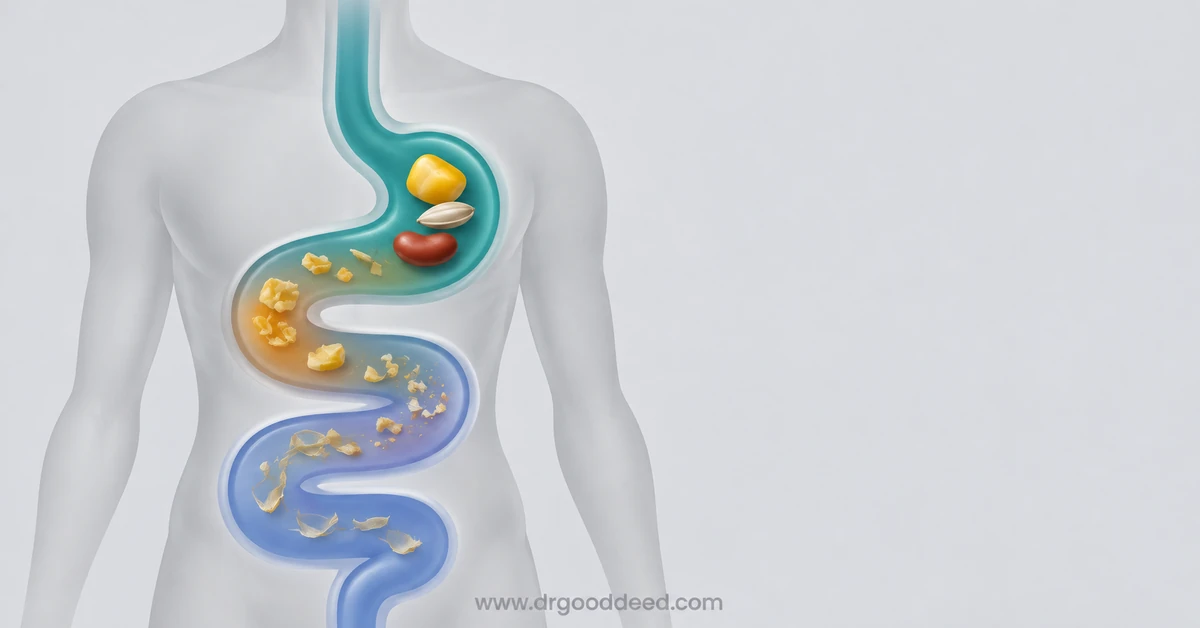
Undigested food in stool means food particles you can see after a bowel movement. The digestive system breaks down food through chewing, stomach acid, digestive enzymes, and intestinal movement, and absorbs nutrients.
Most nutrient absorption occurs in the small intestine. The large intestine reabsorbs water and breaks down the rest of it before it is excreted from the body.
Some parts of plants, like tough fibers, are indigestible. So, if food particles are visible in your stool, it doesn’t necessarily indicate that your digestive system is not working properly. Food types, chewing and how quickly the food passes through the gut may affect how stool looks. See the types of poop chart for what normal stool can look like.
Which Foods Commonly Show Up Undigested in Stool?
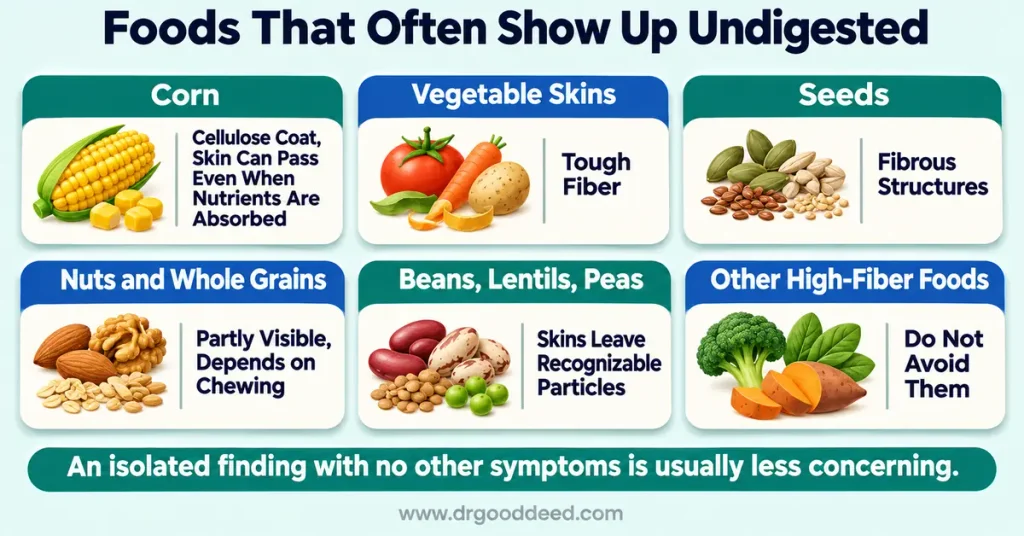
An isolated finding is not as concerning if you don’t have ongoing changes in bowel movements or other unusual symptoms that make you feel unwell. Undigested vegetables in stool and other plant foods commonly include:
Corn and Vegetable Skins
Corn kernels are coated with cellulose, a plant fiber that is not completely digested by human digestive enzymes. Therefore, the outer skin can be found in the stool even if the nutrients inside the kernel have been broken down or absorbed.
Corn in stool does not necessarily mean that digestion is poor or that nutrients are not being absorbed.
Seeds, Nuts, and Whole Grains
Fibrous structures in seeds, nuts and whole grains might not be completely digested or broken down, so they may be partly visible in the digested material. The way the food is chewed in the mouth and digested in the stomach and intestines can determine their appearance.
Beans and Other High-Fiber Foods
The skins of vegetables, beans, lentils, peas or other high fiber foods may result in recognizable particles in stool. They provide fibers that are essential for normal bowel function, and the presence of these fibers in the stool should not be a reason to avoid nutritious foods and meals.
If these changes occur repeatedly and there is diarrhea, greasy stools, abdominal discomfort or unexplained weight loss, however, then medical attention is required.
Read more about the causes of diarrhea after eating to understand how changes in intestinal movement may affect bowel habits.
What Causes Undigested Food in Stool?
Undigested food in stool causes range from eating quickly and tough plant fiber to fast digestion and, less often, problems with digesting or absorbing food. Some foods are easier to identify in the stool if they are eaten quickly or not chewed well. If the problem is related to eating habits, eat slowly and chew thoroughly.
Fast Digestion and Faster Intestinal Transit
A more rapid transit of the food through the digestive tract may lessen the amount of time available for food to be digested and nutrients absorbed. Read why some people need to poop right after eating.
Faster transit may be caused by a stomach infection, diarrhea, some intestinal conditions or a previous stomach surgery. In combination with persistent diarrhea, food particles can help the health professional diagnose the cause of the diarrhea.
Digestive Enzyme Problems
Digestive enzymes are used to digest carbohydrates, protein and fats. Exocrine pancreatic insufficiency (EPI) is a condition in which the pancreas fails to produce enough digestive enzymes to aid in digestion.
The NIDDK lists possible symptoms as foul-smelling, oily, loose stools, bloating, gas and weight loss. But the presence of the food particles in the stool does not confirm pancreatic insufficiency.
Learn more about the pancreas and its role in digestion to understand why pancreatic problems can affect stool appearance.
Problems With Nutrient Absorption
Malabsorption is when the small intestine fails to absorb nutrients well. Digestive issues or problems with absorption can occur, such as celiac disease, small intestinal bacterial overgrowth (SIBO), or inflammatory bowel disease (IBD).
Malabsorption symptoms include diarrhea, bloating, weakness, loss of weight, and deficiencies of various nutrients. The symptoms may be due to more than one cause, and medical evaluation is required, not just because of the appearance of the stool.
Gastrointestinal Infections
Some gastroenteritis infections result in bowel changes, cramps and diarrhea. The increased speed of the gut may cause the food particles to be more noticeable than usual during infection.
If diarrhea persists following possible ingestion of contaminated food or water, it should be medically evaluated.
Symptoms That Can Come With Undigested Food in Stool
Often, it’s the symptoms associated with the presence of visible food particles that give more information than the particles do. If bowel changes are found occasionally without any other symptoms, this is not as much of a problem as when bowel changes persist.
Be alert to these other symptoms:
- Diarrhea: If there are more frequent or watery stools, it can be a sign of infection, food intolerance or an increase in bowel movements.
- Infections and other digestive problems may cause abdominal pain or cramps.
- Bloating and gas: This can happen if you eat foods that are high in carbohydrates or have high fiber content.
- Greasy floating stool: Fatty stool that floats may be a sign of trouble digesting and absorbing fats.
- Fatigue and sudden weight loss: This can result from deficiencies in nutrients or some hidden digestive problem.
- Blood in stool: If there is blood, it should not be taken as undigested food and should be investigated by a medical doctor.
How to Tell Normal Food Particles From Digestive Problems
| Observation | Possible explanation | Recommended action |
| Occasional corn or vegetable skins | Normal passage of plant fiber | Usually less concerning without other symptoms |
| Food particles with persistent watery stools | Faster intestinal transit or another digestive problem | Seek medical advice |
| Repeated greasy, bulky stools | Possible fat malabsorption | Arrange a medical evaluation |
| Food particles with unexplained weight loss | Possible nutrient absorption problem or another condition | Arrange prompt medical assessment |
| Blood in stool or severe abdominal pain | Potentially serious condition | Seek urgent medical care |
How Doctors Find the Cause
Tests are not always needed; the doctor will assess the symptoms and history, as well as perform a physical examination, before deciding.
Medical History and Examination
The doctor might want to know how many bowel movements you have in a day, whether you have diarrhea, abdominal discomfort, weight loss or gain, medications you are taking, travel history, and whether you have eaten or drank anything that may have been contaminated. An examination can be used to determine hydration and may also measure the presence of nutritional deficiencies and abdominal tenderness.
Stool and Blood Tests
The stool tests may examine intestinal infections, inflammation or fat digestion issues depending on the symptoms. Blood tests can help detect anemia or nutrient deficiencies and/or signs of diseases like celiac disease.
The American Gastroenterological Association recommends that if pancreatic insufficiency is suspected, the first test to perform is to measure the level of elastase in the stool. If there is a clinical suspicion of a particular digestive disorder, further investigations, such as a breath test or an endoscopy, may be done.
The laboratory tests and endoscopy are not necessary for everyone who sees visible food particles. It will depend on the symptoms and medical evaluation.
How Can You Reduce Undigested Food in Stool Naturally?
If food particles become visible from time to time, without any symptoms, a change of eating habits may be helpful in order to facilitate normal digestion.
- Take time to chew food: Eat slowly and chew food into small pieces before swallowing.
- Gradually add fiber back in: If a sudden change in eating habits results in changes in bowel habits and/or bloating, add fiber back in gradually.
- Stay well hydrated: Drink enough fluids, especially during mild diarrhea. If you have a prescribed fluid restriction, follow your healthcare professionals’ advice.
- Follow a balanced diet: Add an appropriate variety of vegetables, fruits, whole grains and protein in accordance with your tolerance.
- Talk about pattern of symptoms: If certain foods tend to cause digestive upset over and over again, discuss this with a health care professional.
- Eat food safely: Wash food, cook food properly and drink safe water to minimize the risk of food-borne infection.
It is not necessary to cut out healthy foods that contain a lot of fiber because there may be some material visible in the stools. When warning signs are present, dietary changes cannot take the place of medical evaluation.
Undigested Food in Stool: When to See a Doctor
Undigested food in stool on its own is usually not a concern; it matters when it comes with persistent diarrhea, weight loss or other bowel changes. If symptoms do not resolve or there is a marked change in bowel habits, symptoms may need medical evaluation, however.
If you get any of the following symptoms, please see a doctor:
- Chronic or recurrent diarrhea.
- Loose, pale, fatty, or frequent bowel movements.
- Sudden loss of weight or persistent tiredness.
- Ongoing abdominal pain or fever.
Blood in stool or persistent changes in bowel movements.
Sources differ slightly on timing: Ubie Health suggests contacting a provider if symptoms last more than two weeks. Do not wait for a set time; consult for symptoms that do not go away, come back, or get worse.
Get emergency help for severe or worsening abdominal pain, heavy bleeding, black or tarry stools with weakness or fainting or severe dehydration. Please call 911 in the U.S. or 999 or visit A&E in the UK with emergency symptoms. For non-emergency issues, see your primary care doctor in the US, or your GP or NHS 111 in the UK.
Frequently Asked Questions
Is Undigested Food in Stool Normal?
Yes. Some food particles, especially corn, seeds, beans, and vegetable skins, may be visible and are sometimes normal. If symptoms or changes continue or new symptoms appear, medical evaluation may be necessary.
Why Does Corn Come Out Undigested in Stool?
Corn kernels are surrounded by cellulose, a fiber component of plants that is not completely digestible by human enzymes. The covering can be present after the nutrients within the kernel have been consumed or absorbed.
Does Undigested Food in Stool Mean Poor Digestion?
Not necessarily. Some plant fiber naturally resists digestion. If food particles come with diarrhea, greasy stools or loss of weight, however, then medical assessment is required.
Can Diarrhea Cause Undigested Food in Stool?
Yes. The faster the food moves through the intestines, the less time it will have for digestion and the more noticeable the food particles will be. If diarrhea is present, it should be evaluated.
Can Pancreatic Problems Cause Greasy Stools?
They can. Loose, foul-smelling, greasy stools, bloating and weight loss can occur with pancreatic insufficiency. The symptoms don’t only occur with pancreatic disease, and sometimes testing is necessary to find out the cause of the symptoms.
When Should You Worry About Food Passing Through Undigested?
Contact your doctor if food particles are seen frequently in conjunction with frequent diarrhea, oily stools, unintended weight loss, and/or continuous abdominal pain. Any stool containing blood, black and tarry stools, severe pain or severe dehydration should be assessed immediately.
Sources
WebMD, What to Know About Undigested Food in Your Stool. link
NIDDK, Symptoms and Causes of Exocrine Pancreatic Insufficiency. link
American Gastroenterological Association, Clinical Practice Update on Exocrine Pancreatic Insufficiency. link
Mayo Clinic, Undigested Food in Stool: What Does It Mean? link
MedlinePlus, Malabsorption. link
NIDDK, Diarrhea: Symptoms and Causes. link
Cleveland Clinic, Malabsorption Syndrome. link
Medical Disclaimer: This article is for general information only and is not medical advice. It does not replace a diagnosis, treatment plan, or guidance from a qualified healthcare professional. Always talk to your doctor about your own symptoms and before starting, stopping, or changing any treatment. If you think you may be having a medical emergency, call 911 or go to your nearest emergency room.