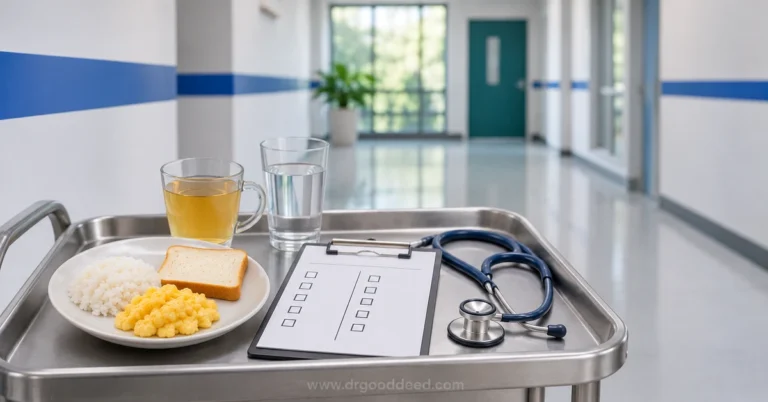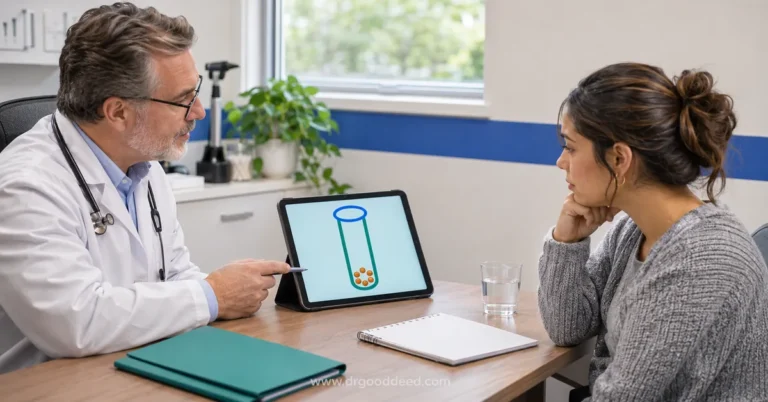

If your colonoscopy prep is not working and you’re still passing brown liquid, the prep may simply need more time, but your care team should know before your procedure. This guide shows how to read what you’re seeing, what to do right now and what it means for your appointment.
Key Takeaways
- Brown liquid partway through usually means your colonoscopy prep is not working yet, not that it failed; output should end clear or yellow.
- Finish every dose, even if your output looks clear early (Mayo Clinic, 2026).
- Don’t add extra prep, laxatives or enemas unless your care team tells you to.
- Call your care team if you can’t keep the prep down, and call 911 for fainting or trouble breathing.
Is Your Colonoscopy Prep Not Working or Just Slow?
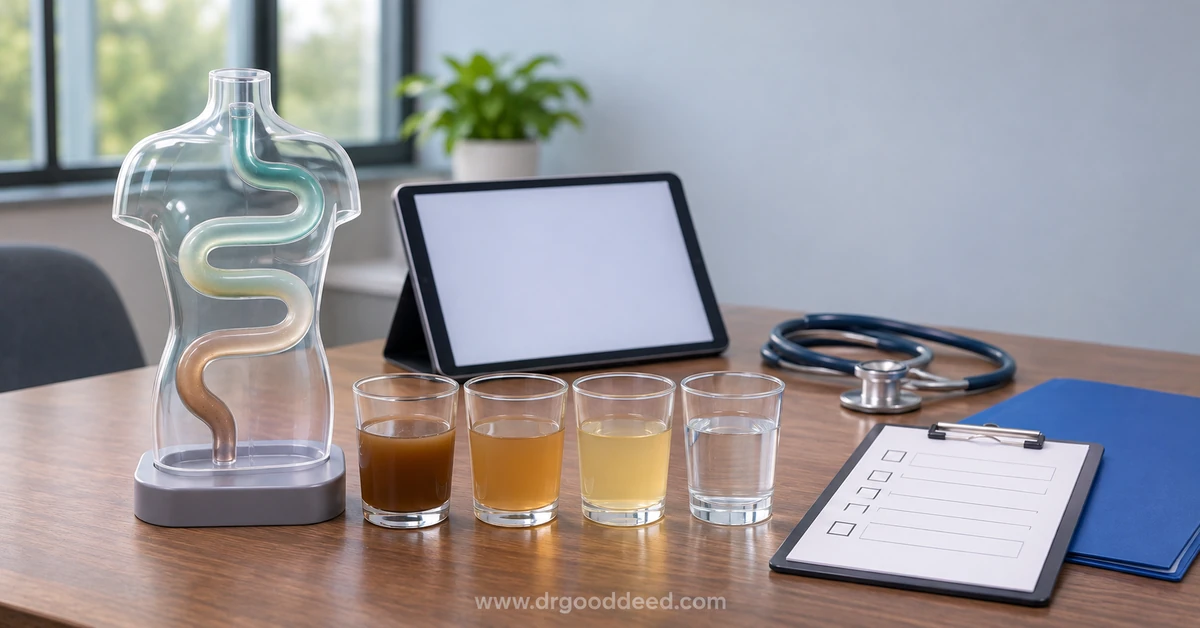
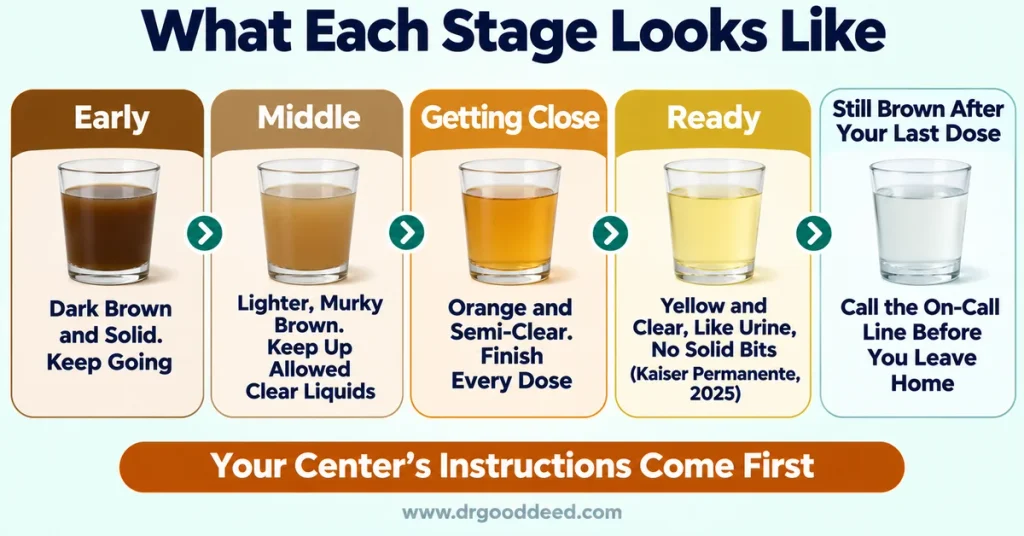
It depends on timing: early brown liquid is normal, but if output is still brown with solid bits when you finish, your colonoscopy prep is not working well enough yet. Kaiser Permanente (2025) describes the usual progression, which the table below follows.
| Stage | What output usually looks like | What to do |
| Early | Dark brown and solid | Keep going. This is normal |
| Middle | Lighter, murky brown | Keep going and keep up your allowed clear liquids |
| Getting close | Orange and semi-clear | Keep going and finish every dose |
| Ready | Yellow and clear, like urine, with no solid bits | Finish the prep as instructed |
| Still brown, murky or full of solids after your last dose | Not ready yet | Call your endoscopy center’s on-call line before you leave home |
If your first dose of colonoscopy prep seems to do nothing, or little has happened after a few hours, the whole prep isn’t necessarily lost.
Sources differ on how long is too long. Oshi Health (2025) says to call after about 5 hours without a bowel movement, while Kaiser Permanente (2025) says to call if output isn’t yellow and clear by early morning. Your center’s instructions come first.
When Is Your Bowel Clean Enough?
Your bowel is clean enough when what comes out is clear or yellow liquid, like urine, with no solid bits. Leftover stool can hide the colon lining, which is why a complete prep ends in clear liquid (NIDDK, 2023).
- What clean looks like: The stage table above works as a colonoscopy prep poop color chart. It runs from brown to orange to yellow, and the goal is yellow and see-through. For everyday stool shapes, see our guide to types of poop.
- Still going in the morning: Still pooping on the morning of your colonoscopy is often fine. With split-dose prep you’ll likely still be going that morning, and what matters is what comes out, not how often.
- The last dose still counts: Finish the full prep even if your stool looks clear early (Mayo Clinic, 2026).
Why Colonoscopy Prep Sometimes Doesn’t Work
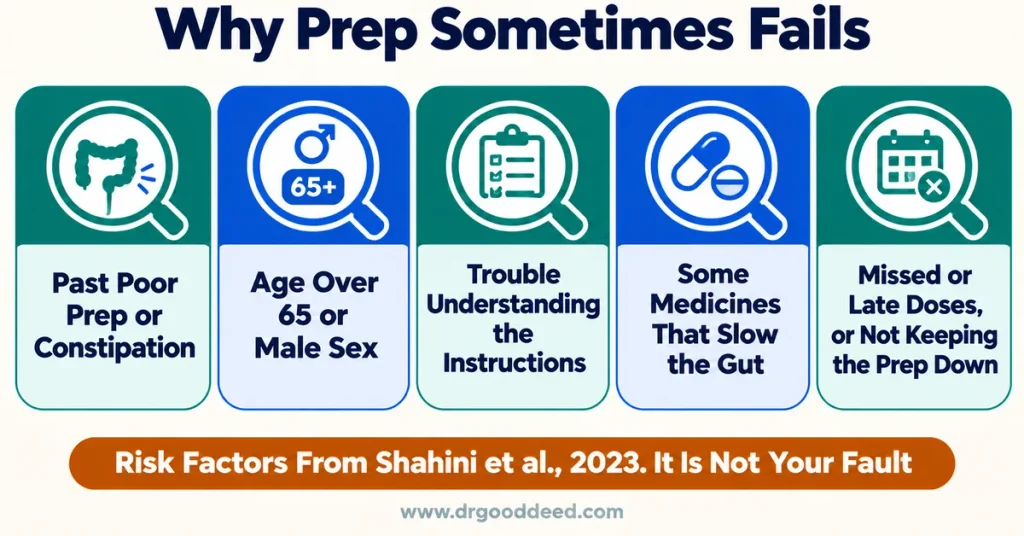
Prep fails more often with chronic constipation, a past poor prep, older age or medicines that slow the gut (Shahini et al., 2023). If your poop is still brown after you finish, one of these is often behind it, and it isn’t your fault.
- Risk factors: Shahini and colleagues (2023) list a past poor prep, constipation, age over 65, male sex, trouble understanding the instructions (low health literacy) and some medicines. New constipation is worth raising with your doctor, and our guide explains whether polyps cause constipation.
- Missed or late doses: Stool can stay behind when the prep isn’t finished or the doses drift off schedule. Mayo Clinic (2026) stresses finishing the whole thing.
- Diet: NIDDK (2023) advises avoiding high-fiber foods for several days, then moving to a clear liquid diet.
- Vomiting the prep: If you can’t keep it down, call your team.
What to Do if You’re Still Passing Brown Liquid
Keep following your instructions, keep drinking allowed clear liquids, and call the on-call line.
- Check your schedule. Look at when each dose was supposed to start and whether you’ve taken them all.
- Finish every dose as instructed (Mayo Clinic, 2026).
- Stay on clear liquids. NIDDK (2023) lists broth, plain coffee or tea, water, gelatin, sports drinks, and apple or white grape juice, and says to skip red or purple drinks and cloudy juices. Your center’s list comes first.
- Call the on-call line. That’s the after-hours number on your instructions. If you’ve finished the prep and output still isn’t clear, call before you leave home. Say what you took, when, and what it looks like now.
- Hold off on extras. Extra prep, laxatives or enemas only if the team says so. They’ll choose what’s safe for you.
Can You Still Have Your Colonoscopy?
Sometimes. Whether you can still have a colonoscopy if the liquid is still brown is your doctor’s call: they may add prep the same day, move your time or reschedule (Shahini et al., 2023; Mayo Clinic, 2026).
- Extra cleansing: Shahini and colleagues (2023) describe a same-day or next-day repeat with extra cleansing as a rescue approach. Your team sets it up, so don’t try it on your own.
- A new date: An incomplete prep may mean the procedure is delayed or repeated (Mayo Clinic, 2026).
- Why they’re strict: A clean colon helps your doctor tell a hemorrhoid vs. polyp apart and remove polyps during the same test.
Expert Insight: Poor prep matters mainly because it hurts the accuracy of the exam, not because it’s inconvenient. Leftover stool can hide the colon lining, which is why guidelines aim for adequate prep in at least 90% of exams (US Multi-Society Task Force, 2025), and why a team may prefer a delayed colonoscopy to an unclear one.
How to Get a Better Prep Next Time
Tell your doctor about constipation or a past poor prep before you book (Shahini et al., 2023). Then ask which of these your center uses, and follow its instructions over anything printed here.
- Split-dose prep: The prep is split into two portions. The US Multi-Society Task Force (2025) recommends this, with the second portion 4 to 6 hours before the exam and the last dose finished at least 2 hours before, but follow your center’s timing.
- Low-fiber diet: NIDDK (2023) says to avoid high-fiber foods for several days, while the task force (2025) says diet limits may only be needed the day before for low-risk outpatients. Your center decides.
- The target: The US Multi-Society Task Force (2025) aims for adequate prep in at least 90% of exams. That benchmark applies to centers, not to you, but it’s a good reason to ask questions.
To see when to rebook, check the cancer screening guidelines by age for colon cancer, and our list of health screenings by age for other routine checks.
When to Call Your Doctor During Prep
Call your care team if you can’t finish the prep or keep it down (NIDDK, 2023; Mayo Clinic, 2026).
- Call the on-call line: You can’t finish the prep, or output is still brown or full of solids close to the time your instructions say it should be clear.
- Urgent care the same day: Severe belly pain, repeated vomiting or dizziness.
- 911: Fainting or trouble breathing.
If your colonoscopy prep is not working by the time your instructions say output should be clear, call your endoscopy center’s on-call line before you leave home.
Frequently Asked Questions
Why Am I Not Pooping After Drinking Colonoscopy Prep?
It can take a few hours for the prep to start working, and some people start slower than others (Kaiser Permanente, 2025). If nothing happens in the time your instructions give, call your care team instead of taking more on your own (Mayo Clinic, 2026). Constipation also raises the odds of a poor prep.
Does Drinking Extra Water Help Colonoscopy Prep?
Yes, within limits. Allowed clear liquids help, but only up to your center’s limits and its cutoff time for stopping liquids before sedation (NIDDK, 2023; Mayo Clinic, 2026). Extra water can’t stand in for unfinished doses, so finish the prep first, and ask the nurse before drinking more than your instructions allow.
Do I Have to Finish the Colonoscopy Prep if My Poop Is Clear?
Yes. Finish the full prep as instructed even if your stool looks clear before all doses are done (Mayo Clinic, 2026). The doses are timed to leave your colon clean at the time of your exam, so skipping the last one can undo early progress.
How Common Is a Failed Colonoscopy Prep?
A failed colonoscopy prep is common, and it can happen even when you follow every instruction, so it is not a reason to give up on screening. A 2023 review by Shahini and colleagues found almost a quarter of colonoscopies are done with suboptimal prep.
Is Yellow Liquid With Flecks OK for a Colonoscopy?
It depends. Clear or yellow liquid is the goal, and a few small flecks may be acceptable, but output should have no solid bits (Kaiser Permanente, 2025). Describe the flecks to your care team before you leave home, and don’t take extra prep unless they tell you to.
Sources
- National Institute of Diabetes and Digestive and Kidney Diseases, Colonoscopy (2023). link
- Mayo Clinic, Colonoscopy (2026). link
- American Society for Gastrointestinal Endoscopy, Evidence-Based Strategies Improve Colonoscopy Bowel Preparation Quality, Performance, and Patient Experience (2025). link
- American Gastroenterological Association, U.S. Multi-Society Guidance on Optimal Bowel Prep for Quality Colonoscopy Outcomes (2025). link
- World Journal of Gastroenterology, Factors Affecting the Quality of Bowel Preparation for Colonoscopy in Hard-to-Prepare Patients (2023). link
- Kaiser Permanente, Is My Colonoscopy Prep Working (2025). link
- Oshi Health, The Ultimate Guide to Colonoscopy Prep (2025). link
Medical Disclaimer: This article is for general information only and is not medical advice. It does not replace a diagnosis, treatment plan, or guidance from a qualified healthcare professional. Always talk to your doctor about your own symptoms and before starting, stopping, or changing any treatment. If you think you may be having a medical emergency, call 911 or go to your nearest emergency room.