

Medically reviewed by Dr Nivedita Pandey, GI and hepatology.
Black specks in stool are most often bits of dark food or an effect of iron, but they can occasionally be a sign of bleeding higher in the gut. The appearance of your stool, recent meals, and medicines you take can help explain the change.
A few dark particles in otherwise normal stool are different from stool that is completely black, sticky, and tar-like. Knowing the difference can help you understand what might be happening and when to seek medical care.
Key Takeaways
- Black specks in stool are often from dark foods, seeds or iron, but persistent specks with other symptoms need a doctor’s check.
- Dark foods, iron pills, activated charcoal, and bismuth medicines can darken stool (MedlinePlus, 2026).
- Black, tarry stool or vomiting blood requires immediate medical attention (Mayo Clinic, 2026).
- Call 911 if possible bleeding is accompanied by fainting, confusion, cold, clammy skin, or a racing pulse (Mayo Clinic, 2026).
What Black Specks in Stool Usually Mean
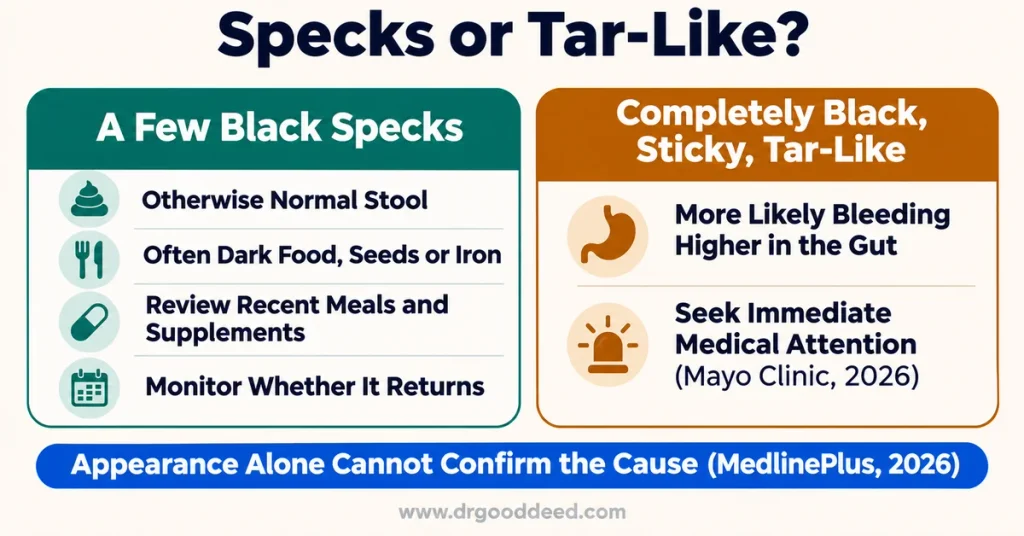
Black specks in stool usually come from something you ate or took, while a whole stool that is black, sticky and tar-like is more likely to mean bleeding (MedlinePlus, 2026). The difference in appearance can help you understand how urgently you need medical attention.
| What you notice | Possible explanation | What to do |
| A few black specks in otherwise normal stool | Dark food particles, seeds, or food skins | Review what you ate recently and monitor whether the specks return. |
| Dark stool after starting iron pills | Iron supplements can darken stool | Ask your healthcare professional if you are unsure about the change. |
| Completely black, sticky, tar-like stool | Possible bleeding in the upper digestive tract | Seek immediate medical attention. |
| Black stool with dizziness, weakness, or vomiting blood | Possible significant gastrointestinal bleeding | Get emergency medical care. Call 911 if you have signs of shock. |
MedlinePlus (2026) explains that certain foods and medicines can darken stool, while black, tarry stool can signal bleeding. Mayo Clinic (2026) advises seeking immediate medical attention for black, tarry stool or vomiting blood.
If you have noticed only a few specks, think about your recent meals and any supplements you take. However, the appearance of your stool alone cannot confirm that the cause is harmless.
If your entire stool is black rather than speckled, read our guide to why is my poop black for more information about possible causes.
Foods That Can Cause Black Specks
Dark foods are one possible explanation for black specks in stool. Small particles from foods, skins, or seeds may remain visible during digestion, although the exact cause depends on what you have eaten.
MedlinePlus (2026) identifies blueberries, black licorice, and blood sausage among foods that can darken stool.
Foods that may explain a change in stool color include:
- Blueberries: These dark berries can contribute to changes in stool color.
- Black licorice: Eating this dark-colored food can make stool appear black.
- Blood sausage: This food can also darken stool.
- Seeds and fruit skins: Small particles may remain visible in stool, depending on the food and how it is digested.
- Foods with dark coloring: Dark food dyes may change the appearance of bowel movements.
Think back to what you ate before noticing the black bits in stool. A recent meal containing dark foods may offer a useful clue, especially if the rest of your stool looks normal.
Texture matters as much as color, as our guide to types of poop explains.
Food is one possible explanation, but do not assume every dark particle is harmless. If the specks keep returning without an obvious cause, speak with your healthcare professional.
Iron Pills and Other Medicines
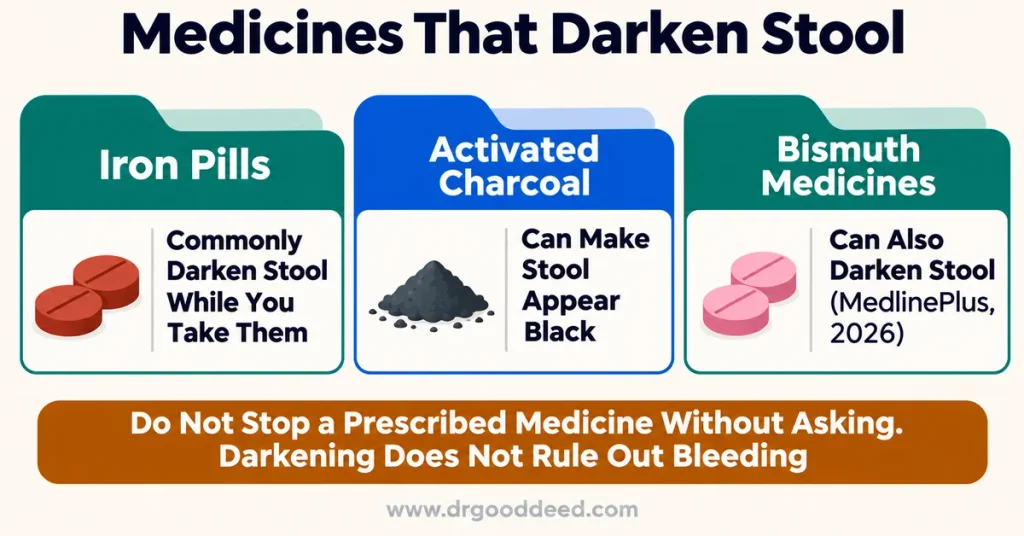
Iron pills, activated charcoal, and bismuth medicines can turn stool dark or black, according to MedlinePlus (2026). If you recently started one of these products, it may explain the change.
Here is how these products can affect stool appearance:
- Iron pills: Iron supplements commonly darken stool while you take them.
- Activated charcoal: This substance can make stool appear black.
- Bismuth medicines: Products containing bismuth can also darken stool.
Check your medicines and supplements if you notice an unexpected change. Consider whether the specks appeared after you started a new product or changed your usual routine.
Do not stop a prescribed medicine or supplement without speaking with your healthcare professional. Your clinician or pharmacist can help determine whether the product could explain the change.
Keep in mind that medicine-related darkening does not rule out bleeding. If your stool becomes black and tarry, or you develop other warning signs, seek immediate medical attention (Mayo Clinic, 2026).
When Black Specks Can Mean Bleeding
Black specks alone are not the typical appearance of significant upper gastrointestinal bleeding. Blood from the esophagus, stomach, or upper small intestine can darken during digestion, making the stool black and tar-like (MedlinePlus, 2026).
Several conditions can cause bleeding in the upper digestive tract (MedlinePlus, 2026; Mayo Clinic, 2026).
- Peptic ulcers: These sores in the stomach or upper small intestine are a common cause of upper gastrointestinal bleeding (MedlinePlus, 2026).
- Gastritis: Inflammation of the stomach lining can sometimes cause bleeding.
- Tears from forceful vomiting: Repeated or forceful vomiting can cause tears in the lining of the upper digestive tract.
- Esophageal varices: Enlarged veins in the esophagus can bleed, particularly in people with advanced liver disease.
- Growths: Some growths in the digestive tract can bleed and require medical evaluation.
Mayo Clinic (2026) identifies certain medicines, including anti-inflammatory pain relievers and blood thinners, as factors that can increase the risk of gastrointestinal bleeding.
Blood from the lower digestive tract is more likely to appear red or maroon, while blood from higher up may make stool black and tarry (MedlinePlus, 2026).
A few black specks do not automatically mean you have internal bleeding. However, persistent unexplained changes, particularly alongside weakness, dizziness, or abdominal pain, deserve medical evaluation.
Could Black Specks Be Parasites?
Parasites are not a typical explanation for black specks in stool. You should not assume that dark particles are worms or parasite waste based on their appearance alone.
The Centers for Disease Control and Prevention (CDC, 2024) describes pinworms as small, thin, white worms rather than black particles.
According to the CDC (2024), pinworm infections can cause:
- Itching around the anus, particularly at night.
- Disrupted sleep because of itching.
- Visible small, white worms around the anal area.
If you suspect a parasitic infection, contact a healthcare professional for an appropriate assessment. Your doctor may recommend a specific test based on your symptoms and possible exposure.
Seek medical advice if you notice visible worms, persistent digestive symptoms, or unexplained weight loss. Black specks alone cannot establish a parasitic infection, and treatment should depend on an appropriate diagnosis.
How Doctors Check Black Specks in Stool
A doctor can investigate black specks in stool by reviewing your symptoms, recent meals, and medicines. Depending on what they find, they may recommend stool testing, blood tests, or an examination of your digestive tract (MedlinePlus, 2026).
The evaluation may include the following steps:
- Review your medical history: Your doctor may ask when the specks first appeared, what you have eaten recently, and which medicines or supplements you take.
- Test a stool sample: A stool test can check for hidden blood that is not visible to the naked eye.
- Check your blood: Blood tests, including a complete blood count, may help identify anemia associated with bleeding.
- Consider an upper endoscopy: This procedure allows a doctor to examine the esophagus, stomach, and upper small intestine for possible sources of bleeding.
- Consider a colonoscopy: If your symptoms suggest a problem in the lower digestive tract, your doctor may recommend a colonoscopy to examine the colon and rectum.
Not everyone with black specks needs all these tests. Your doctor will choose the appropriate investigations based on your symptoms, medical history, and examination findings.
The goal is to determine whether the specks are related to food or supplements or whether further investigation is needed.
When to See a Doctor About Black Specks
Make an appointment with your healthcare professional if black specks keep appearing and you cannot connect them to food or supplements. Seek immediate medical attention for black, tarry stool, blood in the stool, or vomiting blood (Mayo Clinic, 2026).
According to NIDDK (2022), get medical attention promptly if you notice:
- Black, tarry stool.
- Red or maroon blood in your stool.
- Vomiting blood or material that looks like coffee grounds.
- Persistent or severe abdominal pain.
- Dizziness or fainting, especially alongside possible bleeding.
Call 911 if you have signs of shock, such as fainting, confusion, cold and clammy skin, or a racing pulse (Mayo Clinic, 2026).
You should also arrange a medical appointment if the specks keep returning without an obvious explanation, you develop persistent digestive symptoms, or you have concerns about a change in your bowel movements.
If you also notice mucus in stool, mention it to your healthcare professional.
Black specks in stool can have simple explanations, but persistent unexplained changes deserve attention. If black specks in stool keep coming back and you can’t link them to food or iron, make an appointment with your primary care doctor.
Frequently Asked Questions
Can Black Spots in Stool Be a Sign of Colon Cancer?
Black spots in stool are rarely the main sign of colon cancer, because bleeding low in the colon usually looks red or maroon rather than black. Blood from higher in the digestive tract can turn stool black (MedlinePlus, 2026). Persistent unexplained changes should be evaluated by a healthcare professional.
Can Liver Disease Cause Black Specks in Stool?
Liver disease can cause enlarged veins in the digestive tract that may bleed, producing black, tarry stool (MedlinePlus, 2026). This is different from a few isolated specks. Seek immediate medical attention if you have liver disease and develop black, tarry stool or vomit blood (Mayo Clinic, 2026).
Are Black Specks in a Baby’s Stool Normal?
A newborn’s first stools are normally dark, black, and sticky. After this initial period, unexplained black stool or specks should be discussed with a pediatrician, especially if your baby seems unwell. Our baby poop chart explains common stool color changes.
Can Pregnancy Cause Black Specks in Stool?
Pregnancy itself is not a typical cause of black specks, but iron supplements commonly taken during pregnancy can darken stool (MedlinePlus, 2026). If you are pregnant and unsure about the change, or the specks continue without an iron link, contact your prenatal care team.
How Long Do Black Specks From Food or Iron Last?
Food-related specks may disappear once the food passes through your digestive system, while iron can darken stool for as long as you take the supplement. If the specks persist without an obvious explanation, contact your healthcare professional rather than relying on a fixed waiting period.
Sources
- MedlinePlus, Stools: Black or Tarry (2026). link
- Mayo Clinic, Gastrointestinal Bleeding: Symptoms and Causes (2026). link
- Centers for Disease Control and Prevention, About Pinworm Infection (2024). link
- National Institute of Diabetes and Digestive and Kidney Diseases, Symptoms and Causes of Peptic Ulcers (2022). link
Medical Disclaimer: This article is for general information only and is not medical advice. It does not replace a diagnosis, treatment plan, or guidance from a qualified healthcare professional. Always talk to your doctor about your own symptoms and before starting, stopping, or changing any treatment. If you think you may be having a medical emergency, call 911 or go to your nearest emergency room.