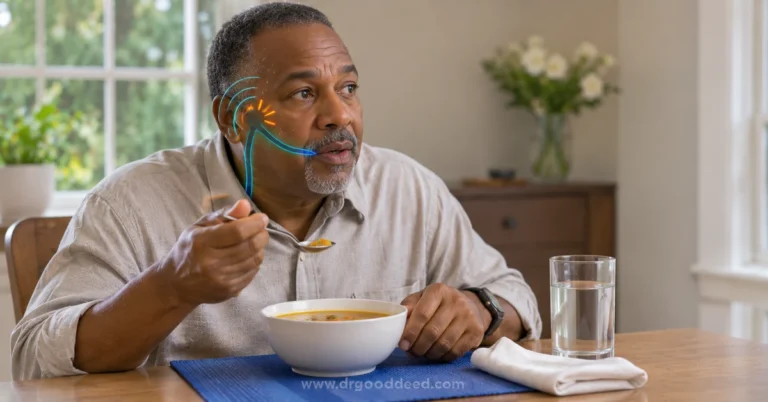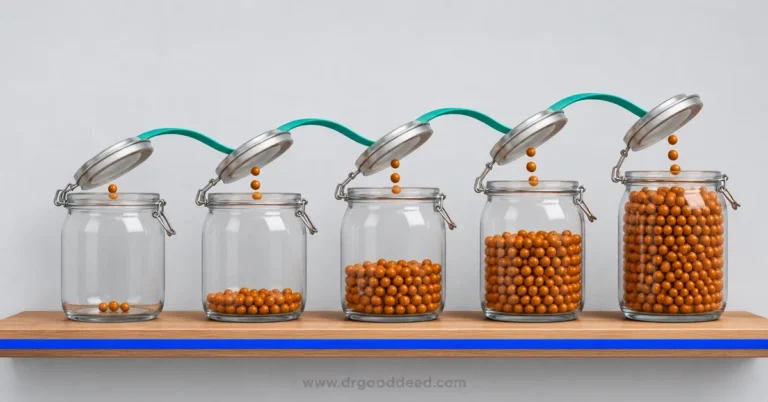
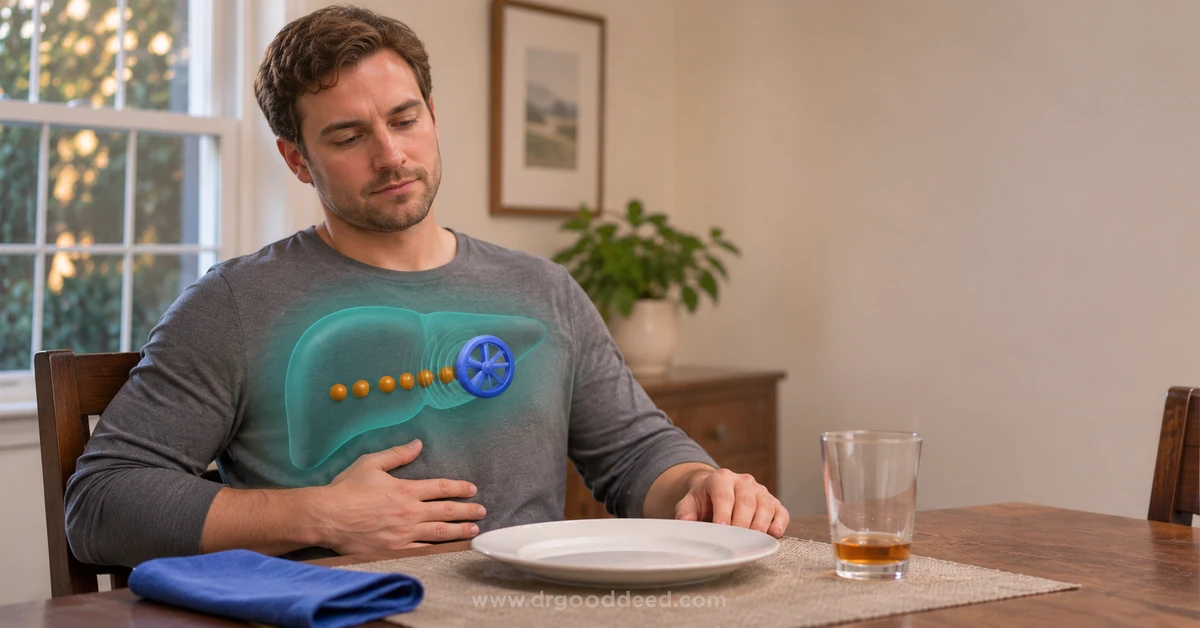

Low blood sugar after drinking alcohol happens because the liver stops releasing glucose while it breaks down the alcohol, and the drop can come hours after the last drink. Doctors call it hypoglycemia. It’s most common in people who use insulin or certain diabetes pills, and it can look just like being drunk.
Key Takeaways
- Low blood sugar after drinking alcohol is a real risk, mostly with diabetes: treat it fast, and get emergency help if the person cannot swallow.
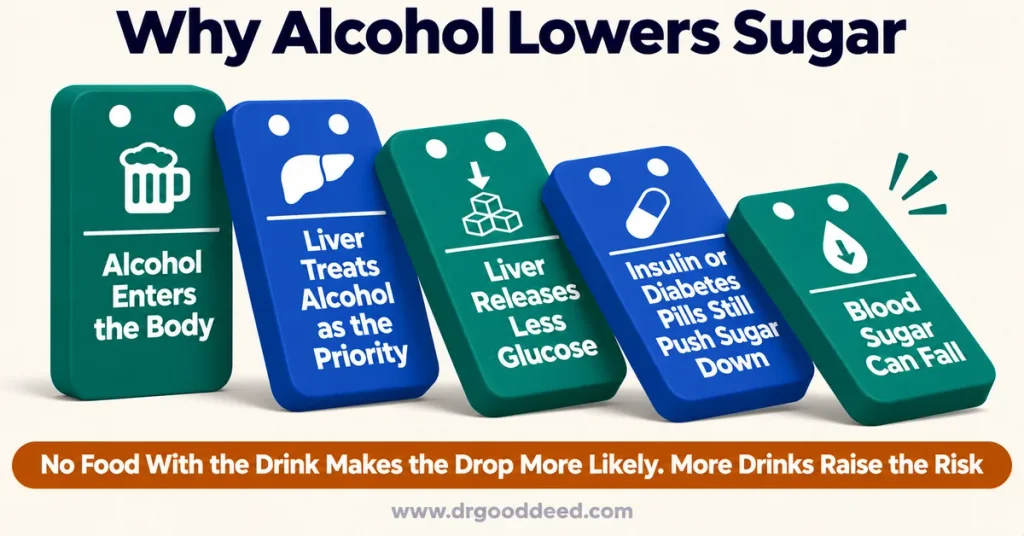
- While the liver breaks down alcohol, it stops releasing glucose, so blood sugar can fall.
- The risk lasts for hours after the last drink, and MedlinePlus (2025) advises checking for up to the next 24 hours.
- Drink only with food. Eating while you drink helps prevent nighttime lows.
- Call 911 if someone is disoriented, slurring, has a seizure or passes out, and give no food or drink.
Low Blood Sugar After Drinking Alcohol: What to Do
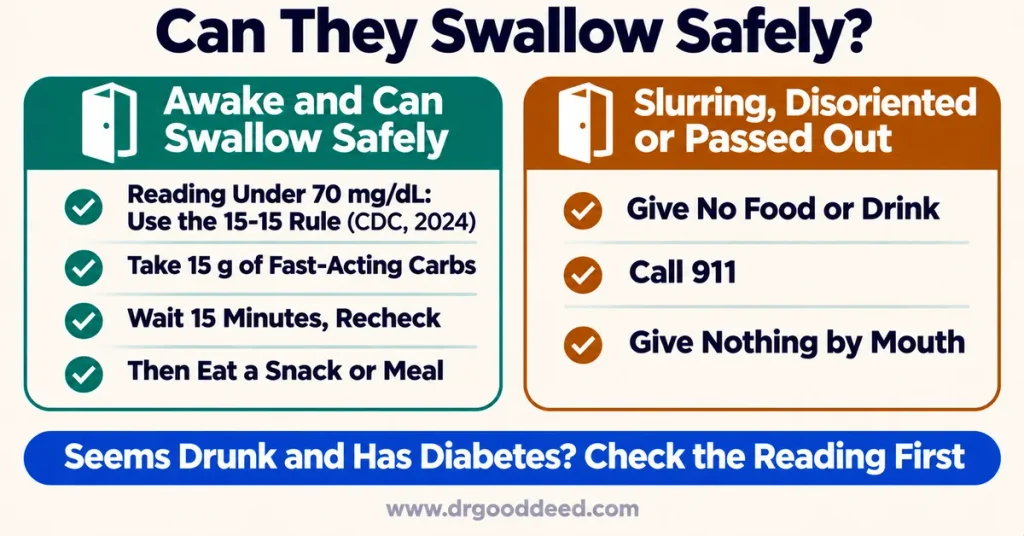
To treat low blood sugar after drinking alcohol, check your blood sugar first, because the symptoms can look like being drunk; then take fast-acting carbs if you can swallow safely. Fast-acting carbs are sugars that raise glucose quickly.
The table below shows what to do based on whether the person can swallow safely.
| What you see | Can they swallow safely? | What to do |
| Awake, reading under 70 mg/dL | Yes | Use the 15-15 rule (CDC, 2024). Take 15 grams of fast-acting carbs, such as 4 oz of juice or regular soda, or glucose tablets. Wait 15 minutes and recheck. Repeat if still under 70. Then eat a snack or meal with protein and carbs. |
| Seems drunk, and has diabetes | Unknown | Check the blood sugar reading before assuming anything. |
| Slurring or disoriented | No | Give no food or liquid. Call 911. |
| Passed out or having a seizure | No | Call 911. Give nothing by mouth. |
Which number counts as severe depends on the page. The CDC’s Low Blood Sugar page (2024) says below 54 mg/dL, while its Treatment page (2024) says below 55 mg/dL. NIDDK (2021) defines severe as too low to treat yourself. Go by how the person is acting, not the exact line. NIDDK also gives 15 to 20 grams as the carb amount, so use whichever your care team has told you.
Below 70 mg/dL is low for many people but your own line may differ (NIDDK, 2021). Ask your care team what counts as low for you, and don’t lean on general normal blood sugar levels.
Low Blood Sugar or Just Drunk: How to Tell
Low blood sugar and being drunk share slurred speech, drowsiness and confusion, so a blood sugar reading is the way to tell.
- Alcohol-induced hypoglycemia symptoms: the CDC (2024) lists fast heartbeat, shaking, sweating, irritability or confusion, dizziness and hunger.
- The overlap: the American Diabetes Association adds trouble walking to the list, which is why a stumbling person can be written off as drunk when the real problem is low glucose.
- Overnight: NIDDK (2021) describes nightmares, sweating, and waking up tired or confused as signs of low blood sugar during sleep.
Doctor’s Tip: Someone who seems only drunk may have low blood sugar, so check the reading instead of guessing, and tell the people you drink with about this before the first drink.
Why Alcohol Causes Low Blood Sugar
Alcohol causes low blood sugar because the liver stops releasing glucose while it processes alcohol. The liver treats alcohol as the priority.
- No food. With nothing else to draw on, the body has even less to fall back on.
- Insulin and certain diabetes pills already push glucose down. With the liver’s backup supply switched off, there’s nothing to cover the drop.
- More drinks in one sitting raise the risk (MedlinePlus, 2025).
Long-term heavy drinking is a separate issue, covered in our guide to alcohol and diabetes risk.
How Long After Drinking Can Blood Sugar Drop?
The risk of a drop lasts for hours after the last drink, and MedlinePlus (2025) advises checking for up to the next 24 hours. Other sources give narrower windows: Verywell Health (2026) says the worst drops come 6 to 12 hours after the last drink, and Beyond Type 1 (2026) says lows can come up to 12 hours later.
MedlinePlus (2025) lists four checkpoints:
- Before you drink.
- While you drink.
- A few hours after you stop.
- Up to the next 24 hours, making sure you’re at a safe level before sleep.
Alcohol can affect blood sugar the next day. It’s also a cause of overnight low blood sugar, and eating when you drink can help (CDC, 2024). A glucose sensor can alarm during sleep. Our guide to a blood sugar monitor without finger pricks explains the options.
Alcohol-induced lows are easy to miss because they borrow a drunk person’s symptoms and can arrive after the last drink, when nobody is watching. For someone on insulin, the real risk window is the night and next morning, which is why MedlinePlus lists checkpoints up to 24 hours.
Who Gets Alcohol-Induced Hypoglycemia, With or Without Diabetes
Alcohol-induced hypoglycemia is most common in people who take insulin or certain diabetes pills, but heavy drinking with little food can cause it without diabetes.
- Higher risk with diabetes: NIDDK (2021) says lows are more likely with type 1 diabetes, with insulin, and at age 65 or older.
- Can alcohol lower blood sugar without diabetes? Sometimes. Cleveland Clinic (2026) ties it to heavy drinking over several days with too little food, which uses up stored sugar. In a small 2021 study, Oba-Yamamoto and colleagues gave 10 healthy volunteers glucose with 20 grams of alcohol, and 5 of them developed low blood sugar.
- Hypoglycemia unawareness means you don’t feel the first warning signs of a low. NIDDK (2021) says alcohol can also stop you from feeling those first symptoms.
If you take a weight or diabetes shot, read about alcohol on GLP-1 medications and ask your doctor.
How to Prevent Low Blood Sugar When Drinking
Preventing low blood sugar when drinking starts with food: drink only with a meal or carb-rich snack. Drinking on an empty stomach raises the risk greatly.
- Limits: MedlinePlus (2025) suggests up to 1 drink a day for women and 2 for men. One standard drink is 12 oz of beer, 5 oz of wine, or 1.5 oz of liquor.
- Sweet mixers: beer and sweet mixed drinks can push blood sugar up before it falls.
- Exercise: skip it after drinking.
- Be ready: carry a sugar source, wear medical ID, and don’t drink alone. Make sure someone with you knows what a low looks like.
- Between drinks, water works well, and our list of best drinks for diabetes covers other choices.
- Medicine: don’t change insulin or diabetes pills on your own. Talk to your doctor first.
When to See a Doctor or Call 911
Call 911 for low blood sugar with confusion, a seizure or passing out. Helpers should call 911 right away after giving emergency rescue medicine, or right away if there’s none.
- 911: confusion that’s getting worse, a seizure, or passing out. Give nothing by mouth.
- After vomiting: check blood sugar and ketones, and ask your doctor how.
- After any low: tell your primary care doctor and share your readings, medicines, activity and food.
If you keep having low blood sugar after drinking alcohol, tell your primary care doctor, because your diabetes plan may need a review.
Frequently Asked Questions
Can Low Blood Sugar After Alcohol Cause a Hangover?
Low blood sugar after alcohol can add to a hangover. Cleveland Clinic (2026) says it makes you feel shaky, weak and sweaty. If you have diabetes, check a reading before blaming a hangover, since the symptoms overlap with a low.
What Are the Symptoms of Reactive Hypoglycemia?
Reactive hypoglycemia is low blood sugar within about four hours after eating (Mayo Clinic, 2023). Symptoms include shakiness, sweating, hunger, and confusion. Alcohol is one possible cause. If you get lows after meals without diabetes, tell your doctor. Cleveland Clinic (2026) puts it at two to four hours after a meal.
What Is a Normal Blood Sugar After Drinking Alcohol?
No guideline sets a separate range for after drinking. Low is below 70 mg/dL with diabetes (CDC, 2024) and below 55 mg/dL for most people without it (Cleveland Clinic, 2026). Your own targets may differ, so ask your care team what applies to you.
Does Alcohol Cause Hypoglycemia or Hyperglycemia?
Both. Beer and sweet mixed drinks can raise blood sugar at first, and the alcohol itself can cause a drop that arrives for hours after the last drink. Hypoglycemia is low blood sugar and hyperglycemia is high, so check readings for up to the next 24 hours.
Will Emergency Rescue Medicine Work After Drinking?
Don’t count on it alone. Emergency rescue medicine is meant for someone who can’t eat or drink, and helpers should call 911 right away after giving it, or right away if none is on hand. Keep fast-acting carbs on hand and make sure the people with you know how to help.
Sources
MedlinePlus, Diabetes and alcohol. link
Centers for Disease Control and Prevention, Treatment of Low Blood Sugar (Hypoglycemia). link
Centers for Disease Control and Prevention, Low Blood Sugar (Hypoglycemia). link
National Institute of Diabetes and Digestive and Kidney Diseases, Low Blood Glucose (Hypoglycemia). link
Cleveland Clinic, Hypoglycemia (Low Blood Sugar). link
American Diabetes Association, Alcohol and Diabetes. link
Cleveland Clinic, Hangover. link
Mayo Clinic, Reactive hypoglycemia: What can I do? link
Journal of Diabetes Investigation, study of alcohol and glucose in healthy volunteers (Oba-Yamamoto et al., 2021). link
Beyond Type 1, Everything You Should Know About Alcohol + Managing Diabetes. link
Medical Disclaimer: This article is for general information only and is not medical advice. It does not replace a diagnosis, treatment plan, or guidance from a qualified healthcare professional. Always talk to your doctor about your own symptoms and before starting, stopping, or changing any treatment. If you think you may be having a medical emergency, call 911 or go to your nearest emergency room.