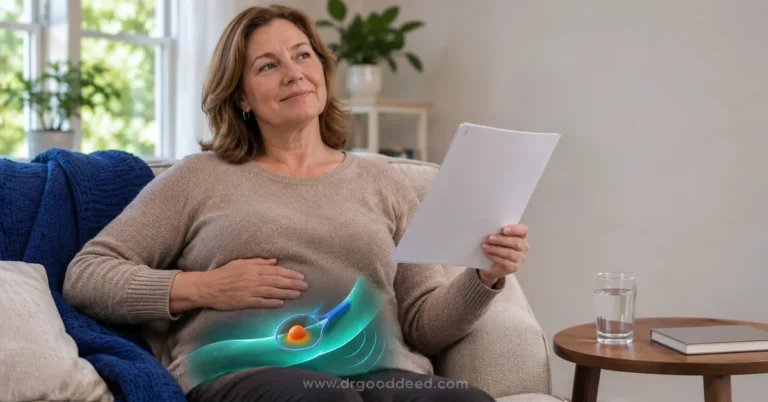

Gallbladder sludge on an ultrasound usually means bile has thickened from sitting in the gallbladder for too long. This finding often causes no symptoms and may clear without treatment. However, it can sometimes develop into gallstones or cause inflammation and blockage, so your symptoms and medical history matter.
Key Takeaways
- Gallbladder sludge is thickened bile that usually causes no symptoms but can sometimes lead to gallstones or painful complications.
- Sludge may clear, come and go, or progress to gallstones. A 2018 review reported these outcomes in about 40%, 40%, and nearly 20% of cases, respectively.
- Pregnancy, rapid weight loss, fasting, and certain medical conditions can affect how the gallbladder empties.
- Treatment depends on whether you have symptoms or complications. People without symptoms often need no treatment.
- Severe or persistent abdominal pain, fever, chills, or yellow skin and eyes need prompt medical attention.
What Gallbladder Sludge on Ultrasound Means
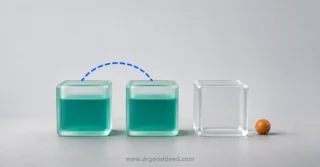
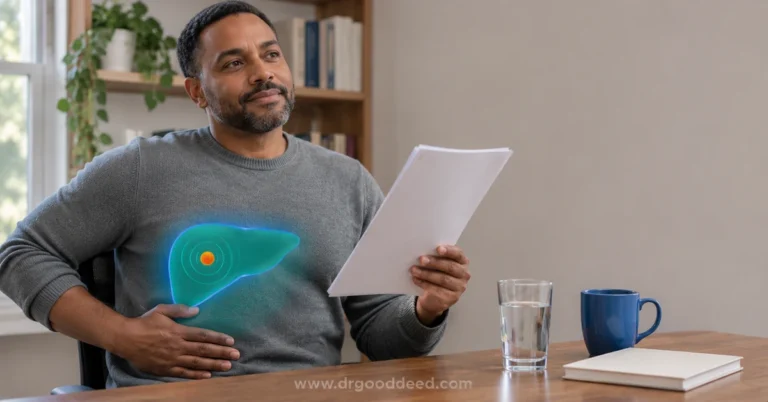
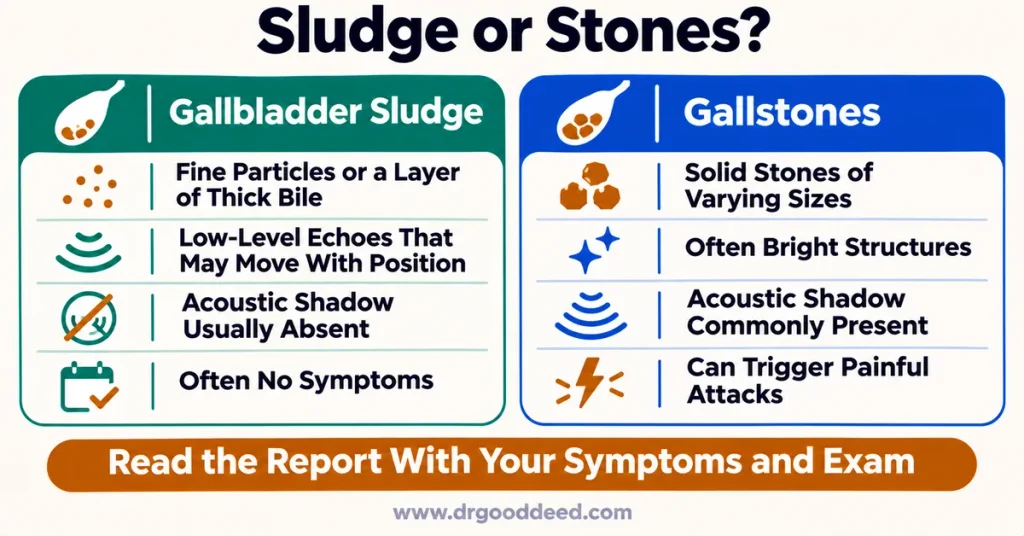
Gallbladder sludge on ultrasound means the scan found thick bile inside your gallbladder. It appears as fine particles or echoes that move slowly and do not create the clear shadow typically seen with gallstones.
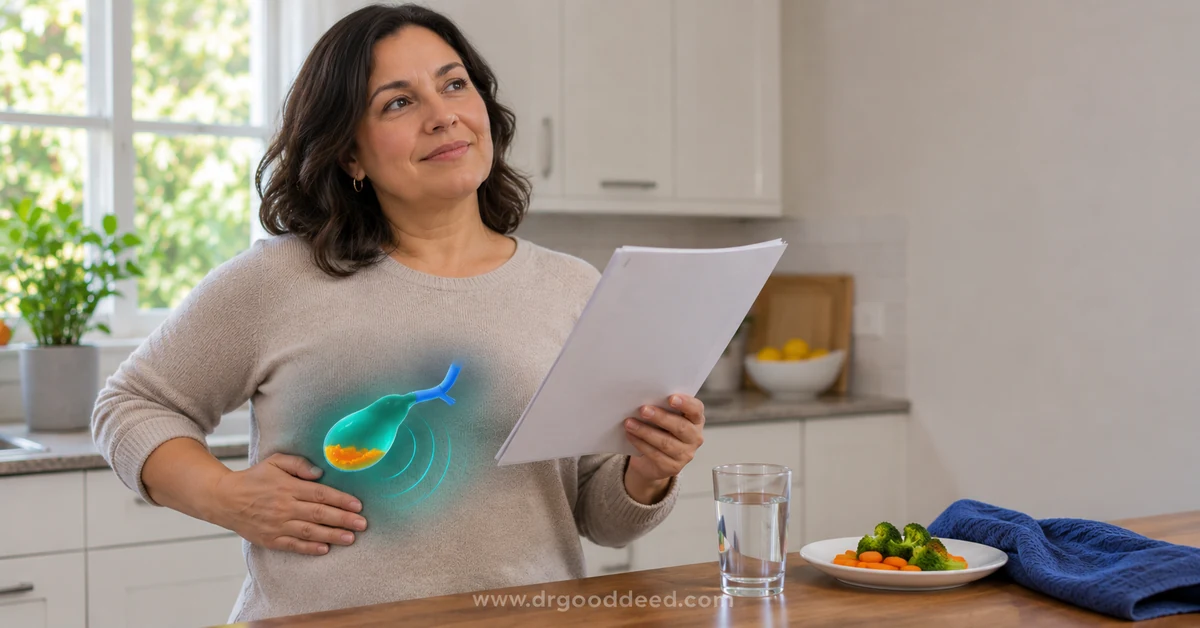
Your gallbladder is a small organ beneath your liver. It stores bile, a digestive fluid that helps your body break down fats. When bile stays in the gallbladder for too long or does not flow properly, small particles can collect and form sludge.
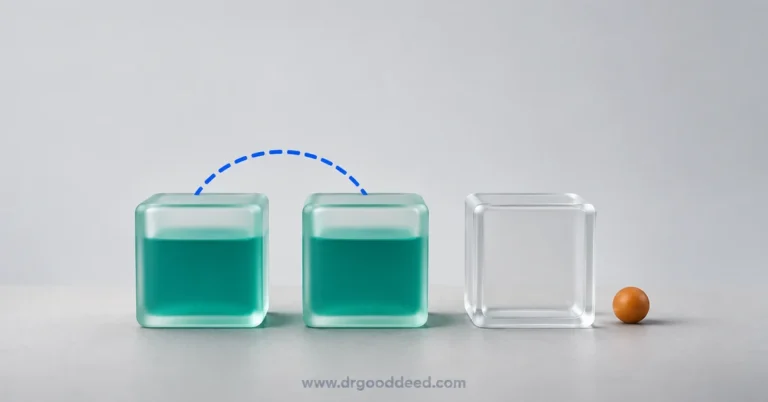
Biliary sludge, another name for gallbladder sludge, contains a mixture of substances such as cholesterol crystals, calcium salts, and mucus. These particles settle in the bile and may become visible during an abdominal ultrasound.
What does the ultrasound show?
An ultrasound uses sound waves to create pictures of your internal organs. When sludge is present, the scan may show low-level echoes or a brighter layer within the gallbladder. Unlike most gallstones, sludge does not usually produce acoustic shadowing.
The finding may appear during a scan ordered for another reason. You may have no digestive symptoms at all, and the report may be the first indication that anything is different.
The table below compares how gallbladder sludge and gallstones look on ultrasound and how they are treated.
| Feature | Gallbladder sludge | Gallstones |
| Appearance | Fine particles or a layer of thick bile | Solid stones of varying sizes |
| Ultrasound finding | Low-level echoes that may move with position | Often appear as bright structures |
| Acoustic shadow | Usually absent | Commonly present |
| Composition | Cholesterol crystals, calcium salts, and mucus | Hardened deposits, often containing cholesterol |
| Symptoms | Often causes no symptoms | May also cause no symptoms but can trigger painful attacks |
| Treatment | Often observation if there are no symptoms | Depends on symptoms and complications |
Your ultrasound report should be interpreted alongside your symptoms and examination. A scan alone does not always explain why sludge formed or whether it is causing your discomfort.
How Serious Is Gallbladder Sludge?
Gallbladder sludge is usually not serious on its own, especially when you have no symptoms. It may disappear, return at a later stage, or develop into gallstones. The main concern is whether it causes a blockage or inflammation.
A 2018 review by Wang and colleagues described three possible outcomes: complete resolution in about 40% of cases, a pattern in which sludge comes and goes in about 40%, and progression to gallstones in nearly 20%. These figures describe findings reported in the review, not a prediction of what will happen to you.
Can gallbladder sludge dissolve on its own?
Yes. Gallbladder sludge can dissolve on its own when the reason it formed improves. For example, sludge associated with a temporary condition may disappear once normal bile flow returns.
However, it does not always clear permanently. Some people have sludge that comes and goes, while others develop gallstones. Your doctor may recommend monitoring if you have no symptoms and no signs of complications.
What complications can occur?
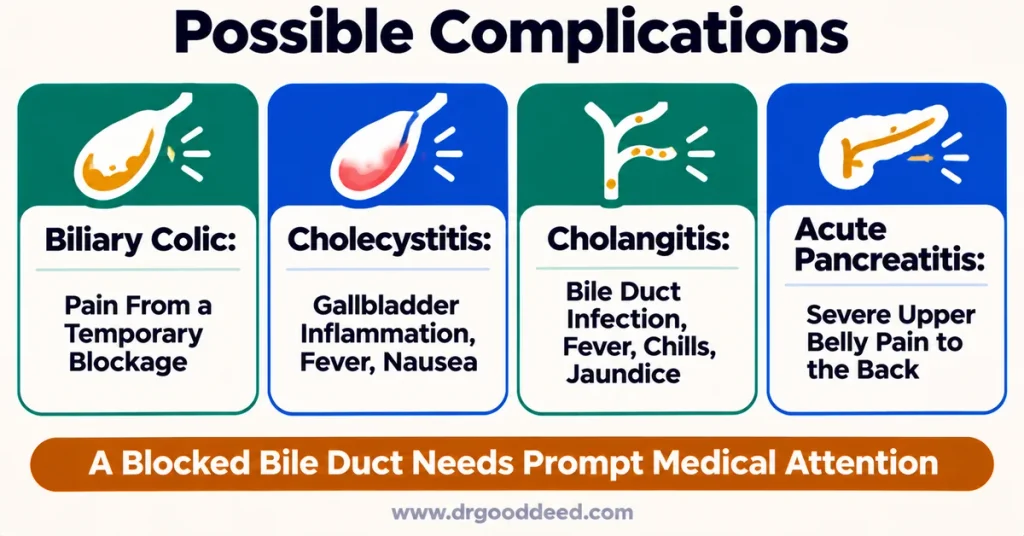
Problems develop when sludge or stones move into the bile ducts or interfere with normal bile flow. Possible complications include:
- Biliary colic: This refers to pain caused by a temporary blockage in the bile duct or gallbladder outlet. The pain often occurs in the upper right abdomen and may spread toward your back or right shoulder.
- Cholecystitis: This is inflammation of the gallbladder. It can cause persistent abdominal pain, tenderness, fever, nausea, and vomiting.
- Cholangitis: This is an infection of the bile ducts. It may cause fever, chills, abdominal pain and jaundice, which means yellowing of the skin or eyes.
- Acute pancreatitis: This is sudden inflammation of the pancreas. It can cause severe upper abdominal pain that may spread to the back, often with nausea and vomiting.
Sludge can also point to another problem affecting the biliary system, which includes the gallbladder and bile ducts. If material blocks a duct, it may cause a bile duct obstruction that needs prompt medical attention.
What Causes Gallbladder Sludge to Form?
Gallbladder sludge forms when bile remains in the gallbladder for too long, or the organ does not empty properly. Changes in bile composition can also allow small particles to collect. Several temporary and ongoing conditions may contribute.
Common causes and risk factors include:
- Pregnancy: Hormonal changes during pregnancy can slow gallbladder movement and affect bile composition. An older 1993 study of 272 pregnant women found that 31% developed new sludge during pregnancy. The finding was generally asymptomatic, and sludge disappeared after delivery in 61% of affected women who were followed.
- Rapid weight loss: Losing weight quickly can reduce gallbladder emptying and increase the amount of cholesterol in bile. This can happen after weight-loss surgery or during treatment with GLP-1 weight-loss medicines. If you have concerns about GLP-1 long-term side effects, discuss them with your prescriber rather than changing your treatment yourself.
- Prolonged fasting: Going without food for long periods can reduce the regular emptying of your gallbladder. This allows bile to remain in the organ and may encourage sludge formation.
- Intravenous nutrition: People who receive nutrition through a vein for an extended period may have reduced gallbladder stimulation because food does not pass through the digestive tract in the usual way.
- Certain medical conditions and procedures: Some illnesses, major surgery, and organ transplantation may affect bile flow or gallbladder movement. Your doctor will consider these factors when reviewing your scan.
Sometimes, there is no single clear cause. Your medical history, recent weight changes, pregnancy status, nutrition, and current treatments can help your doctor understand why the finding appeared.
Gallbladder Sludge Symptoms and Pain Patterns
Gallbladder sludge symptoms are absent in most people. When symptoms occur, upper right abdominal pain is common, particularly after eating. The location and duration of pain can help your doctor decide whether the gallbladder is involved.
Possible symptoms include:
- Upper right abdominal pain: You may feel discomfort below your right ribs. It can last for a short period or continue for several hours.
- Pain after meals: Some people notice pain after eating, particularly following a heavy or fatty meal.
- Pain spreading to the back or shoulder: Gallbladder-related pain can travel toward your back or right shoulder.
- Nausea and vomiting: These symptoms may occur during a gallbladder attack or when inflammation develops.
- Fever or chills: These symptoms may suggest inflammation or infection and should not be ignored.
- Jaundice: Yellowing of your skin or the whites of your eyes may indicate that bile is not draining properly.
Not every episode of upper abdominal discomfort comes from gallbladder sludge. Other digestive conditions can cause similar symptoms. Sludge is one possible cause of right rib cage pain, but a medical assessment is needed to identify the reason.
If you have pain, note where it starts, how long it lasts, and whether it follows meals. These details can help your doctor assess the pattern.
What Happens After Sludge Shows on Ultrasound
After gallbladder sludge shows on ultrasound, your doctor reviews the finding alongside your symptoms, medical history, and examination. If the scan was done for another reason and you feel well, you may not need immediate treatment.
Your next steps depend on whether the sludge is causing symptoms or whether the doctor suspects a complication.
What tests might you need?
Your doctor may consider these tests:
- Medical history and physical examination: Your doctor will ask about pain, nausea, vomiting, fever, previous gallbladder problems, recent weight changes, and relevant medical conditions.
- Blood tests: These may help check for signs of inflammation, infection, liver or bile duct problems, and pancreatic inflammation.
- Additional imaging: If the ultrasound does not provide enough information, your doctor may recommend more detailed imaging. Endoscopic ultrasound can detect small particles or stones that may be difficult to see on a standard scan.
- Bile examination: In selected cases, examining bile under a microscope can help identify tiny particles. This is not a routine test for everyone with sludge.
You do not automatically need every test. Your doctor chooses investigations based on your symptoms, examination, and ultrasound findings.
Three questions to ask your doctor
If your report mentions sludge, ask your doctor these three questions to understand what to do next:
- Is the sludge an incidental finding, or could it explain my symptoms?
- Do I need blood tests or any additional imaging?
- Should I have follow-up monitoring, and what symptoms should prompt me to seek care?
A repeat ultrasound may be considered in some situations, but there is no single follow-up schedule that applies to everyone. Ask your doctor whether another scan is necessary and when it should happen.
Gallbladder Sludge Treatment With and Without Surgery
Gallbladder sludge treatment depends on your symptoms, the underlying cause, and whether complications have developed. If you have no symptoms, your doctor may recommend observation rather than treatment. If sludge causes repeated pain or complications, a procedure or surgery may be necessary.
When treatment may not be needed
If your ultrasound shows sludge but you feel well, treatment may not be necessary. A 2001 review by Shaffer reported that people with silent sludge generally do not need therapy.
Your doctor may monitor your condition and address any contributing factors. If the sludge developed during a temporary situation, it may clear when that situation improves.
Treatment without surgery
Treatment without surgery depends on the reason for the sludge and your clinical condition. Some medical approaches aim to change bile composition or help reduce sludge, but the evidence and suitability vary.
There is disagreement in the medical literature about how useful medical treatment is. Cleveland Clinic describes a bile acid medicine as one possible approach, while Shaffer’s 2001 review characterizes medical therapy as limited. This is why treatment decisions should be made with a gastroenterologist or treating doctor rather than based on the ultrasound finding alone.
If you have symptoms, your doctor may investigate whether sludge is causing the pain or whether another condition is responsible. Treating the underlying problem is important.
When surgery may be considered
Gallbladder removal, called cholecystectomy, may be recommended when sludge causes repeated symptoms or complications. Wang and colleagues described surgery as the most definitive treatment for symptomatic biliary sludge in their 2018 review.
Some people may not be suitable for surgery because of age, other medical conditions, or a higher risk from an operation. In these situations, the specialist may consider other ways to manage the problem.
You can usually live normally without a gallbladder because your liver continues to produce bile. The gallbladder stores bile, but it is not essential for digestion. Some people notice softer or more frequent stools after removal.
If gallstones are also found, read our guide to gallstones and constipation to understand possible digestive changes.
When to See a Doctor for Gallbladder Sludge
You should discuss gallbladder sludge with your doctor even if it appears on a scan done for another reason. The urgency depends on your symptoms. Severe pain, fever, chills, or jaundice can signal a complication and need immediate medical attention.
The table below matches your situation with what it may mean and what to do next.
| Your situation | What it may mean | What to do |
| Sludge found by chance, with no symptoms | An incidental finding that may not need treatment | Arrange a routine discussion with your primary care doctor. |
| Mild or recurring upper abdominal pain | Possible gallbladder-related pain or another digestive condition | Contact your primary care doctor or visit urgent care. |
| Pain that lasts several hours, repeated vomiting, or fever | Possible inflammation or blockage | Go to the ER. |
| Yellow skin or eyes, chills, or tea-colored urine | Possible bile duct blockage or infection | Go to the ER right away. |
| Severe abdominal pain with faintness, confusion, or feeling very unwell | Possible serious complication | Call 911. |
A primary care doctor can review your ultrasound report, assess your symptoms, and arrange initial tests. If the finding needs further investigation, you may be referred to a gastroenterologist, a specialist in digestive conditions.
If you develop severe or persistent pain, fever, chills, repeated vomiting, or jaundice, do not wait for a routine appointment. Go to the ER. Call 911 if you have severe symptoms or feel faint or cannot safely get to the hospital.
A doctor’s tip to remember
A gallbladder attack that settles does not necessarily mean the problem has gone away. Gallbladder attacks can return, so report an episode to your doctor even if the pain has stopped. Do not assume that feeling better means you no longer need an assessment.
If you are unsure how to describe your symptoms, an abdominal pain location chart may help you explain where the discomfort occurs. However, it cannot replace a medical examination.
If you have a fever, yellow skin, or pain that will not ease, do not wait for a follow-up visit about gallbladder sludge; get care right away.
Frequently Asked Questions
What foods are good for gallbladder sludge?
No specific food has been proven to dissolve gallbladder sludge. A balanced eating pattern with fiber-rich foods, vegetables, whole grains, and healthy fats may support general digestive health. The NIDDK also recommends limiting refined carbohydrates and added sugars when discussing gallstone prevention. Ask your doctor whether you need dietary changes.
Do I need a repeat ultrasound for gallbladder sludge?
You may need another ultrasound if your symptoms continue, your condition changes, or your doctor wants to monitor the finding. However, there is no standard repeat-scan schedule for everyone with sludge. Your doctor will decide based on your symptoms, medical history, and initial scan.
Can you live normally without a gallbladder?
Yes. You can live normally without a gallbladder because your liver continues to make bile. Bile flows directly into your small intestine instead of being stored first. Some people experience softer or more frequent stools after surgery, but many return to their usual daily activities.
Is gallbladder sludge on ultrasound common in pregnancy?
Yes, gallbladder sludge on ultrasound is fairly common in pregnancy, and it often clears after delivery. Hormonal changes affect gallbladder movement and bile composition. In a 1993 study of 272 pregnant women, 31% developed new sludge. Among women with sludge who were followed after delivery, it disappeared in 61% at an average of about five months.
Can weight-loss medicines cause gallbladder sludge?
Rapid weight loss can increase the risk of gallbladder problems, including sludge. This may occur during treatment with GLP-1 weight-loss medicines or after weight-loss surgery. The speed of weight loss and changes in gallbladder emptying may contribute. Discuss new symptoms or concerns with your prescriber, and do not change your treatment on your own.
Sources
Liver Research, Similarities and differences between biliary sludge and microlithiasis (Wang et al., 2018). link
Current Gastroenterology Reports, Gallbladder sludge: what is its clinical significance? (Shaffer, 2001). link
Annals of Internal Medicine, Biliary sludge (Ko et al., 1999). link
Annals of Internal Medicine, Biliary sludge and gallstones in pregnancy: incidence, risk factors, and natural history (Maringhini et al., 1993). link
National Institute of Diabetes and Digestive and Kidney Diseases, Symptoms and Causes of Gallstones. link
National Institute of Diabetes and Digestive and Kidney Diseases, Treatment for Gallstones. link
Mayo Clinic, Gallstones: Symptoms and causes. link
Cleveland Clinic, Gallbladder Sludge. link
Medical Disclaimer: This article is for general information only and is not medical advice. It does not replace a diagnosis, treatment plan, or guidance from a qualified healthcare professional. Always talk to your doctor about your own symptoms and before starting, stopping, or changing any treatment. If you think you may be having a medical emergency, call 911 or go to your nearest emergency room.