

Weight loss to reverse type 2 diabetes works for many people, though doctors call the result remission and the amount needed varies. Some people see meaningful improvements after losing a modest amount of weight, while others need a larger, sustained change. There is no guaranteed number of pounds that works for everyone.
Key Takeaways
- Weight loss to reverse type 2 diabetes has no single target, but larger, sustained losses bring higher remission odds.
- Remission means blood sugar stays below the diabetes range without glucose-lowering medicines for a defined period. It is not a cure.
- In the DiRECT trial, remission rates increased from 7% to 86% across different weight-loss groups (Lean et al., 2018).
- Structured support, healthy habits, medical treatment, and long-term follow-up can help people maintain weight loss.
- Talk with your care team before changing your diet or diabetes medicines, especially if you are at risk of low blood sugar.
Type 2 Diabetes Remission vs Reversal vs Cure
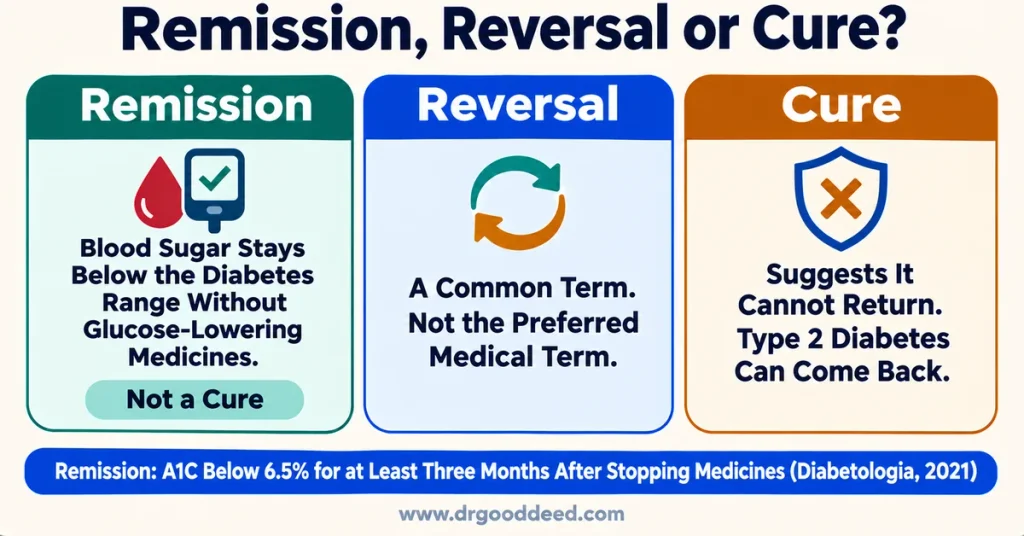
Type 2 diabetes remission means your blood sugar stays below the diabetes range without glucose-lowering medicines. It does not mean the condition has been permanently cured.
A 2021 international consensus report published in Diabetologia defines remission as an A1C below 6.5% for at least three months after stopping glucose-lowering medicines.
A1C is a blood test that shows your average blood sugar over roughly three months.
Here is how the terms differ:
- Remission: Your blood sugar stays below the diabetes threshold without glucose-lowering medicines for the required period.
- Reversal: A common term people use when blood sugar improves, but it is not the preferred medical term.
- Cure: This suggests the condition cannot return. Type 2 diabetes can come back, so doctors do not consider remission a cure.
An A1C below 6.5% is below the diabetes line, which is not the same as normal blood sugar levels. Results between 5.7% and 6.4% fall within the prediabetes range (HealthCentral, 2025).
You may also reach better blood sugar control without remission. That still matters because improved glucose levels can lower the risk of diabetes-related complications.
Even after remission, regular checkups remain important. Your care team may continue to monitor A1C, blood pressure, cholesterol, kidney health, eye health, and nerve function.
Weight Loss to Reverse Type 2 Diabetes: How Much?
Weight loss to reverse type 2 diabetes works best when it is large and kept off, and remission rates climb with each step of loss.
There is no universal target. Research, including the DiRECT trial (Lean et al., 2018), has shown that people who lose more weight tend to have a better chance of remission, but the results vary based on diabetes duration, pancreas function, and how much weight stays off.
The DiRECT trial studied adults with type 2 diabetes who took part in a structured weight-management program. Researchers found a clear link between the amount of weight lost and remission.
Table: DiRECT trial remission rates by weight lost
| Weight lost | Approximate pounds | Remission rate |
| 0 to 5 kg | 0 to 11 lb | 7% |
| 5 to 10 kg | 11 to 22 lb | 34% |
| 10 to 15 kg | 22 to 33 lb | 57% |
| 15 kg or more | 33 lb or more | 86% |
Source: Lean et al., The Lancet, 2018. These results came from trial participants receiving structured support. The higher weight-loss groups included fewer people, so the percentages are not personal predictions.
Different articles cite different weight-loss targets for these reasons:
- About 10 kg, or 22 pounds: NIDDK’s 2020 discussion highlighted sustained weight loss of around 10 kg as a meaningful goal for some people.
- Around 10% of body weight: Cleveland Clinic (2026) and Yale School of Medicine (2025) describe this as a level that may make a substantial difference.
- Around 15 kg, or 33 pounds: The BMJ Group has highlighted this amount as a weight-loss target associated with remission in research.
- More than 10% of body weight: The American Diabetes Association’s 2024 Standards of Care notes that larger, sustained weight loss may offer greater health benefits and can lead to remission for some people.
- Smaller losses still help: Losing 3% to 7% of body weight can improve blood sugar and other health measures, even if remission does not happen (ADA, 2024).
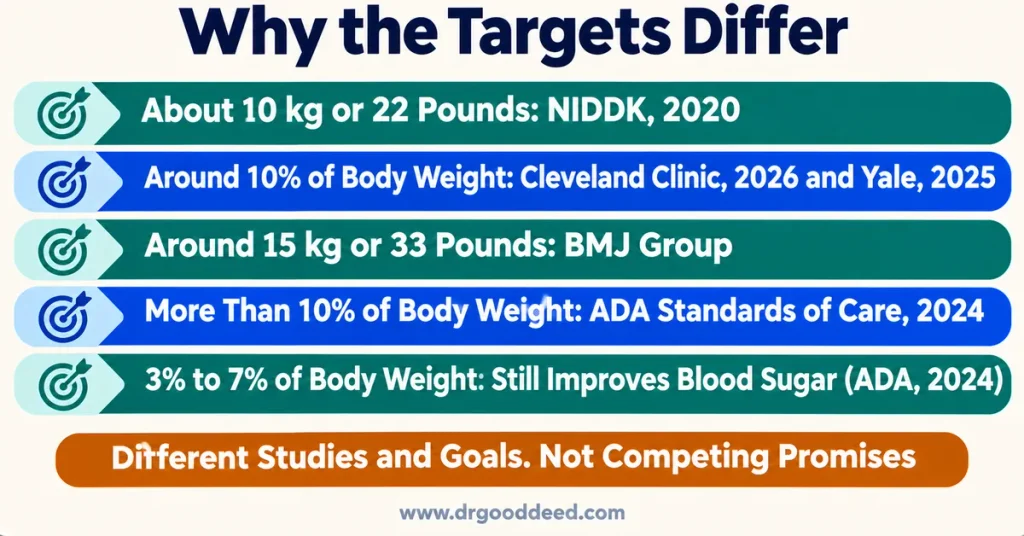
These numbers describe different study findings and clinical goals. They are not competing promises or requirements.
The best target depends on your starting weight, health, diabetes history, and what you can maintain safely. You do not need to reach a specific number of pounds before your health can improve.
Why Weight Loss Can Put Diabetes in Remission
Diabetes remission after weight loss is linked to less fat in the liver and pancreas, which can improve insulin use and insulin production.
When excess fat builds up in the liver, the liver may release more glucose than the body needs. Fat around the pancreas may also affect the cells that make insulin.
Insulin is the hormone that helps glucose move from the bloodstream into your cells. When your body does not respond well to insulin, blood sugar rises.
Weight loss may help by:
- Reducing fat stored in the liver and pancreas.
- Improving insulin resistance, so cells respond better to insulin.
- Helping the liver manage glucose more effectively.
- Supporting the pancreas in making and releasing insulin.
- Improving blood sugar control and other metabolic health measures.
The response differs from person to person. Some people regain better insulin function after losing weight, while others continue to have diabetes because their pancreas cannot produce enough insulin.
Weight loss can also improve blood pressure, cholesterol, sleep, mobility, and heart health. These benefits matter even when remission does not happen.
Extra fat in the liver is tied to poor insulin use, and signs of insulin resistance may sometimes appear on the skin.
Who Is More Likely to Reach Remission?
Remission is more likely with larger sustained weight loss, better pancreas function, and a shorter time with diabetes (NIDDK, 2020). However, no factor guarantees success.
People may have a better chance when they:
- Have had type 2 diabetes for a shorter time.
- Lose a larger amount of weight and maintain the loss.
- Still have enough pancreas function to produce insulin.
- Improve blood sugar early in their diabetes journey.
- Have access to ongoing support and follow-up care.
Remission after 10 years may still be possible, but remission becomes less likely as diabetes progresses. Cleveland Clinic (2026) notes that the chances are much lower after about 8 to 10 years, partly because insulin-producing beta cells may lose function over time.
Beta cells are the cells in the pancreas that make insulin.
If you have had diabetes for many years, weight loss can still improve blood sugar, mobility, blood pressure, and other health measures. Remission is only one possible outcome.
Body size is not the whole story, since skinny people can get diabetes as well. People who are not overweight may still have insulin resistance or other factors affecting blood sugar.
A smaller amount of weight loss may help some people who are not overweight, but evidence for remission in this group is more limited.
Ways to Lose Weight for Diabetes Remission
Weight loss for diabetes remission can come from supervised programs, lifestyle changes, newer weight-loss medicines, or metabolic surgery. The right approach depends on your health and should fit your needs.
Structured weight-management programs
A structured program can provide regular check-ins, nutrition support, activity guidance, and help with maintaining changes.
The DiRECT trial used a supervised program rather than asking participants to lose weight on their own. This support was an important part of the study.
A 2026 study of 96 adults aged 18 to 45 with obesity found that 54% reached remission at 24 weeks with a supervised program, compared with about 4% on usual care (Dasgupta et al., Lancet Regional Health Americas, 2026). Longer studies are still needed.
Lifestyle changes
Everyday habits can support weight loss and blood sugar control.
- Build meals around vegetables, protein, and fiber-rich foods.
- Choose eating patterns you can maintain over time.
- Find physical activities that fit your ability and health.
- Get enough sleep and work on stress management.
- Seek support when motivation or progress becomes difficult.
There is no single eating pattern that works for everyone. A clinician or registered dietitian can help you find an approach that supports your health without leaving you undernourished.
Newer weight-loss medicines
Some people may benefit from medical treatment that supports weight management. These options can help with weight loss and blood sugar control, but they are not appropriate for everyone.
Your clinician can explain the benefits, risks, and whether treatment fits your medical history.
Metabolic surgery
Metabolic surgery may be an option for some people with type 2 diabetes and obesity.
The American Diabetes Association’s 2024 Standards of Care notes that metabolic surgery can lead to substantial and sustained weight loss and may improve diabetes control or support remission.
Surgery requires careful assessment, follow-up, and long-term nutritional care. It is not a quick fix or a guaranteed cure.
Very low calorie programs should only take place under medical supervision. They are not suitable for everyone and may require changes to diabetes treatment.
Can Type 2 Diabetes Come Back After Remission?
Type 2 diabetes can come back after remission, most often when weight is regained. Remission can last for years, but it needs ongoing care.
The DiRECT extension study followed participants for five years. The University of Glasgow reported the following results in 2024:
- 46% were in remission at one year.
- 36% were in remission at two years.
- 13% were in remission at five years, among those with data.
- Of those in remission at year two, 26% remained in remission at year five.
These figures show why maintaining weight loss can be difficult. They also show that remission is not always permanent.
Weight regain can lead to more fat building up in the liver and pancreas, which may affect insulin function again. Diabetes may return even when someone continues to work on healthy habits.
If your blood sugar rises again, it does not mean you failed. Your care team can reassess your health and help you decide what to do next.
Continue regular diabetes checks during remission. Screening for diabetic neuropathy and other complications remains important.
A single raised reading can also have other causes, including high blood sugar without diabetes.
When to See a Doctor About Diabetes Medicines
Diabetes medicines should change only with your care team, because cutting food while taking some of them can cause low blood sugar (diaTribe, 2026). Very rapid weight loss can also drop blood pressure (diaTribe, 2026). Never stop a diabetes medicine on your own to reach remission.
Table: Your situation, what it means and the next step
| Your situation | What it means | Next step |
| Newly diagnosed | Remission is more likely with a shorter time with diabetes (NIDDK, 2020). | Ask your primary care doctor about a supervised weight-loss program. |
| Many years with diabetes | Remission chances are far lower after about 8 to 10 years (Cleveland Clinic, 2026). | Weight loss can still improve blood sugar, so set goals with your care team. |
| On medicines that can cause lows | Eating less can push blood sugar too low (diaTribe, 2026). | Talk with your care team before cutting calories so doses can be adjusted. |
| Not overweight | Evidence for remission in this group is thinner (University of Glasgow, 2024). | Ask your doctor whether modest weight loss makes sense for you. |
| Past eating problems | Weight-loss plans may not be safe for you. | Talk with a clinician before trying to lose weight. |
| Sudden weight loss without trying | Unplanned weight loss is not the same as remission and needs a check. | Get same-day care from your doctor or urgent care. |
| Signs of a severe low, such as confusion, fainting or a seizure | A severe low is an emergency (NIDDK, 2021). | Call 911 or go to the ER. |
Doctor’s Tip: Tell your care team before you cut calories, because some diabetes medicines can push blood sugar too low as food intake drops (diaTribe, 2026).
If you have a history of eating problems, talk with a clinician before trying to lose weight.
Talk with your primary care doctor before starting weight loss to reverse type 2 diabetes, so your medicines can be adjusted safely.
Frequently Asked Questions
Will Losing 30 Pounds Reverse Diabetes?
It might, but no amount of weight loss is a guarantee. In the DiRECT trial, 57% of people who lost 10 to 15 kg, about 22 to 33 pounds, reached remission (Lean et al., 2018). These were trial participants with structured support, so your own result may differ.
How Long Does It Take to Reverse Type 2 Diabetes?
How long it takes to reverse type 2 diabetes varies from person to person, and for some people remission does not happen. Providers often check A1C every three months to track progress (Cleveland Clinic, 2026). Remission means A1C stays below 6.5% for at least three months after stopping glucose-lowering medicines (Diabetologia, 2021).
Can You Reach Remission If You Are Not Overweight?
Possibly, though the evidence is thinner. DiRECT co-author Mike Lean says people who are not overweight may reach remission with quite modest weight loss (University of Glasgow, 2024). Body size is not the whole story in type 2 diabetes, so talk with your doctor before you try to lose weight.
What Checkups Do You Still Need in Remission?
You still need regular checks in remission. A1C testing at least once a year and screening for eye, kidney, nerve and heart complications continue (diaTribe, 2026, citing the ADA). These checks can catch a return of diabetes early, so keep your follow-up visits even when your numbers look good.
Does Weight Loss Help If Remission Does Not Happen?
Yes. Losing 3% to 7% of body weight improves blood sugar and some heart risk factors even without remission (ADA, 2024). The ADA also notes that any amount of weight loss may help, so the effort still pays off if your A1C stays at or above 6.5%.
Sources
Diabetologia via PubMed, Consensus Report: Definition and Interpretation of Remission in Type 2 Diabetes (2021). link
The Lancet via PubMed, Primary Care-Led Weight Management for Remission of Type 2 Diabetes (DiRECT) (2018). link
American Diabetes Association, Obesity and Weight Management for the Prevention and Treatment of Type 2 Diabetes: Standards of Care in Diabetes (2024). link
University of Glasgow, Diet Intervention Links Longer Remissions of Type 2 Diabetes and Improved Health Over 5 Years (2024). link
Cleveland Clinic, Tips To Reverse Type 2 Diabetes (2026). link
NIDDK, Achieving Type 2 Diabetes Remission Through Weight Loss (2020). link
NIDDK, Low Blood Glucose (Hypoglycemia) (2021). link
diaTribe, Type 2 Diabetes Remission: What It Is and How Can It Be Done (2026). link
BMJ Group, Losing Weight Can Reverse Type 2 Diabetes but Is Rarely Achieved or Recorded. link
Yale School of Medicine, Can Type 2 Diabetes Be Reversed? (2025). link
ScienceDaily, Type 2 Diabetes Breakthrough as 54% Achieve Remission in Just 6 Months (2026). link
Medical Disclaimer: This article is for general information only and is not medical advice. It does not replace a diagnosis, treatment plan, or guidance from a qualified healthcare professional. Always talk to your doctor about your own symptoms and before starting, stopping, or changing any treatment. If you think you may be having a medical emergency, call 911 or go to your nearest emergency room.