
This article is for general information only. It does not replace advice from a doctor or rheumatologist. If you notice new joint swelling, deformity, or sudden loss of movement, get evaluated promptly.
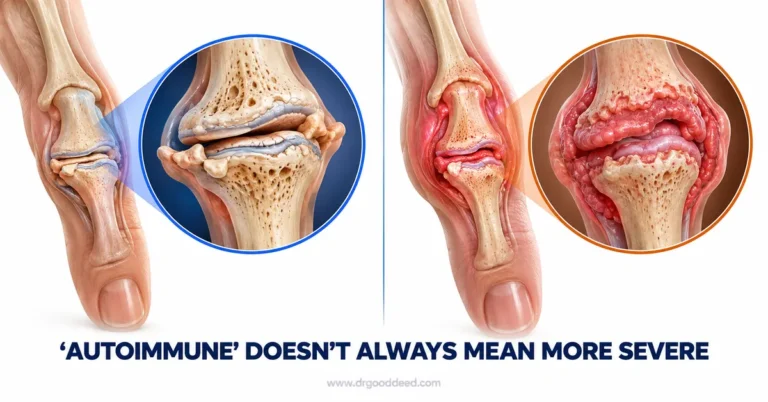
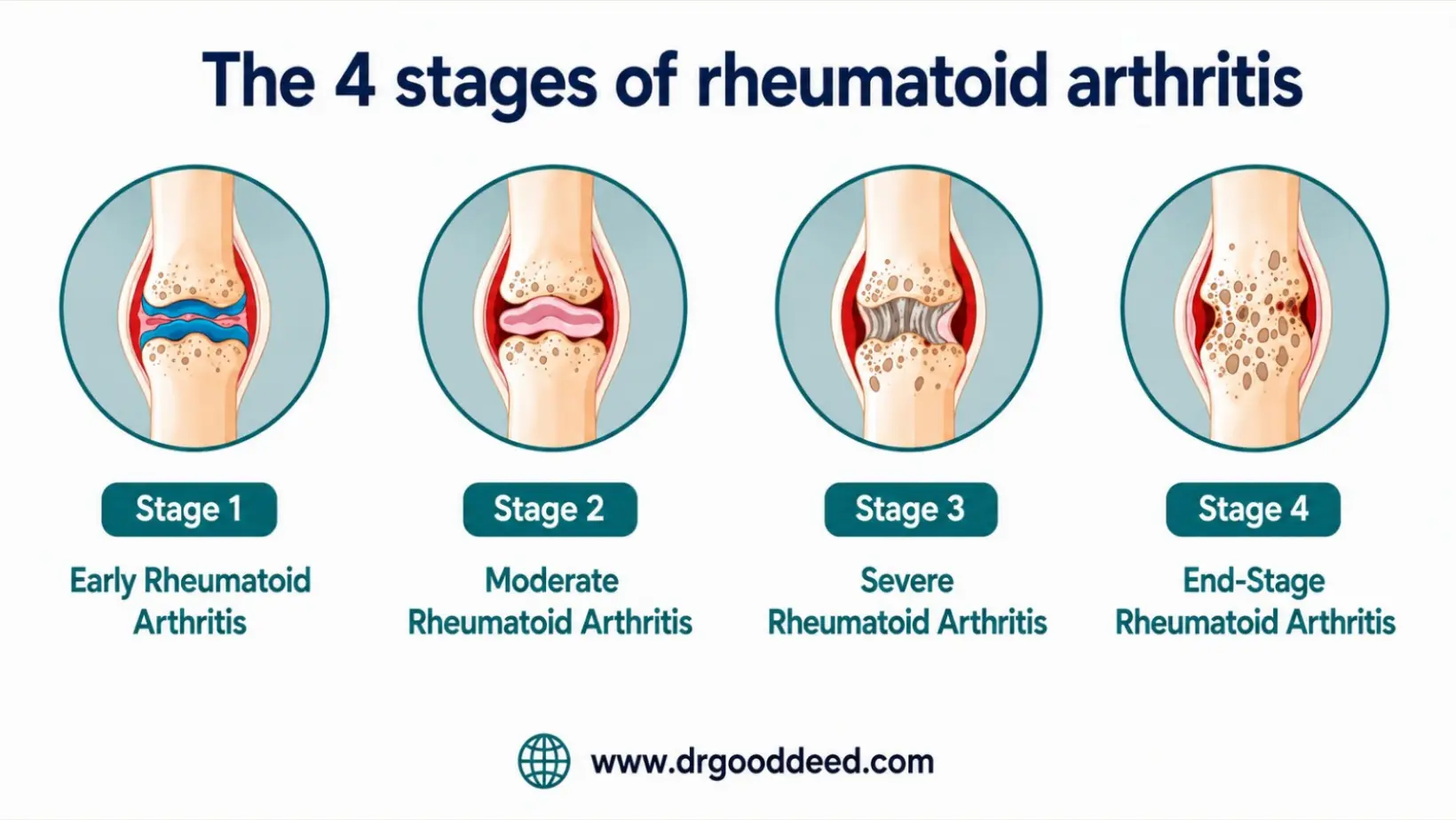
The 4 stages of rheumatoid arthritis are early, moderate, severe, and end-stage disease, each marked by more joint damage than the last. Rheumatoid arthritis is an autoimmune condition where the immune system attacks joint linings, and the World Health Organization classifies it as a leading cause of disability worldwide.
Understanding the autoimmune causes of rheumatoid arthritis helps explain why early treatment matters so much. In the USA, over 1.3 million adults live with this disease. This guide breaks down the 4 stages of rheumatoid arthritis, the symptoms at each point, and what actually slows progression.
Stage 1: Early Rheumatoid Arthritis
Stage 1 is where the immune system first starts attacking joint tissue, often years before major damage shows up on an X-ray. Catching rheumatoid arthritis here gives you the best shot at controlling it long term. This is the most treatable of the 4 stages of rheumatoid arthritis by rheumatologists today.
Inflammation Begins
Immune cells start attacking the synovium, the thin lining inside your joints, causing it to thicken and become inflamed. This inflammation is often invisible without imaging tests like ultrasound or MRI.
Early Symptoms
Mild joint pain, tenderness, and warmth typically start in small joints first, like fingers and toes. Fatigue and low-grade fever sometimes show up before joint symptoms even become noticeable.
Morning Joint Stiffness
Stiffness lasting more than 30 minutes after waking is a hallmark early sign. This differs from osteoarthritis stiffness, which usually eases within 10 to 15 minutes of moving around.
Importance of Early Treatment
Starting disease-modifying drugs within the first 3 to 6 months of symptoms, a window doctors call the “window of opportunity,” dramatically lowers long-term joint damage risk. Delayed treatment allows inflammation to become harder to control.
Stage 2: Moderate Rheumatoid Arthritis
Stage 2 marks the point where inflammation starts causing physical damage instead of just discomfort. Cartilage, the cushion between your bones, begins wearing down here. This stage causes damage to joints, since pain becomes harder to ignore. Doctors track this stage of the 4 stages of rheumatoid arthritis closely with X-rays to catch early erosion.
Cartilage Damage Begins
Ongoing inflammation triggers enzymes that break down cartilage covering the ends of your bones. Once cartilage wears away, joints lose their natural cushioning and start rubbing against each other.
Increased Joint Swelling
Swelling becomes more visible and persistent, often affecting both sides of the body symmetrically. Fluid buildup inside joints adds pressure, making even light touch uncomfortable.
Reduced Range of Motion
Joints start losing flexibility as swelling and cartilage loss make bending and straightening harder. Simple tasks like gripping a cup or climbing stairs start feeling noticeably different.
Functional Limitations
Daily activities that once felt automatic, like buttoning a shirt or typing, start requiring more effort. This is usually when people first mention symptoms interfering with work or hobbies.
Stage 3: Severe Rheumatoid Arthritis
Stage 3 is where the disease moves from cartilage into bone itself. Damage at this point becomes visible on standard X-rays, not just specialized scans. Left unmanaged, this stage brings some of the most serious untreated rheumatoid arthritis complications, including permanent bone loss.
Bone Erosion
The same inflammatory enzymes that destroyed cartilage now begin eating into bone tissue. This erosion is permanent and shows up clearly as small notches or gaps on X-ray images.
Joint Deformities
Bone erosion and tendon damage together pull joints out of their normal alignment. Fingers may bend sideways, a pattern doctors call ulnar deviation, and other joints can shift in similar ways.
Persistent Pain and Swelling
Pain becomes constant rather than coming and going with flares. Swelling rarely fully disappears even during quieter periods, since structural damage keeps triggering inflammation.
Difficulty Performing Daily Activities
Walking, cooking, and dressing become genuinely hard, not just uncomfortable. Many people need assistive devices like jar openers or modified utensils by this stage.
Stage 4: End-Stage Rheumatoid Arthritis
Stage 4 represents the most advanced point in the 4 stages of rheumatoid arthritis, where joints have sustained damage that can’t be reversed. Treatment goals shift here from stopping progression to managing daily function. This stage is far less common today due to earlier diagnosis and better drugs.
Extensive Joint Damage
Multiple joints show severe erosion, cartilage loss, and deformity at once. Bone can fuse together in some cases, a process called ankylosis, locking the joint in place permanently.
Loss of Joint Function
Affected joints can lose most or all of their normal movement. This happens most often in wrists, knees, and hips after years of unchecked inflammation.
Chronic Disability
Daily independence becomes limited, and many people need ongoing support for basic tasks. Pain management and mobility aids become central parts of everyday life.
Treatment Goals in Advanced Disease
Doctors shift focus toward pain control, joint replacement surgery, and physical therapy to preserve remaining function. Biologic drugs may still help reduce inflammation even at this stage. Avoiding untreated rheumatoid arthritis complications like fused joints is the main goal once damage has already set in.
Symptoms Throughout the Four Stages
Some symptoms of rheumatoid arthritis show up at every stage but change in intensity as the disease moves forward. Recognizing these patterns early helps you and your doctor track how fast things are moving. The table below breaks down what to expect.
| Symptom | Early Stage | Advanced Stage |
| Joint Pain | Mild, comes and goes | Constant, severe |
| Swelling | Occasional | Persistent |
| Morning Stiffness | 30+ minutes | Hours, or all day |
| Fatigue | Mild | Often debilitating |
| Symmetrical Joint Involvement | Starting in small joints | Spread across multiple joints |
Joint Pain
Pain starts as mild aching in small joints and grows into constant, deep pain affecting larger joints like knees and hips over time.
Swelling
Swelling begins as occasional puffiness after activity and becomes a fixed feature of affected joints as inflammation becomes chronic.
Morning Stiffness
Early stiffness clears within an hour. In advanced disease, stiffness can last most of the morning or persist throughout the day.
Fatigue
Fatigue in early stages feels like general tiredness. In later stages, it becomes debilitating enough to affect work and basic daily tasks.
Symmetrical Joint Involvement
Rheumatoid arthritis classically affects matching joints on both sides of the body, a pattern that becomes more obvious as more joints get involved over time.
What Determines How Fast Rheumatoid Arthritis Progresses?
How quickly someone moves through the 4 stages of rheumatoid arthritis depends on several factors working together, not just one cause. Genetics, how early treatment starts, and lifestyle habits all play a measurable role in disease speed.
The risk factors for rheumatoid arthritis progression include smoking, obesity, high disease activity at diagnosis, and the presence of specific antibodies called anti-CCP and rheumatoid factor. Genetic markers, particularly certain HLA-DRB1 gene variations, also raise the risk of faster joint damage and are one of the harder-to-control risk factors for rheumatoid arthritis progression.
People who start treatment within the first few months of symptoms generally progress through the 4 stages of rheumatoid arthritis far more slowly than those who delay care.
Can the Rheumatoid Arthritis Progression Be Slowed or Prevented?
Yes, in most cases progression can be significantly slowed, especially when treatment starts early. Disease-modifying antirheumatic drugs, known as DMARDs, target the immune response driving joint damage rather than just masking pain. Biologic medications add another layer of control for people who don’t respond fully to standard DMARDs.
Doctors adjust dosage and drug combinations based on disease activity, weight, and other health conditions, so treatment plans vary widely between patients. Regular monitoring through blood tests and imaging helps doctors catch autoimmune causes of rheumatoid arthritis flaring up before permanent damage sets in. Lifestyle changes like quitting smoking, maintaining a healthy weight, and staying physically active also measurably slow how fast the disease moves through its stages.
FAQs
How long does it take rheumatoid arthritis to progress?
Progression speed varies widely. Untreated cases can show joint erosion within 1 to 2 years, while treated patients on DMARDs often stay stable in early stages for a decade or longer.
Can rheumatoid arthritis be stopped in the early stages?
Yes. Starting treatment within the first 3 to 6 months, the “window of opportunity,” can prevent most joint damage and sometimes leads to lasting remission.
How does rheumatoid arthritis damage joints?
Immune cells attack the synovium, triggering enzymes that break down cartilage and then bone. This process is one of the clearest examples of how rheumatoid arthritis damages joints over time.
What causes rheumatoid arthritis?
The exact trigger is unknown, but genetics, smoking, and infections combine to trigger an immune attack on joint tissue. These autoimmune causes of rheumatoid arthritis vary between individuals.
Can rheumatoid arthritis go into remission?
Yes. About 10 to 20 percent of patients on early, aggressive DMARD treatment reach drug-free remission, while many more reach low disease activity with ongoing medication.
Which treatments slow rheumatoid arthritis progression?
Methotrexate remains the first-line DMARD for most patients. Biologics like TNF inhibitors are added when methotrexate alone doesn’t control inflammation adequately.
Can exercise help people with rheumatoid arthritis?
Yes. Low-impact exercise like swimming or walking preserves joint flexibility and reduces stiffness without adding stress to already inflamed joints.