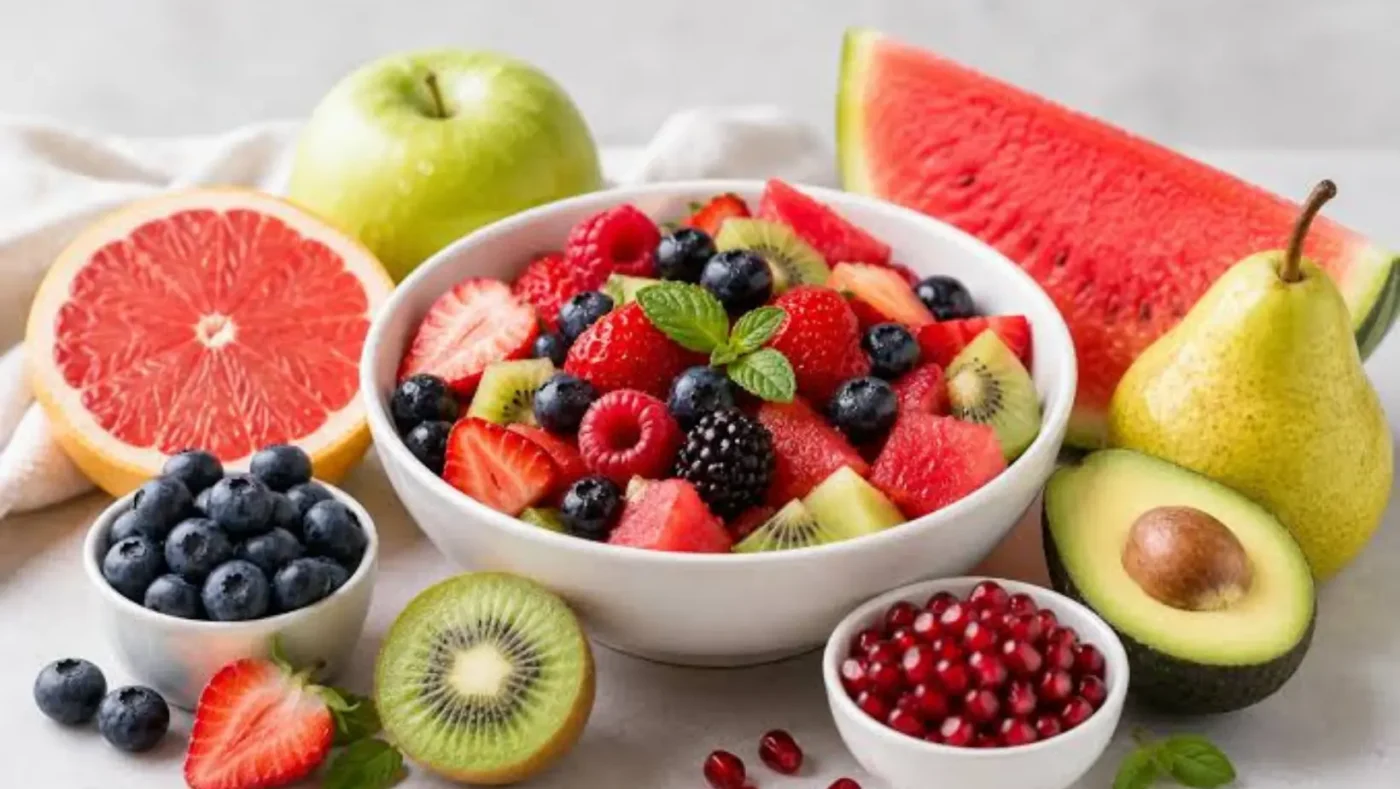

The best fruits for weight loss are low in calories, high in fiber, and packed with water, which means grapefruit, berries, apples, and watermelon top most nutrition experts’ lists. These fruits fill you up on fewer calories than processed snacks. This guide ranks 18 fruits by their fiber, water content, and sugar load, then answers the questions people search for most.
Whole fruit is not the enemy in a weight loss plan. A large cohort study of over 18,000 women found that eating more than 3 servings of fruit a day cut the odds of becoming overweight by 13% over almost 16 years.
18 Best Fruits for Weight Loss
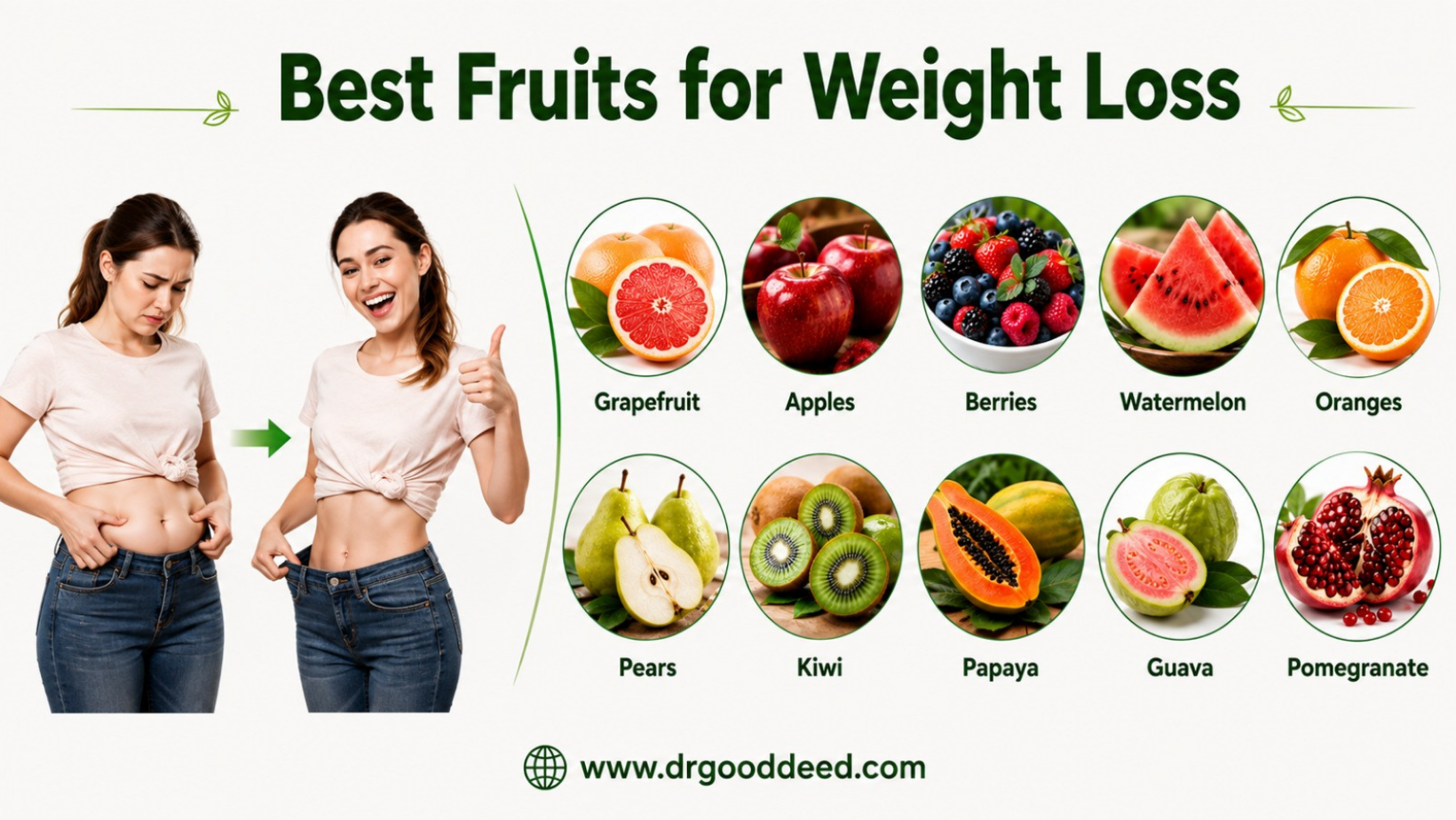
Below are the top fruits to help lose weight, ranked by calorie density, fiber content, and how well they curb hunger. Each one fits easily into breakfast, snacks, or dessert without wrecking a calorie budget. Portion size still matters more than the fruit you pick.
Grapefruit
Half a grapefruit has about 52 calories and 2 grams of fiber. In a 12-week trial, obese adults who ate half a grapefruit before meals lost 3.5 pounds, versus 0.7 pounds in the placebo group. Eat it fresh, not juiced, to keep the fiber intact.
Apples
One medium apple has 95 calories and 4 grams of fiber, mostly in the skin. The fiber slows digestion and keeps you full for hours. Apples rank among the best fruits to eat daily for weight loss because they travel well and need no prep.
Berries (Blueberries)
A cup of blueberries has just 84 calories and 3.6 grams of fiber. Their sugar content is lower than most tropical fruits, and their antioxidants support metabolic health. Add them to oatmeal or yogurt instead of granola clusters.
Watermelon
Watermelon is 92% water by weight, so a full cup runs about 46 calories. That water content fills your stomach without adding much energy. It works well as a hot-weather snack that stops afternoon cravings before dinner.
Oranges
One medium orange has 62 calories and 3 grams of fiber, plus a full day’s vitamin C. Eating the whole segments, not drinking the juice, keeps the fiber that blunts blood sugar spikes.
Pears
A medium pear packs 6 grams of fiber, more than almost any other common fruit, for just 101 calories. That fiber load makes pears one of the more filling low-calorie fruits for weight loss on this list.
Kiwi
Two kiwis have about 84 calories and 4 grams of fiber, along with more vitamin C than an orange. The seeds and skin (if you eat it) add extra fiber that most people skip out on.
Papaya
A cup of papaya cubes has only 62 calories. It contains papain, an enzyme that helps break down protein and may ease bloating after meals. Papaya works well blended into a light morning smoothie.
Guava
One guava has about 37 calories and 3 grams of fiber, giving it one of the best fiber-to-calorie ratios of any fruit on earth. It also delivers four times the vitamin C of an orange.
Pomegranate
A half-cup of pomegranate seeds (arils) has 72 calories and 3.5 grams of fiber. Chewing the seeds slows you down and adds satiety that juice cannot match. Sprinkle them on salads instead of dried cranberries, which carry added sugar.
Peaches
A medium peach has 58 calories and 2 grams of fiber, with a natural sweetness that satisfies dessert cravings. Grilled peaches make a lower-calorie stand-in for pie on a summer night.
Plums
Two small plums have about 60 calories and 2 grams of fiber. Dried plums, better known as prunes, also support regular digestion, which matters when you increase fiber intake overall.
Pineapple
A cup of pineapple chunks has 82 calories and contains bromelain, an enzyme linked to reduced inflammation after exercise. Its sweetness makes it a smart swap for candy or baked goods.
Dragon Fruit
One cup of dragon fruit has around 60 calories and 7 grams of fiber, among the highest fiber counts on this list. Its black seeds carry most of that fiber, so eat the flesh whole rather than straining it.
Avocado
Avocado is higher in calories (240 per cup) than other fruits here, but its monounsaturated fat and 10 grams of fiber slow digestion and reduce hunger for hours. A quarter avocado on toast beats butter or mayonnaise for a weight loss diet.
Passion Fruit
One passion fruit has just 17 calories and 2 grams of fiber, making it one of the most efficient low-calorie fruits for weight loss by volume. Scoop the pulp straight from the shell or stir it into plain yogurt.
Cherries
A cup of pitted cherries has 87 calories and 2.9 grams of fiber. Their deep color comes from anthocyanins, plant compounds tied to lower inflammation markers in several studies. Frozen cherries work as a cold, filling snack.
Apricots
Four fresh apricots have about 68 calories and 3 grams of fiber. They pack potassium, which helps balance sodium and reduce water retention, a common complaint during the first weeks of a diet change.
How to Include Fruit in a Weight Loss Diet
Knowing how to include fruit in a weight loss diet matters more than memorizing a fruit list. Eat fruit whole, not juiced, since juicing strips the fiber that controls hunger and blood sugar. Pair fruit with protein or fat, like apple slices with peanut butter, to slow digestion further. Two to three servings a day, each about the size of your fist, fits most weight loss plans without excess sugar.
Fruits to avoid or limit during weight loss include dried fruit, canned fruit in syrup, and fruit juice, since removing the water and fiber concentrates the sugar and calories into a smaller volume. A quarter cup of raisins packs roughly the same sugar as a full cup of grapes, without the fullness that whole grapes deliver.
Case Spotlight: How One Reader Used Fruit Swaps to Break a Weight Loss Plateau
Names in this section are changed to protect privacy.
Maria Alvarez, a 42-year-old office manager from Austin, Texas, had lost 18 pounds through calorie tracking but stalled for six weeks. Her dietitian found she was drinking 16 ounces of orange juice daily, adding roughly 220 unnecessary calories. Swapping the juice for two whole oranges plus a handful of berries at breakfast cut her daily sugar intake and added 6 grams of fiber. Within a month, her plateau broke and she lost another 4 pounds. Her case shows why whole fruit, not juice, belongs on any list of best fruits for weight loss strategies that actually work.
FAQs
Can I eat fruit every day and still lose weight?
Yes. Two to three servings of whole fruit daily fit most calorie-controlled diets. Fruit’s fiber and water content offset its natural sugar, unlike candy or soda, which carry sugar without fullness.
What are the best low-calorie fruits for weight loss?
Watermelon, papaya, strawberries, and passion fruit all fall under 65 calories per cup. Grapefruit and guava follow close behind, each under 55 calories per typical serving.
Which fruits should I avoid during weight loss?
Limit dried fruit, fruit canned in syrup, and fruit juice. A cup of raisins has about 480 calories, compared to 104 calories in a cup of fresh grapes.
Is it better to eat fruit in the morning or at night for weight loss?
Morning works best for most people. Fruit’s natural sugar gets used for energy during daytime activity, and eating it early curbs mid-morning snack cravings before lunch.
How much fruit should I eat daily for weight loss?
The USDA recommends 1.5 to 2 cups daily for most adults on a weight loss plan. That equals about two medium fruits or one cup of chopped fruit twice a day.
Are bananas good for weight loss?
Yes, in moderation. One medium banana has 105 calories and 3 grams of fiber, plus potassium that supports muscle function during exercise. Riper bananas carry more sugar than green ones.
Can eating too much fruit slow weight loss?
Yes. Six or more servings a day can add 400 to 600 extra calories, enough to stall a calorie deficit even though the food itself is healthy.
Are frozen fruits as healthy as fresh fruits for weight loss?
Yes. Frozen fruit is picked and frozen at peak ripeness, keeping fiber and most vitamins intact. Skip versions with added sugar syrup or glaze listed on the label.
Which fruits are highest in fiber for weight loss?
Avocado, dragon fruit, and pears top the list, each with 6 to 10 grams of fiber per serving. Raspberries and pomegranate seeds follow close behind at roughly 3.5 grams each.
The Bottom Line
Fruit is not off-limits during weight loss. Whole, fiber-rich options like grapefruit, berries, pears, and dragon fruit fill you up on relatively few calories, while juices and dried versions concentrate sugar without the fullness. Building two to three servings of the best fruits for weight loss into daily meals, alongside protein and vegetables, supports a sustainable calorie deficit instead of a restrictive one. Small swaps like Maria’s, trading juice for whole fruit, often unlock progress that tracking alone cannot.
Sources
- A Comprehensive Critical Assessment of Increased Fruit and Vegetable Intake on Weight Loss in Women, Nutrients, 2020
- Impact of Whole, Fresh Fruit Consumption on Energy Intake and Adiposity: A Systematic Review, PMC
- Fruit and Vegetable Consumption and Changes in Anthropometric Variables in Adult Populations, PLOS ONE
- Effects of grapefruit, grapefruit juice and water preloads on energy balance and weight loss in obese adults, PMC
- Weight Management and Florida Grapefruit, Florida Department of Citrus
- USDA FoodData Central
- Dietary Guidelines for Americans 2020-2025, USDA/HHS
- Mayo Clinic: Water-rich foods help manage weight
- Harvard T.H. Chan School of Public Health: Fruits and Vegetables
- Effects of fruit consumption on body mass index and weight loss in overweight and obese dieters, PubMed