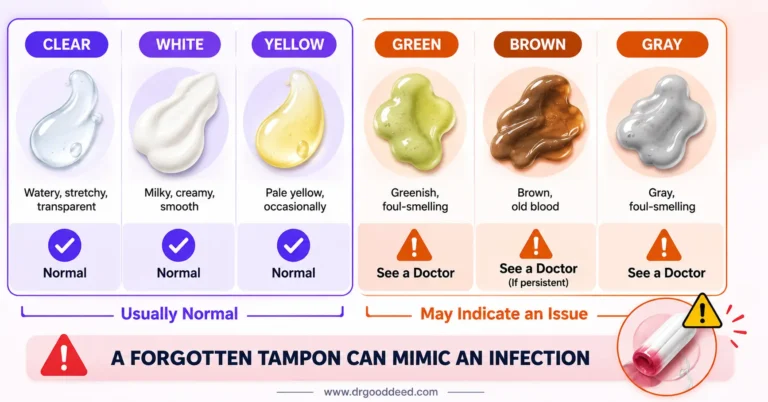

Yellow vaginal discharge can be a pale, faint yellow tint with no smell and is often just normal discharge that oxidizes after contact with air. But a darker yellow discharge that smells bad, itches, or comes with pelvic pain usually points to an infection like bacterial vaginosis, trichomoniasis, or a sexually transmitted infection. The color alone rarely tells the full story. Texture, odor, and timing matter just as much.
Is Yellow Vaginal Discharge Normal?
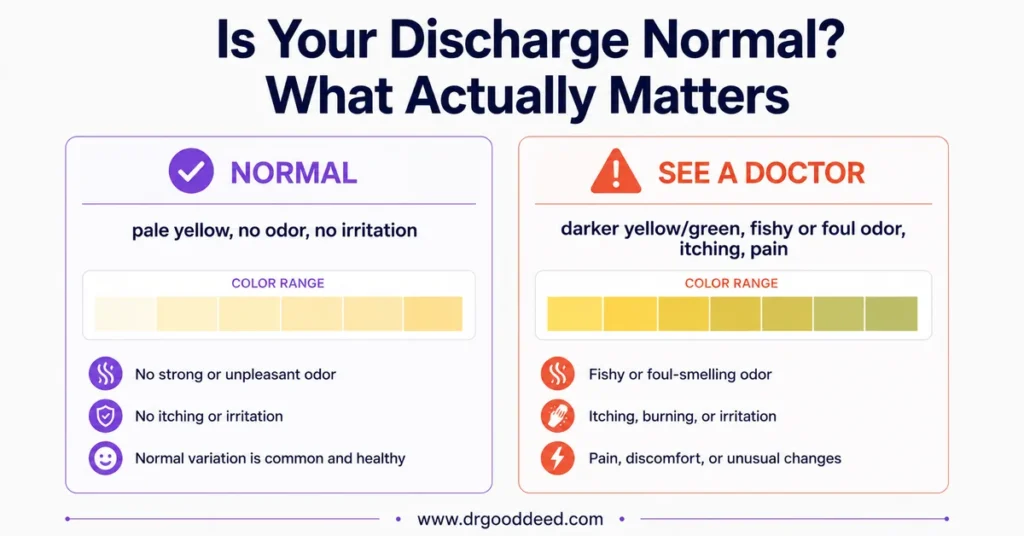
Yes, in many cases it is. According to the American College of Obstetricians and Gynecologists, healthy discharge is clear to white and has little to no odor, but a light yellow shade can still fall within a normal range if nothing else feels off. What separates normal from a yellow vaginal discharge that needs attention is whether the color shows up alone or travels with a smell, itching, or a change in thickness.
Normal Yellow Discharge (No Odor, No Other Symptoms)
A very pale, straw-colored discharge with no smell usually forms when normal cervical mucus mixes with a small amount of air exposure or dries slightly on underwear. This kind of yellow vaginal discharge tends to show up right before or after a period, when a tiny bit of old blood blends into the mucus and turns it yellow instead of red or brown.
It can also appear midcycle, since cervical fluid naturally shifts in color and thickness across the menstrual cycle as estrogen and progesterone rise and fall. If there is no itching, no burning, no unusual smell, and no pelvic discomfort, this pattern almost always reflects a normal hormonal process rather than an infection.
When Yellow Discharge Signals a Problem
A darker yellow, yellow green, or grayish yellow discharge deserves more attention, especially when it comes with a strong odor, itching, soreness, or pain during sex or urination. Dark yellow, brown, green, or gray discharge may signal a problem, particularly when paired with a fishy or foul smell, which points toward bacterial vaginosis, trichomoniasis, or a bacterial STI such as chlamydia or gonorrhea. Discharge that appears alongside fever, lower abdominal pain, or bleeding between periods needs prompt medical evaluation, since these signs can indicate pelvic inflammatory disease.
Yellow Discharge Without Odor: Common Causes
Yellow discharge with no odor cases are usually tied to hormones rather than infection. The most common triggers include normal cycle changes, early pregnancy, and the hormonal shifts of perimenopause or menopause. None of these require antibiotics, though a checkup can rule out infection if symptoms change.
Hormonal Changes and Menstrual Cycle Timing
Estrogen and progesterone control how much cervical mucus the body produces and how thick it becomes. Right after ovulation, mucus often turns thicker and slightly yellow or cloudy as progesterone rises. Around the start or end of a period, small traces of blood can mix with mucus and shift its color from clear to pale yellow.
Hormonal birth control, including pills, patches, and IUDs, can also change the consistency and color of discharge because it alters the natural hormone pattern that regulates cervical fluid. This type of yellow vaginal discharge typically resolves on its own within a day or two and does not need treatment.
Early Pregnancy
A mild increase in yellowish discharge is common in yellow discharge early pregnancy cases, since rising estrogen and increased blood flow to the pelvis boost mucus production starting in the first trimester. This discharge, sometimes called leukorrhea, is usually thin, milky to pale yellow, and odorless. It tends to increase as pregnancy progresses.
However, a yellow discharge with a strong smell, green tint, or itching during pregnancy should be checked promptly, since untreated infections like bacterial vaginosis or trichomoniasis raise the risk of preterm labor and low birth weight.
Menopause and Low Estrogen
Falling estrogen levels during perimenopause and menopause thin out the vaginal lining, a condition called atrophic vaginitis or genitourinary syndrome of menopause. This can produce a thin, pale yellow discharge menopause pattern along with vaginal dryness, itching, or discomfort during sex. Because thinner vaginal tissue is more prone to irritation and minor infection, any yellow discharge that develops after menopause, especially with spotting, deserves a medical evaluation rather than being assumed to be atrophy alone.
Yellow Discharge With Odor or Other Symptoms: Possible Infections
Yellow discharge with smell is the clearest sign that something beyond hormones is happening. The main causes include bacterial vaginosis, trichomoniasis, chlamydia, gonorrhea, and less often a yeast infection.
Bacterial Vaginosis (BV)
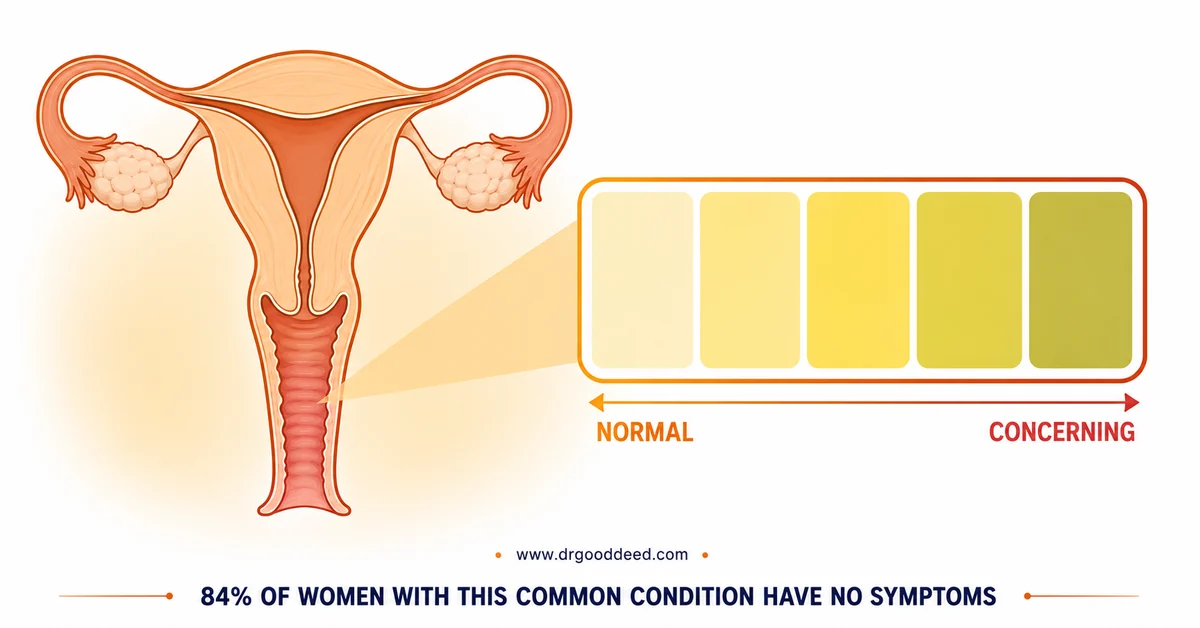
BV happens when the normal balance of vaginal bacteria shifts, and protective lactobacilli get replaced by other organisms. CDC data from a national health survey found that BV affects an estimated 29.2 percent of American women ages 14 to 49, roughly 21 million women, making it the most common vaginal condition in that age group. A striking detail many articles skip: the same CDC analysis found that 84 percent of women with BV reported no symptoms at all.
When symptoms do appear, bacterial vaginosis discharge is typically thin, grayish white to yellow, and carries a distinct fishy odor that often becomes stronger after sex or during a period. BV is not classified as an STI, though sexual activity can influence risk.
Trichomoniasis
Trichomoniasis is caused by a parasite called Trichomonas vaginalis and is considered the most common curable nonviral STI worldwide. CDC estimated more than two million trichomoniasis infections in the United States in 2018, yet only about 30 percent of infected people ever develop symptoms.
When present, trichomoniasis discharge is often frothy, yellow-green, and has a strong, unpleasant odor, frequently paired with vulvar itching, redness, and discomfort during urination or sex. Because it spreads through sexual contact and often shows no symptoms, routine testing is the only reliable way to catch it.
Chlamydia and Gonorrhea
Both are bacterial STIs that can infect the cervix and cause a condition called cervicitis. CDC’s 2022 case definition data shows about three-quarters of women with chlamydia have no symptoms, while gonorrhea often behaves the same way. CDC’s 2024 national surveillance report recorded more than 2.2 million combined cases of chlamydia, gonorrhea, and syphilis, though the number of chlamydia and gonorrhea cases both declined compared to 2023.
When symptoms do occur, chlamydia discharge and gonorrhea discharge often look similar: yellowish, sometimes tinged with a mucus-like or slightly cloudy texture, along with pain during urination, bleeding between periods, or pelvic discomfort. Because both infections can silently damage the reproductive tract, CDC recommends annual screening for sexually active women under 25.
Yeast Infection (Less Common Yellow Presentation)
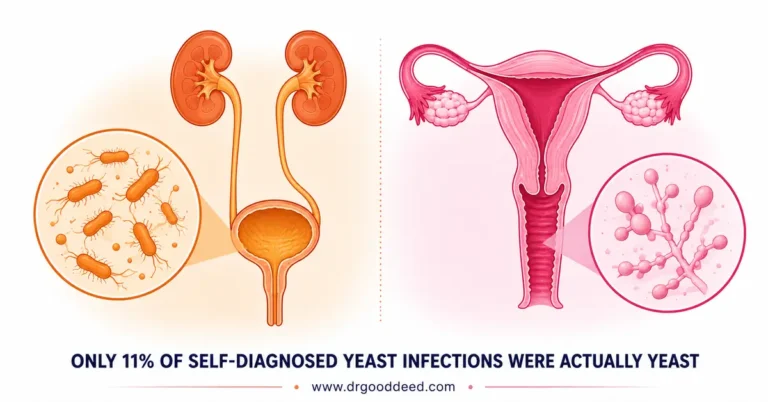
Most yeast infections cause a thick, white, cottage cheese-like discharge, but a less common yeast infection yellow discharge pattern can appear, especially if the discharge dries on underwear or mixes with normal secretions. Intense itching, redness, and a burning sensation around the vulva usually accompany it, along with pain during sex or urination. Unlike bacterial infections, yeast infections typically do not produce a strong odor. Antibiotic use, uncontrolled diabetes, and pregnancy all raise the risk of developing one.
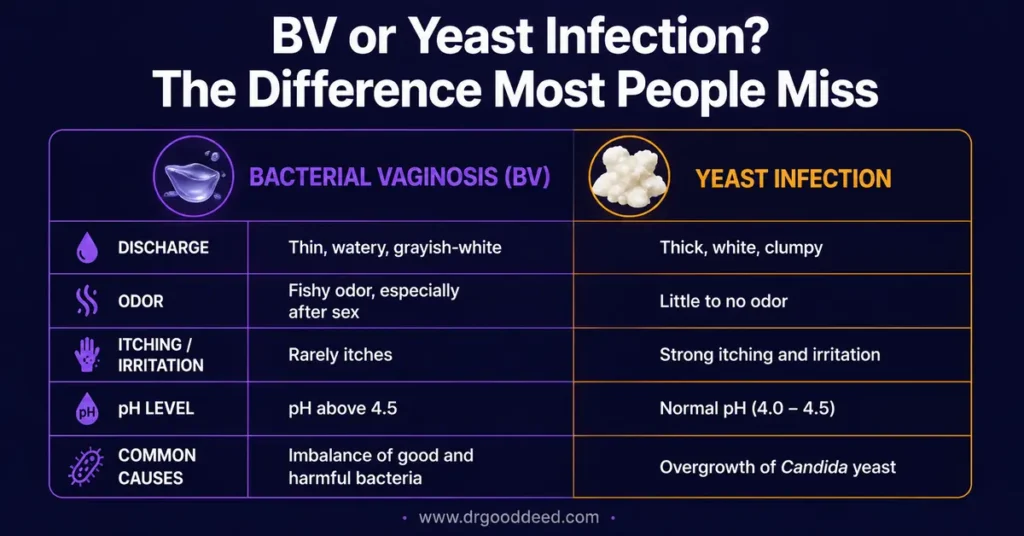
How to Tell if Yellow Discharge Is BV or a Yeast Infection
These two conditions get confused often, but a few clear differences help separate them. BV discharge is thin, watery, and grayish yellow with a fishy odor that often intensifies after sex, and it rarely causes itching.
Yeast infection discharge is thick, clumpy, and white to pale yellow, closer to cottage cheese in texture, and it typically causes strong itching and burning with little to no odor. BV tends to feel more like an odor problem, while a yeast infection tends to feel more like an itching and irritation problem. A simple pelvic exam and vaginal pH test can confirm which one is present, since BV usually raises vaginal pH above 4.5 while yeast infections do not.
Can Stress Cause Yellow Discharge?
Stress does not directly turn discharge yellow, but it can set the stage for it. Chronic stress raises cortisol, which can suppress immune function and disrupt the balance of protective bacteria in the vagina. This makes the vaginal environment more vulnerable to overgrowth of bacteria or yeast, which then produces the odor, texture, and color changes tied to BV or a yeast infection.
Stress can also delay ovulation or shift cycle timing, which indirectly changes when hormone-driven yellow discharge appears. The stress itself is rarely the direct cause, but it can tip the balance toward infection.
When to See a Doctor
See a doctor if yellow vaginal discharge comes with an odor, itching, pain, or any change from a normal pattern that lasts more than a few days. A pelvic exam and a few simple tests usually identify the cause quickly.
Warning Signs That Need Prompt Care
Certain symptoms point to something that should not wait for a routine appointment. These include fever or chills alongside discharge, pain in the lower abdomen or pelvis, bleeding between periods or after sex, discharge that appears green or has a strong foul smell, and yellow discharge that develops after menopause.
Pregnant individuals with any of these symptoms should be seen promptly, since untreated infections during pregnancy carry added risk. Pelvic inflammatory disease, a possible complication of untreated chlamydia or gonorrhea, can cause lasting fertility problems if it goes unaddressed.
How Yellow Discharge Is Diagnosed and Treated
Diagnosis usually starts with a pelvic exam and discharge testing process that includes a visual check, a pH test strip, and a swab sent for lab analysis or a rapid nucleic acid test. This identifies whether bacteria, a parasite, or yeast is responsible. Treatment depends entirely on the cause.
- Bacterial infections like BV, chlamydia, and gonorrhea are treated with prescription antibiotics, while trichomoniasis requires a different antiparasitic antibiotic course.
- Yeast infections respond to antifungal medication, available as creams, suppositories, or oral tablets.
- Hormonal causes, including pregnancy-related and menopause related discharge, often need no treatment beyond monitoring unless an infection is also present.
A provider will select the specific medication and course length based on the confirmed diagnosis.
FAQs
Is yellow discharge always a sign of infection?
No. Pale yellow discharge without odor or irritation is often a normal hormonal variation, not an infection.
Can yellow discharge mean pregnancy?
Yes, mild yellowish discharge can appear in early pregnancy due to rising estrogen, though a doctor should confirm any new symptom.
Does yellow discharge always need antibiotics?
No. Only bacterial or parasitic causes need antibiotics. Hormonal or yeast-related discharge needs different or no treatment.
Can yellow discharge go away on its own?
Yes, if it is tied to normal cycle changes. Infection-related discharge usually needs treatment to resolve.
Is yellow discharge with no smell ever an STI?
Yes, some STIs like chlamydia can be present with minimal or no noticeable odor, so testing matters more than smell alone.
Sources
- American College of Obstetricians and Gynecologists: Is It Normal to Have Vaginal Discharge?
(https://www.acog.org/womens-health/experts-and-stories/ask-acog/is-it-normal-to-have-vaginal-discharge) - Cleveland Clinic: Vaginal Discharge, Causes, Colors and What’s Normal
(https://my.clevelandclinic.org/health/symptoms/4719-vaginal-discharge) - CDC: Bacterial Vaginosis Statistics and Prevalence
(https://cybercemetery.unt.edu/oilspill/20121014005018mp_/http://www.cdc.gov/std/bv/stats.htm) - CDC: About Trichomoniasis
(https://www.cdc.gov/trichomoniasis/about/index.html) - CDC: Sexually Transmitted Infections Treatment Guidelines 2021, Trichomoniasis
(https://www.restoredcdc.org/www.cdc.gov/std/treatment-guidelines/trichomoniasis.htm) - CDC: Chlamydial Infections, STI Treatment Guidelines
(https://www.cdc.gov/std/treatment-guidelines/chlamydia.htm) - CDC: Chlamydia Trachomatis Infection 2022 Case Definition
(https://ndc.services.cdc.gov/case-definitions/chlamydia-trachomatis-infection-2022/) - CDC: 2024 National STI Surveillance Data Release
(https://www.cdc.gov/nchhstp/director-letters/release-2024-sti-data.html) - Cleveland Clinic: Chlamydia, Causes, Symptoms, Treatment and Prevention
(https://my.clevelandclinic.org/health/diseases/4023-chlamydia) - Medscape/StatPearls: Vaginitis Clinical Presentation
(https://emedicine.medscape.com/article/257141-clinical)