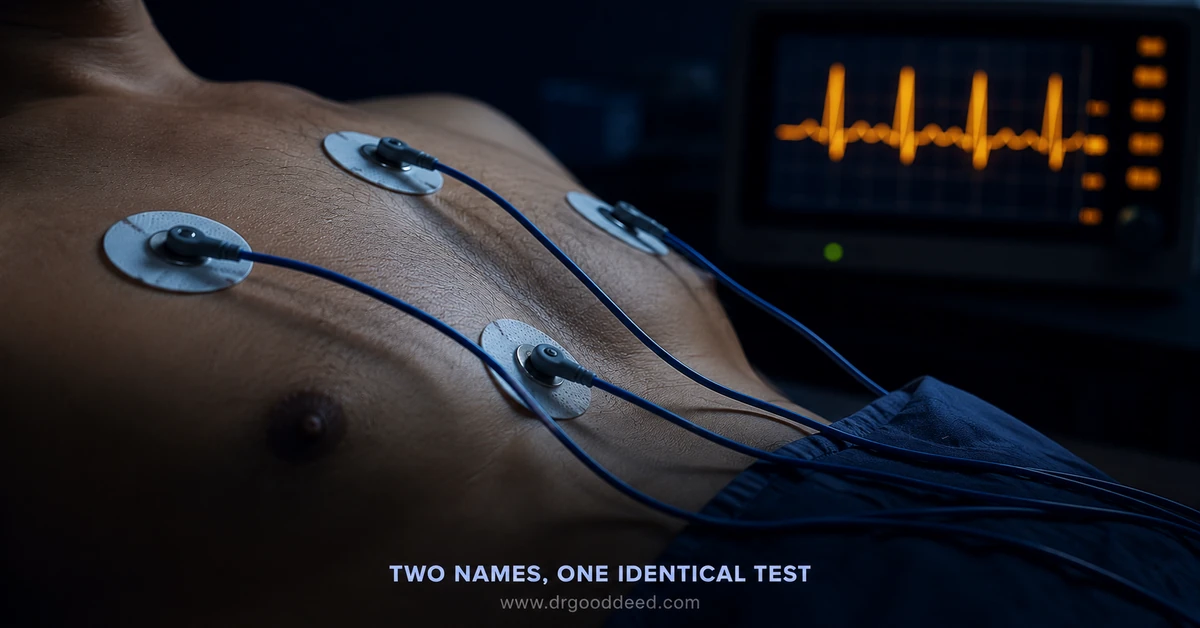

There is no real difference between ECG and EKG. Both tests point to the recording of the electrical signals that make your heart beat. ECG stands for electrocardiogram in English. EKG comes from the German word Elektrokardiogramm. American doctors, nurses, and hospital charts use both terms interchangeably for one identical procedure
Short Answer: ECG and EKG Are the Same Test
Yes. Is ECG the same as EKG? Medically, yes, completely. Willem Einthoven, the Dutch physiologist who invented the test, published his original findings in German, and the German medical community named it Elektrokardiogramm. English-speaking countries later translated the term to electrocardiogram, which is where the ECG abbreviation comes from. Your test result is identical either way.
The History Behind Two Different Abbreviations
In 1900, Einthoven and physiologist Cornelis de Lint published a paper in German titled “Über das normale menschliche Elektrokardiogramm,” introducing the term that gave EKG its K.
German was the leading language of scientific medicine in the early 1900s, much like English dominates research journals today, so Elektrokardiogramm became the standard name across European medicine.
Einthoven refined the test using his string galvanometer, a 600-pound instrument that required patients to submerge their limbs in tubs of saline solution, and later won the 1924 Nobel Prize in Medicine for the work.
When the terminology crossed into English-speaking medicine, it was translated to electrocardiogram, shortened to ECG.
Why Do Doctors Often Say EKG Instead of ECG?
Many US clinicians say EKG instead of ECG to prevent confusion with EEG, the test that records brain waves, not heartbeats.
EKG vs EEG: an EKG records your heart’s electrical activity. An EEG records the brain’s electrical activity. The two terms sound similar spoken aloud, so US hospitals favor EKG to prevent mix-ups with brain-test orders.
Is an ECG/EKG the Same as an Echocardiogram?
No. An electrocardiogram, whether labeled ECG or EKG, records electrical signals using flat electrode stickers on your skin. An echocardiogram uses ultrasound to create a moving picture of your heart’s chambers, valves, and blood flow.
EKG vs echocardiogram: EKG reads your heart’s wiring; echocardiogram watches it physically pump. Doctors often order both in a single visit because a normal EKG will not detect a structural problem, and a normal echo will not detect a rhythm problem.
What an ECG/EKG Actually Measures
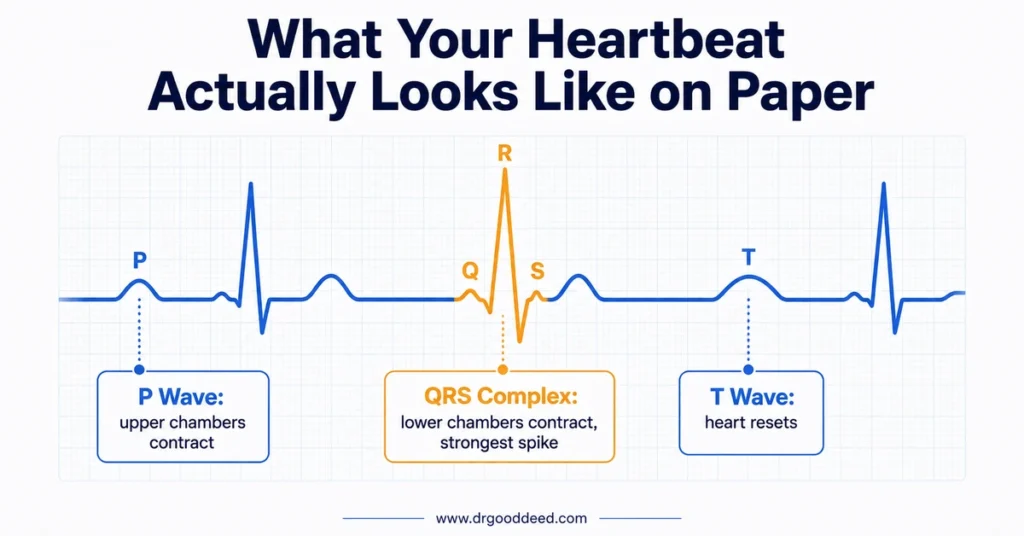
An EKG machine records three core signals through electrodes on your chest, arms, and legs.
- The P wave shows your heart’s upper chambers contracting.
- The QRS complex shows the lower chambers contracting, the strongest electrical spike on the tracing.
- The T wave shows the heart resetting for the next beat.
A standard 12-lead EKG captures these signals from twelve different angles around your heart, giving doctors a detailed map of rate, rhythm, and any areas where electrical signals travel abnormally.
When You Might Need an ECG or EKG
Doctors order an EKG for chest pain, heart palpitations, unexplained shortness of breath, dizziness, or before surgery to check baseline heart function.
- Athletes sometimes get one as part of a sports physical.
- People with high blood pressure, diabetes, or a family history of heart disease may get a screening EKG even without symptoms.
The EKG test takes under ten minutes, requires no needles, and delivers results a cardiologist can read within minutes, which is why it remains the first step in most heart evaluations.
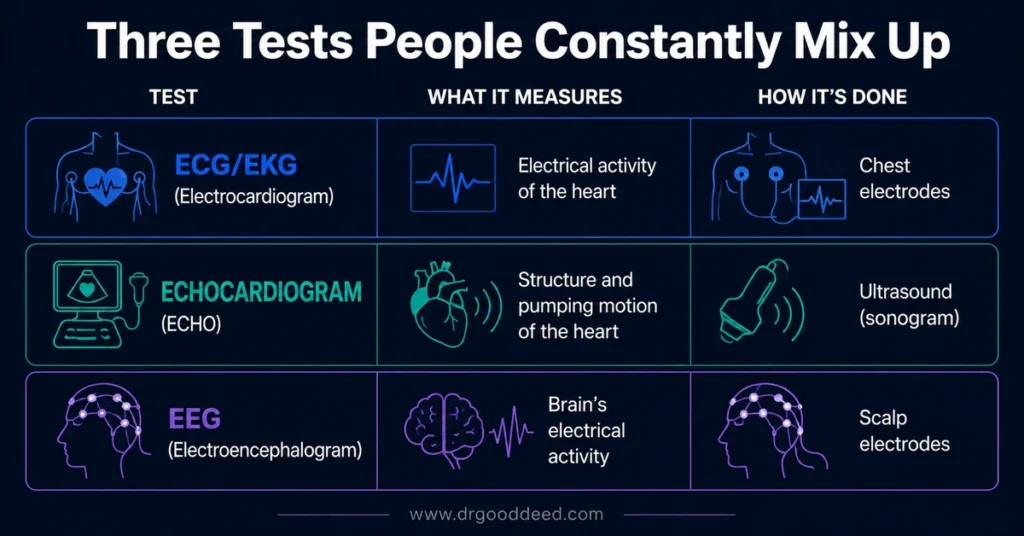
Quick Comparison: ECG/EKG vs. Echocardiogram vs. EEG
Here is the difference between ECG and EKG and their look-alike tests laid out side by side.
| Test | What It Measures | Often Confused With |
| ECG / EKG | Heart’s electrical activity, via chest electrodes | Each other (same test, two spellings) |
| Echocardiogram | Heart’s structure and pumping motion, via ultrasound | EKG (electrical signal vs. physical structure) |
| EEG | Brain’s electrical activity, via scalp electrodes | EKG (similar-sounding name, different organ) |
FAQs
Is ECG the same as EKG?
Yes. ECG and EKG are identical tests. ECG follows the English term electrocardiogram; EKG follows the German term Elektrokardiogramm. No difference in accuracy, equipment, or results exists between the two labels.
What is the difference between ECG and EKG readings?
None. A difference between ECG and EKG readings does not exist because both machines record the same electrical waveform. Any variation you see between two tracings comes from electrode placement or heart rhythm changes, not the abbreviation used.
Why is it called EKG and not ECG in some hospitals?
US hospitals often use EKG to avoid sounding like EEG on verbal orders. EKG vs EEG confusion during rushed communication drove this naming habit into everyday hospital use nationwide.
Is an EKG the same as an echocardiogram?
No, an EKG is not the same as an echocardiogram. An EKG reads electrical signals in seconds. An echocardiogram uses ultrasound imaging and takes about 30 to 60 minutes.
Does the difference between ECG and EKG affect test accuracy?
No. The difference between ECG and EKG is purely linguistic, so accuracy is identical. Every EKG or ECG machine sold in the US meets the same FDA standards regardless of which label appears on the printout.
Which term should I use, ECG or EKG?
Either works. ECG and EKG are regional habits. Use whichever term your doctor or hospital form uses. Both point to the identical electrical heart test with zero difference in what happens during the exam.
Sources
- American Heart Association: Electrocardiogram (ECG or EKG) link
- LITFL Medical Eponym Library: History of the Electrocardiogram link
- Cardiac Electrophysiology Review (Springer Nature): Willem Einthoven and the Birth of Clinical Electrocardiography a Hundred Years Ago link
- Mayo Clinic: EEG (electroencephalogram) link
- American Heart Association: Echocardiogram (Echo) link
- NCBI StatPearls: Electrocardiogram link
- National MagLab: Electrocardiograph, 1903 link