
Creatinine levels are a blood or urine measure commonly used to assess how well the kidneys are filtering waste from the body. Blood creatinine can vary with age, muscle mass, diet, hydration, and certain medications, so a single result should be interpreted alongside eGFR and other clinical information. Higher-than-expected levels may indicate reduced kidney function but can also have other causes, while low levels are often related to lower muscle mass.
This guide covers normal ranges, why the test misleads certain people, and cystatin C, a lesser known companion test.
Key Takeaways
- Creatinine is a waste product from muscle metabolism. Kidneys filter it into urine, so blood levels rise when filtration slows.
- Typical ranges run close to 0.6 to 1.3 mg/dL in adults, but the exact cutoff shifts with your lab, age, sex, and muscle mass.
- Creatinine levels explained through one flat number can mislead athletes, older adults, people on restrictive diets, and certain ethnic groups.
- Cystatin C is a complementary blood test barely affected by muscle mass or diet, useful when a creatinine result does not match symptoms.
- Only a doctor reviewing your full history, GFR trend, and urine tests together can judge kidney health. A single value cannot.
What Is Creatinine, and Why Is It Tested?
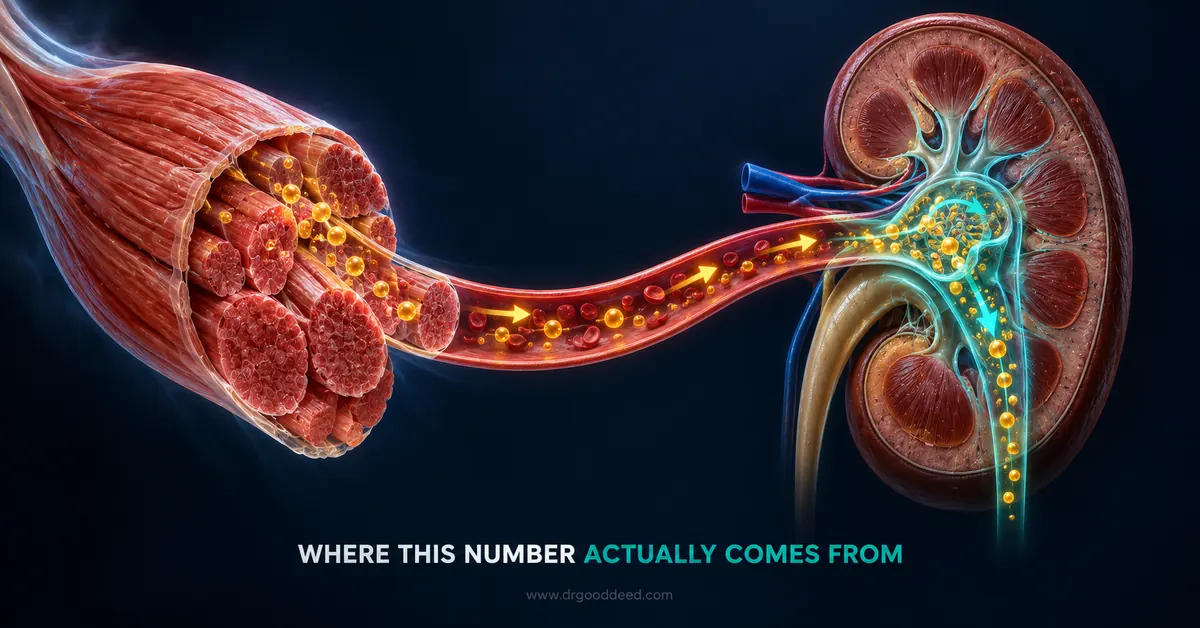
Creatinine forms when muscle tissue breaks down a compound called creatine for energy.
- Creatinine and kidney function stay closely linked because healthy kidneys filter nearly all of this waste product out of the blood and into urine.
- Doctors order the test during routine physicals, before surgery, and when a patient reports swelling, fatigue, or flank pain that could easily be confused with a muscle strain (our guide on kidney pain vs back pain breaks down that distinction).
- A creatinine level that climbs steadily over months is one of the more reliable early signals of reduced kidney filtration.
Normal Creatinine Levels: What the Numbers Mean
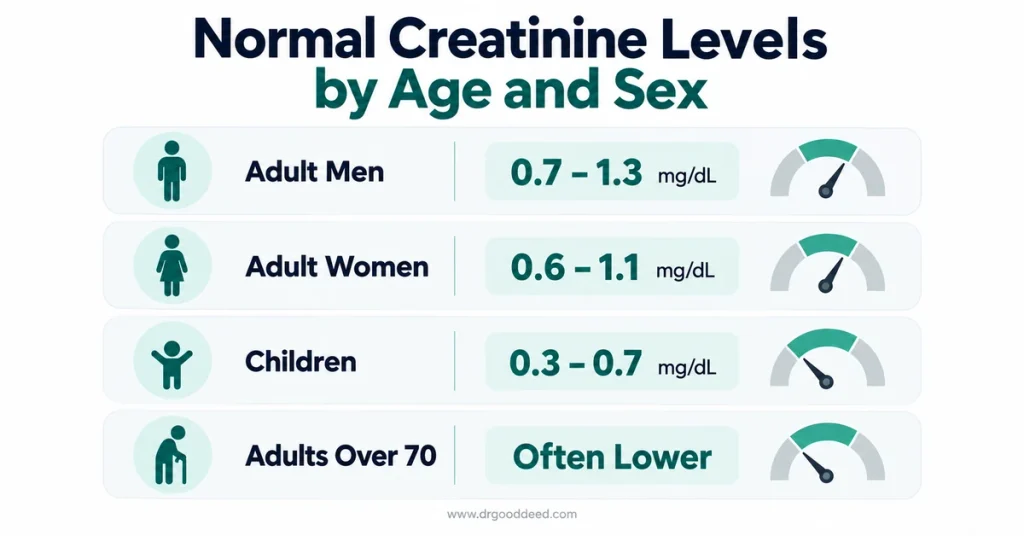
Normal creatinine levels generally fall between 0.7 and 1.3 mg/dL for men and 0.6 and 1.1 mg/dL for women, based on adult reference ranges used by major US labs. These figures shift with age, muscle mass, pregnancy, and even which lab method was used.
| Group | Typical Creatinine Range (mg/dL) |
| Adult men | 0.7 to 1.3 |
| Adult women | 0.6 to 1.1 |
| Children | 0.3 to 0.7 |
| Adults over 70 | Often lower, since muscle mass declines with age |
Labs pair a single creatinine reading with an estimated GFR calculation that factors in age and sex, giving a fuller picture than the raw number alone. A creatinine clearance test, which compares blood creatinine with a 24 hour urine collection, offers a more precise filtration estimate than one blood draw.
Why Creatinine Levels Can Be Misleading
A 2025 review published in Biomolecules by Ávila and colleagues found that serum creatinine is shaped by far more than kidney filtration alone. Age, physical activity, protein rich diets, sex, certain medications, and ethnicity all shift creatinine independent of actual kidney health.
- Muscle mass: creatinine and muscle mass are directly linked, since muscle tissue produces nearly all of the body’s creatinine. A heavily muscled person can run higher than average with perfectly normal kidneys.
- Age: creatinine production naturally drops as muscle mass shrinks with age, so a “normal” reading in an 80-year-old can still hide a meaningful loss of actual filtration.
- Diet: High-protein meals and heavy cooked meat intake raise creatinine for several hours afterward, with no connection to kidney status.
- Sex: men typically run higher creatinine than women at the same GFR, largely because men carry more average muscle mass.
- Medications: Some antibiotics and H2 blockers like cimetidine block creatinine secretion in the kidney tubules, raising blood levels without harming filtration.
- Ethnicity: population-level differences in average muscle mass once justified a race based correction in GFR formulas, a practice most US labs and the National Kidney Foundation have now removed overaccuracy concerns.
Cystatin C: A Complementary Creatinine Test Worth Knowing About
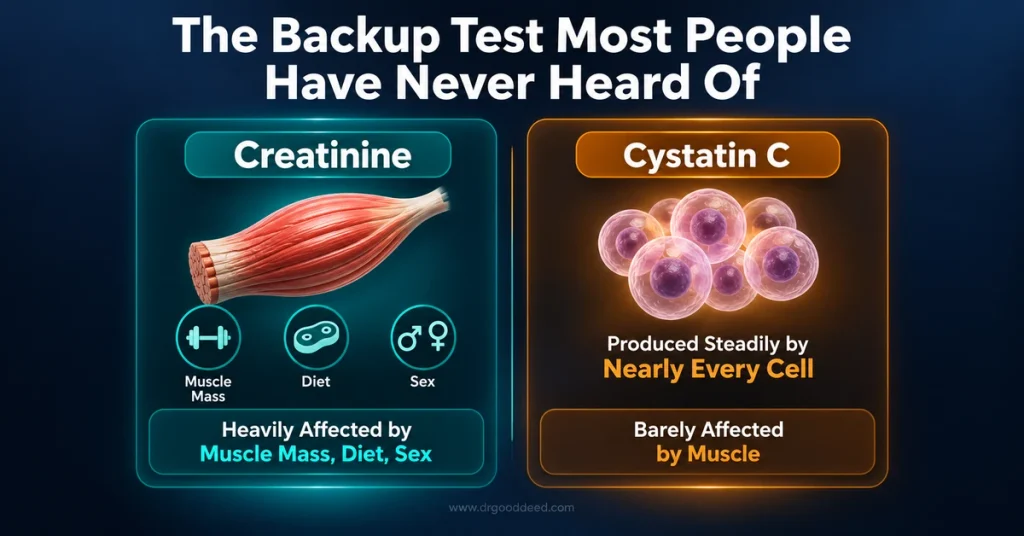
The cystatin C test measures a protein produced by nearly every cell in the body at a steady rate, unlike creatinine, which depends heavily on muscle mass. This makes cystatin C a genuinely useful second opinion when a creatinine result does not match a patient’s symptoms or history. Some labs now report both markers together as a creatinine to cystatin C ratio.
- Cystatin C is not swayed by diet, sex, or creatinine and muscle mass dynamics the way creatinine is, making it more dependable in older adults, amputees, and people with muscle-wasting conditions.
- Doctors often order it when a creatinine-based eGFR looks inconsistent with the clinical picture, such as a bodybuilder with borderline high creatinine but no other kidney symptoms.
- A 2025 meta-analysis in Frontiers in Nutrition found the combined creatinine to cystatin C ratio useful for tracking muscle loss and predicting outcomes in people with chronic kidney disease.
- Cystatin C is not yet part of routine annual bloodwork. Ask your doctor directly if your creatinine reading seems out of step with how you actually feel.
Pro Tip: If your creatinine looks abnormal but you recently lifted heavy weights, ate a large steak dinner, or started a creatine supplement, ask your lab to repeat the test after 48 hours of normal activity and diet before assuming a kidney problem exists.
Common Causes of High Creatinine Levels
What does high creatinine mean in daily practice? It often points to reduced kidney filtration, but several reversible, everyday factors raise the number too.
- Dehydration is the most common cause seen in outpatient clinics, followed by high protein intake and certain drugs.
- Persistent elevation across repeated tests, paired with a falling GFR, is what actually warrants deeper investigation, which in advanced cases can eventually lead to treatment options such as home hemodialysis.
- Dehydration lowers blood volume moving through the kidneys, concentrating waste products and temporarily raising creatinine until fluid intake normalizes.
- High protein diets and creatine supplements add raw material for creatinine production, nudging results upward within hours of a large meal.
- NSAIDs such as ibuprofen, several blood pressure drugs, and certain antibiotics can reduce kidney blood flow or block creatinine secretion, raising blood levels.
- Chronic kidney disease, urinary tract obstruction, and acute kidney injury from illness or major surgery are the causes that genuinely require medical evaluation.
- Intense or prolonged exercise, including marathon running, transiently spikes creatinine from muscle breakdown, mimicking a kidney problem on the same-day blood draw.
Common Causes of Low Creatinine Levels
Since production depends on muscle mass, anything that reduces muscle or dilutes blood volume can reduce the creatinine levels below the typical range.
- Reduced muscle mass from aging, prolonged bed rest, malnutrition, or muscle wasting disease lowers creatinine simply because less muscle tissue exists to produce it.
- Pregnancy increases blood plasma volume and kidney filtration, both of which dilute and lower creatinine, most noticeably during the second trimester.
- Advanced liver disease can reduce creatinine production, since the liver manufactures creatine, the precursor molecule muscles convert into creatinine.
- A vegetarian or low-protein diet modestly lowers creatinine compared with a diet heavy in red meat, without indicating any kidney problem.
When to See a Doctor About Your Creatinine Level
Contact your doctor if creatinine falls outside your lab’s normal range on two separate tests, or climbs steadily over several months. Sudden increases alongside swelling, reduced urination, or persistent fatigue need same day medical attention.
For people already managing advanced kidney disease, understanding how long can you live on dialysis becomes part of a longer conversation your nephrology team should walk through with you directly.
FAQs
Can dehydration raise creatinine levels?
Yes. Dehydration concentrates the blood and briefly reduces kidney blood flow, raising creatinine by roughly 10 to 20 percent within hours. Levels typically return to baseline within a day or two of proper fluid intake, without lasting kidney damage.
Does exercise affect creatinine test results?
Yes. Intense exercise, especially endurance events like marathons, breaks down muscle tissue and can raise creatinine by 20 percent or more for 24 to 48 hours afterward. Avoid heavy workouts the day before a scheduled blood draw.
Can diet lower creatinine levels?
Yes, modestly. Cutting red meat, protein powders, and creatine supplements for a few days before testing lowers results slightly. Diet does not reverse real kidney damage, so a low protein diet is not a treatment for elevated creatinine from reduced filtration.
Is a slightly high creatinine level always a sign of kidney disease?
No. A single mildly elevated result is often caused by dehydration, recent exercise, or diet rather than disease. Doctors confirm kidney disease using repeat testing, GFR trends, and urine albumin, never one isolated creatinine number.
How often should creatinine be tested?
Healthy adults typically get creatinine checked during annual physicals or routine blood panels. People with diabetes, high blood pressure, or prior kidney findings need testing every three to six months, based on their doctor’s specific monitoring plan.
Sources
- NIDDK: Chronic Kidney Disease Tests & Diagnosis link
- NIDDK: Explaining Your Kidney Test Results link
- NIDDK: Estimated GFR Calculators link
- NIDDK: Quick Reference on UACR & GFR link
- Ávila M, et al. The Metabolism of Creatinine and Its Usefulness to Evaluate Kidney Function and Body Composition. Biomolecules, 2025 link
- Zheng WH, et al. Creatinine-to-cystatin C ratio as a muscle assessment tool in CKD: a meta-analysis. Frontiers in Nutrition, 2025 link
- Creatinine, cystatin C, muscle mass, and mortality: PREVEND and NHANES cohorts. Journal of Cachexia, Sarcopenia and Muscle, 2024 link
- Mayo Clinic: Creatinine Test link
- National Kidney Foundation: Estimated GFR (eGFR) Test link
- National Kidney Foundation: eGFR Calculator, Race-Free CKD-EPI Equations link
Medical Disclaimer: This article is for general information only and is not medical advice. It does not replace a diagnosis, treatment plan, or guidance from a qualified healthcare professional. Always talk to your doctor about your own symptoms and before starting, stopping, or changing any treatment. If you think you may be having a medical emergency, call 911 or go to your nearest emergency room.