
Sundowning is a pattern of increased confusion, restlessness, or agitation in some people with dementia during the late afternoon or evening. Although its exact cause is not fully understood, tiredness, changes in the body clock, poor lighting, and unmet physical needs may contribute.
Understanding these patterns can help caregivers make evenings more comfortable and recognize when medical attention is needed.
Key Takeaways
- Sundowning is increased confusion, restlessness, or agitation in some people with dementia during the late afternoon or evening; its exact cause is not fully understood.
- It is a behavioral pattern, not a formal diagnosis, and does not always begin at sunset.
- Fatigue, hunger, pain, changes in sleep patterns, and environmental factors may contribute.
- Maintaining a regular daily routine, getting enough daylight, and staying active can help.
- Avoid sudden changes in the environment and stay calm.
- Seek medical attention if there are sudden changes or rapid decline.
What Is Sundowning in Dementia?
Sundowning is a pattern of behavioral and cognitive changes that becomes more noticeable in the late afternoon or evening in some people living with dementia. A person may seem relatively settled earlier in the day but become anxious, confused, restless, or irritable as the day progresses (Alzheimer’s Society). Its prevalence varies across studies, with some reports suggesting that around 20% of people with dementia experience sundowning; estimates differ depending on the population and definition used (National Geographic).
Sundowning is not in itself a distinct type of dementia or a formal medical diagnosis, and it can happen in association with various forms of dementia, such as Alzheimer’s disease. The difference between Alzheimer’s disease and dementia can help caregivers better understand the condition affecting their loved one.
Despite its name, sundowning is not necessarily caused by the sun setting. The timing and intensity of symptoms vary between individuals, and the same person may have better and more difficult evenings on different days.
What Are the Symptoms of Sundowning?
Sundowning symptoms can affect how a person communicates, responds to their surroundings, and manages everyday activities. Caregivers may notice a change from the person’s usual behavior rather than one specific symptom.
Common features include:
- Increased confusion as to the time, place, and people around them
- Restlessness, pacing, or difficulty sitting still.
- Anxiety, irritability, or agitation.
- Asking the same questions over and over or seeking constant reassurance.
- Difficulty following conversations or familiar routines.
- Wandering or attempts to leave a familiar environment.
- Greater difficulty settling down for sleep.
Not everyone experiences all these changes. Some people become quiet or withdrawn, while others appear more active or distressed.
Sundowning can occur at any stage of dementia, although it is more common during the middle and later stages. The pattern may also differ across dementia types. For example, people with Lewy body dementia may experience changes in alertness and sleep difficulties. Our guide to the seven stages of Lewy body dementia explains more about these changes.
What Causes Sundowning in Dementia?
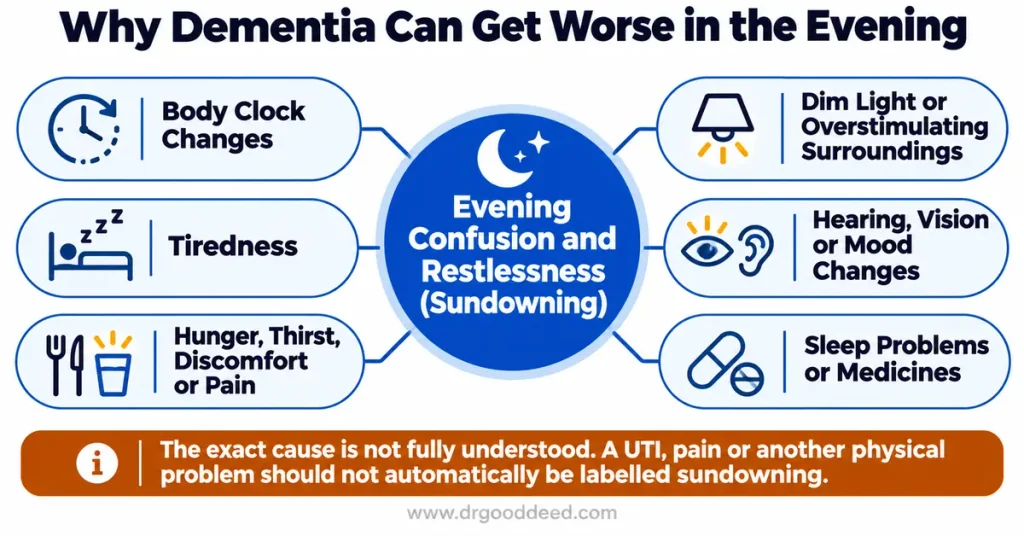
The exact causes of sundowning remain uncertain. Several factors may contribute, and the trigger can differ from one person to another.
Changes in the body clock: Dementia may affect the body’s sleep-wake cycle, also called the circadian rhythm. Changes in this rhythm may contribute to confusion and restlessness later in the day.
Tiredness: Following a tiring day, an individual may have a decreased ability to tolerate noises, stimuli, or activities that were stressful for them during the day. Fatigue can amplify the effects of a poor night’s sleep.
Hunger, thirst, discomfort, or pain: Physical discomforts often lead to irritability and decreased cooperation and affect one’s ability to communicate their needs verbally.
Lighting or lack of it: In poor light, shadows become more noticeable, and familiar objects may be harder to recognize. A noisy or overstimulating environment can also increase confusion or distress.
Sensory and mood changes: Hearing or vision difficulties can make it harder to understand what is happening nearby. Anxiety or depression may also contribute to changes in mood and behavior. Learn more about whether depression can cause memory loss and why mood changes deserve attention.
Sleep problems and medicines: Sleep apnea and other sleep disturbances may affect rest and daytime functioning. Sleep apnea can sometimes occur without the loud snoring people commonly associate with it, as explained in our guide to sleep apnea without snoring. Some medicines can also affect behavior or alertness, so a clinician should review possible medication-related concerns.
A urinary tract infection (UTI), incontinence, restless legs, or another physical problem may contribute to confusion or restlessness and should not automatically be labelled as sundowning. According to the Alzheimer’s Association, potential triggers also include unfamiliar surroundings, difficulty distinguishing dreams from reality, and boredom. If symptoms develop suddenly, a UTI, sleep apnea, or another underlying medical problem may need to be investigated (Mayo Clinic). A healthcare professional can help identify the cause and determine whether treatment is needed.
How Can You Manage Sundowning at Night?
The best action is to look for patterns, minimize the provoking factors, and attend to the identified needs. Alternative non-pharmacological methods should be considered first before drugs are used to control the condition.
Keep a Predictable Daily Routine
Try to keep a regular schedule of waking, eating, sleeping, and other activities, and a routine helps reduce agitation and confusion due to pattern disruption.
If agitation tends to occur at the same time of day, try to do things early that the person likes to do. Try to keep instructions as few and as simple as possible, give extra time, and do not rush the person.
Improve Daytime Light and Activity
Most experts recommend identifying patterns, reducing possible triggers, and addressing the person’s individual needs. Non-drug approaches are generally preferred first, while any decision to use medication should be made by a doctor in consultation with the person and their caregivers (Alzheimer’s Association).
Avoid overly long or late daytime naps if they interfere with nighttime sleep. Activity should be comfortable and appropriate for the person’s mobility and health.
Make Evenings Calmer and Brighter
Turn on suitable lights before the room becomes dim. Good lighting can reduce confusing shadows and help the person recognize familiar surroundings.
Turn down the television, conversations, or other activities if they seem to bother or worry the person. Familiar music or a simple activity may help. Do not introduce too many new activities at once.
Check Pain, Hunger, and Toilet Needs
Before assuming a change in behaviour is sundowning, check whether the person needs the toilet, food, a drink, rest, or help with physical discomfort. Watch for new or unusual behaviours that may indicate pain or illness, especially if the person has difficulty explaining how they feel. If symptoms are persistent, new, or unexplained, consult a healthcare professional rather than trying to manage them at home.
Respond Calmly and Redirect Attention
Speak softly and calmly. Give simple directions and allow the person to comply. Don’t argue about the mistake or try to convince them that it’s wrong.
A calm reassurance, a familiar picture, a favorite song, or even an easy distraction may help. If the patient becomes confused or agitated, try to de-escalate the situation and remove them to a calmer setting if possible.
These approaches may not stop sundowning, but they can help ease distress and make the person feel more comfortable. Caregivers should also seek support, as regularly supporting someone experiencing sundowning can be emotionally and physically demanding. If symptoms persist or become difficult to manage, a healthcare professional can help identify additional support and care options.
Is Sundowning Different From Delirium?
Sundowning and delirium are different and should not be used interchangeably. Sundowning describes a pattern of behavioral changes that become more noticeable in the late afternoon or evening in some people with dementia (Alzheimer’s Society). Delirium is an acute change in attention and awareness that develops over a short period and may be caused by an underlying medical condition.
New or sudden confusion is not just sundowning. A person with dementia can also develop an infection or another medical problem that changes their behavior. A sudden change, a marked worsening from their usual condition, or difficulty staying alert needs prompt medical assessment.
Caregivers should report when the change began, how rapidly it occurred, what other symptoms developed and what changes, if any, have occurred in sleeping, eating or drinking, medication usage, and overall physical health. This includes any alterations in the patient’s condition that may help determine the underlying cause.
When Should You Call a Doctor?
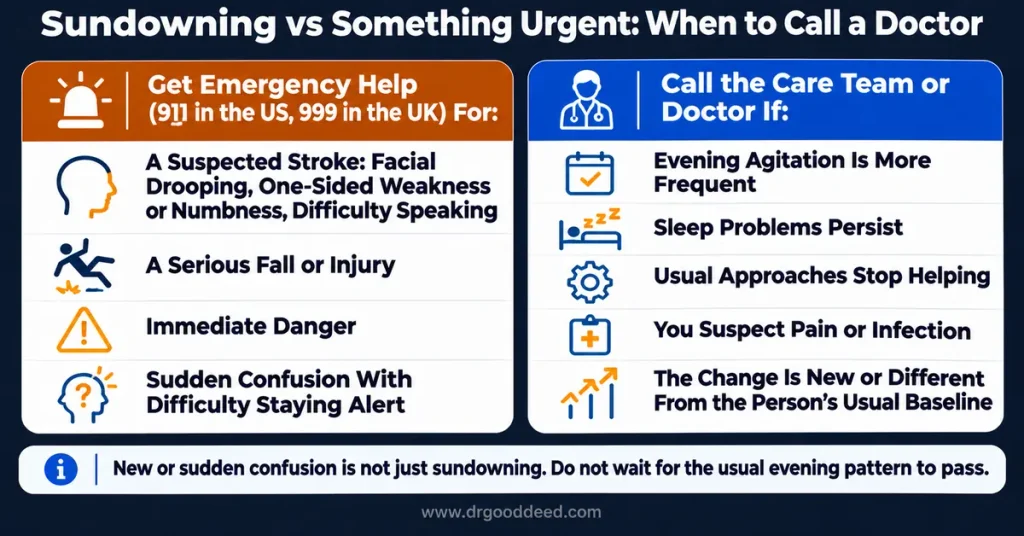
Contact the person’s primary care clinician, GP, neurologist, geriatrician, or dementia care team if evening agitation becomes more frequent, sleep problems persist, usual approaches are no longer helping, or you suspect pain, an infection, or another medical condition.
Seek prompt medical assessment for sudden or rapidly worsening confusion. Do not wait for the usual evening pattern to pass if the change is new or significantly different from the person’s baseline.
Get emergency medical help if the person has a suspected stroke, a serious fall or injury, or is in immediate danger. Sudden facial drooping, weakness or numbness on one side of the body, or difficulty speaking can be signs of a stroke and require immediate action. Do not assume these symptoms are sundowning.
- In the US: Call 911 or go to the emergency department for a medical emergency.
- In the UK: Call 999 or go to A&E for a suspected stroke or another life-threatening emergency. If the person develops sudden confusion and you are unsure what to do, seek urgent medical advice; NHS guidance says sudden confusion needs immediate medical assessment. Call 999 if it is an emergency.
Dementia support helplines
For advice and emotional support, caregivers and families can contact these services. I verified that both helplines are currently listed by their respective organizations.
- US — Alzheimer’s Association 24/7 Helpline: Call 800-272-3900 for dementia information, caregiver support, local resources, and crisis assistance. Available 24 hours a day, every day.
- UK — Alzheimer’s Society Dementia Support Line: Call 0333 150 3456 for dementia-related advice and support. Opening hours vary by day, so check the official support line page
Our guide to stroke warning signs explains symptoms that require urgent attention.
Wandering also requires some consideration. If the person is trying to leave the home or is exposed to unsafe conditions, it may be necessary to talk to their care team about developing an individualized safety plan. Remember to choose options that are respectful and that do not cause additional problems.
Get the Right Help for Sundowning
Managing sundowning starts with recognizing patterns in the person’s behaviour and identifying possible triggers. Track sleep, meals, activity, discomfort, and changes in behaviour throughout the day. Check the person’s needs, maintain a calming routine, and contact their healthcare or dementia care team if symptoms change, worsen, or become difficult to manage.
If agitation arises in the evening, becomes severe, or is accompanied by other physical symptoms, consultation with a physician may be required to rule out other causes. With a good schedule, physical needs attended to, and professional assistance, caregivers are able to make better judgments that consider the comfort, welfare, and safety of their loved ones with dementia.
Frequently Asked Questions
Why does dementia get worse in the evening?
The cause of this condition is not clear. It may be due to body-clock disturbance, tiredness, dim lighting, and unfulfilled needs.
What causes sundowning?
Possible triggers of sundowning include fatigue, hunger, physical discomfort, overstimulation, disrupted sleep, sensory difficulties, and certain medications. Irritability is a possible symptom of sundowning, rather than a cause.
What time does sundowning start?
It often appears in the late afternoon or early evening, but there is no fixed start time, and it is not necessarily linked to sunset.
How long does sundowning last?
There is no fixed duration. One estimate cited by National Geographic suggests about four hours, but episodes vary and may continue until the person sleeps.
What stage of dementia does sundowning occur?
It can occur at any stage of dementia but is more common in the middle and later stages.
Medical Disclaimer: This article is for informational and educational purposes only and does not replace professional medical advice, diagnosis, or treatment. Always consult a qualified healthcare professional about your symptoms or health concerns. Never delay or disregard professional medical advice based on information provided in this article.
Sources:
1. Alzheimer’s Society. Sundowning [Internet]. Available from: https://www.alzheimers.org.uk/about-dementia/stages-and-symptoms/dementia-symptoms/sundowning link
2. Alzheimer’s Association. Sleep issues and sundowning [Internet]. Available from: https://www.alz.org/help-support/caregiving/stages-behaviors/sleep-issues-sundowning link
3. NHS. Sudden confusion (delirium) [Internet]. Available from: https://www.nhs.uk/symptoms/confusion/ link
4. National Institute for Health and Care Excellence (NICE). Delirium: prevention, diagnosis and management in hospital and long-term care [Internet]. Available from: https://www.nice.org.uk/guidance/cg103/chapter/Recommendations link
5. National Institute for Health and Care Excellence (NICE). Dementia: assessment, management and support for people living with dementia and their carers [Internet]. Available from: https://www.nice.org.uk/guidance/ng97/chapter/Recommendations link
Medical Disclaimer: This article is for general information only and is not medical advice. It does not replace a diagnosis, treatment plan, or guidance from a qualified healthcare professional. Always talk to your doctor about your own symptoms and before starting, stopping, or changing any treatment. If you think you may be having a medical emergency, call 911 or go to your nearest emergency room.