

Stomach pain after eating eggs usually comes from an egg intolerance, an egg allergy, food poisoning, or the fat the eggs were cooked with. How quickly you feel unwell, and what other symptoms you notice, can help your doctor find the cause.
Key Takeaways
- Stomach pain after eating eggs is often an intolerance, but hives, wheezing, or swelling point to an allergy that needs care.
- An egg intolerance is not an immune reaction and is not life-threatening, though it can cause gas, bloating, and diarrhea (Mayo Clinic, 2026).
- Salmonella from raw or undercooked eggs causes symptoms 6 hours to 6 days after infection (CDC, 2024).
- If you have trouble breathing or throat swelling after eating eggs, call 911 right away.
Common Causes of Stomach Pain After Eating Eggs
The main causes of stomach pain after eating eggs are an intolerance, an allergy, food poisoning from undercooked eggs, and gallbladder pain after a heavy meal.
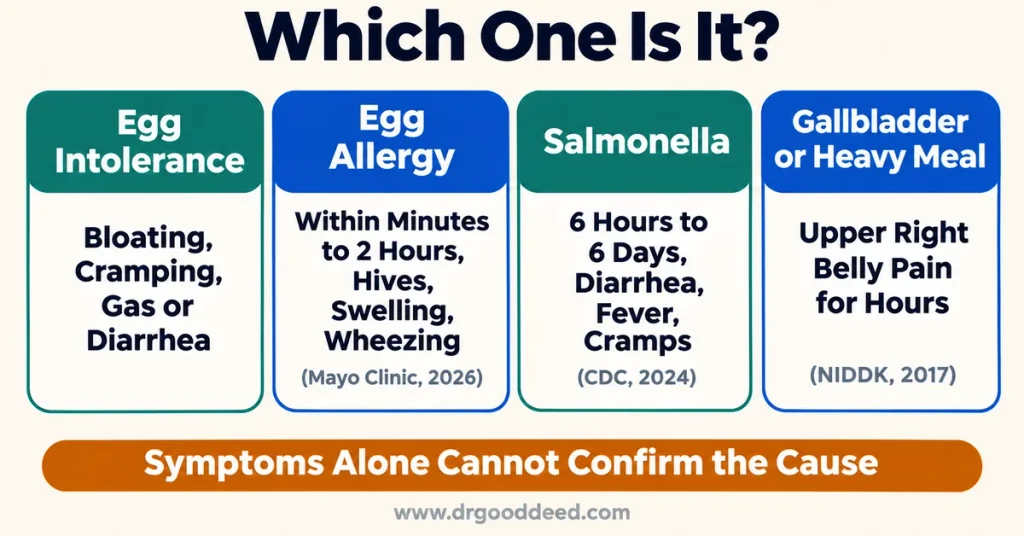
| Possible cause | Onset of symptoms | Additional symptoms | Action |
| Egg intolerance | Often several hours after eating eggs | Bloating, cramping, gas, or diarrhea | Speak to your doctor about your symptoms. |
| Egg allergy | Usually within minutes to 2 hours (Mayo Clinic, 2026) | Hives, swelling, vomiting, wheezing, or stomach cramps | See an allergist. Call 911 for trouble breathing or throat swelling. |
| Salmonella food poisoning | 6 hours to 6 days after infection (CDC, 2024) | Diarrhea, fever, nausea, and severe cramping | Drink fluids, watch for dehydration, and call your doctor if it lasts more than 2 days. |
| Gallbladder issue or heavy meal | Often after a heavy meal, sometimes in the evening or at night (NIDDK, 2017) | Pain in the upper right belly that can last for several hours | Call your doctor, and get care right away for long-lasting pain, fever, or jaundice. |
If you are experiencing stomach pain after eating many different foods, you may have another digestion issue. Read more about why your stomach hurts after eating.
Egg Intolerance vs. Egg Allergy
An egg allergy is an immune reaction that even tiny amounts of egg can trigger, while an egg intolerance is a digestive reaction that is not dangerous (Mayo Clinic, 2026).
The main differences between an egg allergy and egg intolerance are:
- Onset of symptoms: Allergy symptoms usually start within a few minutes to 2 hours after eating eggs (Mayo Clinic, 2026). Intolerance symptoms can take longer to appear.
- Digestive issues: Both can cause stomach cramps, but an intolerance more often causes bloating, gas, and diarrhea.
- Other symptoms: An egg allergy can cause hives, a runny nose, swelling, vomiting, wheezing, and chest tightness. Hives are the most common symptom (Mayo Clinic, 2025).
- Severity: An intolerance usually causes digestive issues. An allergy can be life-threatening if you experience anaphylaxis, which is a severe allergic reaction. It can affect your breathing and blood pressure.
- Allergy tests: An allergist may recommend a skin prick test, an antibody (IgE) blood test, or a supervised food challenge to check whether your immune system is reacting to eggs (ACAAI, 2019).
There is no validated test for egg intolerance, so your doctor will usually go by your symptoms and diet. If you have had any allergy symptoms, do not eat eggs at home to see if you react.
Can You Develop an Egg Allergy as an Adult?
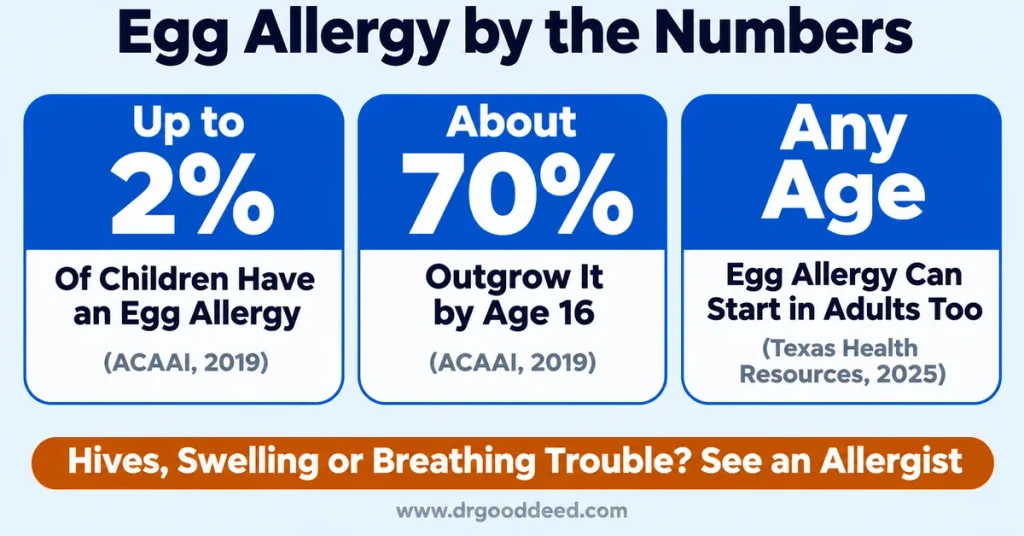
Yes. Egg allergy is less common in adults, but it can start at any age, and most children outgrow it by their teens (Texas Health Resources, 2025; Mayo Clinic, 2025).
- Children: Up to 2% of children have an egg allergy, and about 70% outgrow it by age 16 (ACAAI, 2019).
- Adults: You may have eaten eggs for years without trouble and still develop an allergy later in life (Texas Health Resources, 2025).
- Testing: If you get hives, swelling, breathing trouble, or repeated symptoms after eating eggs, see an allergist. Testing shows whether you have an allergy.
Do not assume you have an intolerance. An allergist can help determine whether you have an allergy or intolerance and advise you on which foods to avoid.
Could It Be Food Poisoning From Eggs?
Yes. Salmonella from raw or undercooked eggs can cause stomach cramps, diarrhea, and fever. Symptoms usually start 6 hours to 6 days after infection and last 4 to 7 days (CDC, 2024).
Common symptoms include:
- Diarrhea: Watery stools, sometimes with blood or mucus.
- Stomach cramps: These can be severe.
- Fever: You may develop a fever.
- Nausea: Some people feel sick to their stomach or vomit.
The time between eating contaminated food and the appearance of symptoms can help identify whether it is food poisoning. However, symptoms alone cannot confirm the cause.
Some people are more likely to get very sick from Salmonella. Call your doctor if you have diarrhea or vomiting for more than 2 days, bloody stools, a fever over 102°F, or signs of dehydration (CDC, 2024).
See our guide to food poisoning vs. stomach flu to learn more about the difference.
When the Fat or Your Gallbladder Is the Problem
Sometimes the trigger is not the eggs but the butter, cheese, or meat cooked with them, and gallbladder attacks often follow heavy meals (NIDDK, 2017).
The gallbladder stores bile, which helps digest fat. Gallstones can block the flow of bile and cause pain, and our guide on whether gallstones can cause constipation explains how they affect your bowels.
Symptoms of a gallbladder attack include:
- Location: Pain in the upper right part of the belly (NIDDK, 2017).
- Duration: The pain can last for several hours.
- Timing: It often comes after heavy meals and in the evening or at night.
- Warning signs: Nausea, vomiting, fever, jaundice, dark urine, or pale stools can mean a more serious problem.
If you often get pain after eating, do not assume eggs are the cause. If you have had no allergy signs, noting whether plain eggs bother you as much as eggs cooked with butter, cheese, or meat can help your doctor. Your doctor may also need to check your gallbladder.
How to Find Out If Eggs Are the Trigger
Keeping a food and symptom diary can help identify patterns. Speak to your doctor or allergist before removing eggs from your diet, especially if you have experienced symptoms of an allergy.
- Keep a food diary: Note when you eat eggs, what you eat with them, and any symptoms you experience.
- Note the timing: Write down how soon pain, bloating, or diarrhea starts and how long it lasts.
- Note other symptoms: Record any hives, swelling, breathing trouble, fever, vomiting, or changes in your bowel movements.
- Speak to your doctor about allergy testing: If you have symptoms that suggest an allergy, your doctor may refer you to an allergist for skin prick tests, IgE blood tests, or a supervised food challenge (ACAAI, 2019).
- Follow medical advice: Your doctor may ask you to stop eating eggs for a while. If you have had an allergic reaction, add them back only under a doctor or allergist’s supervision.
- Keep a balanced diet: If you need to avoid eggs, ask a doctor or dietitian how to replace the protein in an egg and the other nutrients eggs provide.
When to See a Doctor About Stomach Pain After Eating Eggs
Call 911 for any sign of anaphylaxis after eating eggs. Call your doctor for food poisoning warning signs or gallbladder symptoms.
Call 911 right away if you have any of these signs of anaphylaxis (Mayo Clinic, 2025; ACAAI, 2019):
- Swelling of the throat or tongue.
- Difficulty breathing or wheezing.
- A fast heart rate.
- Dizziness or fainting.
- Severe swelling or a sudden allergic reaction affecting multiple areas of your body.
If you have a prescribed emergency allergy autoinjector, use it as directed and still call 911, even if your symptoms ease (ACAAI, 2019).
Call your doctor if you have any of these signs of food poisoning (CDC, 2024):
- Diarrhea or vomiting for longer than 2 days.
- Bloody stools.
- A high temperature (over 102°F).
- Symptoms of dehydration.
Get medical care right away if pain in the upper right belly lasts for several hours, or if it comes with vomiting, fever, jaundice, dark urine, or pale stools (NIDDK, 2017).
If stomach pain after eating eggs keeps coming back, talk to your primary care doctor or an allergist before cutting eggs out for good.
Frequently Asked Questions
Why Do Scrambled Eggs Hurt My Stomach but Not Fried?
It may be what goes in them. Milk, cheese, or butter in scrambled eggs can be the trigger, and how well eggs are cooked can change reactions in some people with an egg allergy (ACAAI, 2019). If you also feel sick after eating dairy, the milk may be the cause. Do not test cooking methods at home after allergy signs.
Why Do Eggs Give Me Diarrhea Instantly?
Symptoms within minutes can be an allergy, so watch for hives, swelling, or trouble breathing (Mayo Clinic, 2026). An urge right after any meal can also be a normal gut reflex, explained in our guide on why you need to poop right after eating. See a doctor if diarrhea keeps coming back or is severe.
Is Vomiting After Eating Eggs a Sign of an Allergy?
It can be, especially with hives, swelling, or trouble breathing (Mayo Clinic, 2025). Vomiting several hours later with diarrhea and fever points more to food poisoning (CDC, 2024). If vomiting comes with signs of a severe allergic reaction, call 911. Otherwise, call your doctor if it lasts more than 2 days.
Can You React to Egg Whites but Not Yolks?
Yes. Skin testing can show whether a person reacts to egg white or egg yolk, so an allergist can tell you which part to avoid (ACAAI, 2019). Some people react to proteins in the white and others to the yolk. Do not separate eggs and test each part at home after any allergy signs.
How Do You Treat Egg Intolerance Symptoms?
Egg intolerance is usually managed by eating fewer eggs or avoiding them once a doctor has ruled out an allergy; there is no specific medicine for it. Keep a food diary, and ask a doctor or dietitian how to keep your protein and nutrients up if you cut back.
Sources
- Mayo Clinic, Food Allergy: Symptoms and Causes (2026). link
- Mayo Clinic, Egg Allergy: Symptoms and Causes (2025). link
- American College of Allergy, Asthma and Immunology, Egg Allergy (2019). link
- Centers for Disease Control and Prevention, Symptoms of Salmonella Infection (2024). link
- National Institute of Diabetes and Digestive and Kidney Diseases, Symptoms and Causes of Gallstones (2017). link
- Texas Health Resources, Worried About an Egg Allergy? Here’s What Your Body Is Telling You (2025). link
Medical Disclaimer: This article is for general information only and is not medical advice. It does not replace a diagnosis, treatment plan, or guidance from a qualified healthcare professional. Always talk to your doctor about your own symptoms and before starting, stopping, or changing any treatment. If you think you may be having a medical emergency, call 911 or go to your nearest emergency room.