
An acute disease starts fast and ends within days or weeks, like the flu or a broken bone. A chronic disease lasts three months or longer and often needs lifelong management, like diabetes or arthritis. The World Health Organization tracks chronic conditions separately from acute illness because the two need completely different care plans.
This guide covers acute vs chronic disease symptoms, causes, and treatment for both, plus what happens when one turns into the other.
Difference Between Acute and Chronic Disease Comparison Table
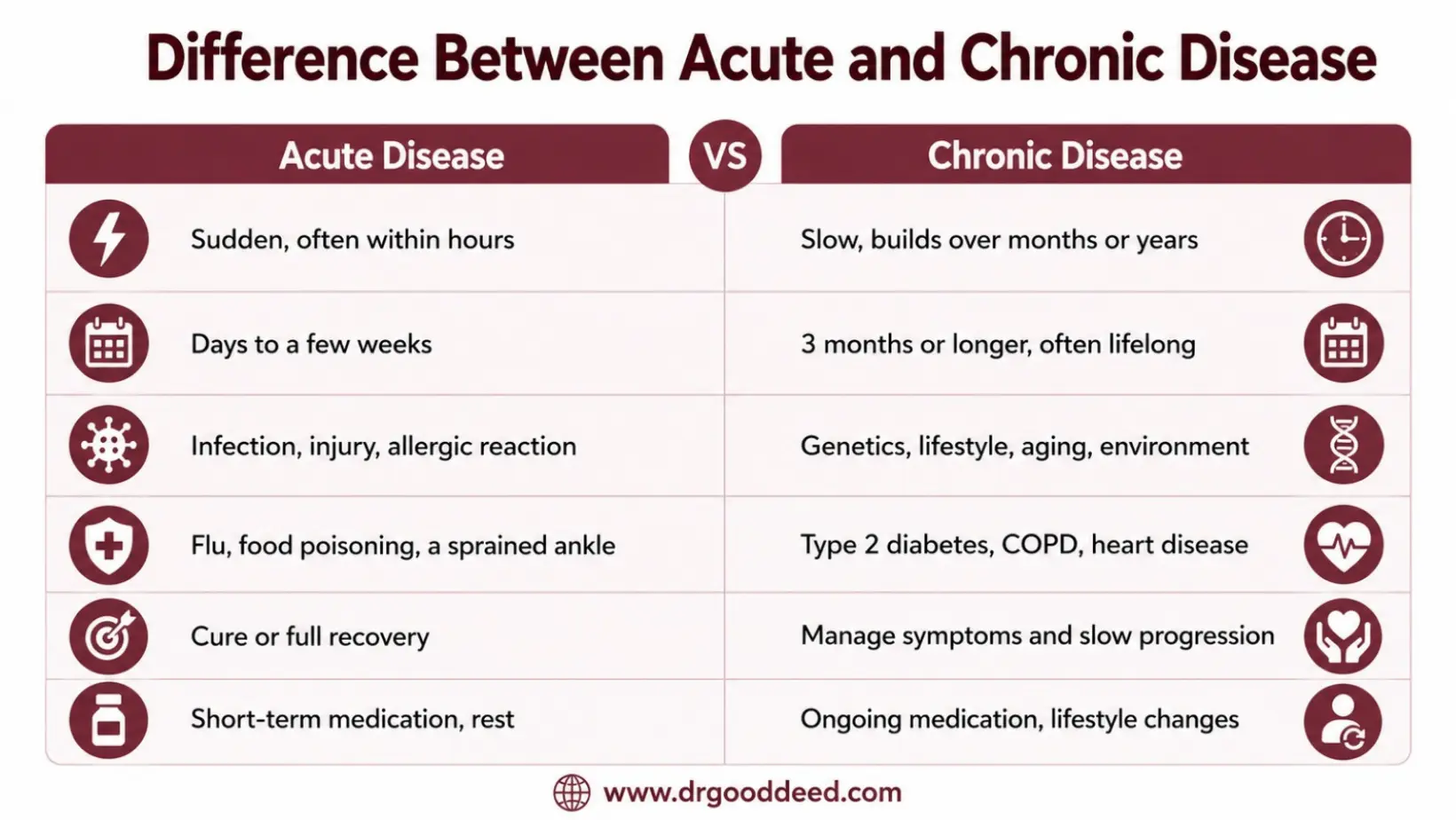
Sorting acute vs chronic disease by timeline, cause, and treatment path makes the split obvious in seconds. The table below lays out the core difference between acute and chronic disease so you can compare both at a glance.
| Feature | Acute Disease | Chronic Disease |
| Onset | Sudden, often within hours | Slow, builds over months or years |
| Duration | Days to a few weeks | 3 months or longer, often lifelong |
| Common Cause | Infection, injury, allergic reaction | Genetics, lifestyle, aging, environment |
| Example | Flu, food poisoning, a sprained ankle | Type 2 diabetes, COPD, heart disease |
| Treatment Goal | Cure or full recovery | Manage symptoms and slow progression |
| Typical Care | Short-term medication, rest | Ongoing medication, lifestyle changes |
Acute Disease Symptoms vs Chronic Disease Symptoms
Acute disease symptoms vs chronic disease symptoms differ mainly in how fast they show up and how long they stick around. Acute symptoms hit hard and fast, then fade once the body heals or treatment works. Chronic symptoms build slowly and can flare, ease, then return for years.
Symptoms of Acute Diseases
- Sudden fever or chills
- Sharp pain that starts within hours
- Swelling right after an injury
- Vomiting or diarrhea from food poisoning
- Rash appearing shortly after allergen exposure
These signs show up fast and usually point to one clear cause, which makes the acute side of acute disease symptoms easier to diagnose on the first visit.
Symptoms of Chronic Diseases
- Fatigue that doesn’t improve with rest
- Joint stiffness lasting for months
- Slow, gradual weight change
- Shortness of breath during normal activity
- Symptoms that come and go in cycles over years
Chronic symptoms often get dismissed as normal aging or stress at first, which is why the chronic half of acute disease symptoms frequently goes undiagnosed for months.
Can an Acute Disease Become a Chronic Disease?
Yes, some acute illnesses turn chronic if the body can’t fully clear the problem or if treatment starts too late. This depends heavily on the type of illness and how fast someone gets treated.
- Acute infections leading to chronic complications: Untreated hepatitis B infection can become chronic hepatitis, a condition tracked by the CDC as a leading cause of liver disease in the U.S.
- Acute injuries resulting in chronic pain: A sprained back that heals wrong can leave nerve irritation that turns into chronic lower back pain months later.
- Untreated acute inflammation progressing to chronic inflammation: Short bursts of inflammation from an infection are normal, but inflammation that never switches off can damage tissue over time and contribute to chronic disease.
- Conditions that resolve completely without long-term effects: Most colds, stomach bugs, and minor sprains heal fully and never come back once the acute phase passes.
Not every acute disease becomes chronic. Many chronic diseases, like type 1 diabetes or high blood pressure, never start as an acute illness at all. They build quietly from genetics or lifestyle instead.
Acute Exacerbation of a Chronic Disease
An acute exacerbation happens when a chronic condition suddenly gets worse for a short period, then settles back to its usual baseline. This differs from acute vs chronic disease in general, since the underlying condition stays chronic the entire time, even during the flare.
- Asthma attack: A person with chronic asthma suddenly struggles to breathe after exposure to smoke or pollen.
- COPD flare-up: Someone with chronic obstructive pulmonary disease has a sudden spike in coughing and breathlessness, often triggered by infection.
- Heart failure exacerbation: A person with chronic heart failure retains fluid quickly, causing sudden swelling and shortness of breath.
- Rheumatoid arthritis flare: Joint pain and swelling spike for days or weeks, then calm down again.
The disease itself remains chronic even though the symptoms worsen suddenly. Doctors treat the flare-up fast, then go back to managing the long-term condition.
Causes of Acute Diseases
Causes of acute diseases almost always trace back to a single, identifiable trigger that hits the body suddenly. Knowing these causes of acute diseases helps explain why acute illness responds so well to targeted, short-term treatment.
- Viral infections, like influenza or norovirus
- Bacterial infections, like strep throat or a urinary tract infection
- Injuries and trauma, like a fracture or deep cut
- Allergic reactions, like a bee sting or food allergy
- Food poisoning from contaminated food or water
Causes of Chronic Diseases
Causes of chronic diseases build up over years, often from several overlapping factors rather than one clear trigger. The CDC lists chronic disease as the leading driver of death and disability in the United States, responsible for 6 in 10 adults living with at least one chronic condition.
Genetics
Some chronic diseases, like certain types of heart disease or early-onset diabetes, run in families through inherited genes.
Aging
Joints, arteries, and organs naturally wear down with age, raising the risk for arthritis, heart disease, and other chronic conditions.
Smoking
Smoking damages the lungs and blood vessels over time, driving up the risk of COPD, heart disease, and several cancers.
Poor Diet
Diets high in processed food, sugar, and sodium raise the risk of obesity, type 2 diabetes, and high blood pressure over years.
Physical Inactivity
Sitting for most of the day weakens the heart and muscles, adding to the long list of causes of chronic diseases tracked by public health agencies.
Obesity
Extra body weight puts strain on joints and organs, raising the risk of diabetes, heart disease, and certain cancers.
Environmental Factors
Long-term exposure to air pollution, industrial chemicals, or secondhand smoke adds measurable risk for chronic lung and heart conditions.
Treatment for Acute Diseases
Treatment for acute diseases focuses on curing the problem fast and getting the body back to normal, unlike chronic care, which focuses on long-term management.
Medications
Doctors often prescribe antibiotics for bacterial infections or antivirals for certain viral illnesses as part of standard treatment for acute diseases. Dosage and drug choice vary by age, weight, and the specific infection involved.
Rest and Supportive Care
Sleep and reduced activity give the immune system room to fight off infection or let injured tissue heal without added strain.
Hydration and Nutrition
Fluids and electrolytes matter most during illnesses like food poisoning or the flu, where vomiting and fever drain the body fast.
Surgery When Necessary
Some acute problems, like appendicitis or a broken bone, need immediate surgery to fix the issue before it turns into a chronic complication.
Follow-Up Care
A follow-up visit confirms the infection or injury fully cleared and catches any early sign of a shift from acute to chronic disease, meaning a problem that should have resolved is instead lingering.
FAQs
How long does an acute disease usually last?
Most acute diseases resolve within a few days to six weeks. Strep throat clears in about 10 days with antibiotics, while a sprained ankle typically heals within two to six weeks.
What makes a disease chronic?
A disease counts as chronic once it persists for three months or longer, per CDC classification standards. Diabetes, arthritis, and COPD all meet this threshold and usually need ongoing management.
Can an acute disease become chronic?
Yes. Untreated hepatitis B, poorly healed injuries, and unresolved inflammation are documented pathways from acute illness into chronic disease. Early treatment during the acute phase lowers this risk significantly.
How are acute diseases treated?
Treatment for acute diseases typically includes targeted medication, like antibiotics, plus rest, hydration, and monitoring. Full recovery is the goal, often within one to six weeks depending on the illness.
How are chronic diseases managed?
Doctors manage chronic disease with long-term medication, regular monitoring, and lifestyle changes like diet and exercise. The goal is controlling symptoms and slowing progression, not achieving a full cure.
Can chronic diseases be cured?
Rarely. Most chronic diseases, including diabetes and COPD, are managed rather than cured. Some, like early-stage high blood pressure, can improve significantly through sustained lifestyle changes.
How can I reduce my risk of chronic disease?
Quit smoking, keep body weight in a healthy range, stay physically active most days, and eat a diet low in processed sugar and sodium. These four steps address the top modifiable risk factors.