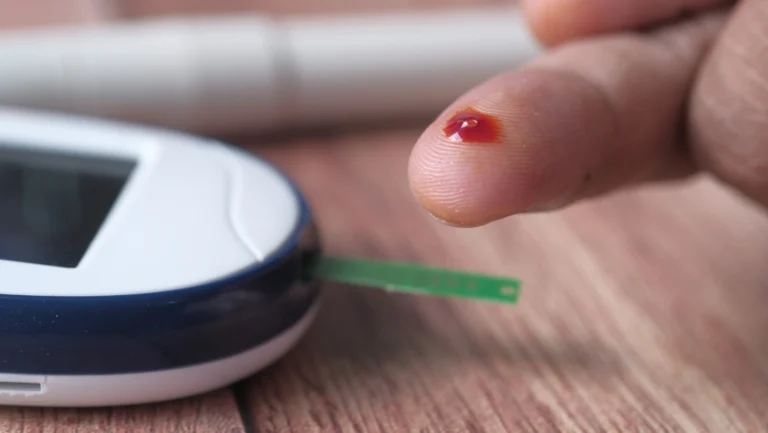

A CGM for non-diabetics is a wearable sensor, worn on the back of the arm, that tracks glucose (blood sugar) around the clock without finger pricks. It’s now sold over the counter in the US, no prescription needed. But before you buy one, you should know the science on whether it actually improves your health if you don’t have diabetes is still thin, and a major 2026 review found no proof that it does.
Key Takeaways
- CGM for non-diabetics devices (Stelo, Lingo) are FDA-cleared and legal to buy without a prescription, but that clearance is about safety, not proof of health benefit.
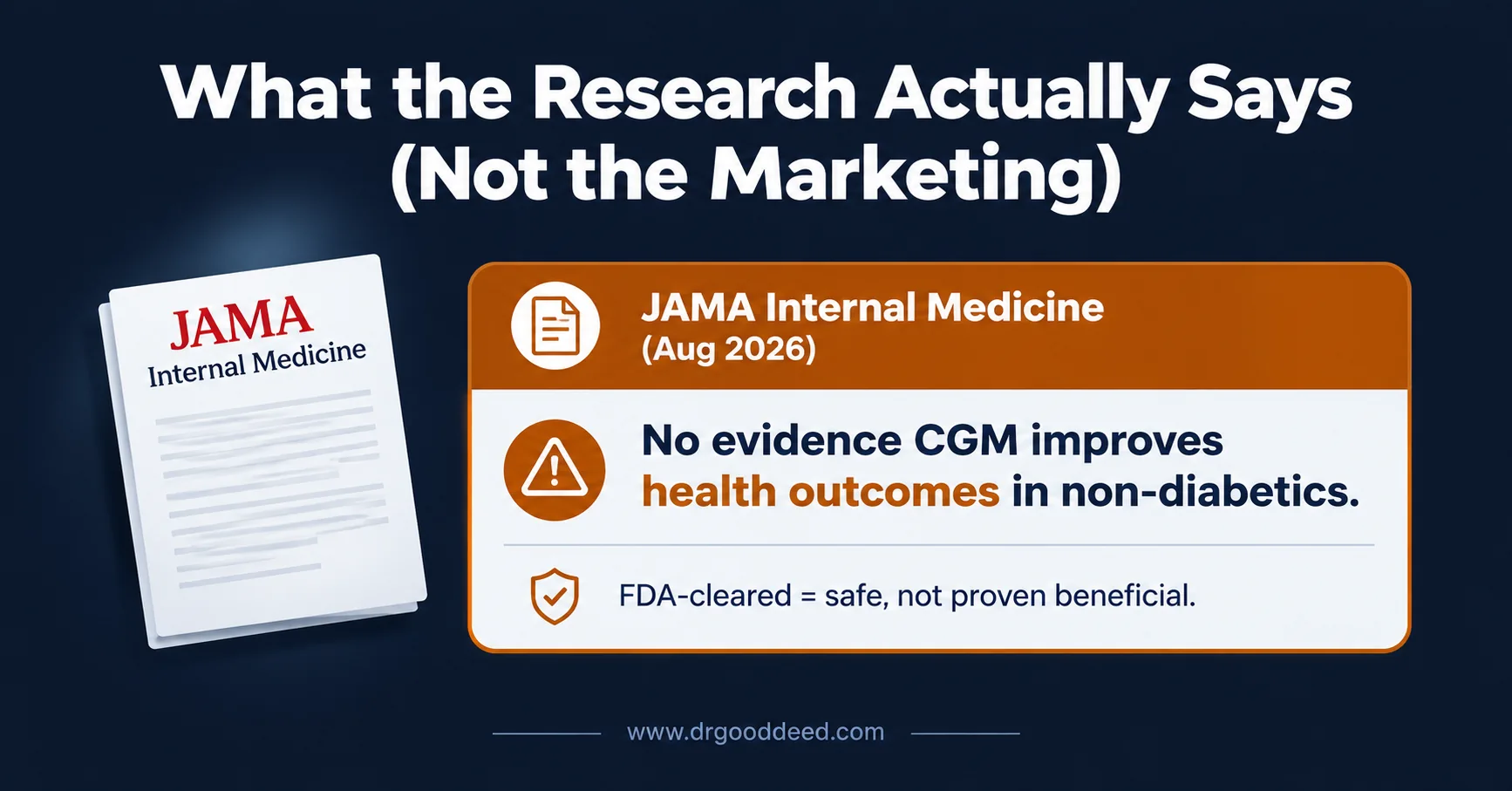
- A JAMA Internal Medicine review published in August 2026 found no evidence that wearing a CGM improves health outcomes in people without diabetes.
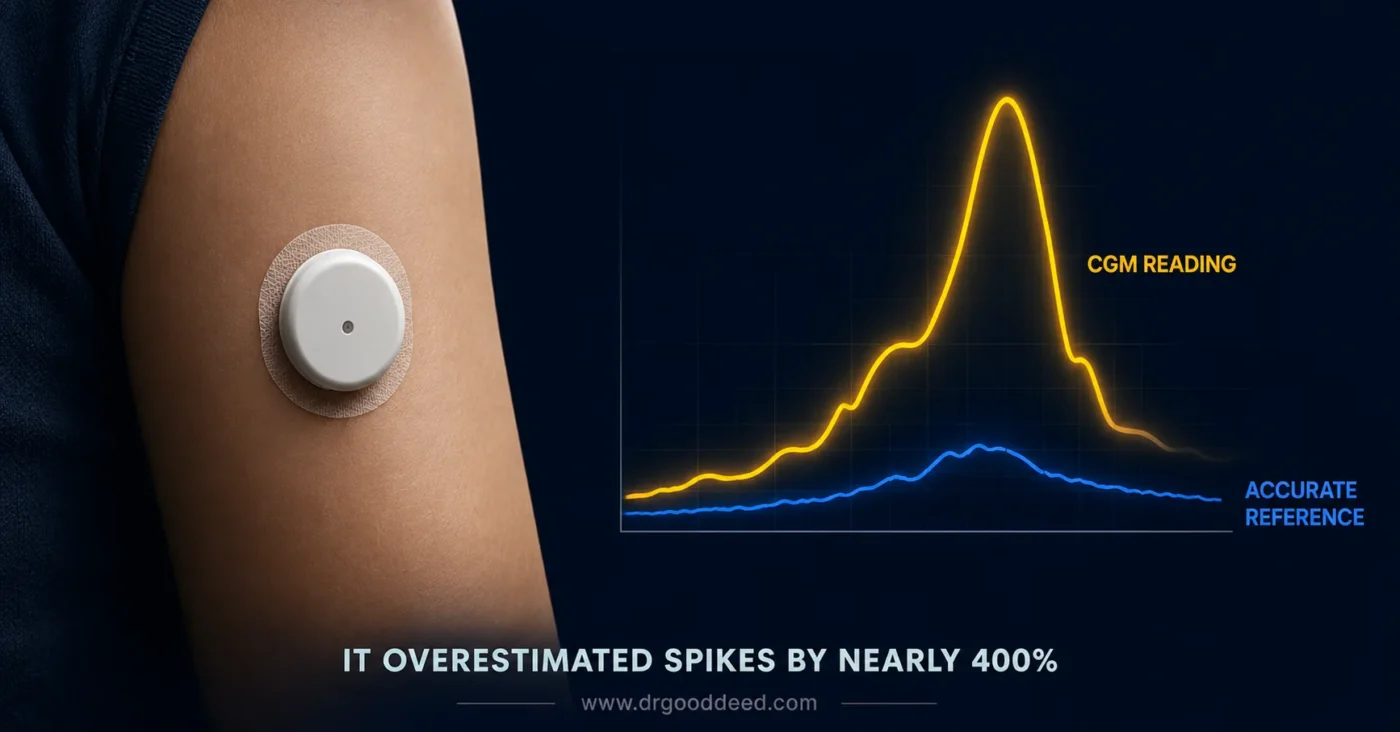
- University of Bath research found a popular CGM overestimated blood sugar spikes, sometimes by close to 400%, compared to finger-prick testing.
- Dexcom Stelo and Abbott Lingo are the only two over-the-counter options in the US as of 2026; neither one can diagnose prediabetes or diabetes.
- If you have real risk factors for diabetes, talk to a doctor first. A fasting blood test or HbA1c is still the accepted way to screen for it.
Should Non-Diabetics Use a CGM? What the Evidence Actually Shows
A continuous glucose monitor without diabetes has been marketed as a tool for weight loss, energy, and metabolic health for a few years now, but the research hasn’t caught up to the marketing.
On one side, a narrative review published in JAMA Internal Medicine in August 2026, led by researchers at the University of Gothenburg, concluded there is no scientific evidence that CGM use improves health or prevents disease in people who don’t have diabetes.
A 2025 systematic review in the journal Sensors noted that a CGM for non-diabetics could theoretically help flag glucose swings that are an early, independent risk factor for heart disease, and might support useful lifestyle changes, diet and exercise timing, for some people. But even that review admitted the actual outcome data (does it change your cholesterol, blood pressure, or heart attack risk down the road) is still scarce.
A separate 2025 review in the European Journal of Medical Research said it may help with short-term glycemic awareness, but there’s not enough evidence yet to say it changes long-term weight or health outcomes.
Final verdict: a best CGM for non-diabetics search will turn up plenty of confident marketing, but the clinical literature itself is cautious, sometimes flatly skeptical, about whether the device changes anything meaningful for someone who is already metabolically healthy.
Are CGM Readings Accurate in People Without Diabetes?
Accuracy for a CGM for non-diabetics isn’t the same as accuracy for someone with diagnosed diabetes, because the devices were built and calibrated using data from people who already have the condition.
Researchers at the University of Bath ran a clinical trial comparing a popular CGM against gold-standard finger-prick blood tests in healthy adults after they drank fruit smoothies. The CGM systematically overestimated glucose levels. In one measure, it overreported the time spent above a diabetes-related blood sugar threshold by close to 400%, and it misclassified low-glycemic whole fruit as a medium or high-glycemic food.
A CGM measures glucose in the fluid between your cells (interstitial fluid), not directly in your blood, and there’s a natural time lag between the two. In someone with healthy, fast-clearing blood sugar, that lag can make a normal, brief rise look like a bigger, longer spike than it really was.
Best CGMs for Non-Diabetics at a Glance (Comparison Table)
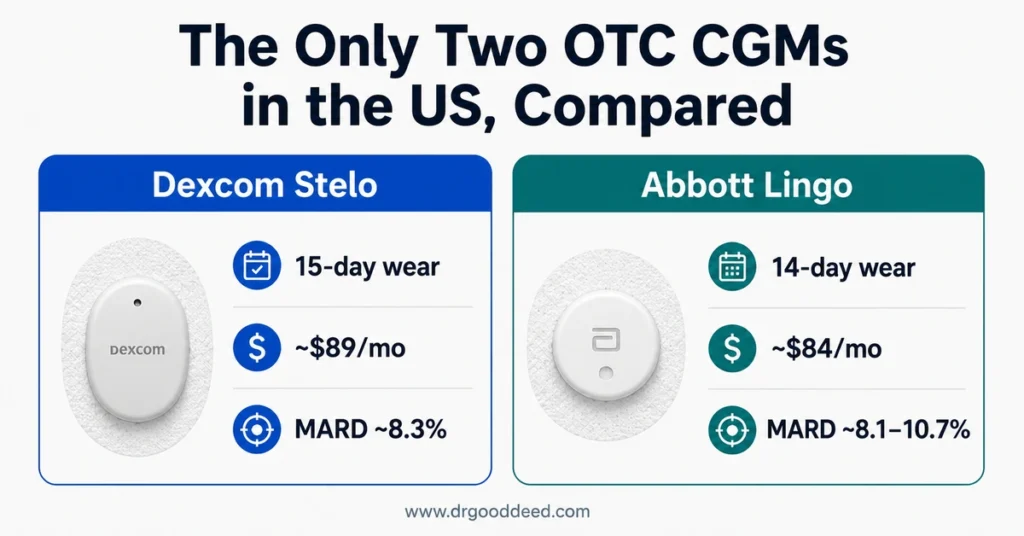
As of 2026, Dexcom Stelo and Abbott Lingo are the only two FDA-cleared, over-the-counter CGM options in the United States. Both are built for adults who don’t use insulin and want general wellness data. Here’s how they stack up on the basics.
| Feature | Dexcom Stelo | Abbott Lingo |
| Prescription required | No | No |
| Sensor wear time | 15 days | 14 days |
| Typical monthly cost | ~$89 (subscription) | ~$84 (subscription) |
| Reported accuracy (MARD)* | ~8.3% | ~8.1–10.7% |
| Coaching features | AI-style insights, photo food logging | “Lingo Count” spike tracker, structured coaching |
| App/device integrations | Apple Health, Apple Watch, Oura | Apple Health, Google Health Connect |
| Provider data sharing | Yes, via Dexcom Clarity | Limited |
| Minimum age | 18+ | 18+ |
*MARD (Mean Absolute Relative Difference) is a lab accuracy metric; lower means closer to reference blood tests. Figures come from each manufacturer’s own validation studies, so they aren’t perfectly apples-to-apples.
Dexcom Stelo Overview
Stelo is Dexcom’s over-the-counter CGM for non-diabetics, built on the same sensor technology as the company’s prescription devices. It’s worn on the back of the upper arm, takes about 30 minutes to warm up after application, and sends a new glucose reading every five minutes to a connected smartphone app.
Sensors last up to 15 days each, and the device is water-resistant enough for showering or swimming. Stelo connects with Apple Health, Apple Watch, and Oura Ring, and it’s the only over-the-counter CGM that lets you share your data directly with a healthcare provider through Dexcom’s Clarity platform. It does not require a prescription, but it is only cleared for adults 18 and older who are not on insulin.
Abbott Lingo Overview
Lingo is Abbott’s consumer glucose biosensor, using the same core sensor technology behind the company’s FreeStyle Libre line. It’s worn the same way as Stelo, on the back of the arm, and each sensor lasts up to 14 days before it needs replacing.
Instead of raw numbers alone, Lingo’s app leans on a proprietary “Lingo Count,” a simplified daily score meant to represent how many notable glucose spikes you had, along with structured coaching content and progress reports. It integrates with Apple Health and Google’s Health Connect, though it offers less direct clinician data-sharing than Stelo. Like Stelo, it does not require a prescription and is intended for adults 18 and older who don’t use insulin.
Prescription CGMs: When They Might Make Sense Instead
A prescription CGM is a different category, meant for people managing diagnosed diabetes or prediabetes under medical supervision. Dexcom G7 and Abbott’s FreeStyle Libre 3 are the two leading prescription options in the US, and both offer tighter integration with automated insulin delivery systems for people who use insulin pumps.
If a doctor has already flagged you as prediabetic, or if you have a strong family history of type 2 diabetes, gestational diabetes in a past pregnancy, or other doctor-identified metabolic risk factors, a prescription CGM used under clinical guidance may give more actionable, better-validated data than an over-the-counter device bought on your own.
Your doctor can also pair the readings with an HbA1c blood test, which reflects your average blood sugar over roughly three months and remains the standard tool for actually diagnosing prediabetes and diabetes.
Who Might Actually Benefit From Trying a CGM?
Given everything above, a CGM for non-diabetics is beneficial for following people.
- People with real risk factors, a family history of type 2 diabetes, overweight combined with a sedentary lifestyle, or a prior prediabetes reading, may get value from a short, doctor-guided trial to see how their body responds to specific meals.
- People who are genuinely motivated by real-time feedback as a behavior-change tool, and who understand the numbers are a rough guide rather than a lab-grade diagnosis, can use a two-to-four week trial to spot patterns like post-meal energy crashes.
- People without any of those factors are unlikely to learn something from a CGM for non-diabetics that a good diet, regular movement, and an annual checkup wouldn’t already tell them.
How to Talk to Your Doctor About Glucose Monitoring
If you’re seriously weighing a continuous glucose monitor without diabetes, ask directly whether your personal risk factors, weight, family history, activity level, past lab results, justify a CGM trial or whether a standard fasting glucose or HbA1c test would answer your question just as well, at a fraction of the cost.
Also ask how to interpret spikes you might see, since a normal, brief rise after a carb-heavy meal isn’t automatically a warning sign.
Sources
- Non-Invasive Continuous Glucose Monitoring in Patients Without Diabetes: Use in Cardiovascular Prevention, a Systematic Review link
- Continuous glucose monitoring in non-diabetic populations: a systematic review and meta-analysis link
- Is Glucose Monitoring Useful for Non-Diabetics? Johns Hopkins Bloomberg School of Public Health link
- Researchers Warn Continuous Glucose Monitors Can Overestimate Blood Sugar Levels, University of Bath link