
What is stage 4 cancer? Stage 4 cancer is a cancer that has grown beyond the organ or area where it first started and has spread to at least one other part of the body, often through the blood or lymph system. But stage 4 cancer covers everything from a slow-moving disease someone lives with for a decade to something far more urgent. The type of cancer, where it has spread, and how a person’s body responds to treatment all shape what comes next.
What Does Stage 4 Cancer Mean?
When doctors talk about what is stage 4 cancer, they’re describing the most advanced point on a five-point scale, running from stage 0 to stage 4. At stage 4, the disease is no longer contained to the original site. It has traveled, usually to organs like the liver, lungs, bones, or brain. Doctors also call this metastatic cancer, and you’ll hear “metastasis” used as shorthand for the spread itself.
The stage 4 cancer meaning changes a bit depending on the cancer type. Some cancers get split further into stage 4A and stage 4B, which usually reflect how far the spread has gone, for example, nearby versus distant organs. A stage 4 cancer definition for lung cancer looks different from one for breast or colorectal cancer, since each has its own criteria for what counts as distant spread.
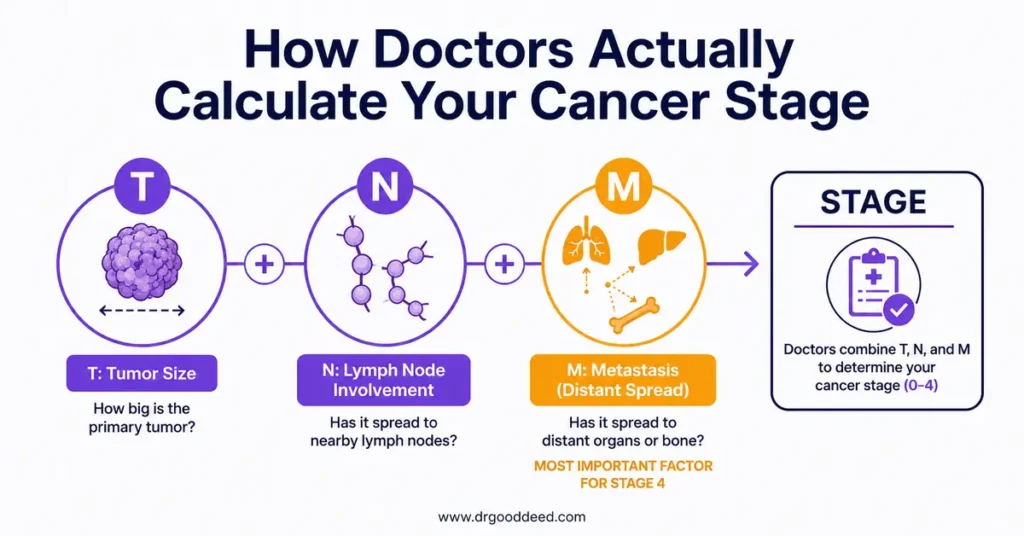
How Cancer Stages Are Determined (Stage 0 Through 4)
Most solid cancers are staged using something called the TNM system: T for tumor size, N for whether nearby lymph nodes are involved, and M for whether the cancer has metastasized, or spread, to distant parts of the body. These three letters get combined into an overall stage number.
Stage 0 means abnormal cells are present but haven’t spread, sometimes called “in situ.” Stages 1 through 3 describe growing tumor size and increasing lymph node involvement, still generally confined to the region where the cancer began. Stage 4, the highest number in the cancer staging system, is reached once the M in TNM becomes positive, meaning distant spread has occurred. Doctors also assign a separate grade, which describes how abnormal the cancer cells look under a microscope and how fast they’re likely to grow. Grade and stage aren’t the same thing, though people often mix them up.
Does Your Cancer Stage Ever Change?
Here’s something that surprises a lot of people, and honestly, most articles skip it entirely: the stage assigned at diagnosis is the one that sticks on your medical records for good. If a stage 2 cancer later spreads and becomes metastatic, doctors don’t relabel it as a new stage 4 diagnosis. Instead, it becomes “stage 2, recurrent with metastasis,” or something similar, noting the original stage plus what happened after.
If someone diagnosed with stage 4 cancer responds extremely well to treatment and the disease shrinks dramatically or goes into remission, they are still, on paper, a stage 4 patient. Remission describes the current activity of the disease. Doctors keep the original staging fixed because it’s a record of how far the cancer had spread at the moment of diagnosis, and that snapshot is what guided the first treatment decisions and remains useful for tracking outcomes over time.
What Cancers Do Not Follow the Standard Staging System
Not every cancer fits neatly into the TNM, stage 0 through 4 model. Blood cancers like leukemia don’t form solid tumors, so they’re usually classified by cell type, genetic markers, and blood counts instead of a tumor stage.
Lymphoma, cancer of the lymphatic system, uses its own staging approach, the Lugano or Ann Arbor systems, based on how many lymph node regions are affected and whether the spread is above or below the diaphragm. Cancers of the brain and spinal cord, known as CNS cancers, are graded on how aggressive the cells look rather than staged for distant spread, since these cancers rarely travel outside the central nervous system the way other cancers do.
How Stage 4 Cancer Is Treated
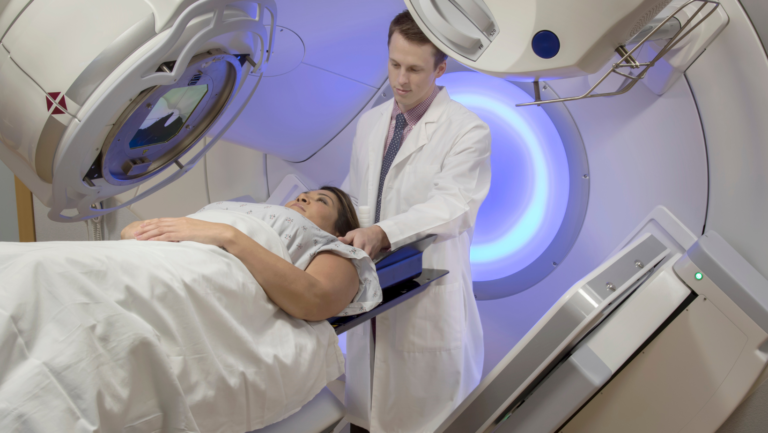
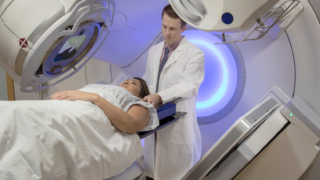
Stage 4 cancer treatment is built around the specific cancer type, its genetic makeup, and the person’s overall health, not a one-size-fits-all protocol. Chemotherapy uses drugs to kill fast-growing cancer cells throughout the body and remains a backbone treatment for many metastatic cancers.
Targeted therapy works differently, it zeroes in on specific genetic mutations or proteins driving a particular cancer’s growth, often with fewer side effects than traditional chemo. Immunotherapy trains a person’s own immune system to recognize and attack cancer cells, and it has changed outcomes for cancers like advanced melanoma and certain lung cancers over the past decade.
Hormone therapy is used for cancers that feed on hormones, such as many breast and prostate cancers, cutting off the fuel supply the tumor depends on. Palliative care often runs alongside any of these, focused on managing pain, nausea, fatigue, and other symptoms so quality of life stays as high as possible, whatever the treatment goal is.
Does Stage 4 Cancer Always Mean the End?
No, stage 4 cancer does not automatically mean death is imminent. It’s serious, and it’s typically not curable in the sense of eliminating every cancer cell from the body, but “not curable” and “immediately fatal” are two very different things. Many people live with stage 4 cancer for years, treating it more like a chronic condition, similar in some ways to managing diabetes or heart disease, with ongoing monitoring and adjustments to treatment as needed.
Outcomes vary enormously by cancer type, how early the spread was caught, genetic factors, and how well someone responds to newer treatments like targeted therapy and immunotherapy. Some stage 4 cancers, including certain types of stage 4 breast cancer or stage 4 prostate cancer, can be managed for a long stretch of time. Others move faster.
The honest answer is that stage 4 changes the goals of treatment, often shifting from cure to control, but it doesn’t erase the possibility of meaningful time, and for a growing number of patients, that time is measured in years, not months.
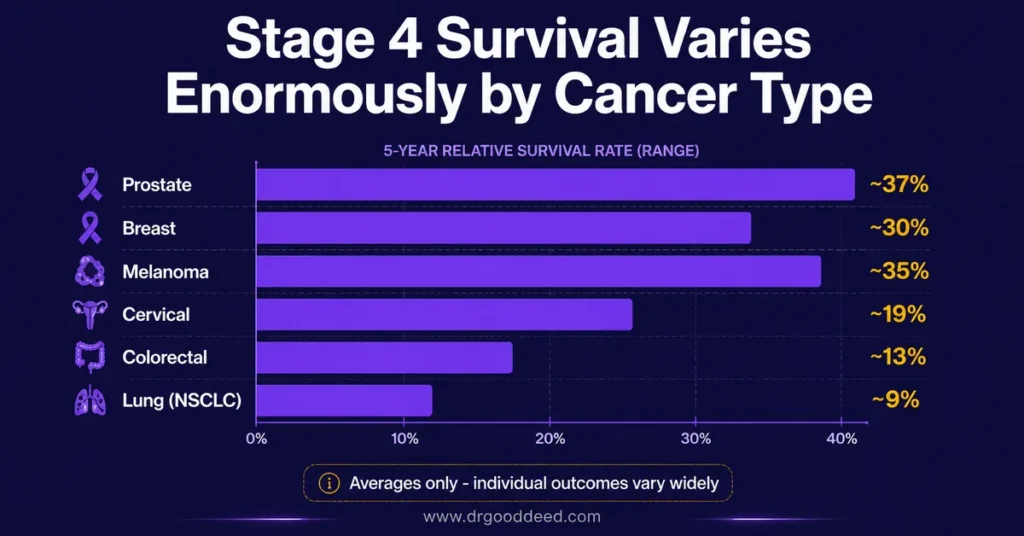
Stage 4 Cancer Survival Rates by Cancer Type
A stage 4 cancer survival rate is usually expressed as a five-year relative survival rate, meaning the percentage of people still alive five years after diagnosis compared to people without cancer. These numbers are averages pulled from large groups of patients in the past, so they can’t predict what will happen to any one individual, especially since treatments keep improving. Still, they give a useful starting point for understanding how different cancers behave once they reach stage 4.
| Cancer Type | 5-Year Relative Survival Rate (Stage 4/Distant) |
| Breast Cancer | Around 30% |
| Non-Small Cell Lung Cancer | Around 9% |
| Prostate Cancer | Around 37% |
| Colorectal Cancer | Around 13% |
| Melanoma | Around 35% |
| Cervical Cancer | Around 19% |
Evidence for exact long-term outlook in newer immunotherapy and targeted-therapy combinations is still developing, so a person’s own oncology team is the most reliable source for what these numbers mean in their specific case.
How to Support Someone With Stage 4 Cancer
Supporting someone through a stage 4 diagnosis often means showing up in practical, unglamorous ways rather than trying to fix an unfixable situation. Offer to handle specific tasks, driving to appointments, managing medication schedules, or sitting with insurance paperwork, instead of a vague “let me know if you need anything.” Let them lead conversations about prognosis and treatment; some days they’ll want to talk about it, other days they won’t, and both are fine.
Learn the basics of their specific cancer type so questions from doctors and hospital staff don’t fall entirely on the patient to translate. Watch for caregiver burnout in yourself too, since supporting someone with a serious illness is physically and emotionally demanding over the long run. Small, consistent gestures, a regular check-in text, a meal dropped off, sitting quietly together, tend to matter more over months and years than any single grand gesture early on.
FAQs
Can stage 4 cancer be cured?
Stage 4 cancer is generally not curable in the traditional sense, but it can often be treated and controlled for extended periods. Stage 4 cancer treatment today focuses heavily on managing the disease long-term rather than eliminating it entirely, and some patients achieve lasting remission.
How long can you live with stage 4 cancer?
It depends entirely on cancer type, genetics, and treatment response. The stage 4 cancer survival rate ranges widely, from single-digit percentages for aggressive lung cancers to over a third of patients for cancers like prostate or melanoma surviving five years or more.
Is stage 4 cancer the same as metastatic cancer?
Yes, stage 4 cancer and metastatic cancer describe the same situation, the disease has spread from its original site to distant organs or tissues elsewhere in the body.
Does stage 4 cancer mean death is coming soon?
Not necessarily. While stage 4 is serious and typically considered advanced, many people live for years with proper treatment, symptom management, and follow-up care, treating it as a long-term condition rather than an immediate end point.