
Pneumonia recovery time ranges from one week to several months, and the exact number depends on your age, health history, and how severe the infection was. In the United States, most adults with mild to moderate community-acquired pneumonia start feeling noticeably better within one to two weeks of starting treatment. Full recovery, including energy levels and stamina, often takes longer.
This guide covers the real pneumonia recovery timeline, what changes it, why fatigue and breathlessness linger, and when slow healing actually needs a doctor.
How Long Does It Take to Recover From Pneumonia?
According to the National Heart, Lung, and Blood Institute (NHLBI), some people return to their normal routine in one to two weeks, while others need a month or longer.
- Mild cases treated at home: Fever usually breaks within three to five days of starting antibiotics. Most people feel functional within a week, though not fully recovered.
- Moderate cases: Chest pain and shortness of breath ease over two to three weeks. Cough often outlasts every other symptom.
- Severe or hospitalized cases: Recovery stretches into weeks or months. A CDC-tracked average hospital stay for pneumonia runs around four to five days, and the real recovery clock starts after discharge, not before.
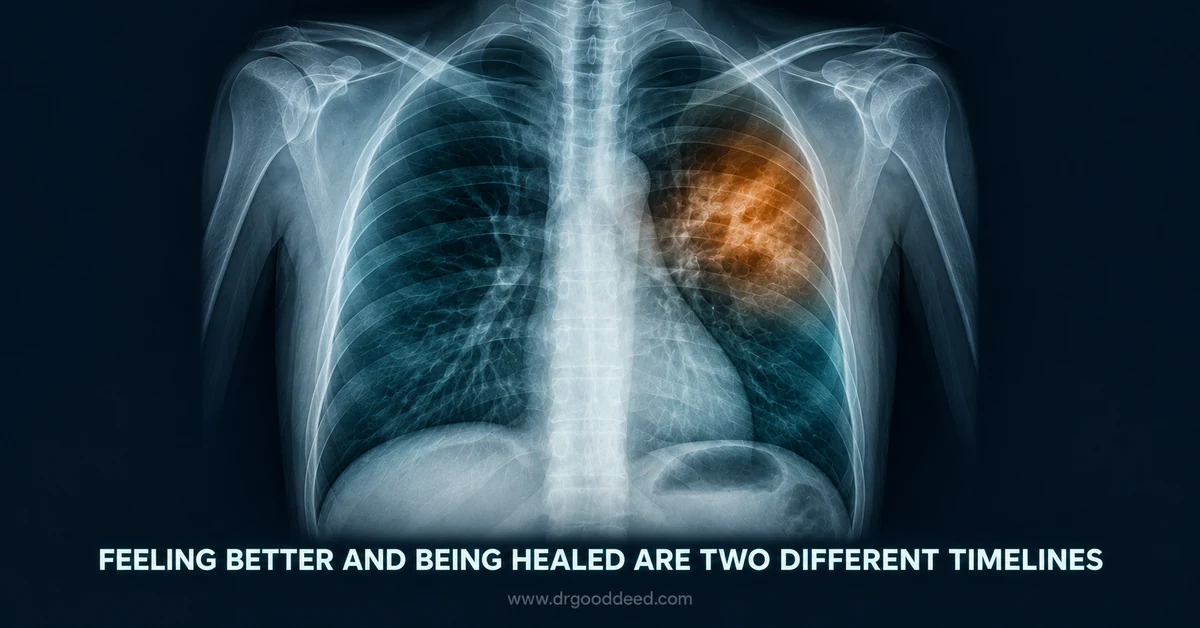
- Chest X-ray lag: Imaging clears slower than symptoms. Studies of hospitalized patients over 70 found only partial resolution on X-ray at three weeks, with fuller clearing by six to twelve weeks.
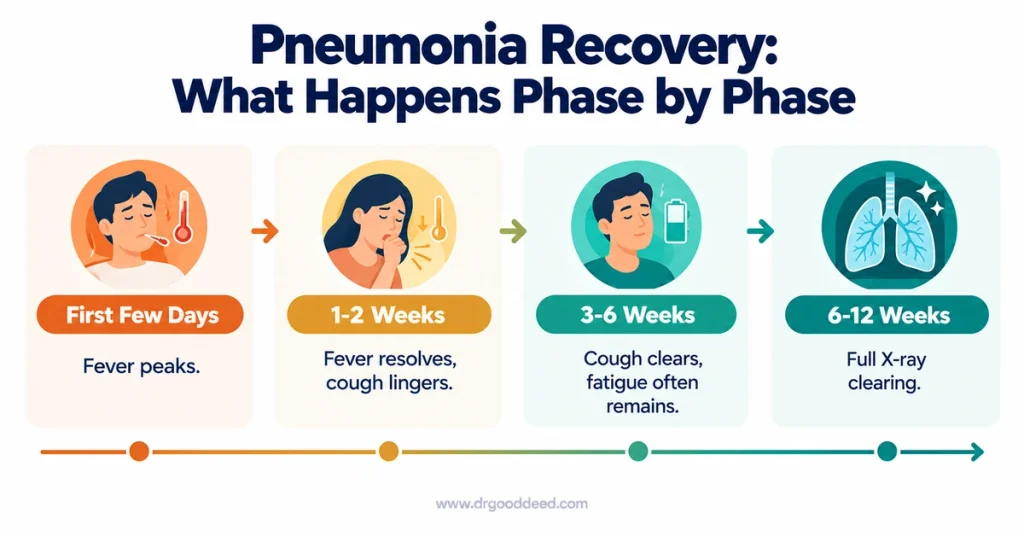
Pneumonia Recovery Timeline
A useful way to think about pneumonia recovery timeline is by phase rather than a fixed date.
First Few Days
This is the acute phase, and it is usually the worst part of the illness.
- Fever and chills peak here and typically start dropping within 48 to 72 hours once antibiotics begin working, for bacterial cases.
- Chest pain from inflamed lung tissue and coughing is often sharpest in these first days.
- Mucus production tends to be heavy, and cough may sound wet or productive.
- Oxygen levels matter most during this window. A pulse oximeter reading below 92% at home warrants a same-day call to your doctor.
First 1 to 2 Weeks
Most of the acute symptoms start resolving now, though not evenly.
- Fever resolution usually happens first, often within the first week.
- Cough decreases in frequency but rarely disappears completely by week two.
- Energy levels improve on a curve, not a straight line. You may feel strong in the morning and wiped out by evening.
- Shortness of breath with exertion commonly persists here even after resting breathing feels normal.
- A 2017 longitudinal cohort study published in the European Respiratory Journal followed 169 adults with community-acquired pneumonia and found symptom severity, not age or comorbidity alone, best predicted how fast someone returned to their personal baseline.
The Following Weeks
Weeks three through six separate straightforward recoveries from the slower ones.
- Cough in most people clears somewhere in this window, though a dry, lingering cough for four to six weeks is common and not automatically abnormal.
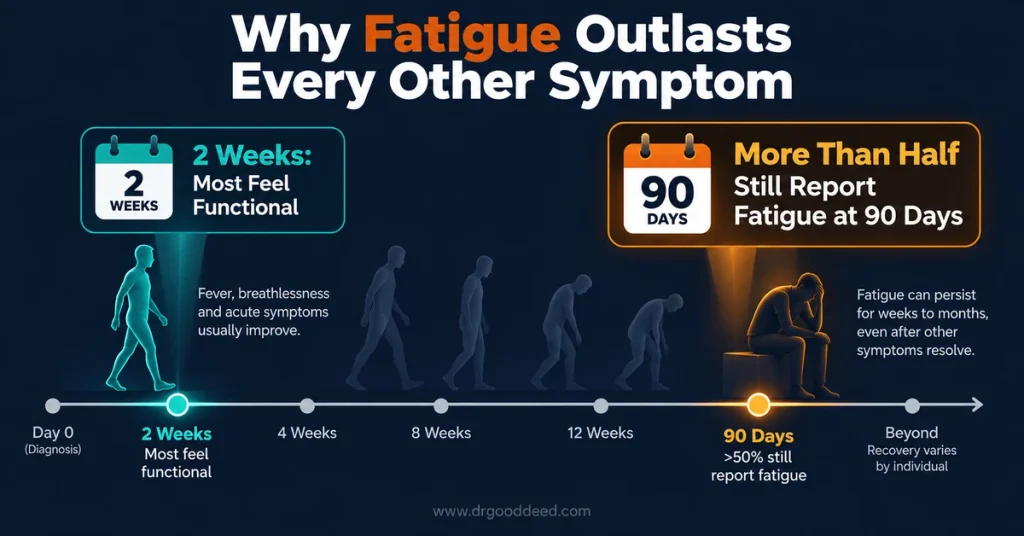
- Fatigue frequently outlasts every other symptom. Research following pneumonia patients found more than half still reported fatigue at the 90-day mark.
- Return to full activity, including exercise or physically demanding work, usually happens toward the end of this stretch for moderate cases.
- Follow-up imaging is sometimes ordered around six weeks, especially for smokers or adults over 50, to confirm the infection has actually cleared rather than just gone quiet.
What Can Affect Your Recovery Time?
- Age: Adults over 65 clear infection more slowly and face higher odds of complications that stretch recovery. Younger, otherwise healthy adults often recover in half the time.
- Underlying health conditions: COPD, asthma, heart disease, diabetes, and immune suppression all slow healing and raise the risk of a rockier course.
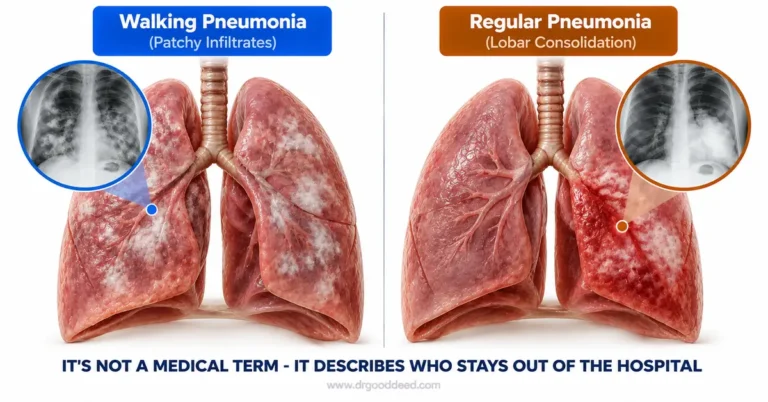
- Severity and type at diagnosis: Someone with walking pneumonia vs regular pneumonia has a very different outlook. Walking pneumonia, caused by organisms like Mycoplasma pneumoniae, tends to resolve in two to four weeks. Bacterial pneumonia severe enough to need hospitalization can take months.
- How quickly treatment started: Starting antibiotics promptly for bacterial pneumonia shortens the acute phase. Delayed treatment allows more lung tissue damage before the infection comes under control.
- Smoking status: Smokers show measurably slower symptom and imaging resolution compared with nonsmokers in the same age group.
- Completing the full treatment course: Stopping antibiotics early, even after symptoms improve, raises the risk of the infection returning or becoming harder to treat.
An older adult with COPD who started treatment late faces a genuinely different timeline than a healthy 30-year-old treated on day one.
Expert Insight: A patient who “feels back to normal” by week two often still has measurably reduced exercise capacity and abnormal chest imaging for weeks afterward. Clinicians distinguish symptomatic recovery from physiological recovery precisely because patients tend to equate the two, which leads many to resume strenuous activity before their lungs have actually finished healing.
Why Do Cough, Fatigue, or Breathlessness Last After Pneumonia?
Fatigue after pneumonia and lingering shortness of breath after pneumonia confuse a lot of patients who expect symptoms to end when the infection does.
- Tissue repair takes longer than infection clearance: Antibiotics or antivirals stop the pathogen, but the lung tissue itself, along with the cilia that clear mucus, needs additional weeks to rebuild.
- Systemic inflammation drains energy: The immune response that fought the infection consumes real metabolic resources, and that deficit does not resolve the moment fever breaks.
- Deconditioning compounds the problem: Days of reduced activity during acute illness lower baseline fitness, so ordinary tasks feel harder even after the lungs improve.
- Post-infectious cough reflex hypersensitivity: Airways stay irritable for weeks after an infection, triggering cough from minor stimuli like cold air or talking, even without ongoing infection.
- Sleep and appetite disruption: Both were affected during acute illness and often take their own separate timeline to normalize, which indirectly slows overall energy recovery.
Signs You Are Not Recovering as Expected
- Fever that returns after resolving: A new fever days after the initial fever broke suggests a secondary infection or treatment failure, not normal fluctuation.
- Worsening, not improving, shortness of breath: Breathlessness should trend better week over week. Getting worse after day five to seven is a red flag.
- Chest pain that intensifies: Increasing pain, especially sharp pain with deep breaths, can indicate a complication such as a pleural effusion.
- Coughing up blood or rust-colored mucus that appears newly or increases in volume.
- Confusion or unusual drowsiness, particularly in older adults, which can signal low oxygen or a systemic infection.
- No improvement at all after 3 to 5 days of antibiotics, which suggests the current treatment is not working against the specific organism.
How to Support Your Recovery
- Rest without full bed rest: Prioritize sleep and reduce exertion, but short, gentle walks maintain lung function better than complete inactivity once fever resolves.
- Hydration: Fluids thin mucus, making it easier to clear through coughing.
- Complete the full antibiotic course: Stopping early because you feel better is the single most common preventable cause of relapse or antibiotic resistance.
- Pace your return to activity: Resume normal routines gradually. Pushing back into a full workload or workout schedule in week two commonly triggers a fatigue crash.
- Avoid smoking and secondhand smoke entirely during recovery, since it directly slows airway healing.
- Track your trend, not your day: A single tired day after a good week is normal. A downward trend over several days is not.
Pro Tip: Track your resting heart rate each morning during recovery. A rate that stays 10 or more beats above your personal baseline for several consecutive days, even without other symptoms, often signals your body is still fighting inflammation and needs more rest before resuming exercise.
When Should You Contact Your Doctor?
Call your doctor if fever returns after going away, breathing gets harder instead of easier, chest pain increases, or you feel confused or unusually drowsy. Contact them immediately for coughing up blood, bluish lips, or oxygen readings below 92%. Also call if symptoms show zero improvement after five days of antibiotics.
FAQs
How long does pneumonia usually last?
Most people improve within one to two weeks and feel fully recovered within a month. Severe or hospitalized cases can take several months, particularly in adults over 65 or those with chronic lung disease.
Can pneumonia take a month or longer to recover from?
Yes. The NHLBI confirms that while some people recover in one to two weeks, others need a month or longer, and most people feel tired for about a month regardless of severity.
How long does pneumonia fatigue last?
Fatigue after pneumonia commonly lasts three to four weeks. Research tracking pneumonia patients found more than half still reported fatigue at the 90-day mark, especially after hospitalization.
When can you return to normal activities after pneumonia?
Most people resume light routines within one to two weeks. Physically demanding work or exercise usually waits three to six weeks, based on how quickly breathlessness and stamina recover.
How do you know pneumonia is getting better?
Fever resolves first, followed by easing chest pain and gradually decreasing cough. Improving energy and less breathlessness during activity, rather than a single symptom, confirm real progress.
Sources
- National Heart, Lung, and Blood Institute: Pneumonia Recovery link
- Wootton et al., European Respiratory Journal: A longitudinal modelling study of CAP symptom recovery link
- American Lung Association: Pneumonia Symptoms and Diagnosis link
- CDC: Pneumonia Clinical Information link
- Mayo Clinic: Pneumonia Diagnosis and Treatment link
- British Thoracic Society: Guidelines for Community Acquired Pneumonia link
- National Institute for Health and Care Excellence (NICE): Pneumonia Management link
- MedlinePlus: Pneumonia link
- Cleveland Clinic: Pneumonia Recovery and Aftercare link
- NHS: Recovering from Pneumonia link
Medical Disclaimer: This article is for general information only and is not medical advice. It does not replace a diagnosis, treatment plan, or guidance from a qualified healthcare professional. Always talk to your doctor about your own symptoms and before starting, stopping, or changing any treatment. If you think you may be having a medical emergency, call 911 or go to your nearest emergency room.