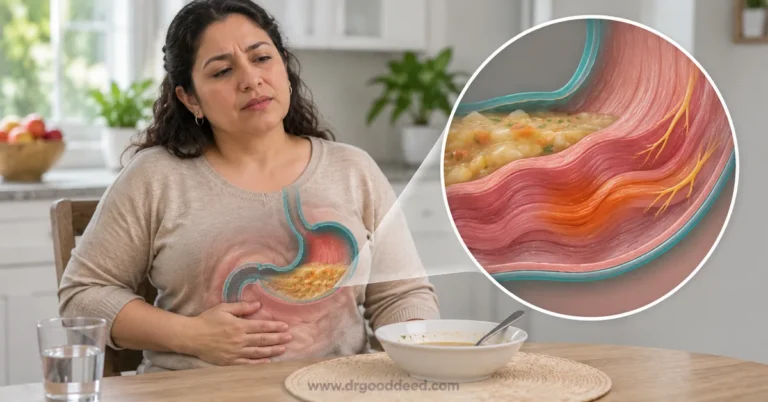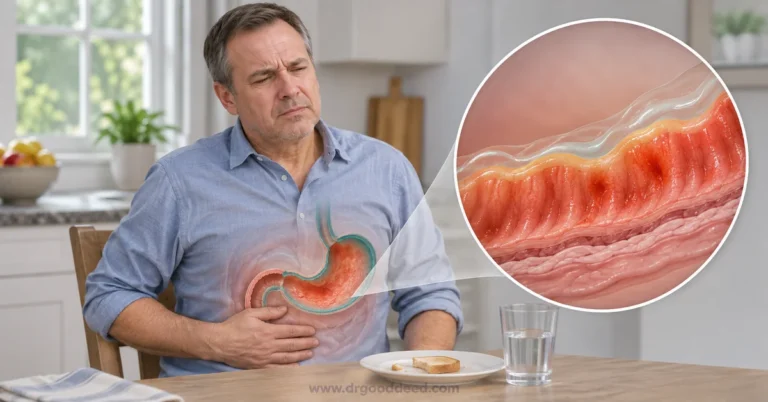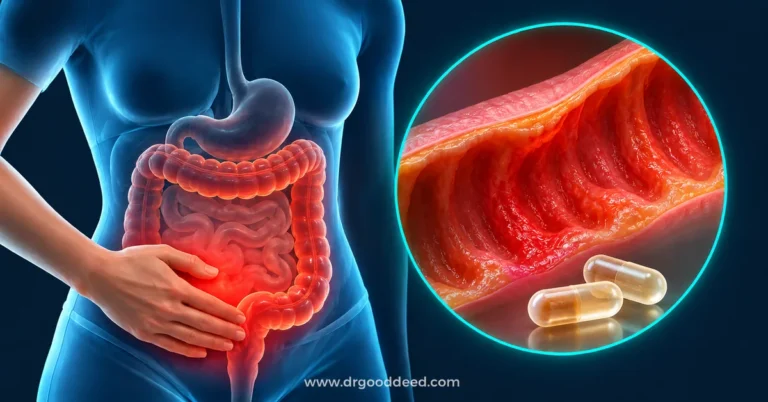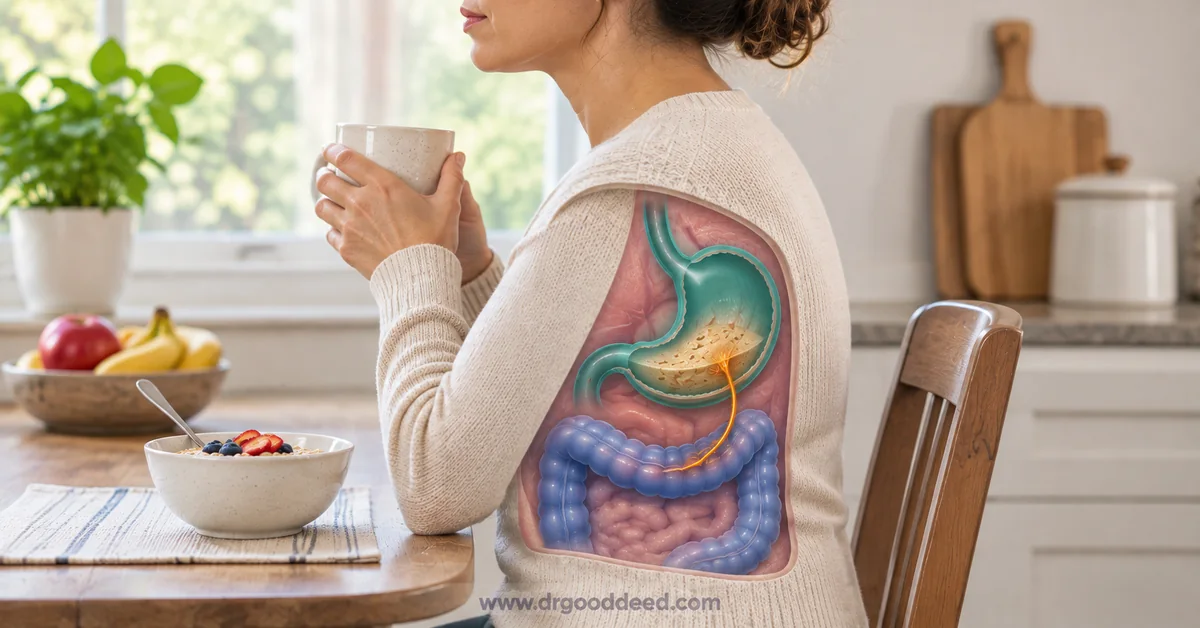

The gastrocolic reflex is a normal reflex in which eating stretches the stomach and makes the colon contract, so you may feel the urge to poop. The contractions push stool toward the rectum, and the urge can be particularly strong after breakfast. However, feeling the urge to poop after every meal, along with looser stools, abdominal pain or bloating, may point to a digestive condition. IBS, food intolerance and stress can make the reflex feel stronger.
Learning to recognize the gastrocolic reflex can help you spot patterns in your bowel activity, work out possible causes and know when to seek medical help.
Key Takeaways
- The gastrocolic reflex is a normal reflex where eating stretches the stomach and makes the colon contract, so you may feel the urge to poop.
- Many people feel the urge 15 to 90 minutes after eating (GoodRx), though colon activity can rise within minutes.
- Coffee, greasy foods, stress and digestive conditions such as IBS can make the urge stronger.
- If loose stools persist, there is blood in your stool, or you have unexplained weight loss or severe pain, see a doctor.
- Keeping a diary of meals, symptoms and bowel movements may help identify possible triggers.
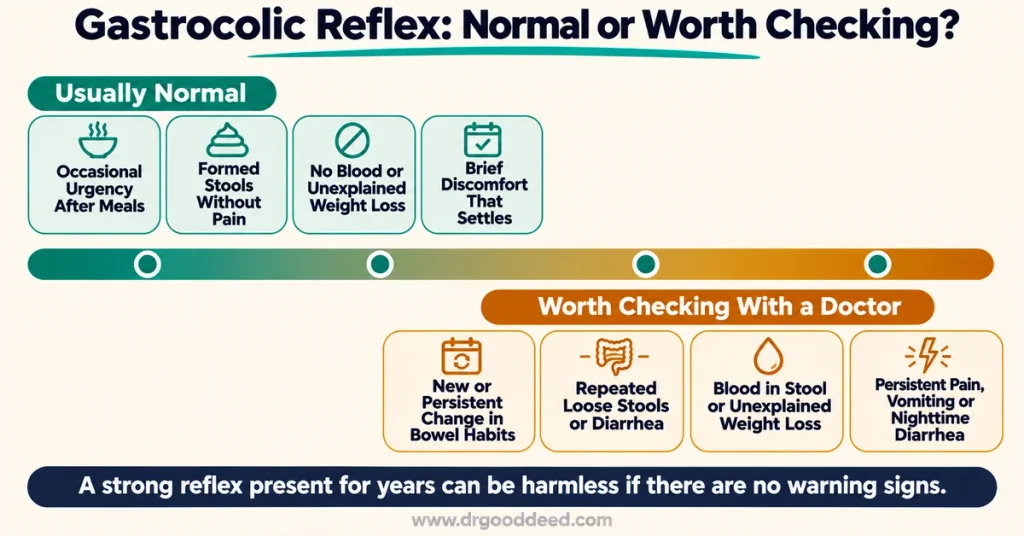
| Usually normal | Worth checking with a doctor |
| Occasional urgency after meals | A new or persistent change in bowel habits |
| Formed stools without pain | Repeated loose stools or diarrhea |
| No blood or unexplained weight loss | Blood in stool or unexplained weight loss |
| Brief discomfort that settles | Persistent pain, vomiting or nighttime diarrhea |
What Is the Gastrocolic Reflex?
The gastrocolic reflex is a normal reflex that occurs when the stomach stretches after eating and triggers the colon to contract. These contractions push stool toward the rectum and make space for the food that follows. Some people never feel it, and how strongly it is felt varies from person to person.
It is not surprising that you may need the toilet soon after eating. It does not mean that the meal you just ate has made its way through your whole digestive tract.
As food enters the stomach, it stretches the stomach walls and activates stretch sensors. These sensors send signals through the gut’s own nervous system and trigger contractions in the colon. This is the gastrocolic reflex. It moves stool that is already in the colon toward the rectum and makes room for more food.
The strength of the reflex differs from person to person. Some people feel an intense urge right after eating, especially at breakfast, while others hardly notice it.
Practical tip: The urge to poop after eating happens because food triggers the colon to push out stool that is already there. Digestion of a whole meal takes about 10 to 73 hours (Healthline) or 10 hours to 3 days (GoodRx).
How the Gastrocolic Reflex Works
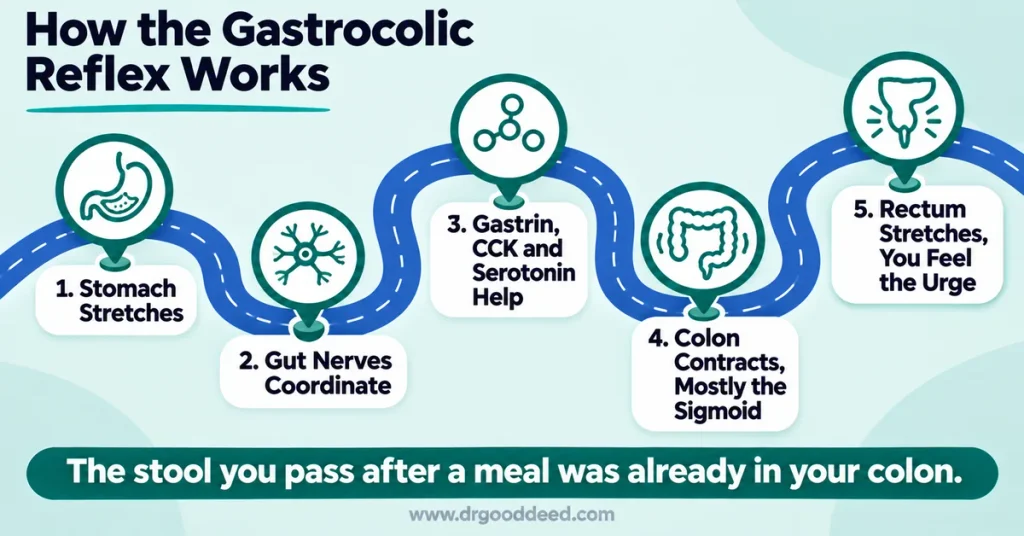
The gastrocolic reflex is a natural process that involves the stomach, nerves, hormones and the muscles of the colon. When you eat, these systems work together to increase colon movement and push stool toward the rectum.
The process involves several steps:
1. Stomach stretching: the stomach walls stretch when food enters, and sensory receptors pick up the change and signal the colon to become more active.
2. Enteric nervous system: this network of nerves in the gut coordinates the muscles and helps move stool along the colon.
3. Hormonal signals: hormones and chemicals such as gastrin, CCK and serotonin are believed to help stimulate digestion.
4. Colon contractions: the muscles of the colon contract more, especially in the sigmoid colon, which moves stool toward the rectum.
5. Rectum and the urge: when stool reaches the rectum, its walls stretch and you feel the urge to poop.
Gastrocolic Reflex Timing: How Soon After Eating?
The gastrocolic reflex can stimulate the colon within a few minutes of eating (StatPearls). Many people feel the urge to use the bathroom 15 to 90 minutes after eating (GoodRx). The reflex can last from minutes to a few hours (Cleveland Clinic).
Why Is the Urge Stronger After Breakfast?
Colon activity tends to be stronger in the morning and after meals. Breakfast after the overnight fast can set it off. Coffee may also increase bowel activity in some people.
Does Food Pass Straight Through Your Body?
Food does not pass straight through you. The stool you pass after a meal was already in your colon, and eating simply pushes it along. Healthline says digestion of a whole meal takes about 10 to 73 hours, and GoodRx says it takes 10 hours to 3 days.
Good to know: After you wake up, colon activity naturally increases and last night’s dinner has moved along. Breakfast, or even waking up, can stimulate the colon to push existing stool out, creating the urge to poop.
What Causes an Overactive Gastrocolic Reflex?
An overactive gastrocolic reflex is an unusually strong and uncomfortable response after meals. It is not a disease in itself, and the cause cannot be worked out from the symptoms alone.
Can IBS Make You Poop After Eating?
It can. People with irritable bowel syndrome (IBS) may have a more sensitive bowel, or a colon that contracts more strongly after a meal. An overactive reflex in adults is usually a symptom of IBS rather than a condition on its own (Healthline). IBS symptoms include abdominal cramps, bloating, gas, constipation and urgency.
Other possible causes are inflammatory bowel disease, celiac disease, food intolerance, gastritis, stress and greasy foods.
Can Coffee, Stress, or Certain Foods Trigger It?
Coffee, large meals, fatty foods, alcohol and stress can make symptoms worse. Keep a food and symptom log to look for patterns, rather than cutting out whole food groups without advice.
Can Food Intolerance or Dumping Syndrome Cause Urgency?
Food intolerance can cause loose stools soon after eating. Early dumping syndrome may be the cause if you have loose stools within 30 minutes of eating, particularly after stomach surgery (Healthline).
Is Pooping After Eating Normal?
Pooping after eating is usually normal when your stools look normal and you have no pain, blood or weight loss. A strong reflex that has been present for years can also be harmless if there are no warning signs. See what normal stool looks like on our types of poop chart.
Signs and Symptoms
Occasional urgency is not a cause for concern. If diarrhea keeps coming back after meals, you struggle to reach the toilet in time, or you have ongoing bloating or abdominal cramps, see a doctor.
Is a Strong Gastrocolic Reflex Normal in Babies?
Yes. Babies often have a bowel movement during or right after a feed, because their digestive reflexes are strong, and this usually lessens with age (Healthline). Ask your pediatrician if your baby has blood in their stool, poor feeding or growth problems.
What to Do When the Gastrocolic Reflex Is Overactive?
It is not possible to turn off the gastrocolic reflex, but some practical steps can reduce symptoms.
- Eat smaller portions if large meals trigger urgency.
- Avoid only the foods that consistently cause symptoms, unless a clinician advises otherwise.
- If you have IBS, a dietitian may suggest a low-FODMAP diet. See our IBS diet plan.
- Eat slowly, keep regular mealtimes and try relaxation techniques to reduce stress. Learn how stress affects gut health.
- Avoid putting off the urge to poop too often, as this can lead to constipation.
- If symptoms continue, a doctor may suggest more tests, medicines or counseling, depending on the cause. Never start or stop a medicine without a doctor’s advice.
If you also notice mucus in stool, mention it to your doctor.
Can Tracking Food Triggers Help?
Yes. Keep a food and symptom log. Note the times of your meals, the foods and drinks you had (including coffee), your bowel movements and your symptoms. This can show which foods trigger the urge (Healthline).
Diarrhea After Eating: When to See a Doctor
Diarrhea after eating that is new, keeps coming back or wakes you from sleep is worth a doctor’s visit. See a doctor if you have:
- Diarrhea that keeps coming back after meals
- Loose stools that are a new pattern for you
- Unexplained weight loss
- Ongoing abdominal pain
- Diarrhea that wakes you at night
- Symptoms that last for weeks after you change your eating habits, or that disrupt your daily life (Cleveland Clinic)
Warning signs that need prompt or emergency care:
- Blood in the stool, black or foul-smelling stool, vomiting or ongoing severe pain should be checked promptly. Learn what black poop can mean.
- Heavy rectal bleeding, black tarry stool, fainting or significant blood loss in stool needs emergency care.
- US: see your primary care doctor for these signs. Go to the emergency department for heavy rectal bleeding or black tarry stool.
- UK: see a GP. Call 999 or go to A&E for blood in poo, black sticky very smelly poo, or severe tummy pain.
Frequently Asked Questions
Does food go straight through you after eating?
No. Digestion takes many hours: about 10 to 73 hours according to Healthline, or 10 hours to 3 days according to GoodRx. The stool you pass after a meal comes mostly from food eaten 1 to 2 days earlier.
Can you stop the gastrocolic reflex?
No. It is a normal digestive process and cannot be prevented. You can manage triggers and symptoms, but if the urgency is constant, see a doctor.
Does coffee trigger the gastrocolic reflex?
Coffee can trigger the reflex in some people (GoodRx). The effect varies, and if you notice it regularly, try reducing how much you drink.
Is a strong gastrocolic reflex normal in babies?
Yes. Babies often have a bowel movement during or right after a feed, because their digestive reflexes are strong, and this usually lessens with age (Healthline). Ask your pediatrician if your baby has blood in their stool, poor feeding or growth problems.
Can Eating Large Portions Increase the Urge to Poop?
Yes. Bigger meals may make the colon contract more forcefully, which can bring on a stronger sense of needing the toilet sooner.
Can Anxiety Increase the Need to Poop Right After a Meal?
Yes. Stress affects the gut and can increase bowel urgency in some people.
Sources
StatPearls, Physiology, Gastrocolic Reflex. link
Healthline, Gastrocolic Reflex. link
GoodRx, Gastrocolic Reflex: Why Do I Have to Poop Right After I Eat? link
Healthline, Pooping After Eating. link
Cleveland Clinic, Gastrocolic Reflex. link
Mayo Clinic, Gastrointestinal Bleeding: Symptoms and Causes. link
Medical Disclaimer: This article is for general information only and is not medical advice. It does not replace a diagnosis, treatment plan, or guidance from a qualified healthcare professional. Always talk to your doctor about your own symptoms and before starting, stopping, or changing any treatment. If you think you may be having a medical emergency, call 911 or go to your nearest emergency room.