

Silent reflux LPR (laryngopharyngeal reflux) happens when stomach contents rise into the throat or voice box, often without heartburn. It can cause frequent throat clearing, a hoarse voice, a lingering cough or a feeling of something stuck in the throat, which can affect talking and sleep. But reflux is not the only cause of these symptoms.
Allergies, postnasal drip, infections, asthma and voice strain can cause the same problems. Knowing the possible causes, the limits of testing and the warning signs can help you decide when to get care.
Key Takeaways
- Silent reflux LPR can cause throat clearing, hoarseness and cough without heartburn, but these symptoms have other causes, so a doctor needs to check.
- Throat clearing, cough, hoarseness and a lump-in-the-throat feeling are common but not specific to reflux.
- There is no one symptom or test that can reliably prove reflux is the cause.
- Treatment depends on the underlying cause; lifestyle changes may help.
- See a doctor if hoarseness persists or swallowing becomes painful or difficult.
What Is Silent Reflux?
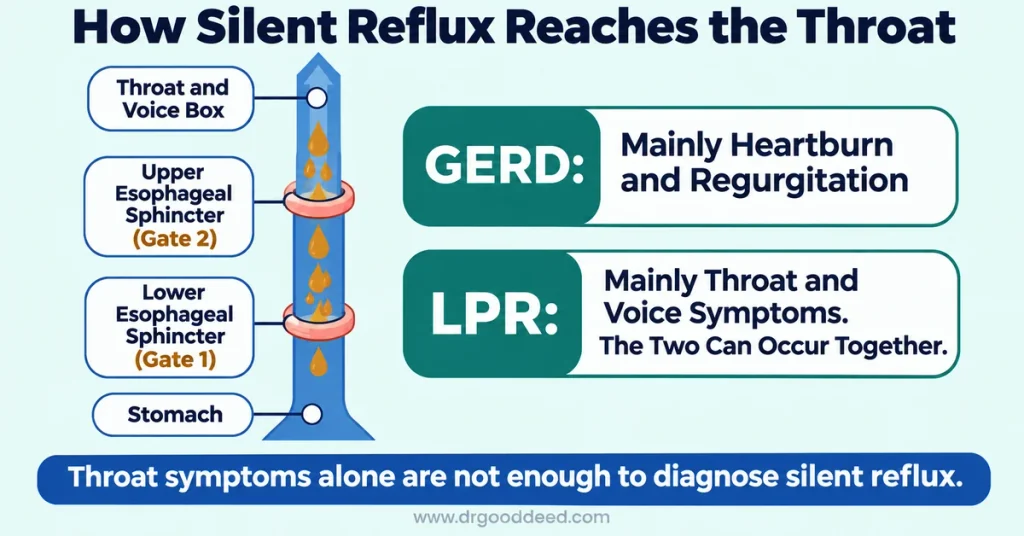
Silent reflux, or LPR (laryngopharyngeal reflux), happens when stomach contents flow back up through the esophagus to the throat or voice box and irritate the tissue there.
Unlike gastroesophageal reflux disease (GERD), silent reflux mainly presents with throat or voice symptoms. However, the two can occur together.
The upper and lower esophageal sphincters normally stop stomach contents from flowing back into the throat. When reflux does reach the throat, it can irritate it. However, throat symptoms alone are not enough to diagnose silent reflux.
Why Silent Reflux Causes Throat Clearing and Hoarseness
Frequent Throat Clearing
Silent reflux throat clearing happens when irritation or a tickly, cough-like feeling builds up in the throat. Clearing it often can irritate the vocal cords further.
Try drinking water or swallowing instead of clearing the throat repeatedly. If the feeling persists, ask your doctor about the cause.
Practical tip: Try a small sip of water or gentle swallowing instead of forceful clearing. If symptoms persist, ask whether an ENT assessment or speech-language therapy may help.
Hoarseness and Voice Changes
Silent reflux hoarseness can make the voice rough, weak, breathy or strained. Your voice may tire after long talking or feel more irritated in the morning.
Other conditions, such as infections, allergies or overusing the voice, can cause similar changes, so persistent hoarseness should always be checked.
Tips: Rest your voice between long conversations, avoid shouting and maintain normal hydration. Arrange an examination if hoarseness persists for four weeks, or sooner if concerning symptoms develop.
Can You Have Reflux Without Heartburn?
Yes. Reflux without heartburn is possible, because reflux that reaches the throat does not always cause the burning chest feeling of heartburn. Some people only notice coughing, throat irritation or voice changes and may not notice acid coming back up.
Some people also feel globus, a lump-in-the-throat feeling. Reflux may contribute, but this feeling has other causes too. If food gets stuck or swallowing hurts, see a doctor promptly.
What Are the Symptoms of Silent Reflux?
The typical symptoms of silent reflux are:
- Throat clearing and excessive mucus.
- Persistent or recurring hoarseness.
- Chronic cough which sometimes gets worse after eating or lying down.
- Sore throat.
- Lump in the throat.
- Vocal fatigue after speaking.
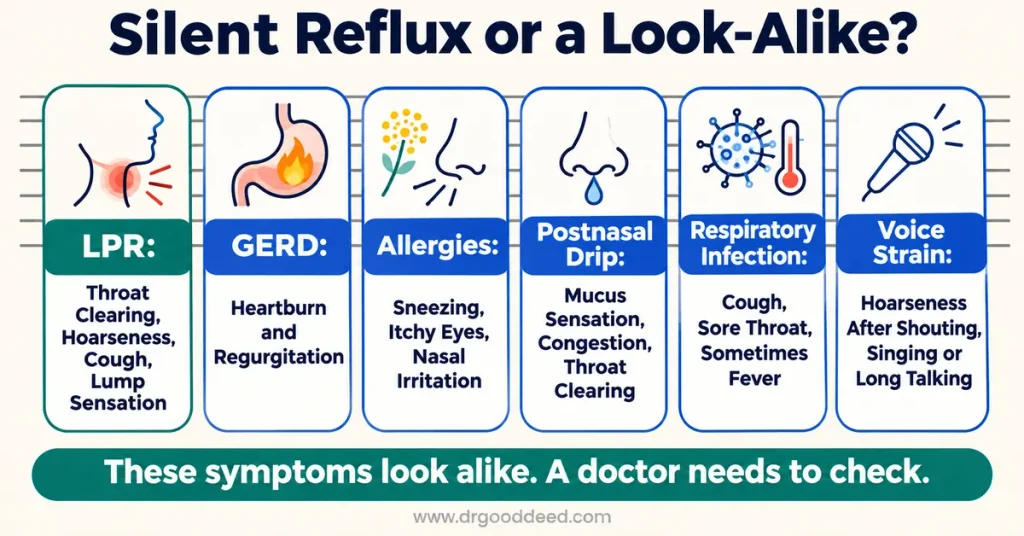
These reflux throat symptoms are not specific to reflux. Allergies, postnasal drip, respiratory infections, asthma and voice strain can cause similar symptoms.
What Triggers Silent Reflux Symptoms?
In some people, large meals and lying down soon after eating may increase reflux. Individual food or drink triggers and smoking may also play a part. If meals also bring on stomach pain, read why your stomach may hurt after eating.
Practical steps people may try include:
- Eat smaller portions if large meals bring on symptoms.
- Stop eating about three hours before lying down.
- Keep a food and symptom diary rather than cutting out whole food groups.
- Consider raising the head of the bed if symptoms are worse at night.
- Stop smoking, and protect your voice by shouting less and clearing your throat less forcefully.
Triggers vary from person to person, so not everyone needs to follow the same strict diet. Sleep position may matter too; read how sleeping on your left side can affect reflux.
LPR vs GERD and Other Look-Alike Conditions
LPR vs GERD mainly comes down to where reflux causes symptoms: GERD typically causes heartburn and regurgitation, while LPR mainly affects the throat and voice. Allergies, postnasal drip, infections and voice strain can look similar.
| Condition | Common features |
| LPR | Throat clearing, hoarseness, cough and a lump sensation |
| GERD | Heartburn and regurgitation are common |
| Allergies | Sneezing, itchy eyes and nasal irritation |
| Postnasal drip | Mucus sensation, nasal congestion and throat clearing |
| Respiratory infection | Cough, sore throat and sometimes fever |
| Voice strain | Hoarseness after shouting, singing or prolonged speaking |
How Is Silent Reflux Diagnosed?
No single test confirms silent reflux LPR. Krause and Yadlapati (2024) note there is no diagnostic gold standard, so doctors combine your symptoms, medical history, medicines and examination findings.
An ear, nose and throat (ENT) specialist may use laryngoscopy to look at the voice box. The exam can show irritation, but that does not prove reflux is the cause. It is still important for ruling out other causes, including cancer (Krause and Yadlapati, 2024).
Ambulatory reflux monitoring, the reference standard for measuring reflux, may be used in selected patients to track reflux episodes over time. Further tests may be needed if the diagnosis is unclear or swallowing is difficult.
Do Acid-Reducing Medicines Always Work?
No. There is mixed evidence on the effectiveness of acid-reducing medicines in individuals who have symptoms only from their throat. In a randomized trial of 220 patients, a twice-daily proton pump inhibitor was no better than placebo after 16 weeks, as reported by Krause and Yadlapati (2024).
The American College of Gastroenterology (2022) recommends reflux testing before acid-reducing medicine when throat symptoms occur without typical GERD symptoms, along with checks for other causes.
Never start, stop or adjust medications without talking with your health care professional. Also, feeling better after treatment does not prove reflux was the cause.
Read more: Can Acid Reflux Cause Headaches?
Silent Reflux: When to See a Doctor
See a doctor if throat symptoms last a while, because some causes need specific treatment and persistent hoarseness needs an examination of the voice box.
Book an appointment with your primary care provider (US) or GP (UK), or call NHS 111 for advice, if:
- Hoarseness lasts 4 weeks or longer, or sooner if you have other concerns.
- Swallowing hurts or keeps getting harder.
- You’re losing weight without a clear reason.
- You notice a lump in your neck, or you cough up or spit blood.
- Symptoms continue to be present despite proper treatment.
- You vomit blood or have black, tarry stools.
If breathing is very difficult, noisy or suddenly getting harder, get emergency help: call 911 or go to the ER in the US, or call 999 or go to A&E in the UK.
Is silent reflux serious? The symptoms can be persistent and bothersome, and symptoms alone cannot show the cause or how serious it is. An examination helps a doctor check for reflux and rule out other causes that need prompt treatment.
Frequently Asked Questions
Can You Have Silent Reflux Without Heartburn?
Yes. Reflux might occur in the throat and voice box and may not result in the typical heartburn. Other conditions, however, may have the same symptoms.
Can Silent Reflux Cause a Chronic Cough?
Yes, reflux can be a cause of chronic cough. Other possible causes include asthma, postnasal drip, infection and other diseases. If a night cough keeps you awake, see how to sleep with a cough.
Can Silent Reflux Cause a Lump in the Throat?
It may contribute to globus sensation, with a feeling of something stuck in the throat. If swallowing is difficult, or you have a neck lump, you should be assessed by a doctor.
How Long Does Silent Reflux Take to Improve?
Recovery is dependent on the cause and severity of the condition and treatment. No universal time frame is reliable. If symptoms persist or come back, see your doctor again.
What Is the Best Treatment for Silent Reflux?
There is no single best treatment. Depending on the cause, a clinician may suggest changes to meal timing, voice care or speech therapy, and medicine where appropriate.
Sources
- American College of Gastroenterology, ACG Clinical Guideline for the Diagnosis and Management of GERD (2022). link
- Alimentary Pharmacology and Therapeutics, Diagnosis and Management of Laryngopharyngeal Reflux (Krause and Yadlapati, 2024). link
- American Academy of Otolaryngology, Clinical Practice Guideline: Hoarseness (Dysphonia) (2018). link
- Cleveland Clinic, Laryngopharyngeal Reflux (LPR). link
- NHS, Dysphagia (Swallowing Problems). link
- American Gastroenterological Association, Extraesophageal Symptoms and Diseases Attributed to GERD. link
Medical Disclaimer: This article is for general information only and is not medical advice. It does not replace a diagnosis, treatment plan, or guidance from a qualified healthcare professional. Always talk to your doctor about your own symptoms and before starting, stopping, or changing any treatment. If you think you may be having a medical emergency, call 911 or go to your nearest emergency room.