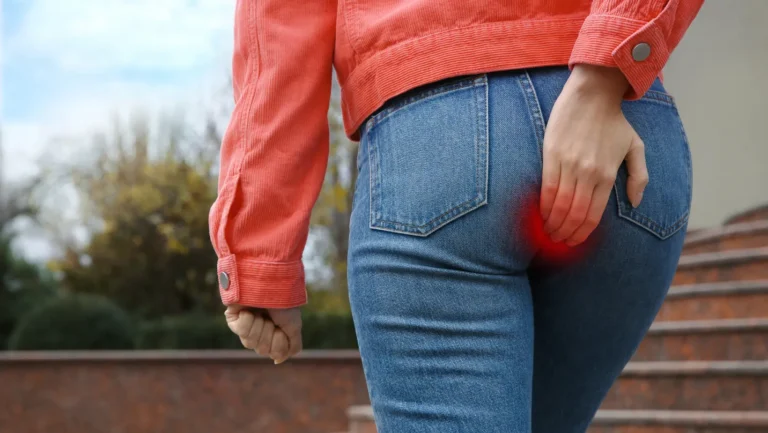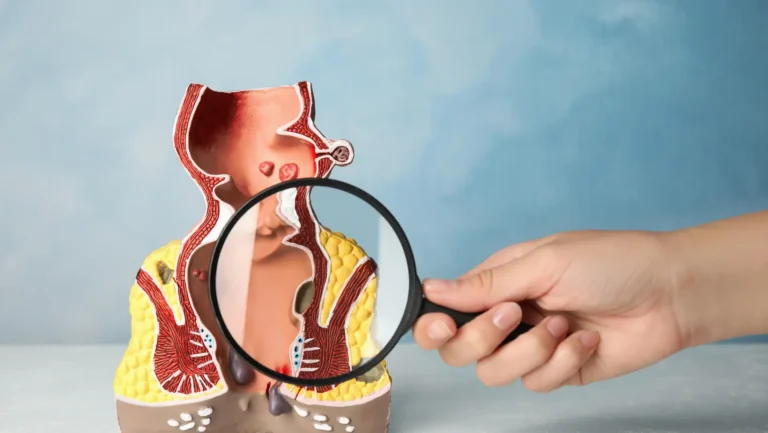


Sudden rectal pain at night that jolts you awake and then fades is often proctalgia fugax, a brief cramp in the muscles around the anus. Doctors diagnose it only after ruling out other causes, such as constipation, anal fissures, hemorrhoids, proctitis and perianal abscesses. A first episode, pain that keeps coming back or any bleeding deserves a clinician’s attention.
Key Takeaways
- Sudden rectal pain at night that stops on its own within minutes is usually a harmless muscle spasm called proctalgia fugax.
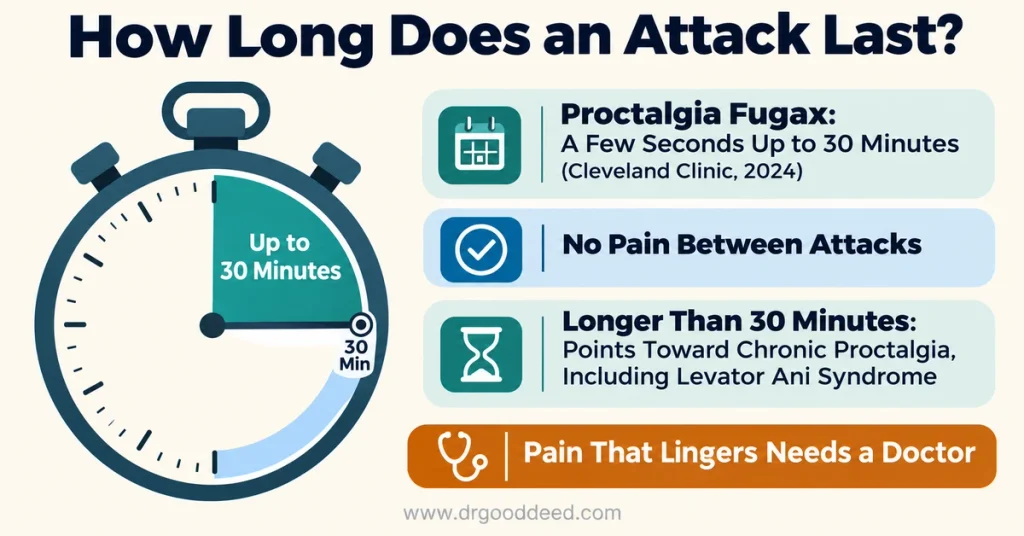
- Attacks last from a few seconds up to 30 minutes, with no pain between them (Cleveland Clinic, 2024).
- Warmth, a sitz bath, gentle movement and relaxation may help during an attack (Cleveland Clinic, 2024).
- See a doctor if the pain lingers, gets worse, or comes with bleeding, a lump or fever.
When to See a Doctor for Rectal Pain
Most brief pain that fades completely is not an emergency, but some signs need prompt or urgent care (Mayo Clinic, 2025):
- Urgent care or the ER now: rectal bleeding that won’t stop, especially with lightheadedness, or anal pain that gets much worse, spreads, or comes with fever, chills or discharge. Have someone drive you.
- Book a visit soon: pain that lasts longer than 30 minutes or more than a few days, keeps coming back, or comes with bleeding, a lump, bowel changes or trouble passing stool.
- Primary care doctor: rectal bleeding at any age, especially if you are over 40, or any new pattern of pain.
If sudden rectal pain at night starts to linger, comes more often or never fully clears between attacks, book a visit with your primary care doctor.
What Causes Sudden Rectal Pain at Night?
Sudden rectal pain at night is commonly caused by proctalgia fugax, a spasm of the anal sphincter or pelvic floor muscles that comes and goes on its own. The pain is sudden, sharp or cramping, can start during the day or wake you at night, and leaves no pain between episodes (Cleveland Clinic, 2024).
Proctalgia fugax is described as a rectal spasm, though the cause is unknown. Doctors diagnose it only after ruling out other conditions (Cleveland Clinic, 2024). Medical News Today (2024) says it is not known why anal pain at night is more common with this condition.
How Long Does Proctalgia Fugax Last?
Proctalgia fugax attacks last from a few seconds up to 30 minutes (Cleveland Clinic, 2024). Pain lasting longer than 30 minutes points toward chronic proctalgia, which includes levator ani syndrome.
Cleveland Clinic (2024) says up to 18% of people have it, but only about 20% of them see a healthcare provider. Patient.info (2024) says up to one in five.
Proctalgia Fugax Causes and Triggers
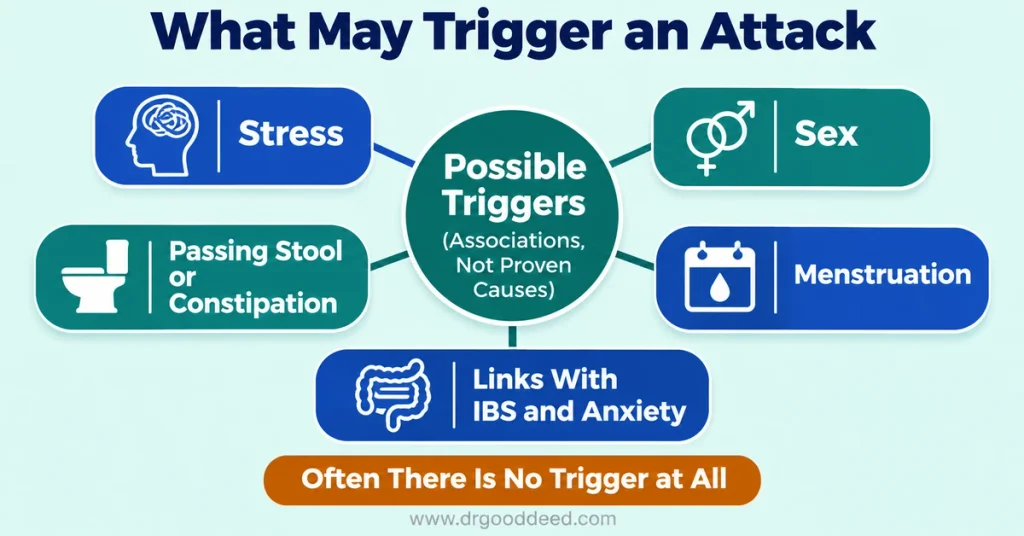
The cause of proctalgia fugax remains unknown. Muscle spasm and problems with the pudendal nerve have been proposed. Cleveland Clinic (2024) says there is usually no trigger at all.
When a trigger is named, the list includes stress, sex, passing stool, constipation and menstruation (Medical News Today, 2024; Cleveland Clinic, 2024; Patient.info, 2024). Cleveland Clinic and Patient.info link it with irritable bowel syndrome and anxiety, and Cleveland Clinic notes it can follow hemorrhoid sclerotherapy or vaginal hysterectomy. These are associations, not proven causes.
If stress seems to bring episodes on, our guide on whether stress can cause hemorrhoids covers the pelvic-area link.
Other Causes of Rectal Pain at Night
Several conditions cause anal or rectal pain, and the timing is what separates them. Proctalgia fugax is the one with no pain between attacks. For what hemorrhoids and thrombosed lumps look like, see our guide on what hemorrhoids look like.
If the pain comes from a hemorrhoid, learn when hemorrhoids go away on their own and when they need treatment.
| Condition | Typical pattern | Source |
| Proctalgia fugax | Sudden, sharp, brief pain; no pain between episodes; can wake you at night | Cleveland Clinic, 2024; Patient.info, 2024 |
| Hemorrhoids | Swelling, bleeding, pain with stool | Cleveland Clinic, 2023 |
| Thrombosed hemorrhoid | A painful lump that forms quickly and needs a prompt visit | Mayo Clinic, 2025 |
| Anal fissure | Sharp pain during or after a bowel movement | Cleveland Clinic, 2023 |
| Perianal abscess | Constant, throbbing pain, often with fever | Cleveland Clinic, 2023 |
| Levator ani syndrome | Dull ache lasting more than 30 minutes, often worse when sitting | Cleveland Clinic, 2024 |
Sudden Rectal Pain at Night: Diagnosis and Treatment
How Doctors Diagnose It
A clinician takes your history, examines you and rules out other causes. Tests such as a digital rectal exam, sigmoidoscopy, or colonoscopy may be recommended by your clinician. The ACG (2021) says structural causes such as a fissure, hemorrhoids, cryptitis, and malignancy are excluded first, and that rectal bleeding often calls for confirmation by endoscopic studies.
What Treatment Exists
There is no proven treatment. The ACG (2021) says evidence for specific treatment is anecdotal and recommends reassurance. Patient.info (2024) says no treatments are proven, and Cleveland Clinic (2024) says there is no cure.
During an attack, Cleveland Clinic (2024) lists warmth from a heating pad or warm bath, a sitz bath and relaxation as comfort measures. Any medicine decision belongs to your clinician.
Rare Serious Causes of Rectal Pain
Rectal pain at night with no bleeding that fades completely fits the proctalgia pattern better than the conditions below, but only an exam can say. Patient.info (2024) lists cancer, Crohn’s disease, ulcerative colitis, rectal prolapse and abscess among causes of anal pain.
Cleveland Clinic (2023) lists anal and rectal cancer as less common causes. Medical News Today (2024) notes that rectal bleeding can signal colon cancer. Bleeding, a lump, or pain that persists needs checking; see our note on hemorrhoid vs polyp for bleeding causes.
Frequently Asked Questions
Is Proctalgia Fugax Serious?
Cleveland Clinic (2024), Medical News Today (2024) and the ACG (2021) describe it as benign, with no tissue damage. Because it is diagnosed by exclusion, a clinician should still rule out other causes, especially after a first episode, recurrence, or bleeding.
Can Stress or Anxiety Cause Rectal Spasms?
Stress and anxiety are linked to episodes (Medical News Today, 2024; Cleveland Clinic, 2024; Patient.info, 2024). That is an association, not a proven cause, and many episodes have no trigger.
Is a Sudden Sharp Pain in the Anus a Sign of Cancer?
Brief attacks of sudden sharp pain in the anus with no pain in between are not the usual cancer pattern, but pain that turns constant, bleeding or a lump needs a doctor. Cancer is a rare cause of anal pain (Patient.info, 2024; Cleveland Clinic, 2023). For bleeding or bowel changes, compare hemorrhoids and colon cancer symptoms before your visit.
Can Constipation Cause Sudden Rectal Pain?
Constipation is a listed trigger (Medical News Today, 2024; Patient.info, 2024), though the cause of proctalgia fugax is unknown. Pain that prevents bowel movements needs prompt care (Cleveland Clinic, 2023).
Sources
- Cleveland Clinic, Proctalgia Fugax (2024). link
- Cleveland Clinic, Anal Pain (2023). link
- Patient.info, Proctalgia Fugax (2024). link
- American Journal of Gastroenterology, ACG Clinical Guidelines: Management of Benign Anorectal Disorders (Wald and others, 2021). link
- Medical News Today, Proctalgia Fugax and Anal Pain (2024). link
- Mayo Clinic, Anal Pain: When to See a Doctor (2025). link
Medical Disclaimer: This article is for general information only and is not medical advice. It does not replace a diagnosis, treatment plan, or guidance from a qualified healthcare professional. Always talk to your doctor about your own symptoms and before starting, stopping, or changing any treatment. If you think you may be having a medical emergency, call 911 or go to your nearest emergency room.