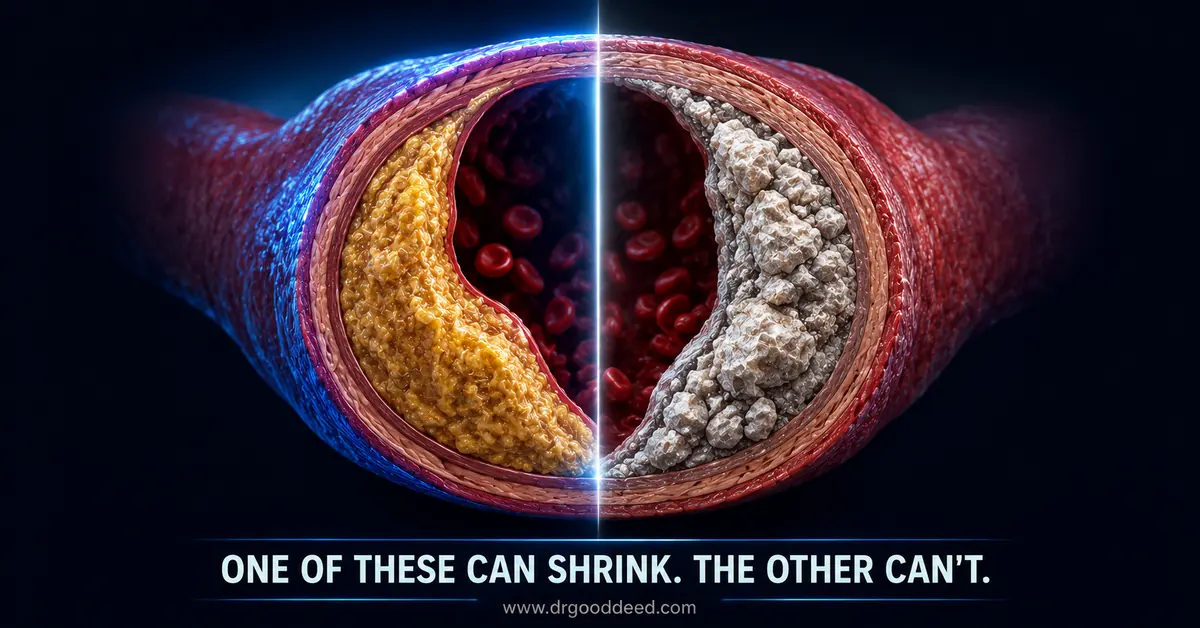

How to clear blocked arteries without surgery depends on whether soft plaque can shrink with treatment, but calcified plaque cannot. High-intensity statins, a Mediterranean-style diet, and structured exercise can help you reverse blocked arteries, but only when the blockage is soft and non-calcified.
Nearly half of American adults live with some form of cardiovascular disease. Coronary artery disease remains the leading cause of death in the United States. This guide separates real, trial-backed ways to unclog arteries naturally from the wishful marketing claims found on many hospital blogs, and covers exactly when a procedure becomes necessary regardless of diet.
Quick Answer: Can You Really Unclog Arteries Naturally?
- Soft, non-calcified plaque can shrink with high-intensity statins and strict diet change. This is genuine reverse blocked arteries evidence, backed by imaging trials.
- Calcified plaque cannot dissolve. No food or supplement removes calcium once it hardens inside an artery.
- A blockage over 70%, or one causing rest pain, needs a procedure. Diet alone will not fix it.
- Clearing blocked arteries without surgery is based on soft plaque, since severe calcified blockages usually already have symptoms.
What Does “Clearing” a Blocked Artery Actually Mean?
Plaque starts soft and fatty, then slowly hardens with calcium over years.
Soft plaque can shrink with aggressive medical therapy. Calcified plaque cannot, because calcium does not dissolve back into the bloodstream once deposited. This is the detail most competing articles gloss over, and it explains why two patients with an identical “80% blocked” diagnosis can face very different outcomes.
A younger patient with soft, inflamed plaque has real room to unclog arteries naturally through treatment. An older patient with a calcium score above 400 has a fixed structure. Medication can stabilize it. Medication cannot remove it.
Coronary CT angiography is the test that reveals which type you have. A standard calcium scan only sees the hardened portion and misses soft plaque entirely.
| Plaque type | How it’s detected | Can it shrink? |
| Soft (lipid-rich) | CT angiography | Yes, with high-intensity statins and lifestyle change |
| Calcified | Coronary calcium (CAC) score | No, but progression can be slowed |
| Mixed | CT angiography | Soft portion may regress; calcified portion stays |
Can You Unclog Arteries Naturally? The Real Trial Evidence
Yes, but only for soft plaque, and only with sustained, aggressive change, not casual dieting. The strongest human evidence comes from two very different kinds of research: intensive lifestyle trials and high-dose statin imaging studies. Both measured actual plaque volume, not just cholesterol numbers.
Dr. Dean Ornish’s Lifestyle Heart Trial tested a near-vegetarian diet with under 10% of calories from fat. Patients also did daily exercise and stress management. Researchers found that cholesterol-clogged plaque shrank slightly in the treatment group, while plaque increased in the control group given standard advice.
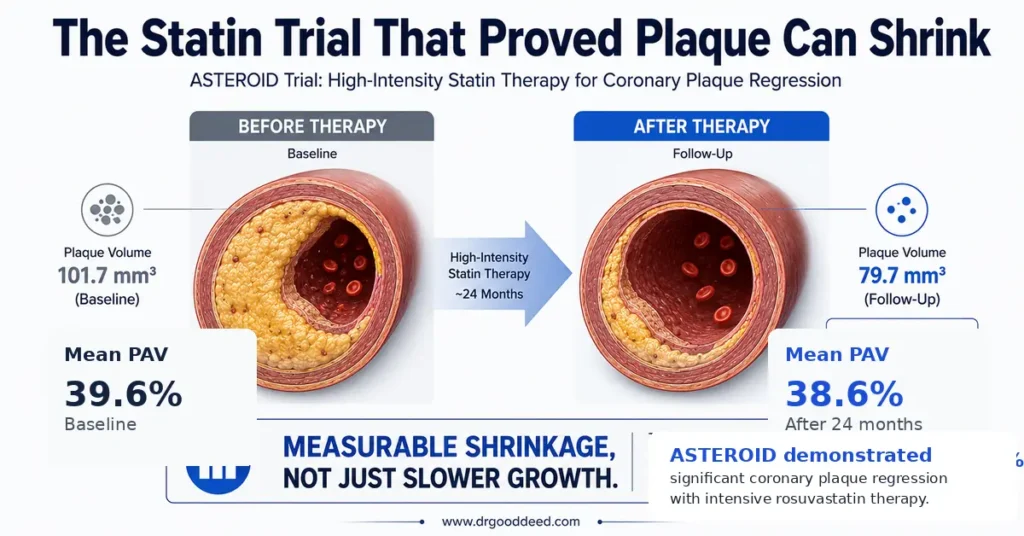
On the medication side, the ASTEROID trial gave patients very high-dose rosuvastatin. Researchers used intravascular ultrasound to directly measure plaque volume. Earlier statin trials had shown treatment could slow or halt plaque progression, but had not convincingly shown actual regression using the strictest volume measurement. ASTEROID documented measurable shrinkage, not just slower growth. A 2024 meta-analysis of lipid-lowering trials reinforced this finding. High-intensity statin therapy was the only treatment category that produced significant reductions in both total and percent atheroma volume across pooled trial data.
Statins and Other Medications: The Non-Surgical Backbone
Statins reverse plaque in its soft, non-calcified form more reliably than diet alone. This is the single most evidence-backed answer to how to clear blocked arteries without surgery.
Cleveland Clinic’s chair of cardiovascular medicine, Dr. Steven Nissen, put it plainly. He states there is strong evidence that high-intensity statins can reverse coronary artery disease. Statins lower LDL cholesterol and reduce arterial inflammation. Together, these actions stabilize plaque and shrink its lipid core.
Three medication categories make up current non-surgical treatment for clogged arteries:
- High-intensity statins (atorvastatin 40 to 80mg, rosuvastatin 20 to 40mg): first-line therapy, proven to shrink soft plaque in imaging trials
- PCSK9 inhibitors (evolocumab, alirocumab): added when statins alone miss LDL targets. The GLAGOV trial linked these drugs to greater plaque volume reduction than statins alone
- Ezetimibe: often paired with a statin for extra LDL reduction, without added statin side effects
A newer option, inclisiran, is a twice-yearly injection now studied for plaque reduction. Early PCSK9 inhibitor data already shows structural change. One imaging study found fibrous cap thickness increased significantly after 26 weeks of evolocumab, a sign plaque was stabilizing. Meaningful imaging change typically takes 18 months to 2 years of steady use. Stopping the medication allows plaque to progress again.
Foods That Unclog Arteries Naturally (and Foods That Don’t Help)
Diet alone rarely reverses a diagnosed blockage. But specific foods do measurably lower the LDL particles that build new plaque, and that distinction matters more than generic “eat healthy” advice. Foods that unclog arteries naturally share one mechanism: they bind cholesterol in the gut or reduce the inflammation that destabilizes plaque.
| Genuinely helps | Limited or no real evidence |
| Soluble fiber (oats, beans, psyllium) | “Detox” juices or cleanses |
| Fatty fish (salmon, sardines), twice weekly | Coconut oil for artery health |
| Extra-virgin olive oil replacing butter | Occasional “superfoods” |
| Unsalted nuts, moderate portions | Cayenne pepper or vinegar shots |
| Legumes replacing red meat, several times weekly | Garlic supplements as a statin substitute |
Mayo Clinic recommends a heart-healthy eating plan such as the Mediterranean diet as a core part of managing atherosclerosis, alongside not smoking and staying active. The Mediterranean pattern outperforms low-fat diets in outcome trials. It lowers inflammatory markers, not just LDL. Sodium under 2,300mg daily also matters here, since high sodium worsens arterial stiffness on its own.
What Lifestyle Change and Medication Cannot Fix
This is the part most hospital blogs skip or soften. If your blockage is calcified, or narrows the artery by more than 70%, diet and pills will not open it. The vessel needs a mechanical fix. Claiming otherwise, as several marketing-driven health sites currently do, risks delaying care a patient genuinely needs.
Signs that lifestyle change alone will not be enough:
- Chest pain occurring at rest, not just during exertion
- A stress test showing significantly reduced blood flow
- A coronary calcium score above 400
- Angiography showing 70% or greater narrowing in a major artery
- A prior heart attack tied to the blocked vessel
In these cases, lifestyle change still matters. It becomes a companion to a procedure, not a replacement for one.
Angioplasty and Stents: Non-Surgical Procedures That Actually Open Arteries
Angioplasty is genuinely angioplasty without surgery, in the traditional sense. There’s no chest incision, and no general anesthesia requiring a bypass machine. Most patients go home within a day. A cardiologist threads a thin catheter through the wrist or groin. The catheter reaches the blocked artery. A small balloon inflates and compresses the plaque against the vessel wall. A stent often stays behind to keep the artery open.
Hackensack Meridian Health’s non-invasive cardiologist, Dr. Mindy Markowitz, describes it clearly. Balloon angioplasty is a minimally invasive procedure that opens narrowed arteries through targeted inflation. Angioplasty and stenting are legitimate atherosclerosis treatment options that skip open surgery entirely. For a severely blocked artery, they work faster and more reliably than any diet ever could.
Case Spotlight: A Realistic Example
The name and details below are illustrative and do not represent an actual patient. Any resemblance to a real person is coincidental.
Consider a composite case similar to what cardiologists see weekly. Robert Aldana, 58, had a 55% blockage in one coronary artery, found during a routine stress test. CT angiography showed no calcification. His cardiologist started a high-intensity statin. He was referred to cardiac rehab and given a daily walking goal of 30 minutes. At his 18-month follow-up angiogram, the blockage had dropped to 38%. His case mirrors what the ASTEROID and GLAGOV data predict: soft plaque, caught early, responds to treatment. A calcified 80% blockage in the same artery would not have followed the same path.
Exercise and Cardiac Rehab: Building New Blood Flow Routes
Regular aerobic exercise does something statins alone cannot. It encourages collateral circulation, small new vessels that reroute blood around a narrowed section.
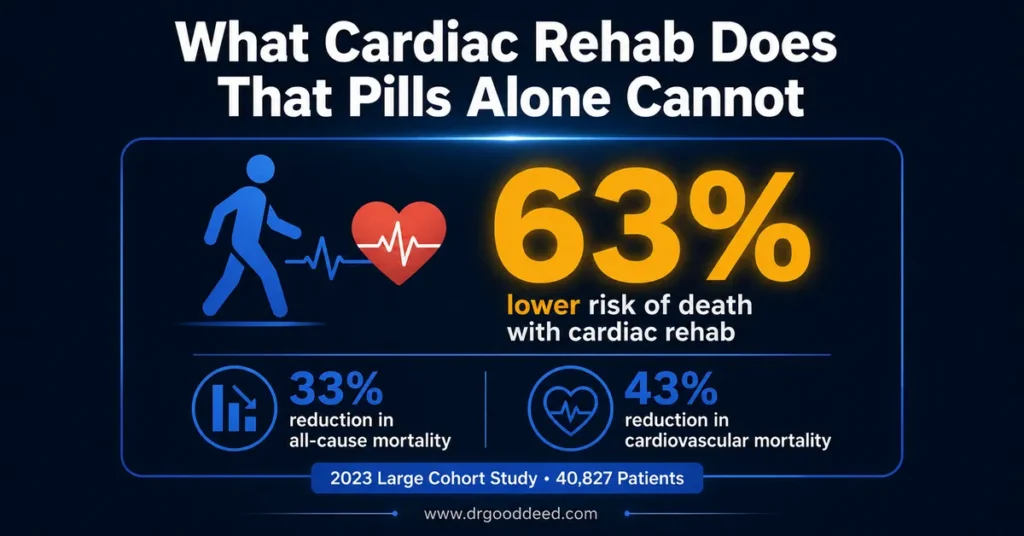
Structured cardiac rehabilitation delivers this benefit with documented outcomes. A 2023 cohort study of over 11,000 patients found that completing cardiac rehab was linked to a 33% reduction in all-cause mortality. The same study found a 43% reduction in cardiovascular mortality after roughly four years of follow-up.
A separate 2025 review found similar results. Participation in cardiac rehab was associated with as much as a 63% reduction in all-cause mortality over a 12-month period. The American Heart Association gives cardiac rehab its highest recommendation grade for patients recovering from a cardiac event, right alongside statin therapy.
When to See a Cardiologist Immediately
Do not try to manage these symptoms with diet or supplements while waiting for an appointment:
- Chest pressure, tightness, or pain lasting more than a few minutes
- Pain spreading to the jaw, arm, or back, especially with sweating or nausea
- Sudden shortness of breath with minimal exertion
- Fainting or near-fainting linked to chest discomfort
Call 911 for any of these. They can signal an unstable blockage, regardless of how clean your diet has been.
FAQs
Can you unclog arteries naturally without medication?
Rarely to a meaningful degree. The Ornish trial showed small plaque regression with an extremely strict vegetarian diet. Most soft-plaque regression evidence combines diet with high-intensity statins, not diet alone.
Do statins really reverse blocked arteries, or just slow them down?
Both, depending on dose and plaque type. High-dose statins in the ASTEROID trial produced measurable plaque volume reduction, not just slower progression, in soft plaque only.
Is angioplasty considered surgery?
No. Angioplasty uses a catheter through a small wrist or groin puncture, not an open-chest operation. Most patients recover within one to two days.
How long does it take to unclog arteries naturally?
Imaging studies show measurable soft plaque change after 18 to 24 months of consistent statin use and diet change. Nothing shows meaningful regression before six months.
Can walking alone unclog arteries naturally?
No, not by itself. Walking builds collateral circulation, but plaque volume reduction in trials required combining exercise with statin therapy.
Does a calcium score of zero mean my arteries are clear?
Not necessarily. A score of zero rules out calcified plaque but misses soft, non-calcified plaque, which causes many heart attacks despite a “clean” scan.
Sources
- Cleveland Clinic: Atherosclerosis (Arterial Disease) link
- Mayo Clinic: Arteriosclerosis/Atherosclerosis, Diagnosis and Treatment link
- Harvard Health: Is It Possible to Reverse Coronary Artery Disease? link
- JAMA: Effect of Very High-Intensity Statin Therapy on Regression of Coronary Atherosclerosis (ASTEROID Trial) link
- ScienceDirect: Atherosclerotic Coronary Plaque Regression From Lipid-Lowering Therapies, Meta-Analysis (2024) link
- Hackensack Meridian Health: How Doctors Treat Clogged Arteries Without Surgery link
- WebMD: Can You Reverse Coronary Artery Disease? link
- Journal of the American Heart Association: Mortality Benefits of Cardiac Rehabilitation in Coronary Artery Disease (2023) link
- American Journal of Cardiology: Cardiac Rehabilitation for Coronary Artery Disease, Gaps and Future of Personalized Prevention (2025) link
- ScienceDirect: VICTORION-PLAQUE, Effect of Inclisiran on Atherosclerotic Plaque link
This article is for general information only. It does not replace advice from a licensed physician. Talk with your cardiologist before starting any new medication, supplement, or exercise plan.