
Choosing the best migraine tracker app for 2026 depends on what you want to monitor: Migraine Buddy is a strong all-around choice for detailed attack logging, medication tracking, weather information, and doctor-ready reports, while N1-Headache is better suited to people who want deeper, data-driven analysis of potential triggers and protective factors over time.
If you also track sleep, mood, diet, or other health conditions, a broader symptom-tracking app such as Bearable may be more practical. Ultimately, prioritize an app that makes daily logging quick and consistent, provides useful trend reports, and lets you export information for your healthcare provider.
Key Takeaways
- Migraine Buddy is the most widely used and full-featured migraine diary app, with millions of users, cloud sync, and physician-ready PDF exports.
- Almost every trigger-logging app, including well-known names, runs on self-reported data with no published clinical trial behind the app itself.
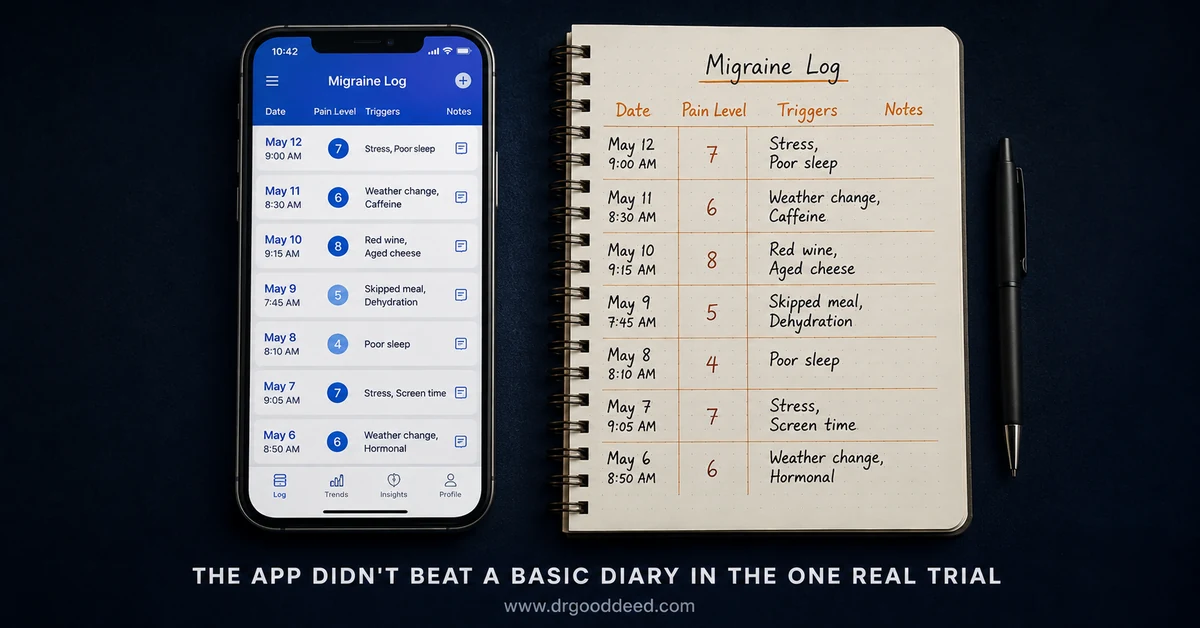
- The one recent randomized trial testing a similar migraine-management app found it did not outperform a basic headache diary, a result most competitor roundups never mention.
- N1-Headache is free, was built with input from migraine neurologists, and uses a structured system to separate real triggers from coincidence.
- All three are self-management tools. None replace a diagnosis or treatment plan from a licensed neurologist or headache specialist.
Migraine Tracker Apps at a Glance (Comparison Table)
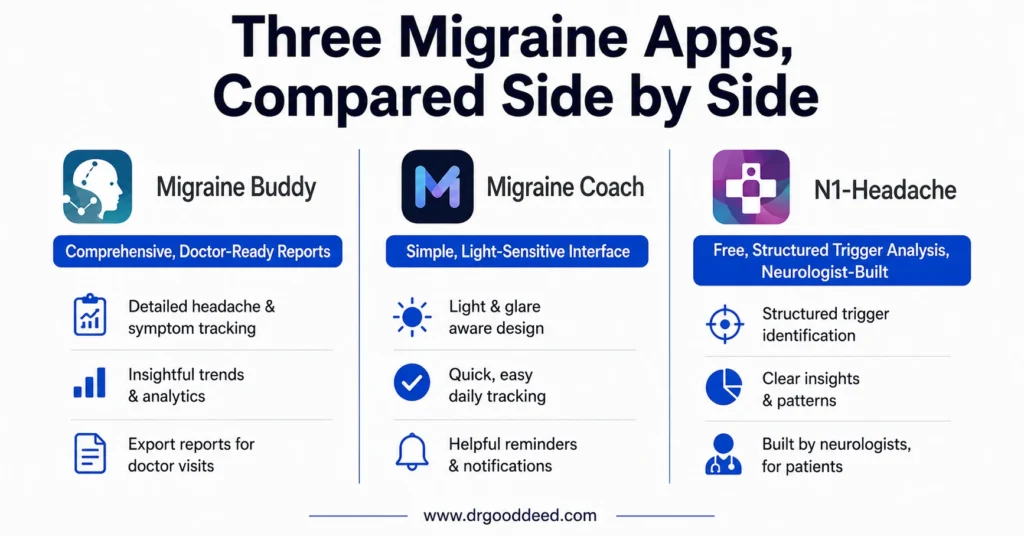
Cost, platform support, and what kind of evidence stands behind each app all affect whether it fits your situation. Use this table as a starting point, then read the sections below for the details that matter for your specific needs.
| Feature | Migraine Buddy | Migraine Coach | N1-Headache |
| Cost | Free, with MBplus premium tier | Free | Free, premium unlocked via participating neurologists |
| Platform | iOS and Android | iOS and Android | iOS and Android |
| Developed with | Neurologists, data scientists, chronic illness experts | Headache specialists and engineers (SensorRx) | Migraine neurologists (originally Curelator Inc.) |
| Clinical trial evidence | None published for the app itself | None published for the app itself | None published for the app itself |
| Best for | Comprehensive daily tracking and doctor reports | Simple, no-frills attack logging | Structured trigger and protector analysis |
Migraine Buddy: Most Comprehensive Option
Migraine Buddy is the largest and most feature-dense migraine tracking app on the market, with the developer citing a community of several million users.
- Migraine Buddy was created by Francois, a migraine patient himself, and built with input from neurologists, data scientists, and other experts in the migraine and chronic illness space.
- Migraine Buddy logs pain location, intensity, duration, symptoms, medications, and sleep, then compiles that data into a report you can hand to your doctor.
- Migraine Buddy runs on iOS and Android with cloud sync, so your log survives a phone change. The free tier covers core tracking and reporting.
- The paid MBplus tier adds predictive risk analysis, AI symptom suggestions, and expert-designed coaching plans.
Your data is compared against millions of similar entries, which the app uses to power features like weather-pattern flags, though this is pattern detection within user data, not clinical trial validation.
Migraine Coach: A Simpler Trigger-Logging App
Migraine Coach was originally launched by Welltodo in 2015 and later acquired and relaunched by SensorRx, a patient-generated health data company.
- Using Migraine Coach, you can log an attack, score it with the MIDAS disability scale, and export a PDF for your neurologist. Its interface is light-sensitive by design, a genuinely useful detail for anyone logging an attack mid-migraine when screen brightness is unbearable.
No published randomized trial tests Migraine Coach’s effect on migraine frequency or severity, and that is true of nearly every trigger-logging app on the market, not just this one. The single relevant randomized clinical trial in this space tested a different app, M-sense Migräne, in 477 adults with migraine over 12 weeks. It found the full app did not reduce migraine days any more than a bare-bones control app with just diary features.
Expert Insight: A migraine app’s feature list says nothing about whether it changes migraine frequency. The only relevant randomized trial in this category, testing M-sense Migräne against a bare diary control, found no added benefit from the full-featured version, which means the value of most trigger-tracking apps lies in identifying your personal patterns for a clinician, not in a proven treatment effect from the app itself.
N1-Headache: Built With Neurologists, Completely Free
N1-Headache, formerly branded Curelator, was developed with input from leading migraine neurologists and is recommended by the National Headache Foundation.
- N1-Headache uses a proprietary Visual Migraine Language covering more than 70 factors, letting you log your day in two to three minutes.
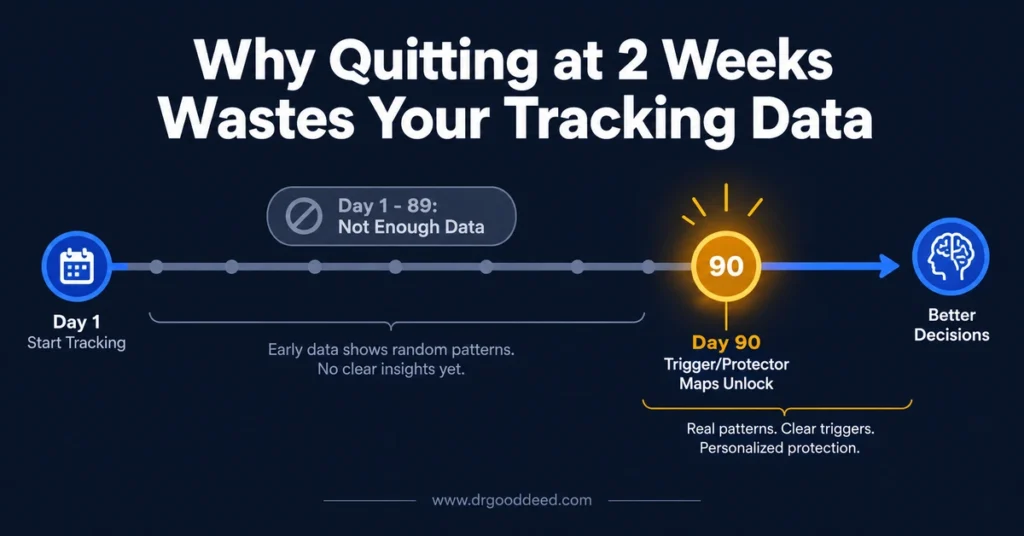
- After 90 days of consistent entries, N1-Headache generates Trigger, Protector, and No Association maps that separate factors statistically linked to your attacks from ones that are not, a level of structured analysis most free migraine tracker options do not attempt.
- N1-Headache is entirely free for core use, with premium features unlocked automatically for patients whose neurologist participates in N1-Headache’s referral program.
- N1-Headache also flags medication overuse, relevant since taking triptans more than 9 days a month or other painkillers more days than not can itself worsen headache frequency.
- N1-Headache is iOS and Android compatible and pairs well with a device-based approach if you are also comparing migraine devices, covered in our companion piece on migraine wearables.
Pro Tip: Most trigger maps need at least 90 days of consistent daily entries before they mean anything statistically, so if you stop logging after two weeks because nothing obvious turned up, you have not given the app’s pattern analysis enough data to actually work.
What to Look for in a Migraine Tracker App
Before committing to one migraine diary app, check what it can and cannot actually prove about your migraine.
- Evidence behind the app, not just the condition. Most trigger-tracking apps have zero published clinical validation of their own; they are structured journals, not tested interventions. That is not disqualifying, but it should shape your expectations.
- Doctor-ready export format. A migraine app for doctor visits needs to generate a clean PDF or summary your neurologist can scan in under a minute, not a raw data dump.
- Data privacy practices. Migraine data can reveal patterns tied to hormonal cycles, medication use, and mental health. Check whether the app sells or shares data with third parties before entering sensitive details.
- Speed of logging mid-attack. An app you cannot use one-handed with photophobia during an actual migraine will get abandoned within a week, regardless of its feature list.
- Cost transparency. A genuinely free migraine tracker should state clearly what is locked behind a paywall, rather than restricting basic logging to force an upgrade.
How to Get the Most Out of Tracking Your Migraines
Logging attacks only after they happen is the most common way people underuse any headache diary app. Track daily, not just on migraine days, so the app has non-attack days to compare against.
- Log sleep, stress, meals, hydration, and weather alongside pain, since single-factor tracking misses combined triggers most people actually have.
- Bring your exported report to appointments instead of just letting data sit in the app; unopened data changes nothing about your treatment plan.
- Give any trigger-analysis feature at least 8 to 12 weeks of consistent entries before drawing conclusions, matching the timeframe used in actual research on these apps.
- Reassess your app choice if you are only using a fraction of its features. A simpler tool used daily beats a comprehensive one used sporadically.
Sources
- American Migraine Foundation: Headache Journals: Tracking Your Migraine link
- Migraine Buddy, official site link
- Aptar Digital Health: MigraineBuddy product page link
- NeurologyLive: Advantages of Migraine Buddy App, Richard B. Lipton, MD link
- N1-Headache, official site link
- N1-Headache FAQ, Curelator Inc. link
- JAMA Network Open: A Prescribed Digital Health App and Number of Migraine Days, Randomized Clinical Trial (2025) link
- Migraine Science Collaborative: A Failed Clinical Trial of a Digital App for Migraine link
- MobiHealthNews: SensorRx’s Acquisition of Welltodo (Migraine Coach) link
- PR Newswire: SensorRx Re-Introduces Migraine Coach App link