
A lingering cough sends millions of Americans to urgent care every year, and most want one answer: is this bronchitis vs pneumonia?
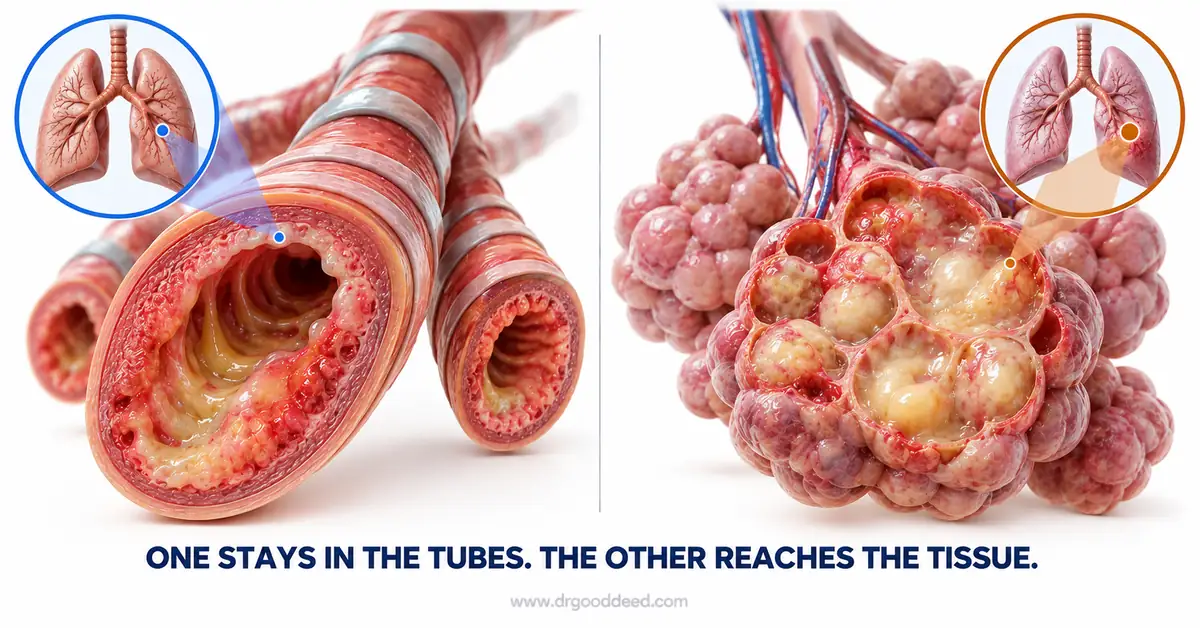
Bronchitis inflames the airways that carry air into your lungs. Pneumonia infects the lung tissue itself, the air sacs where oxygen actually enters your blood. That distinction, airway versus tissue, decides how serious the illness is, how it gets treated, and how fast it should improve.
This guide breaks down bronchitis vs pneumonia by cause, symptom pattern, contagious period, and the exact point where a chest cold stops being a chest cold.
Bronchitis vs Pneumonia at a Glance
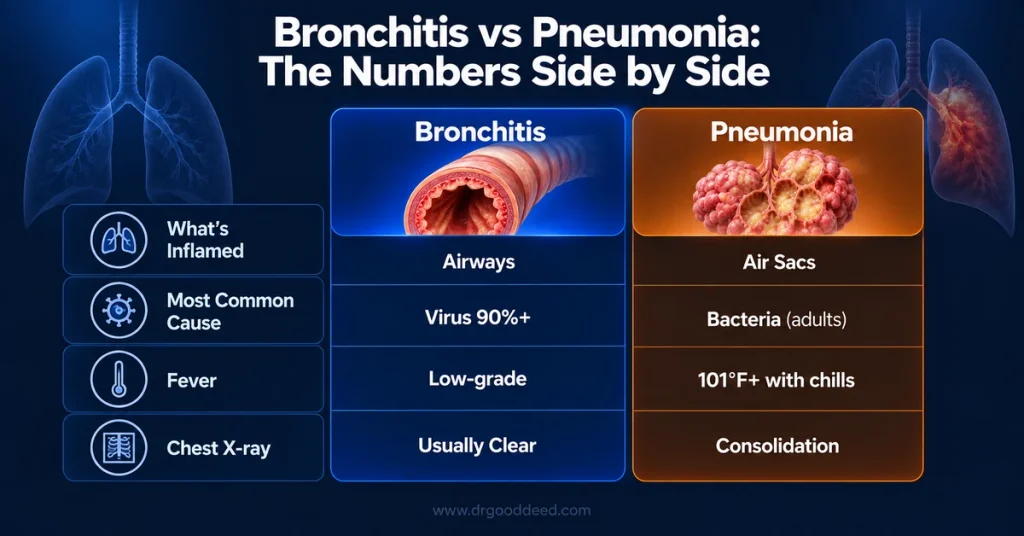
Bronchitis is airway inflammation, usually viral, and it typically resolves on its own within three weeks. Pneumonia is a lung tissue infection, often bacterial in adults, and it frequently needs antibiotics plus follow-up imaging. The table below lines up the practical differences a reader needs before calling a clinic.
| Feature | Bronchitis | Pneumonia |
| What’s inflamed | Bronchial tubes (airways) | Alveoli (air sacs in lung tissue) |
| Most common cause | Virus (over 90% of cases) | Bacteria in adults; virus in about a third of cases |
| Fever | Low grade or absent | Often 101°F or higher, with chills |
| Cough | Persistent, often productive | Productive, sometimes rust colored or bloody mucus |
| Chest X-ray | Usually clear | Shows consolidation, a cloudy patch |
| Typical duration | 10 days to 3 weeks | 1 to 3 weeks with treatment |
| Antibiotics needed | Rarely | Usually, if bacterial |
What Is Bronchitis?
Bronchitis is inflammation of the bronchi, the branching tubes that carry air from your windpipe into your lungs. The swelling and extra mucus these tubes produce during infection is what triggers the trademark bronchitis cough.
- Acute bronchitis develops after a cold or flu virus travels down into the bronchial tubes. It typically clears within two to three weeks, though the cough itself can linger longer than the infection does.
- Physician Charles Badham coined the word “bronchitis” in 1808 and, in a follow-up essay in 1814, became the first doctor to formally separate it from pneumonia and pleurisy, conditions previously lumped together under vague terms like catarrh.
- More than 90% of acute bronchitis cases are caused by viruses such as rhinovirus, influenza, parainfluenza, and coronavirus, according to research published in American Family Physician.
- Chronic bronchitis is a separate, longer-term condition defined by a productive cough on most days for at least three months a year, across two consecutive years, and it falls under chronic obstructive pulmonary disease (COPD).
- Risk factors include smoking, secondhand smoke exposure, air pollution, dust, and chemical fumes, all of which irritate the bronchial lining directly.
Typical bronchitis symptoms include a persistent cough, mild chest tightness, wheezing, and a low-grade fever, rarely reaching the intensity pneumonia produces.
What Is Pneumonia?
Pneumonia is an infection that reaches the alveoli, the tiny air sacs where oxygen crosses into your bloodstream. When these sacs fill with pus, fluid, or inflammatory cells, breathing becomes harder and oxygen delivery drops.
- Bacteria, most often Streptococcus pneumoniae, cause the majority of adult community-acquired pneumonia cases. This is why antibiotics are the default treatment once bacterial pneumonia is confirmed.
- Viral pneumonia accounts for roughly one-third of cases and is often caused by influenza, respiratory syncytial virus (RSV), or coronaviruses, including SARS-CoV-2.
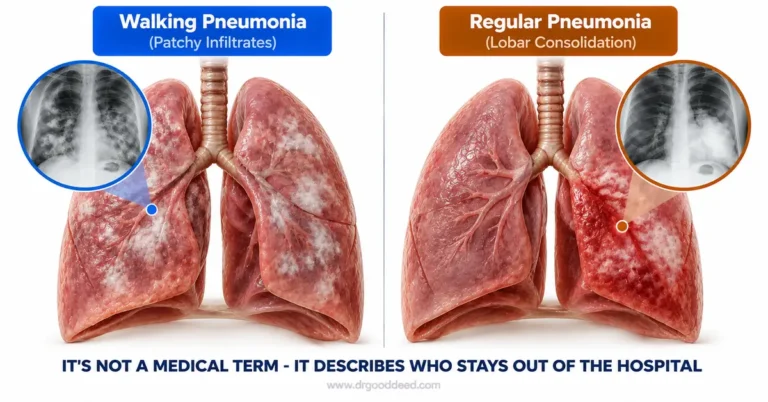
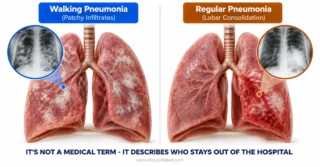
- Mycoplasma pneumoniae causes so-called walking pneumonia, a milder, atypical form that can let people stay upright and functional despite an active lung infection, unlike typical bacterial pneumonia.
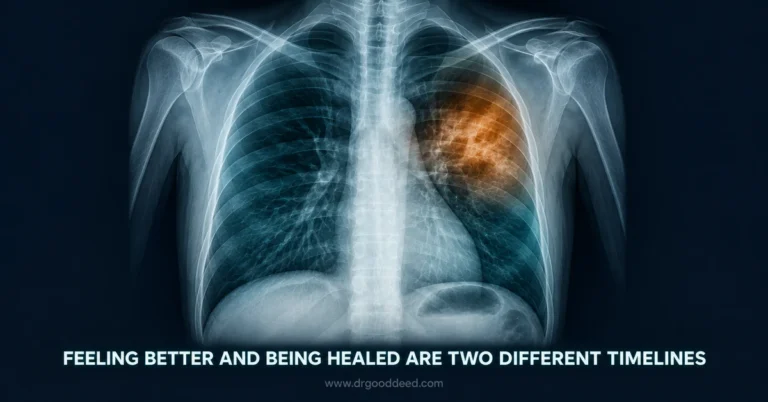
- A chest X-ray typically shows consolidation, a dense, cloudy patch where fluid has replaced air in the lung tissue, a finding that almost never appears with plain bronchitis.
- People over 65, infants, smokers, and anyone with a weakened immune system or chronic lung disease face a higher risk of severe pneumonia and hospitalization.
Bronchitis vs Pneumonia: Key Differences
Both bronchitis and pneumonia start with a cough, both can follow a cold, and both leave you exhausted. The difference shows up in intensity, in the vital signs a clinician checks, and in what a stethoscope or X-ray picks up.
Symptoms and Severity
- Bronchitis produces a persistent cough, mild chest discomfort, wheezing, and a low grade fever under 100.4°F in most cases, without the sudden sharp decline seen in pneumonia.
- Pneumonia often brings a fever of 101°F or higher with shaking chills, sharp chest pain that worsens with deep breaths or coughing, and breathlessness even at rest.
- Clinicians flag pneumonia risk when resting heart rate exceeds 100 beats per minute, breathing rate exceeds 24 breaths per minute, or oral temperature reaches 100.4°F or higher, combined with abnormal lung sounds on one side.
- Confusion, especially in older adults, and bluish lips or fingertips signal low blood oxygen and point toward pneumonia rather than bronchitis.
Causes
- Bronchitis is viral in more than nine out of ten cases, driven by the same cold and flu viruses responsible for most upper respiratory infections.
- Pneumonia in adults is more often bacterial, though influenza, RSV, and coronaviruses cause a substantial share of cases too, particularly in children and older adults.
- Bacterial superinfection can follow a viral illness in both conditions. A worsening cough after apparent improvement always deserves attention for this reason.
How They Affect the Lungs
- Bronchitis stays confined to the airway lining, the mucous membrane inside the bronchial tubes, so gas exchange in the lungs usually remains intact.
- Pneumonia reaches the alveoli themselves, filling the air sacs with fluid and pus, which directly interferes with oxygen absorption into the blood.
- This anatomical difference, airway versus alveoli, is the clearest way to separate the two conditions. It is more reliable than any symptom checklist alone.
Can Bronchitis Turn Into Pneumonia?
Bronchitis does not automatically progress into pneumonia, but the same weakened airway defenses that let one infection take hold can allow a second, deeper infection to follow.
- Bacterial pneumonia can develop as a secondary infection after acute bronchitis, especially in smokers, older adults, and people with existing lung disease like COPD or asthma.
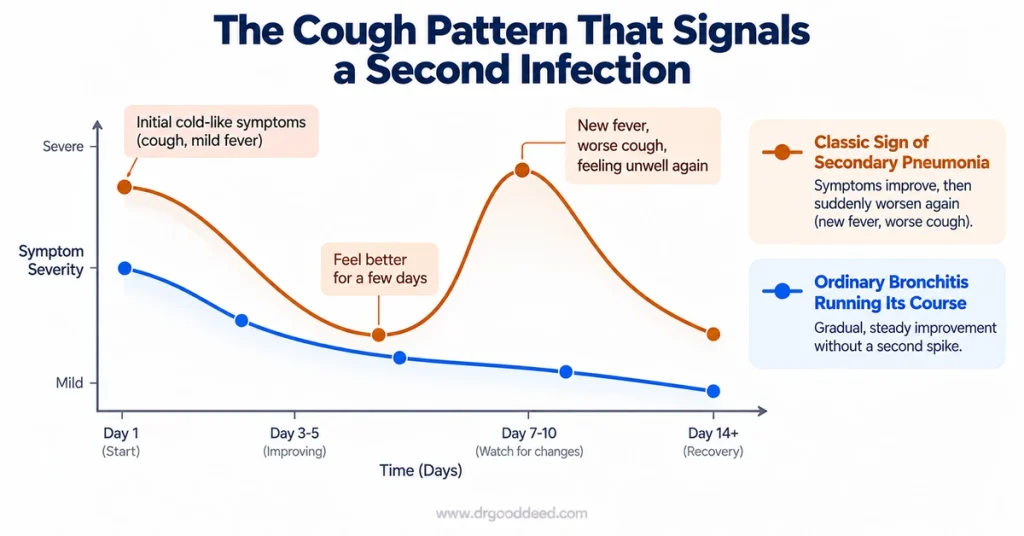
- A cough that improves for several days and then suddenly worsens, alongside a new or higher fever, is a classic warning sign of secondary pneumonia rather than ordinary bronchitis running its course.
- Does bronchitis need antibiotics if it progresses this way? Only once bacterial pneumonia is confirmed by a clinician, typically through exam findings or a chest X-ray.
- Older adults and anyone with a weakened immune system should seek evaluation for a cough lasting more than three weeks, or a fever that returns after initially improving.
Expert Insight: A cough that follows a “better, then worse” pattern deserves more attention than one that simply lingers, because that dip-and-spike pattern is the classic signature of bacterial superinfection setting in after a viral illness has already started clearing. Persistent low-grade symptoms without that second spike are far more consistent with ordinary bronchitis running its natural three-week course.
How Are Bronchitis and Pneumonia Treated?
- Acute bronchitis treatment centers on rest, fluids, and over-the-counter fever reducers like acetaminophen or ibuprofen, since antibiotics have no effect on viral infections and show no meaningful benefit in clinical trials.
- Does bronchitis need antibiotics in most cases? Only if a bacterial cause like pertussis is suspected, or if the patient is 65 or older with added risk factors, per American Family Physician guidance.
- Bacterial pneumonia requires a prescribed antibiotic course matched to the likely organism, and most patients start feeling meaningfully better within 48 to 72 hours of starting treatment.
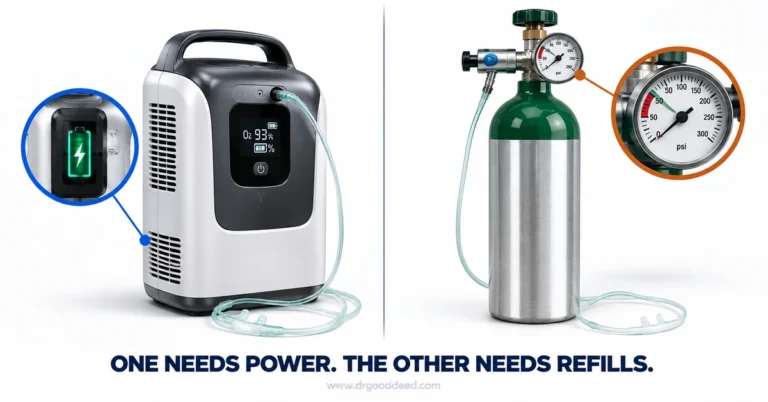
- Viral pneumonia is managed with supportive care, rest, fluids, and fever control, similar to bronchitis, though severe cases may need hospitalization and supplemental oxygen.
- Severe pneumonia with low oxygen saturation, confusion, or an inability to keep fluids down requires hospital care, sometimes including intravenous antibiotics and oxygen therapy.
Pro Tip: A pulse oximeter reading below 94% at rest, even without severe breathlessness, is a more reliable early warning sign of pneumonia than fever alone, since oxygen saturation often drops before someone feels dramatically worse. Keep a home pulse oximeter on hand if you are managing a lingering cough past the two-week mark.
When Should You See a Doctor?
Most chest colds and cases of bronchitis resolve without a clinic visit, but specific warning signs shift the calculation toward same-day evaluation.
- See a doctor promptly for a fever above 102°F, breathing that feels labored or fast even at rest, or chest pain that sharpens with every breath.
- Seek same-day care if a cough that seemed to be improving suddenly returns with a new fever or thicker, discolored mucus.
- Go to urgent care or an emergency room for bluish lips or fingertips, confusion, or an oxygen saturation reading under 92% on a home pulse oximeter.
- People over 65, smokers, and anyone with asthma, COPD, diabetes, or a weakened immune system should have a lower threshold for evaluation, since pneumonia complications hit these groups harder.
FAQs
How can you tell if you have bronchitis or pneumonia?
Bronchitis causes a persistent cough with low-grade fever. Pneumonia causes high fever, chills, and breathlessness. Only a chest X-ray confirms pneumonia’s lung tissue consolidation definitively.
Is pneumonia worse than bronchitis?
Yes. Pneumonia infects lung tissue and can lower blood oxygen, sometimes requiring hospitalization. Bronchitis stays in the airways and rarely causes life-threatening complications in healthy adults.
Can bronchitis turn into pneumonia?
Yes, in some cases. Bacterial pneumonia can follow bronchitis as a secondary infection, especially in smokers, older adults, and people with existing lung conditions like COPD.
Do bronchitis and pneumonia need antibiotics?
Bronchitis rarely needs antibiotics since over 90% of cases are viral. Bacterial pneumonia almost always requires a prescribed antibiotic course chosen by a clinician.
How long does bronchitis or pneumonia last?
Bronchitis typically resolves in 10 days to 3 weeks. Pneumonia takes 1 to 3 weeks with treatment. Untreated bacterial pneumonia can persist longer and worsen.
Sources
- MedlinePlus: Acute Bronchitis link
- MedlinePlus: Viral Pneumonia link
- CDC: About Pneumonia link
- American Family Physician: Diagnosis and Treatment of Acute Bronchitis link
- American Family Physician: Principles of Appropriate Antibiotic Use for Acute Bronchitis link
- Mayo Clinic: Bronchitis Symptoms and Causes link
- Cleveland Clinic: Pneumonia link
- Johns Hopkins Medicine: Pneumonia link
- Cleveland Clinic: Bronchitis link
- Royal College of Physicians: Charles Badham link
Medical Disclaimer: This article is for general information only and is not medical advice. It does not replace a diagnosis, treatment plan, or guidance from a qualified healthcare professional. Always talk to your doctor about your own symptoms and before starting, stopping, or changing any treatment. If you think you may be having a medical emergency, call 911 or go to your nearest emergency room.