
If your TIA symptoms went away, still call 911 (US) or 999 (UK) now: symptoms that clear do not mean the cause has gone. A transient ischemic attack (TIA, a brief blockage of blood flow to part of the brain) can clear in minutes, but it may be a warning that a stroke is coming.
When mini-stroke symptoms went away on their own, the cause behind them may still be there. Below you will find what to do in the next few minutes, what the ER checks, and what to do if the episode was yesterday.
Key Takeaways
- Yes. If TIA symptoms went away, call 911 (US) or 999 (UK) anyway, because the cause may still be there and needs urgent checking.
- Do not drive yourself. Write down when symptoms started and stopped, and keep a list of your medicines ready for the crew.
- TIA tests in the ER usually include brain imaging, a heart tracing, blood-vessel imaging and blood tests.
- What to do after a TIA depends on what caused it, and the care team decides that plan.
What Should You Do When Mini-Stroke Symptoms Disappear?
Should I go to the ER after a TIA if I feel fine? Yes, and calling emergency services is the first step.
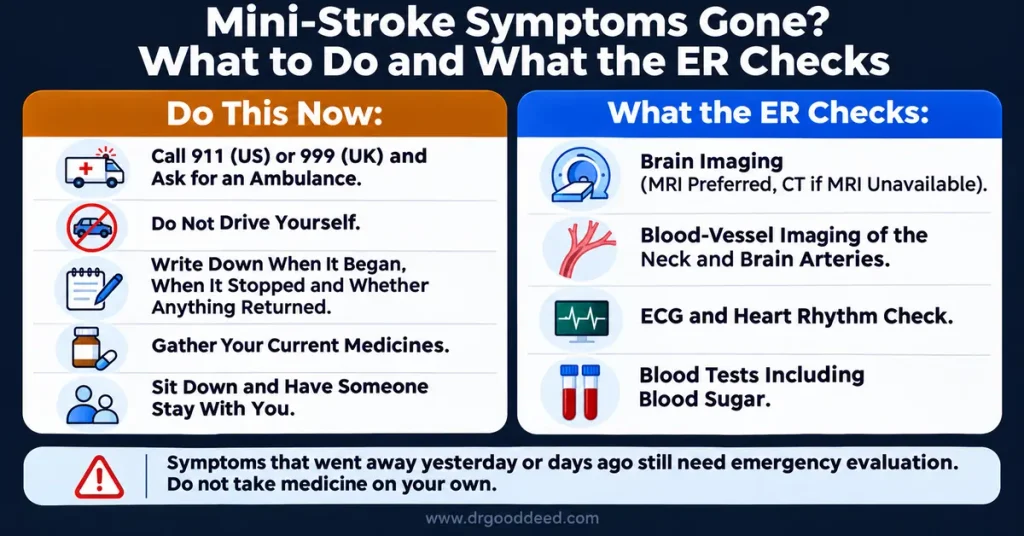
- Call 911 in the US or 999 in the UK and ask for an ambulance.
- Do not drive yourself, and do not let the affected person drive.
- Write down what happened, when it began, when it stopped, and whether anything returned.
- Gather your current medicines and have the list or boxes ready for the crew.
- Sit down and have someone stay with you until help arrives.
Call 911 Even If You Feel Normal Again
Emergency services are the right first call because a routine primary care visit usually cannot offer scans, heart monitoring, and specialist review within hours. Even when TIA symptoms went away before arrival, you are still assessed in hospital. Driving yourself also risks a repeat episode behind the wheel.
Record the Last Time You Felt Normal
Clinicians build the diagnosis from your timeline. Note when you were last completely normal, when symptoms began, when they ended, and what they felt like. A family member’s account helps if you were confused or struggled to speak.
Which Symptoms Count as a Possible TIA?
TIA symptoms match stroke symptoms, but they fade, sometimes before help arrives. Any sudden neurological change counts. You do not need every sign together, because one sudden, concerning symptom is enough to call 911.
- One side of the body: weakness, numbness or drooping in the face, arm or leg, usually on one side, because each side of the brain controls the opposite side of the body.
- Speech: sudden slurred speech, trouble finding words, or trouble understanding what others say.
- Vision: sudden loss of sight in one or both eyes, blurred vision or double vision.
- Balance: sudden loss of balance, poor coordination, or dizziness with trouble walking.
- Head: a sudden, severe headache with no known cause.
The BE-FAST reminder covers these: Balance, Eyes, Face, Arm, Speech, Time to call. Brief mini stroke symptoms, such as a hand that goes numb for five minutes, still count.
Why Can a TIA Be Dangerous After Symptoms Stop?
When TIA symptoms went away, the blood-flow problem behind the TIA warning signs may still be active, and the risk of a stroke is highest early.
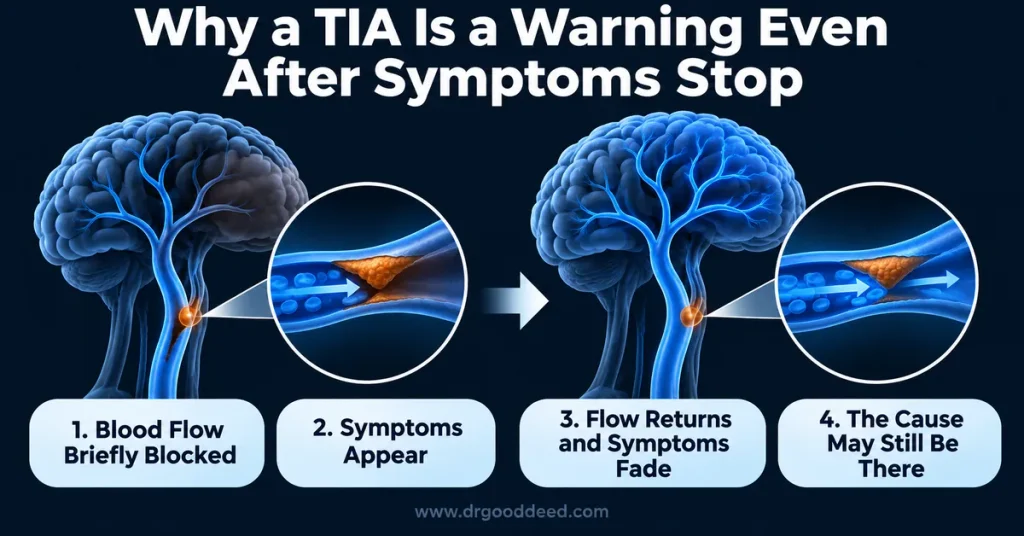
Temporary Symptoms Do Not Prove the Event Was Harmless
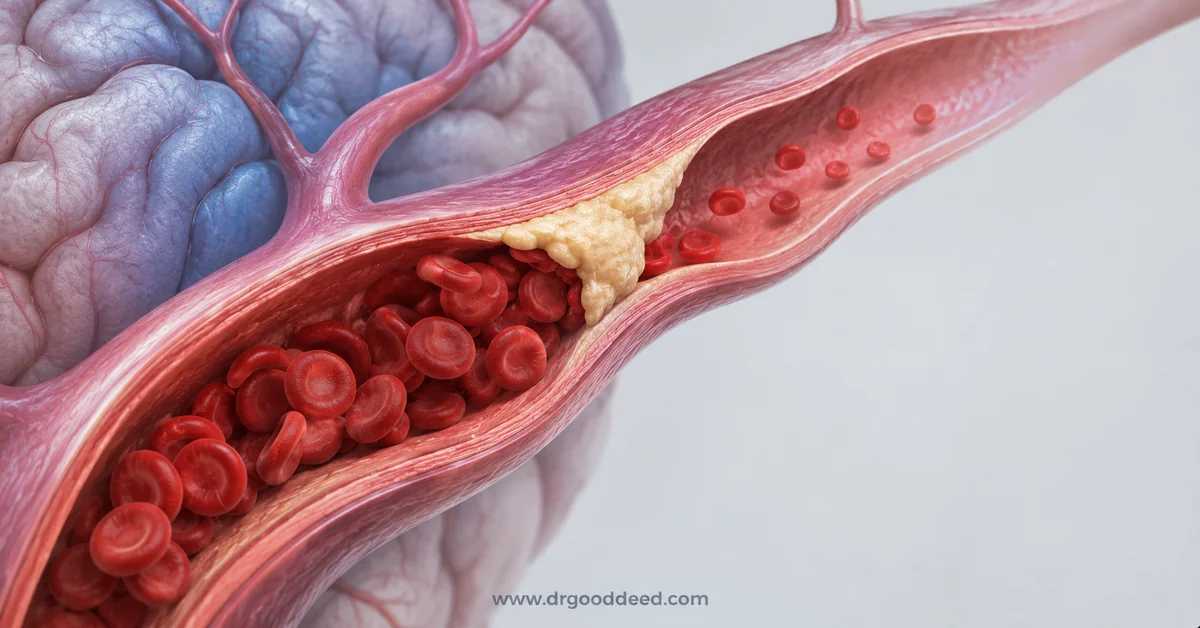
In a transient ischemic attack, blood supply to part of the brain is briefly disrupted. Symptoms fade when flow returns, but the cause, such as a narrowed artery, a clot or an irregular heartbeat, may not be fixed. Symptoms alone cannot show that no damage occurred.
A TIA Can Be a Warning of an Upcoming Stroke
The January 2023 AHA/ASA statement reports upwards of 17.8% within 90 days, with almost half of those strokes within 2 days. About 40% of ER patients with TIA symptoms, it turns out to have had a stroke on MRI. People who experienced TIA should get an MRI ideally within 24 hours and consult a neurologist within 48 hours.
A stroke is not certain, and urgent treatment aims to lower it.
Expert Insight: A normal neurological exam after a TIA describes your nervous system at that moment, not the artery, heart rhythm or clot source behind the episode. That is why a diagnosis rests on the timeline plus imaging, and why a scan showing injury can turn a suspected TIA into a stroke diagnosis.
How Long Do TIA Symptoms Last?
How long do TIA symptoms last? A few minutes to a few hours, with full recovery within 24 hours, and many clear within an hour. Duration cannot tell you it is safe to wait. Our stroke guide explains timing further.
What Will the ER Check If Your TIA Symptoms Are Gone?
TIA tests in the ER look for the cause and for any stroke that has already happened. Even when TIA symptoms went away before arrival, you are still tested. ER staff expect these visits, and nobody will see yours as a waste of time.
Brain Imaging and Blood-Vessel Tests
MRI is preferred, especially diffusion-weighted imaging (DWI, which can show tiny areas of injury early). CT is used when MRI is not available. Vessel imaging checks the carotid arteries (the large neck arteries feeding the brain) and brain vessels for narrowing or blockage. Tests chosen depend on your situation.
Blood Tests and Heart Rhythm Checks
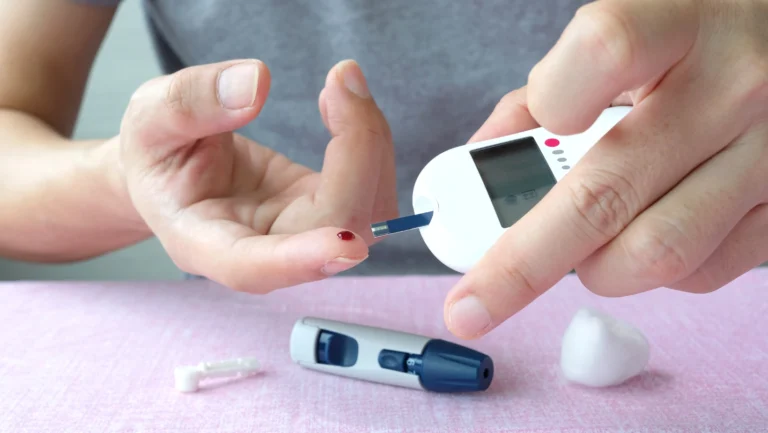
Blood tests include blood sugar, because low sugar can imitate a TIA. An ECG (electrocardiogram, a tracing of the heart’s electrical activity) looks for irregular rhythm such as atrial fibrillation (a rhythm problem that can let clots form in the heart). Some people need longer heart monitoring if the first tracing is normal. Atrial fibrillation is found in about 7% of people with a TIA or stroke, according to AHA News
What Treatment Helps Prevent a Stroke After a TIA?
Can a mini stroke go away on its own? Symptoms can, but treatment still matters when Plans differ from person to person, so what to do after a TIA is to follow the plan your care team builds, including follow-up with a neurologist (a brain and nerve specialist).
Treatment Depends on What Caused the Episode
- Clot-preventing medicines: doctors usually prescribe antiplatelet medicines (which make platelets less sticky) or anticoagulants (which slow clotting). They are not interchangeable. The choice depends on the cause, bleeding risk and medical history, and dosage varies by age and condition. Decisions about your own medicines belong with your care team.
- Cholesterol management: lowers the fatty buildup that narrows arteries.
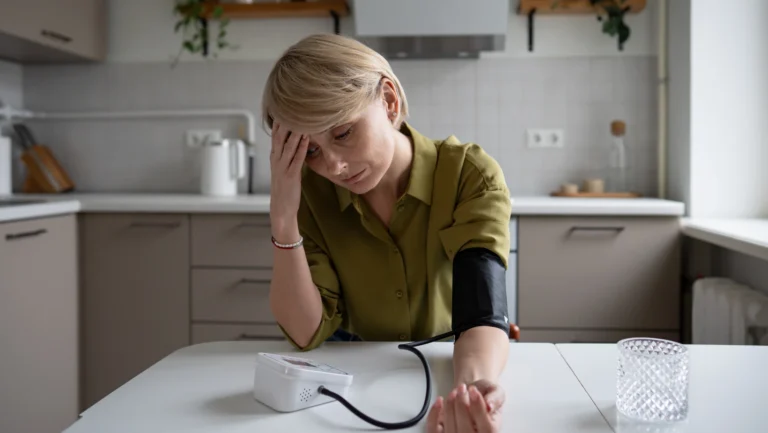
- Blood pressure control: high pressure is a major stroke risk factor. See our guide on blood pressure levels and stroke.
- Blood sugar control: diabetes raises stroke risk, as our diabetes and stroke guide explains.
- Heart rhythm treatment: needed if an irregular rhythm is found.
When a Blocked Neck Artery Needs Specialist Treatment
If imaging shows significant carotid artery narrowing, a specialist may consider a procedure to clear or widen it. That depends on the severity of the narrowing and your overall findings. Most people with a TIA do not need one.
What If the Episode Happened Yesterday?
If a suspected TIA happened yesterday or earlier and nobody assessed you, seek emergency medical evaluation now. Urgency does not fade as hours pass. When TIA symptoms went away yesterday, the cause may still be active today.
If TIA Symptoms Went Away Days Ago
- Not yet assessed: in the US, go to the emergency department rather than booking a routine visit. In the UK, the NHS advises an urgent GP appointment if you had symptoms earlier and received no advice.
- Symptoms again: call 911 or 999 immediately.
- Booked follow-up or rapid-access TIA clinic: this is not a reason to delay care for a new suspected episode.
- Delay does not make it safe: if mini-stroke symptoms went away days ago and nobody checked, a past episode is not safe to monitor at home.
FAQs
Do I need to go to the ER if TIA symptoms disappear?
Yes. Call 911 or 999 even when TIA symptoms went away, because the episode may be an early stroke warning. Scans, heart checks and blood tests that find the cause cannot be done at home.
How long do TIA symptoms last?
Often minutes to an hour. A few minutes to a few hours, fully clearing within 24 hours. Duration cannot show whether the episode was harmless.
Can you have a TIA and feel completely normal afterward?
Yes. Feeling normal does not settle TIA vs stroke, because only a scan shows lasting brain injury. A small ischemic stroke can also fade, so full recovery does not rule it out.
What is the difference between a TIA and a stroke?
TIA: Temporary blockage of blood flow to the brain without permanent brain injury. Stroke: Interrupted blood flow or bleeding causes brain injury. Both are medical emergencies.
Can doctors diagnose a TIA after symptoms disappear?
Yes. Doctors combine your timeline, a neurological exam, MRI or CT, vessel imaging and heart tests. A normal exam after recovery does not exclude a TIA, so your account of events carries real weight.
Should I take medicine on my own after a suspected mini-stroke?
No. Call 911 first and let the emergency team choose treatment, because the right medicine depends on whether a clot or bleeding caused the symptoms, which only imaging can show.
Can low blood sugar or a migraine mimic TIA symptoms?
Yes. Low blood sugar, seizures and migraine can cause brief mini-stroke symptoms. Do not sort them out at home. Only a clinician with a glucose check and imaging can tell, so see our stroke vs seizure guide.
What should I do if TIA symptoms return?
Call 911 or 999 immediately, note when they began, and do not drive. Do not wait to see whether they fade again. Returning TIA symptoms need emergency care, whatever earlier checks showed.
Sources
- NHS, Transient ischaemic attack (TIA), reviewed 28 June 2023: link
- American Heart Association and American Stroke Association, 2023 scientific statement on TIA in the emergency department (Top Things to Know), January 19, 2023: link
- American Stroke Association, Transient Ischemic Attack (TIA), patient information page: link
- Yale Medicine, A Transient Ischemic Attack (TIA) Is as Urgent as a Stroke, April 8, 2025: link
Medical Disclaimer: This content is for informational purposes only and is not a substitute for professional medical advice, diagnosis, or treatment. Always consult a qualified healthcare professional for medical concerns.
Medical Disclaimer: This article is for general information only and is not medical advice. It does not replace a diagnosis, treatment plan, or guidance from a qualified healthcare professional. Always talk to your doctor about your own symptoms and before starting, stopping, or changing any treatment. If you think you may be having a medical emergency, call 911 or go to your nearest emergency room.