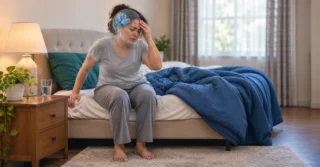

Jerking awake while falling asleep is usually a hypnic jerk, a sudden, harmless twitch that happens as your body slips from waking into sleep. This could cause you to feel like your arm or leg is jumping, or your whole body is jerking.
Generally, these jerks are not a problem. However, if they happen frequently, are affecting your sleep, or you are fully awake, it can help to know what is causing them and when to see a doctor.
Key Takeaways
- Jerking awake while falling asleep is usually a hypnic jerk, a common, harmless muscle twitch at sleep onset that rarely needs treatment.
- How common: Sleep starts happen in 60 to 70% of people (American Academy of Sleep Medicine, 2021).
- Triggers: Caffeine, sleep loss, stress and late strenuous exercise can make the jerks more frequent (American Academy of Sleep Medicine, 2021).
- Bedtime fixes: A steady sleep schedule, less late-day caffeine and a calm wind-down routine can make the jerks less frequent.
- When to get help: See a doctor for daytime or all-night jerks or fear of sleeping; call 911 for a seizure with loss of awareness.
What a Hypnic Jerk Is
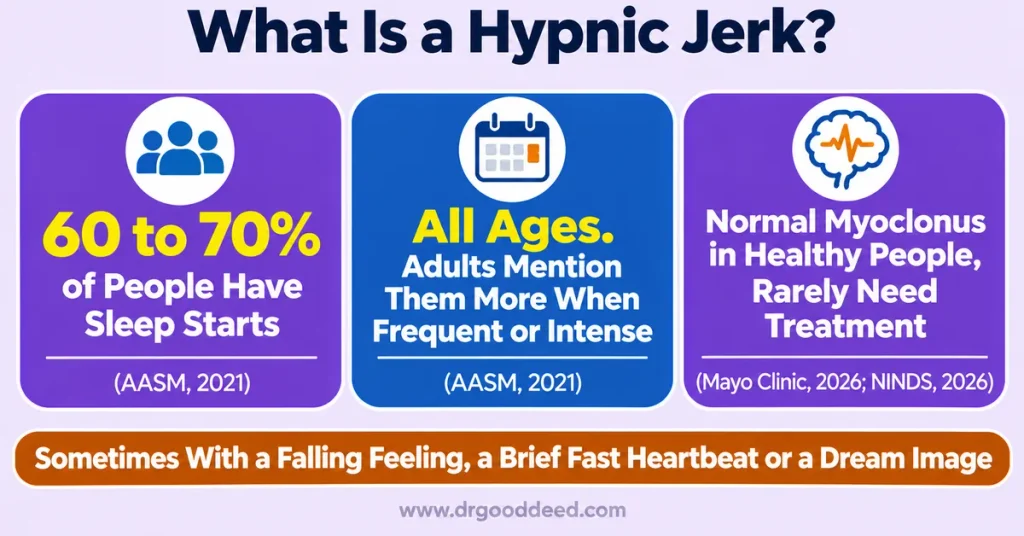
A hypnic jerk, also known as a sleep start, is a sudden and brief muscle twitch you can feel when you’re falling asleep. This can cause you to feel a sudden twitch in your arm or leg or your whole body. You may also have a feeling of falling.
Sleep starts affect 60 to 70% of people (American Academy of Sleep Medicine, 2021). They can happen at any age, though adults mention them more when they become frequent or intense (American Academy of Sleep Medicine, 2021).
Sleep starts are a type of myoclonus, which means sudden, brief muscle movements. In healthy people they are normal myoclonus, are generally harmless and rarely need treatment (Mayo Clinic, 2026; National Institute of Neurological Disorders and Stroke, 2026).
Sometimes you may feel a brief rapid heartbeat or recall a dream. If you hear a loud bang rather than a physical twitch, then this could be another sleep phenomenon known as exploding head syndrome.
Why Your Body Jerks as You Fall Asleep
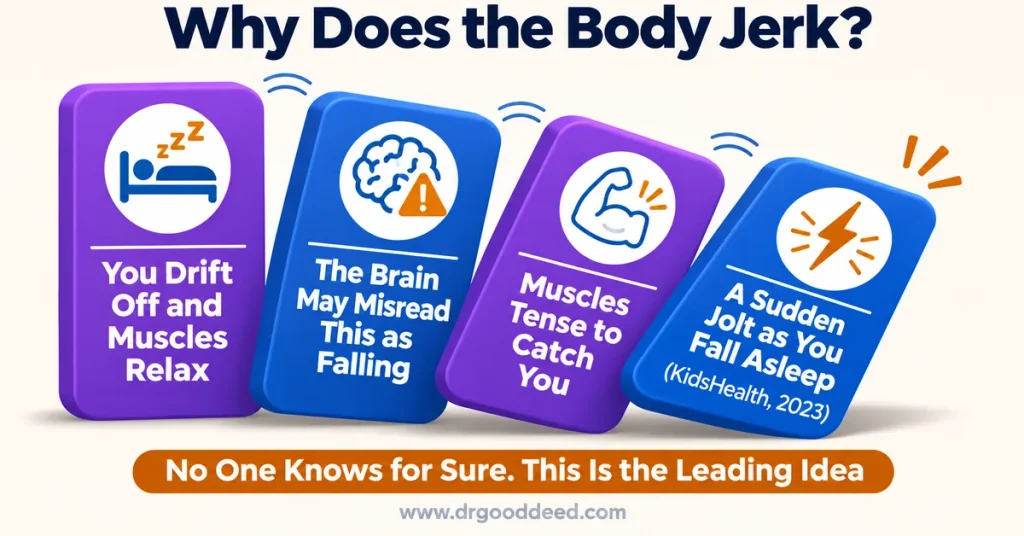
It is unknown why hypnic jerks happen; however, a common theory is that when your muscles relax as you fall asleep, your brain can briefly mistake this for falling and cause your muscles to tense (KidsHealth, 2023).
As you fall asleep, there are many stages your body and brain go through. This can cause sudden muscle movements.
If you are already tired or anxious, you may feel the jerks are more pronounced. Some people may also feel a falling sensation.
What Makes Jerking Awake While Falling Asleep Worse
Jerking awake while falling asleep happens more often when you are short on sleep, stressed, or have had caffeine or a hard workout late in the day (American Academy of Sleep Medicine, 2021).
Common causes include:
- Caffeine and stimulants: These can make it harder to relax and fall asleep.
- Strenuous exercise: Exercising hard late in the day can make the jerks more noticeable.
- Lack of sleep: Sleep loss can cause more frequent sleep starts.
- Stress and anxiety: These can cause tension and keep you from falling asleep, and they can bring other physical symptoms of anxiety too.
- Nicotine and alcohol: Nicotine is a stimulant, and alcohol can disrupt sleep and lead to sleep loss (Sleep Foundation, 2025).
- Starting a new medicine: Some medicines can cause myoclonus (National Institute of Neurological Disorders and Stroke, 2026). If your jerks began after starting a new medicine, tell your healthcare provider, and do not stop a prescribed medicine on your own.
Working irregular hours can cause a lack of sleep, and shift work sleep disorder can make sleep starts more frequent.
Hypnic Jerk or Something Else?
Generally, a single jerk as you drift off to sleep is a hypnic jerk. However, if you are fully awake, having repeated jerks throughout the night or losing awareness, then it could be something else.
| What You Are Experiencing | What It May Mean |
| Single sudden twitch while falling asleep, sometimes with a falling sensation | Hypnic jerk (sleep start) |
| Repeated jerks that feel like shocks, with loss of awareness or other seizure symptoms | Seizure, which should be assessed by a medical professional |
| Legs wanting to move, often with uncomfortable sensations | Restless legs syndrome |
| Repeated leg or arm movements while sleeping | A sleep-related movement disorder such as periodic limb movement disorder |
A hypnic jerk is not a seizure. Myoclonic seizures are sudden shocks caused by abnormal brain activity. In juvenile myoclonic epilepsy, seizures often happen shortly after waking (Epilepsy Foundation, 2022).
If you are unsure whether you are experiencing sleep starts or a seizure, speak to a doctor. Think about whether you lost awareness, felt awake, or felt confused afterward.
How to Stop Hypnic Jerks
You can’t stop a hypnic jerk once it has started; however, keeping a consistent sleep pattern, reducing late-night caffeine, and establishing a relaxing bedtime routine can help reduce them (American Academy of Sleep Medicine, 2021).
Try:
- Keep a consistent sleep pattern: Go to bed and wake up at the same time every day.
- Get enough sleep: Try not to cut back on sleep or stay up late on a regular basis.
- Reduce late-day caffeine: Notice whether caffeine from coffee, tea or energy drinks is affecting your sleep.
- Avoid hard exercise close to bedtime: If late exercise seems to bring on the jerks, try exercising earlier in the day.
- Wind down: Do relaxing things before bed, such as reading, gentle stretches and slow breathing.
- Keep a sleep diary: Record when the jerks happen, how much sleep you got, how much caffeine you had, how stressed you were and how much you exercised.
A steady wind-down routine, like the suggestions in how to fall asleep fast, may help you settle more comfortably.
How Doctors Check Frequent Jerks
Most people with occasional sleep starts need no tests, but if jerks are severe or frequent, a doctor may ask for a two-week sleep diary and suggest a sleep study (American Academy of Sleep Medicine, 2021).
A typical assessment would include:
- Your sleep and symptoms: Your doctor may ask when the jerks happen, how often they happen and whether they happen when you are awake.
- Your health and medicines: Tell your doctor about any recent medicine changes, health problems and other symptoms.
- Sleep diary: The American Academy of Sleep Medicine (2021) suggests keeping a sleep diary for about 2 weeks to help find triggers.
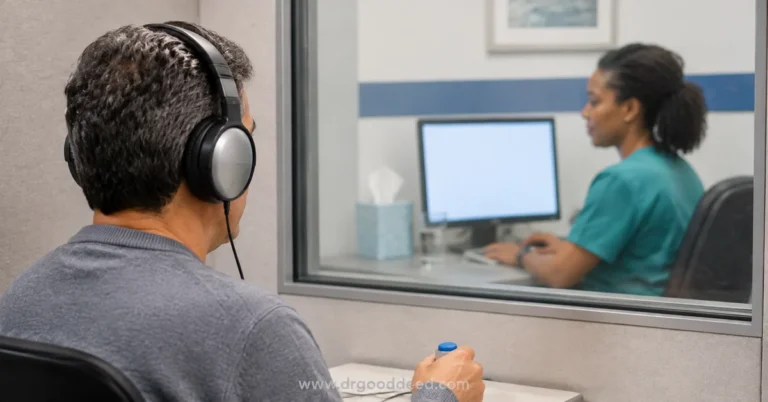
- Sleep study: If movements are severe or your doctor suspects another sleep disorder, they may suggest a sleep study. This lets them observe your sleep.
If possible, describe the movement or ask someone who has seen it to explain what happened. This can help your doctor understand if it is a normal sleep start or something else.
When to See a Doctor About Jerking Awake
See a doctor if fear of the jerks keeps you from sleeping, or if jerks happen during the day or throughout the night (American Academy of Sleep Medicine, 2021; Sleep Foundation, 2025). Start with your primary care doctor, who may refer you to a sleep specialist or neurologist.
Book an appointment if you notice:
- Worsening jerks: The jerks are becoming more frequent or more severe.
- Sleep loss or fear: The jerks regularly interrupt your sleep or make you afraid to go to bed.
- Jerks while awake: Jerks during the day or muscle twitching all over the body are a different issue worth checking.
- Other symptoms: You have new symptoms along with the jerks.
- A new medicine: The jerks began after you started a new medicine (National Institute of Neurological Disorders and Stroke, 2026).
Jerking awake while falling asleep on its own is harmless, but if a jerk turns into a seizure with loss of awareness, call 911.
Frequently Asked Questions
Can Anxiety Make You Jerk Awake as You Fall Asleep?
Yes. Stress and anxiety can make you jerk awake as you fall asleep more often, so calming your mind before bed may help (American Academy of Sleep Medicine, 2021). Anxiety can also make you more aware of the jerks, so they feel scarier. If worry about the jerks keeps you from sleeping, speak to a healthcare professional.
Is a Hypnic Jerk Related to the Heart?
No direct link to the heart is known. Hypnic jerks are normal muscle jerks from the nervous system as you fall asleep (Mayo Clinic, 2026; National Institute of Neurological Disorders and Stroke, 2026), though your heart may race briefly after the startle. If you have ongoing chest pain, fainting or a constant rapid heartbeat, seek medical advice.
Can You Have a Hypnic Jerk While Awake or During the Day?
No. Hypnic jerks happen only as you fall asleep (American Academy of Sleep Medicine, 2021). Jerks during the day or when you are fully awake are a different kind of myoclonus and can have many causes (Sleep Foundation, 2025). If you notice them regularly, book a check with your doctor.
Can You Die From a Hypnic Jerk?
No. Hypnic jerks are a very common, harmless muscle movement as you fall asleep, and they are normal myoclonus in healthy people (Mayo Clinic, 2026; National Institute of Neurological Disorders and Stroke, 2026). If you have loss of awareness, confusion or other seizure-like symptoms, get a medical assessment.
Do Children Get Sleep Starts?
Yes. Sleep starts happen at all ages, including in children, and adults just notice and mention them more (American Academy of Sleep Medicine, 2021). They are generally harmless and cause a brief twitch as your child falls asleep. If your child has repeated movements, unusual symptoms or anything that worries you, speak to their pediatrician.
Sources
- American Academy of Sleep Medicine, Sleep Starts (2021). link
- Mayo Clinic, Myoclonus: Symptoms and Causes (2026). link
- National Institute of Neurological Disorders and Stroke, Myoclonus (2026). link
- Epilepsy Foundation, Myoclonic Seizures (2022). link
- KidsHealth, Why Does My Body Jerk Before I Fall Asleep? (2023). link
- Sleep Foundation, Hypnic Jerk: Why You Twitch When You Sleep (2025). link
Medical Disclaimer: This article is for general information only and is not medical advice. It does not replace a diagnosis, treatment plan, or guidance from a qualified healthcare professional. Always talk to your doctor about your own symptoms and before starting, stopping, or changing any treatment. If you think you may be having a medical emergency, call 911 or go to your nearest emergency room.