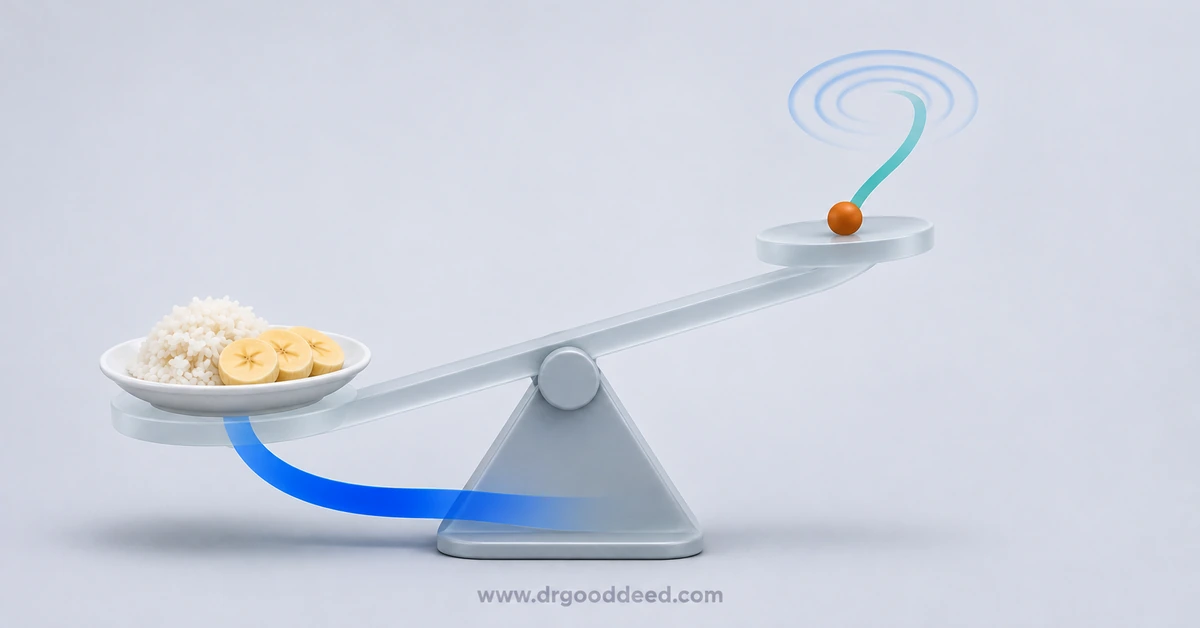

Feeling dizzy after eating usually happens because your blood pressure or blood sugar drops after a meal, and knowing which one it is helps you choose the right treatment. The timing of these symptoms, along with your health history, can help identify the cause. Some episodes are mild, but dizziness with chest pain, fainting, or sudden balance problems needs emergency attention.
Key Takeaways
- Feeling dizzy after eating is most often linked to a drop in blood pressure or blood sugar after a meal.
- Blood pressure may fall within one to two hours after eating, especially in older adults.
- Reactive hypoglycemia can cause blood sugar to drop within four hours of a meal.
- Dizziness after stomach surgery may be related to dumping syndrome.
- Call 911 for fainting, chest pain, sudden loss of balance, facial drooping, or trouble speaking.
Why You Feel Dizzy After Eating
You may feel dizzy after eating when your blood pressure falls in the one to two hours after a meal or your blood sugar drops in the hours that follow (Mayo Clinic, 2024). The cause is not always obvious, but when the symptoms begin and what you feel can help narrow it down.
Your digestive system needs more blood after you eat. Your body usually adjusts circulation to meet this demand. If blood pressure or blood sugar changes too much, you may feel faint, weak, or unsteady.
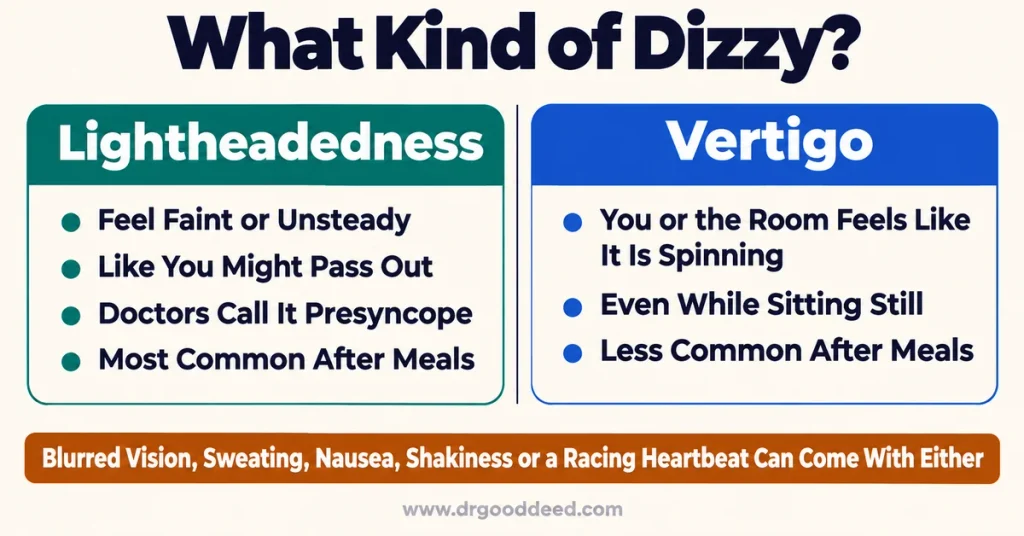
It also helps to describe exactly what you mean by dizziness. The word can refer to two different sensations:
- Lightheadedness: You feel faint or unsteady, as though you might pass out. Doctors may use the term presyncope for this feeling.
- Vertigo: You feel as though you or the room is spinning, even when you are sitting still.
Most meal-related dizziness involves lightheadedness rather than true spinning vertigo. You may also notice blurred vision, sweating, nausea, shakiness, or a racing heartbeat.
These symptoms can have several causes. For example, someone with a blood pressure drop may feel faint, while someone with low blood sugar may also feel hungry, sweaty, or shaky. Looking at the full pattern is more useful than relying on dizziness alone.
Blood Pressure Drops After Meals (Postprandial Hypotension)
Postprandial hypotension is a fall in blood pressure after eating. It usually develops within one to two hours of a meal and can make you feel lightheaded, weak, or close to fainting.
After you eat, blood flow increases toward your digestive system to help process food. Your heart and blood vessels normally adjust to maintain blood pressure. When your body cannot make that adjustment effectively, your blood pressure may fall.
This problem is more common in older adults. It can also affect people with high blood pressure or conditions that interfere with the autonomic nervous system. This system controls automatic functions such as heart rate, digestion, and blood pressure.
Parkinson’s disease and multiple system atrophy can affect autonomic function. As a result, some people with these conditions may have difficulty keeping their blood pressure steady after meals.
A 2024 review published in Age and Ageing estimated that postprandial hypotension affected 32.8% of older adults living in the community. Across the settings included in the review, the pooled estimate was 40.5%. The researchers noted considerable differences between studies, so these figures do not predict an individual’s risk.
The condition deserves attention because a significant blood pressure drop can lead to falls or fainting. A fall may cause injuries such as a hip or spine fracture. Research has also linked postprandial hypotension with stroke, although this association does not mean that every person with the condition will have a stroke.
If you have high blood pressure and regularly feel faint after meals, tell your healthcare professional. Learn more about high blood pressure and dizziness and when these symptoms need attention.
Low Blood Sugar After Eating
Low blood sugar after a meal can cause shakiness, sweating, hunger, weakness, and lightheadedness. When blood glucose falls within about four hours of eating, doctors may consider reactive hypoglycemia.
Your body releases insulin after a meal to help glucose move from your bloodstream into your cells. In some people, blood sugar falls more than expected after this process. The resulting symptoms may appear a few hours after eating rather than immediately.
Mayo Clinic describes reactive hypoglycemia as low blood sugar that occurs within four hours after a meal. In people without diabetes, the reason for the drop is not always clear. A doctor needs to confirm that blood glucose is actually low during the symptoms before identifying it as the cause.
This distinction matters because dizziness by itself does not prove that your blood sugar has dropped. Other conditions can cause similar symptoms, and a normal glucose reading during an episode may point the evaluation in another direction.
If you have diabetes, low blood sugar may occur when your food intake, activity, and treatment do not match. Insulin and some other diabetes medicines can increase this risk. The National Institute of Diabetes and Digestive and Kidney Diseases (NIDDK) lists dizziness, lightheadedness, and confusion among the possible signs.
The American Diabetes Association considers a blood glucose reading below 70 mg/dL low for many people with diabetes. Your personal targets may differ depending on your treatment plan.
If you feel dizzy after eating but do not have diabetes, avoid assuming that you have reactive hypoglycemia. A healthcare professional can help determine whether your glucose level is responsible. Blood sugar changes can also affect concentration and contribute to brain fog after eating.
Dumping Syndrome After Stomach Surgery
Dumping syndrome can cause dizziness, nausea, sweating, and weakness after stomach surgery. It occurs when food moves from the stomach into the small intestine too quickly.
The condition most often develops after surgery involving the stomach or esophagus. The speed at which food enters the small intestine can affect fluid movement and blood sugar levels, leading to symptoms after meals.
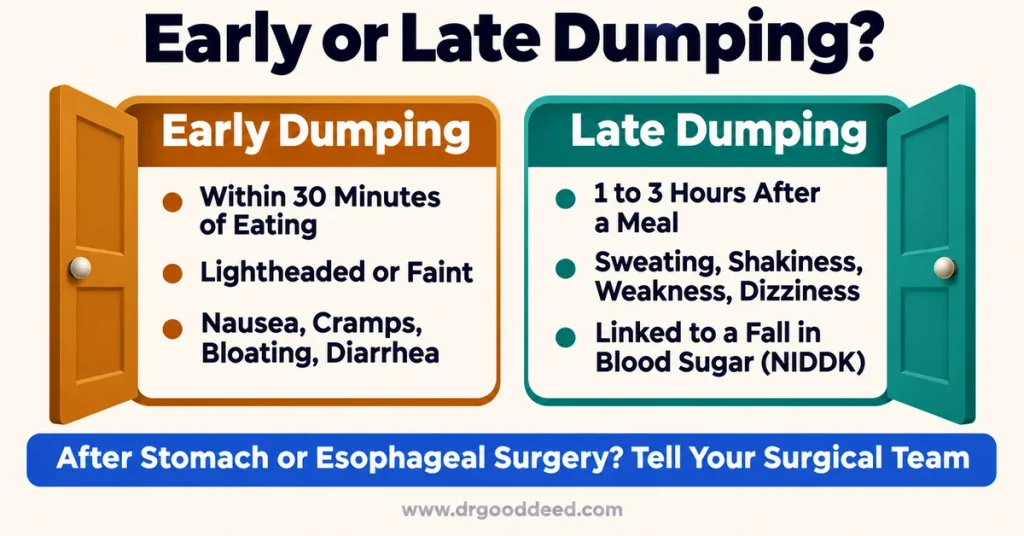
The NIDDK describes two forms of dumping syndrome:
- Early dumping syndrome: Symptoms usually begin within 30 minutes of eating. You may feel lightheaded or faint and experience nausea, stomach cramps, bloating, or diarrhea.
- Late dumping syndrome: Symptoms usually appear one to three hours after a meal. A fall in blood glucose can cause sweating, shakiness, weakness, and dizziness.
The timing can help your doctor understand which form may be involved. For example, dizziness with nausea and stomach cramps soon after eating may fit early dumping syndrome, while shakiness and sweating a few hours later may suggest late dumping syndrome.
If you have had stomach or esophageal surgery and regularly feel unwell after meals, tell your surgical team. They can assess your symptoms and recommend changes to your eating routine.
Other Things That Make You Lightheaded After Meals
Dizziness after eating does not always come from a blood pressure or blood sugar change. Dehydration, alcohol, sudden changes in posture, and certain health conditions can also make you feel lightheaded.
Other possible reasons include:
- Dehydration: Not drinking enough fluids can reduce blood volume and contribute to low blood pressure. You may notice more dizziness when you stand up or move around.
- Alcohol: Alcohol can affect circulation and balance. Drinking around mealtimes may make lightheadedness more noticeable, particularly if you have not eaten enough or are dehydrated.
- Standing up quickly: A sudden change from sitting to standing can cause a temporary blood pressure drop. This is known as orthostatic hypotension.
- POTS: People with postural orthostatic tachycardia syndrome may experience changes in heart rate and circulation around meals. However, dizziness after eating alone does not mean you have POTS. The relationship needs further assessment.
- Food allergy: A serious allergic reaction can cause dizziness along with swelling of the lips, tongue, or throat, difficulty breathing, or other sudden symptoms. Call 911 if you have signs of a severe allergic reaction.
Pay attention to other symptoms that appear with dizziness. For example, some people notice that their heart races after eating. A racing heartbeat can have several explanations, so mention it during your medical evaluation.
What the Timing of Your Dizziness Suggests
The time your symptoms begin can offer clues about the cause. It cannot confirm a diagnosis, but it helps your doctor decide what to check. The table below shows what the timing may suggest and what to do.
| When dizziness starts | Possible cause | Other clues | What to do |
| Within 30 minutes after eating | Early dumping syndrome, especially after stomach surgery | Nausea, cramps, sweating, or diarrhea | Contact your doctor or surgical team if it keeps happening |
| Within one to two hours | Postprandial hypotension | Weakness, blurred vision or feeling close to fainting | Sit down safely and ask about blood pressure checks after meals |
| Within four hours | Reactive hypoglycemia | Shakiness, sweating, hunger or confusion | Discuss checking blood glucose during symptoms |
| One to three hours after stomach surgery | Late dumping syndrome | Sweating, weakness, shakiness, or low glucose | Contact your surgical or diabetes care team |
| When you stand up after eating | Orthostatic hypotension or dehydration | Lightheadedness that improves when you sit or lie down | Change positions slowly and discuss repeated episodes with your doctor |
Keep in mind that these time frames can overlap. For example, dizziness one hour after a meal could have more than one explanation. Your medical history, other symptoms, and test results help your doctor distinguish between them.
If you are unsure whether the problem involves blood pressure, blood sugar, or your heart, note what happens during each episode. Chest discomfort, fainting, breathing difficulty, or a new irregular heartbeat should not be ignored.
Is Dizziness After Eating a Sign of Diabetes?
Dizziness after eating is not a sign of diabetes on its own. However, people with diabetes may feel dizzy because of low blood glucose or nerve damage that affects blood pressure regulation.
Low blood glucose can cause sweating, shakiness, hunger, weakness, and lightheadedness. If the level falls further, confusion or loss of consciousness can occur. The NIDDK explains that insulin and some diabetes treatments can increase the risk of these episodes.
Diabetes can also affect the autonomic nerves. This condition is called diabetic autonomic neuropathy. When these nerves do not regulate circulation properly, blood pressure may fall after eating or when you stand up.
So, what does diabetes dizziness feel like? You may feel faint, weak, shaky, or confused. Some people also experience blurred vision or sweating. These symptoms are not unique to diabetes, so a glucose check and medical assessment are important.
If you have diabetes, follow your healthcare professional’s advice about checking your blood sugar when symptoms occur. If you do not have diabetes but repeatedly experience dizziness after meals, ask your doctor whether glucose testing is appropriate.
You can also read our guide to normal blood sugar levels to understand common glucose ranges.
How Doctors Find the Cause
Doctors identify the cause by looking at your symptoms, medical history, and changes in blood pressure or blood glucose after meals. They may begin with simple checks before recommending further tests.
Your appointment may include:
- Reviewing your symptoms: Your doctor may ask what you ate, when the dizziness began, how long it lasted, and whether you also experienced sweating, nausea, weakness, or palpitations.
- Checking blood pressure: Measurements before and after a meal can help identify postprandial hypotension. Your doctor may also recommend repeated readings to see whether the pattern occurs regularly.
- Checking blood glucose: A glucose reading during symptoms can help determine whether low blood sugar is involved. The result needs to be considered alongside your symptoms and medical history.
- Considering further tests: If your doctor suspects dumping syndrome, they may recommend a glucose tolerance test. The NIDDK describes checking blood glucose, blood pressure, and heart rate at regular intervals, sometimes every 30 minutes for up to three hours.
Your doctor may recommend other investigations if your symptoms do not fit these patterns. Mention any history of diabetes, stomach surgery, Parkinson’s disease, or other conditions that may affect your nervous system.
Doctor’s Tip: Keep a simple record of your meals and symptoms. Write down what you ate, when the dizziness started, how long it lasted, and any blood pressure or glucose readings you can safely obtain. This information can help your doctor identify a pattern.
How to Prevent Dizziness After Meals
The right way to prevent dizziness after eating depends on its cause. Smaller meals may help some people, while others may need to change when they drink fluids. Follow advice that matches your diagnosis rather than trying every recommendation at once.
Your doctor may suggest the following changes:
- For a blood pressure drop: Try smaller meals instead of large ones. Your doctor may suggest drinking water before meals if it is safe for you. If you have heart or kidney disease, ask about fluid limits before increasing your intake.
- For reactive hypoglycemia: Eat smaller, balanced meals at regular intervals. Mayo Clinic suggests spacing meals and snacks about three hours apart and limiting sugary foods and simple carbohydrates.
- For dumping syndrome: The NIDDK recommends eating smaller meals more frequently, sometimes around six small meals each day. It also advises drinking fluids at least 30 minutes after meals rather than drinking them with food.
- For dizziness when standing: Move slowly when getting up from a chair or bed. Pause before walking so your body has time to adjust.
- For activity after meals: Ask your doctor whether walking after eating is suitable for you. Avoid walking or exercising when you feel faint or unsteady.
You may need to keep a food and symptom diary while making these changes. This can help you notice whether certain meal sizes, foods, or eating patterns are followed by symptoms.
If dizziness continues despite these changes, arrange a medical review. Do not change your diabetes treatment or fluid intake significantly without discussing it with your healthcare professional.
When Dizziness After Eating Is an Emergency
Dizziness after eating needs emergency attention when it occurs with fainting, chest pain, severe confusion, or signs of a stroke. Do not assume that a meal caused these symptoms or wait for them to disappear.
Call 911 or go to the ER if you experience:
- Fainting or loss of consciousness.
- Chest pain, chest pressure, or difficulty breathing.
- Sudden loss of balance, severe dizziness, or trouble walking.
- Facial drooping, weakness in one arm, or difficulty speaking.
- Severe confusion or loss of consciousness, especially if you have diabetes.
- Swelling of the tongue or throat or breathing difficulty after eating.
The CDC uses B.E. F.A.S.T. to help people recognize stroke symptoms. The letters stand for Balance, Eyes, Face, Arms, Speech, and Time. Sudden dizziness or loss of balance can be a warning sign, particularly when it appears with facial drooping, arm weakness, or speech changes. Call 911 immediately if you suspect a stroke, even if the symptoms improve.
If you experience repeated dizziness after meals but have no emergency symptoms, schedule an appointment with your primary care doctor. Seek urgent care if the episodes are new, getting worse, or making it difficult to stand and walk safely.
Your doctor may refer you to another specialist depending on the suspected cause. For example, repeated blood pressure changes, low glucose readings or symptoms following stomach surgery may need different types of assessment.
Even stroke symptoms that went away need emergency assessment because they may signal a transient ischemic attack.
If you feel dizzy after eating and also faint, have chest pain, or notice sudden one-sided weakness, call 911 instead of waiting for it to pass.
Frequently Asked Questions
What Is Gastric Vertigo?
Gastric vertigo is not a formal medical diagnosis. People sometimes use the term to describe dizziness linked to digestion or meals. However, meal-related dizziness is often lightheadedness rather than true spinning vertigo. A doctor can help determine whether blood pressure, blood sugar, or another condition is responsible.
Why Do I Feel Dizzy and Nauseous After Eating?
Dizziness and nausea after eating can have several causes. If symptoms begin within 30 minutes and you have had stomach surgery, early dumping syndrome may be responsible. You may also notice sweating, stomach cramps, or diarrhea. Repeated episodes should be discussed with your doctor.
Why Do I Get Dizzy After Eating Sugar?
Some people experience reactive hypoglycemia, in which blood sugar falls within about four hours after a meal. Sugary foods may trigger symptoms in some cases. However, dizziness alone does not confirm low blood sugar. A healthcare professional can help check whether glucose changes are responsible.
Can Dizziness After Eating Cause a Fall?
Yes. A fall in blood pressure after a meal can make you feel faint or lose your balance. Research published in Age and Ageing in 2024 linked postprandial hypotension with falls and fainting in older adults. Sit down when symptoms begin to reduce your risk of falling.
Should I Lie Down if I Feel Dizzy After Eating?
Sit or lie down somewhere safe until the dizziness passes. Avoid walking while you feel unsteady. For people with dumping syndrome, the NIDDK notes that lying down for a period after meals may help. Ask your doctor whether this approach is suitable for your condition.
Sources
Mayo Clinic, Low blood pressure (hypotension): Symptoms and causes. link
MedlinePlus, Low blood pressure. link
Age and Ageing, Prevalence of postprandial hypotension in older adults. link
Mayo Clinic, Reactive hypoglycemia: What can I do? link
National Institute of Diabetes and Digestive and Kidney Diseases, Symptoms and causes of dumping syndrome. link
National Institute of Diabetes and Digestive and Kidney Diseases, Eating, diet, and nutrition for dumping syndrome. link
National Institute of Diabetes and Digestive and Kidney Diseases, Low blood glucose (hypoglycemia). link
Centers for Disease Control and Prevention, Signs and symptoms of stroke. link
National Heart, Lung, and Blood Institute, Low blood pressure. link
American Diabetes Association, Low blood glucose (hypoglycemia). link
Medical Disclaimer: This article is for general information only and is not medical advice. It does not replace a diagnosis, treatment plan, or guidance from a qualified healthcare professional. Always talk to your doctor about your own symptoms and before starting, stopping, or changing any treatment. If you think you may be having a medical emergency, call 911 or go to your nearest emergency room.