


Gabapentin and pregabalin (Lyrica) are closely related nerve pain medicines that work the same way but differ in FDA-approved uses, how the body absorbs them, and how they are regulated. This article explains their differences, effectiveness, side effects, and safety concerns. It is not a guide to choosing or changing your medication.
Key Takeaways
- Gabapentin and pregabalin (Lyrica) work the same way; which one fits depends on your condition, kidney function, other medicines, and possible side effects.
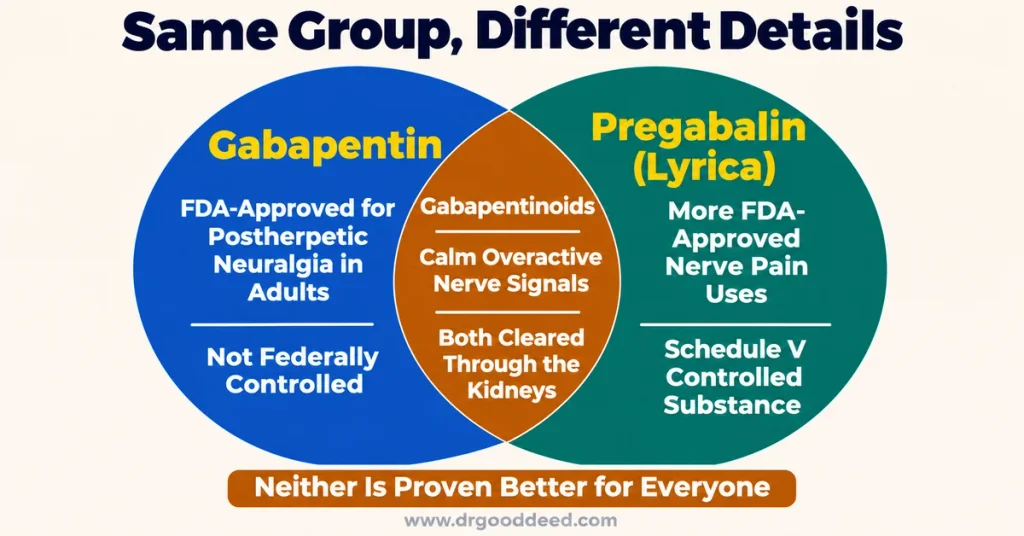
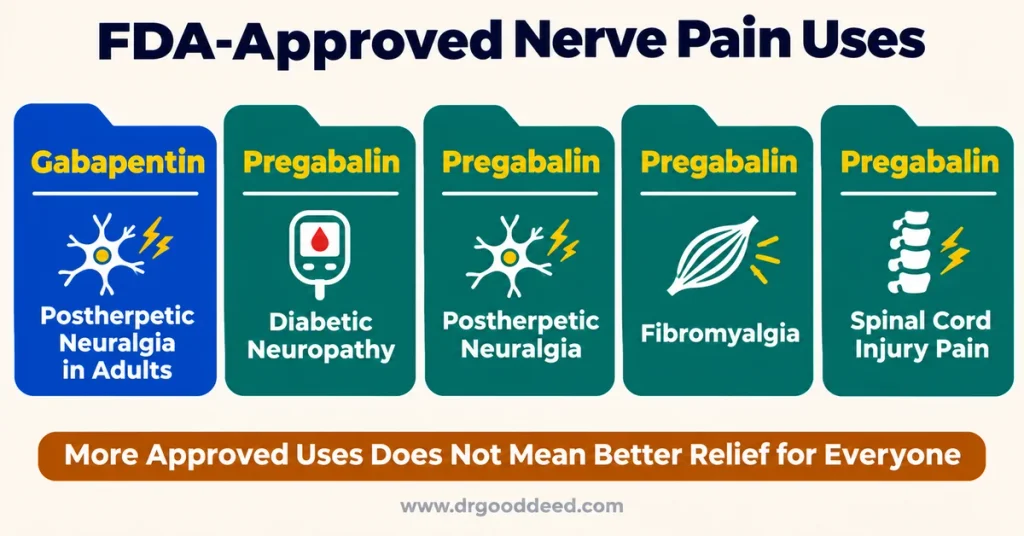
- Pregabalin has more FDA-approved nerve pain uses: diabetic neuropathy, postherpetic neuralgia, fibromyalgia, and spinal cord injury pain. Gabapentin is approved for postherpetic neuralgia in adults.
- Pregabalin is a Schedule V controlled substance under federal law. Gabapentin is not federally controlled, although some states have additional rules.
- Both medicines can cause dizziness, sleepiness, and swelling. They can also cause serious breathing problems in people with certain risk factors.
- Never stop, switch, or combine these medicines without speaking to your doctor.
Gabapentin vs Pregabalin: The Short Answer
Neither drug in the gabapentin vs pregabalin comparison is proven better for everyone. Both calm overactive nerves in a similar way, and pregabalin has more FDA-approved nerve pain uses. Your doctor will consider your diagnosis, medical history, kidney function, other medicines, and possible side effects when deciding which treatment may be suitable.
Both medicines belong to a group called gabapentinoids. They are among the recommended treatment options for painful diabetic neuropathy, alongside other medicine classes. The American Academy of Neurology (AAN, 2022) and the American Diabetes Association (ADA, 2026) include gabapentinoids among the treatment options for diabetic nerve pain.
Both medicines may also help people with neuropathy in the feet. However, the right treatment depends on what is causing the nerve pain.
How Gabapentin and Pregabalin Work (Lyrica)
Gabapentin and pregabalin work by calming overactive nerve signals. Both attach to a part of voltage-gated calcium channels (tiny gates that let calcium into nerve cells) called the alpha-2-delta subunit. This reduces the release of certain chemicals involved in sending pain signals.
Despite their names, neither medicine works directly on GABA, a chemical messenger that helps regulate activity in the nervous system.
Their main difference is how the body absorbs them:
- Gabapentin has saturable absorption. This means the proportion absorbed into the bloodstream decreases as the amount increases.
- Pregabalin has more predictable absorption, with bioavailability of at least 90%, according to its FDA prescribing information (2020).
- Pregabalin reaches peak blood levels within about 1.5 hours, according to its FDA label (2020).
- Both medicines are mainly cleared through the kidneys. Kidney function can therefore affect how the body processes them.
Tingling or numbness does not always mean that you have nerve damage. Find out why your leg falls asleep easily and what may be causing the sensation.
Gabapentin and Pregabalin Side by Side
The table below compares the two medicines using their FDA prescribing information and federal controlled-substance rules.
| Feature | Gabapentin | Pregabalin |
| Drug group | Gabapentinoid | Gabapentinoid |
| FDA-approved nerve pain use | Postherpetic neuralgia in adults | Diabetic neuropathy, postherpetic neuralgia, fibromyalgia, and spinal cord injury pain |
| Epilepsy treatment | Add-on treatment for partial-onset seizures in children aged 3 years and older | Add-on treatment for partial-onset seizures in adults and children aged 1 month and older |
| Absorption | Saturable; the proportion absorbed decreases as the amount increases | At least 90% bioavailability |
| Peak blood levels | Absorption is less predictable | Within about 1.5 hours |
| Federal controlled status | Not federally controlled | Schedule V controlled substance |
| Common side effects | Dizziness, sleepiness, and swelling | Dizziness, sleepiness, dry mouth, swelling, blurred vision, and weight gain |
| Kidney clearance | Mainly excreted unchanged through the kidneys | Mainly excreted unchanged through the kidneys |
| Boxed warning | None | None |
Postherpetic neuralgia is nerve pain that can continue after a shingles infection. Diabetic neuropathy is nerve damage caused by diabetes and often affects the feet and legs.
Pregabalin has more FDA-approved uses for nerve pain, but this does not automatically mean it will provide better relief for every person.
Which Works Better for Nerve Pain?
Neither gabapentin nor pregabalin works best for everyone. Both gabapentin and pregabalin can help with certain types of nerve pain, but the evidence does not establish one as the best choice for all patients.
Here is what the research shows:
- Clinical guidelines: The AAN’s 2022 guideline includes gabapentinoids among the treatment options for painful diabetic neuropathy. The ADA’s 2026 Standards of Care also list gabapentinoids among the initial treatment options.
- Comparison evidence: The ADA’s 2026 guidance discusses evidence suggesting similar results between different first-line treatment approaches. It also notes that more high-quality studies are available for pregabalin.
- Research favoring pregabalin: A 2025 meta-analysis by Mayoral and colleagues reviewed 14 studies involving 3,346 patients. It reported faster and greater pain relief with pregabalin. However, the research was funded by Viatris, a pharmaceutical company. This funding is important to consider when interpreting the findings.
Everyone responds differently to medication. A treatment that works well for one person may not provide the same results for someone else.
If you have diabetes, you may also want to understand whether diabetic neuropathy can be reversed. Treatment may help manage symptoms, but the outcome depends on the cause and extent of nerve damage.
Is Pregabalin Stronger Than Gabapentin?
Pregabalin works at lower milligram amounts, but this does not necessarily mean it provides better pain relief. Evidence comparing the two medicines is mixed, and the ADA’s 2026 guidance does not establish one as better for everyone.
What Is the Strongest Drug for Severe Nerve Pain?
There is no single strongest medicine for every type of severe nerve pain. The right treatment depends on the cause and severity of your pain, medical history, other medicines, and previous response to treatment.
For diabetic nerve pain, doctors may consider different first-line medicine classes. The ADA’s 2026 guidance also notes that combining certain first-line treatment classes may provide additional relief for some people. Your doctor can decide whether a treatment approach is appropriate for you.
The aim is to find a treatment that manages pain while keeping side effects and other risks as low as possible.
Side Effects and FDA Warnings
Gabapentin and pregabalin can both cause side effects. Some are mild, while others may need medical attention. The effects can vary depending on the person, their health, and other medicines they take.
Common Side Effects
Gabapentin may cause:
- Dizziness: You may feel light-headed or unsteady.
- Sleepiness: You may feel unusually tired or drowsy.
- Swelling: Fluid may build up in your hands, feet, or lower legs.
Pregabalin may cause:
- Dizziness and sleepiness: These effects may affect balance and everyday activities.
- Dry mouth: Your mouth may feel unusually dry.
- Swelling: Fluid may build up in your hands, feet, or legs.
- Blurred vision: You may notice changes in your vision.
- Weight gain: Some people experience an increase in body weight.
Not everyone experiences these side effects. Speak to your doctor if they persist, become severe, or interfere with your daily activities.
Important FDA Warnings
Both medicines carry the antiepileptic drug class warning about an increased risk of suicidal thoughts or behavior. Contact your doctor if you notice unusual changes in your mood or behavior, worsening depression, or thoughts of self-harm.
The FDA also issued a safety communication in 2019 warning that gabapentin and pregabalin can cause serious breathing difficulties in people with certain risk factors.
The risk may be higher if you:
- Take opioids or other medicines that cause sedation.
- Have a lung condition, such as chronic obstructive pulmonary disease (COPD).
- Are an older adult.
- Take other central nervous system depressants (medicines that slow brain activity).
Pregabalin can also cause angioedema, a serious allergic reaction that may lead to swelling of the face, lips, tongue, or throat.
Both medicines can cause withdrawal symptoms if stopped suddenly. Do not make changes to your treatment without speaking to your doctor.
Controlled Substance Rules and Misuse Risk
Pregabalin is classified as a Schedule V controlled substance under US federal law. Gabapentin is not federally controlled. However, some states have additional rules for gabapentin, so requirements may vary depending on where you live.
Schedule V is the lowest category of controlled substances under the federal scheduling system. However, medicines in this category can still be misused and may lead to dependence.
Key points to understand:
- Pregabalin: Listed as a Schedule V controlled substance under 21 CFR 1308.15.
- Gabapentin: Not listed as a federally controlled substance.
- Misuse risk: Both medicines may be misused. The risk can be higher when they are taken with opioids or other sedating medicines.
- Breathing risk: Combining either medicine with opioids can increase the risk of serious breathing difficulties.
Some doctors may be more cautious when prescribing pregabalin because of its controlled status, potential for misuse, and possible side effects. This does not mean that doctors avoid prescribing it when it is appropriate.
If you have questions about your prescription or the rules that apply in your state, speak to your doctor or pharmacist.
Why a Doctor May Choose One Over the Other
Your doctor may recommend gabapentin or pregabalin based on your diagnosis, kidney function, medical history, other medicines, and previous treatment experiences. There is no single option that is best for everyone.
Some factors your doctor may consider include:
- Approved use: Pregabalin has more FDA-approved uses for nerve pain, including diabetic neuropathy, postherpetic neuralgia, fibromyalgia, and spinal cord injury pain. Gabapentin is approved for postherpetic neuralgia in adults.
- Kidney function: Both medicines are mainly cleared through the kidneys. Reduced kidney function may affect how your body processes them.
- Other medicines: Opioids, sleep medicines, and other sedating medicines may increase the risk of drowsiness and breathing problems.
- Previous side effects: Your doctor may consider whether you have experienced dizziness, swelling, or other side effects with either medicine.
- Insurance and cost: Coverage and out-of-pocket costs may differ between the two medicines.
- Other health conditions: Diabetes, lung conditions, pregnancy, older age, and other health concerns may affect treatment decisions.
Some nerve pain may be linked to autoimmune neurological disorders. Identifying the underlying cause is important because treatment may involve more than managing pain symptoms.
Your doctor will consider these factors together rather than choosing a medicine based only on its strength.
Switching or Taking Them Together
Gabapentin and pregabalin are similar, but they are not interchangeable. They differ in absorption, approved uses, and how the body processes them.
There is no safe do-it-yourself way to switch between these medicines. Your doctor must decide whether a change is appropriate and explain what to do.
They are not routinely taken together because they have similar effects. Taking both may increase side effects such as dizziness and sleepiness.
Do not stop either medicine suddenly. If you have concerns about your treatment, want to change medicines, or are considering taking them together, ask your doctor.
Can you switch from gabapentin to pregabalin? Switching from gabapentin to pregabalin should only happen under medical guidance. Although the medicines work in a similar way, their absorption and other properties differ. Ask your doctor whether a change is suitable for your condition.
Can you take pregabalin and gabapentin together? These medicines are not routinely combined because their effects can overlap and increase the risk of side effects. Taking them together may cause more dizziness and sleepiness. Ask your doctor before taking both medicines.
Who Needs Extra Care With These Medicines
Some people may need closer monitoring when taking gabapentin or pregabalin. This includes people with kidney problems, older adults, pregnant or breastfeeding women, and people with breathing conditions.
Speak to your doctor about the following:
- Kidney problems: Both medicines are mainly cleared through the kidneys. Reduced kidney function may cause them to build up in the body and increase the risk of side effects.
- Older adults: Older people may have a higher risk of dizziness, sleepiness, falls, and breathing problems. Kidney function should also be considered.
- Pregnancy: There is not enough research in humans to determine whether pregabalin is safe during pregnancy. Tell your doctor if you are pregnant, planning a pregnancy, or could become pregnant.
- Breastfeeding: Speak to your doctor before taking either medicine while breastfeeding. Your doctor can discuss the possible benefits and risks.
- Breathing conditions: People with COPD or other breathing problems may have a higher risk of serious breathing difficulties, especially when taking sedating medicines.
- Opioid use: Taking either medicine with opioids can increase the risk of extreme sleepiness and slowed breathing.
- Diabetes: People taking pregabalin should monitor their skin for sores, blisters, redness, or other changes. This is particularly important if diabetes has reduced sensation in their feet.
Do not assume a medicine is safe simply because you have taken it before. Your health and other medicines may change over time, so regular reviews with your doctor are important.
When to Call Your Doctor or 911
Some side effects can be discussed during a routine medical appointment. Others require urgent or emergency attention.
Call 911 or go to the ER if you or someone taking either medicine experiences:
- Slow or shallow breathing.
- Blue or bluish lips or skin.
- Extreme sleepiness or difficulty waking up.
- Sudden swelling of the face, lips, tongue, or throat.
- Severe breathing difficulties.
These symptoms may indicate a serious breathing problem or allergic reaction. Do not wait for them to improve on their own.
Speak to your doctor if you experience:
- Persistent dizziness or sleepiness.
- New or worsening swelling in your hands, feet, or legs.
- Unexplained weight gain while taking pregabalin.
- Changes in mood, behavior, or mental health.
- Concerns about kidney function or other medicines.
- Questions about pregnancy, breastfeeding, or long-term treatment.
If you have symptoms that need prompt assessment but are not life-threatening, urgent care may be appropriate. Your primary care doctor can also review ongoing concerns and refer you to a neurologist if needed. Do not use urgent care instead of emergency services for severe breathing problems or other emergency symptoms.
If you have thoughts of suicide or self-harm, seek immediate support. In the United States, call or text 988 to reach the Suicide and Crisis Lifeline. If there is an immediate risk of harm, call 911 or go to the nearest emergency room.
Doctor’s Tip: Never stop taking gabapentin or pregabalin suddenly, even if you feel better or think the medicine is no longer helping. Speak to your doctor before making any changes to your treatment.
Gabapentin and pregabalin can both slow breathing, so call 911 for slow or shallow breathing, bluish lips, or extreme sleepiness (FDA, 2019).
Frequently Asked Questions
Is Pregabalin Stronger Than Gabapentin?
Pregabalin works at lower milligram amounts, but this does not necessarily mean it provides better pain relief. Evidence is mixed. Some studies have reported better results with pregabalin (Mayoral et al., 2025, funded by Viatris), while others have found similar results (ADA, 2026). Your doctor will consider your condition, medical history, and response to treatment.
Why Don’t Doctors Like Prescribing Pregabalin?
Many doctors prescribe pregabalin when it is appropriate. However, it is a Schedule V controlled substance under federal law. Doctors may also consider its potential for misuse, particularly when taken with opioids, and side effects such as dizziness, sleepiness, and swelling.
Do Gabapentin and Pregabalin Cause Weight Gain?
It can happen, mainly with pregabalin. Weight gain is a commonly reported side effect of pregabalin. Both medicines can also cause swelling due to fluid retention, which means extra fluid builds up in the body. Speak to your doctor if you notice unexplained weight changes or swelling.
Is Pregabalin or Gabapentin Better for Anxiety?
Neither gabapentin nor pregabalin is FDA-approved to treat anxiety in the United States. Their approved uses include certain types of nerve pain and seizures, while pregabalin is also approved for fibromyalgia. For more information about treatment options, read our guide to anxiety and speak to a healthcare professional.
Can I Take Them With Opioids or Sleep Medicines?
Only take gabapentin or pregabalin with opioids or other sedating medicines if your doctor knows about all your treatments. Combining them can increase the risk of serious breathing problems, extreme sleepiness, and reduced alertness. Ask your doctor before starting, stopping, or combining medicines.
Sources
FDA, Drug Safety Communication on serious breathing problems (2019). link
DailyMed, pregabalin prescribing information (2020). link
DailyMed, gabapentin prescribing information (2025). link
Electronic Code of Federal Regulations, Schedule V, 21 CFR 1308.15. link
American Academy of Neurology, Oral and Topical Treatment of Painful Diabetic Polyneuropathy (2022). link
American Diabetes Association, Standards of Care in Diabetes (2026), Section 12. link
Mayoral et al., Comparative efficacy of pregabalin and gabapentin (2025). link
MedlinePlus, Gabapentin. link
MedlinePlus, Pregabalin. link
Medical Disclaimer: This article is for general information only and is not medical advice. It does not replace a diagnosis, treatment plan, or guidance from a qualified healthcare professional. Always talk to your doctor about your own symptoms and before starting, stopping, or changing any treatment. If you think you may be having a medical emergency, call 911 or go to your nearest emergency room.